
Home / Reptiles / Lizards / Agamidae / Gia Lai Pricklenape
No federal permit to keepGia Lai Pricklenape
Acanthosaura nataliae
Reptiles › Lizards (Lacertilia) › Agamidae (Agamas and dragons)
Acanthosaura nataliae is a species of lizard in the subfamily Draconinae of the family Agamidae.
From Wikipedia: Acanthosaura nataliae, CC BY-SA 4.0 (excerpt)

Care at a glance
Species-specific values
Values researched for this exact species. Air, surface and water temperatures are listed separately, and each source is kept as published rather than averaged.
| Minimum enclosure | Adult single animal: about 140 × 70 × 160 cm or larger. Source: interaquaristik.de | |
| Warm side air temperature | 72–79 °F (22–26 °C) Source: interaquaristik.de | |
| Cool side air temperature | 68–72 °F (20–22 °C) Source: interaquaristik.de | |
| Night temperature | 63–70 °F (17–21 °C) Source: interaquaristik.de | |
| Humidity | 70–85 % Source: interaquaristik.de | |
| Uvb lighting | Provide low to moderate UVB over some upper perches, with shaded refuges available. Source: interaquaristik.de | |
| Diet | Offer varied, appropriately sized invertebrates; dust feeder insects regularly with calcium. Source: interaquaristik.de | |
| Feeding frequency | Adjust feeding amount and schedule to age, condition, activity, and veterinary assessment. Source: interaquaristik.de | |
| Social housing | Usually keep singly; pair housing only in a much larger, structured enclosure with close monitoring. Source: interaquaristik.de | |
| Substrate | Use moisture-retaining, unfertilized soil with leaf litter, bark, and patches of moss over drainage. Source: interaquaristik.de | |
| Seasonal cooling | Obligate brumation is not established; a moderate seasonal phase may use shorter lighting, less misting, and cooler nights. Source: interaquaristik.de |
Understanding the animal
In the wild
In the wild
| Overview | Acanthosaura nataliae is a species of lizard in the subfamily Draconinae of the family Agamidae. — From Wikipedia: Acanthosaura nataliae, CC BY-SA 4.0 (excerpt) |
| Where it lives | The preferred natural habitat of Acanthosaura nataliae is forest, at elevations of 350–1,400 m. — From Wikipedia: Acanthosaura nataliae, CC BY-SA 4.0 (excerpt) |
| Behavior | Acanthosaura nataliae is arboreal and diurnal. — From Wikipedia: Acanthosaura nataliae, CC BY-SA 4.0 (excerpt) |
| Reproduction | Acanthosaura nataliae is oviparous. Clutch size is as many as 16 eggs. — From Wikipedia: Acanthosaura nataliae, CC BY-SA 4.0 (excerpt) |
Read about this species in the wild at The Reptile Database.
Native climate (measured)
Native climate (measured)
| Warm-season highs | about 88°F (up to 92°F in the hottest sampled areas) |
| Cool-season lows | about 64°F (down to 55°F in the coldest sampled areas) |
| Average temperature | 70–78°F across sampled records |
| Relative humidity | 78–80% on average (driest month about 72%) |
| Rainfall | about 2143 mm a year, with strong wet and dry seasons |
Measured at 14 wild occurrence records sampled against WorldClim 2.1 climate data (1970–2000 averages). Air conditions in the range are ecological context, not enclosure settings: microhabitats such as burrows, leaf litter or basking rocks can be cooler, warmer or more humid.
Profile
Profile
Researched for this exact species. Sources are listed under In the wild above.
Sources for this sheet
- Myhrvold et al. (2015). An amniote life-history database. Ecology 96: 3109 Peer-reviewed researchPeer-reviewed compilation of life-history data for over 21,000 birds, mammals and reptiles.
- The Reptile Database Peer-reviewed researchScientist-curated catalog of every reptile species, with taxonomy and literature.
- GBIF Backbone Taxonomy (Global Biodiversity Information Facility) (CC BY 4.0) Peer-reviewed researchInternational scientific taxonomy used here for classification. GBIF Secretariat (2023). GBIF Backbone Taxonomy. Checklist dataset https://doi.org/10.15468/39omei, accessed via GBIF.org.
- Wikipedia (species article) (CC BY-SA 4.0) Community referenceFree encyclopedia; useful overviews with their own citations. Short excerpts are quoted under CC BY-SA 4.0, each credited with a link to its article.
- iNaturalist (captive observations) Community referenceCommunity observation platform run by the California Academy of Sciences and National Geographic; observations marked captive show animals living in homes, zoos and aquariums.
More agamas and dragons
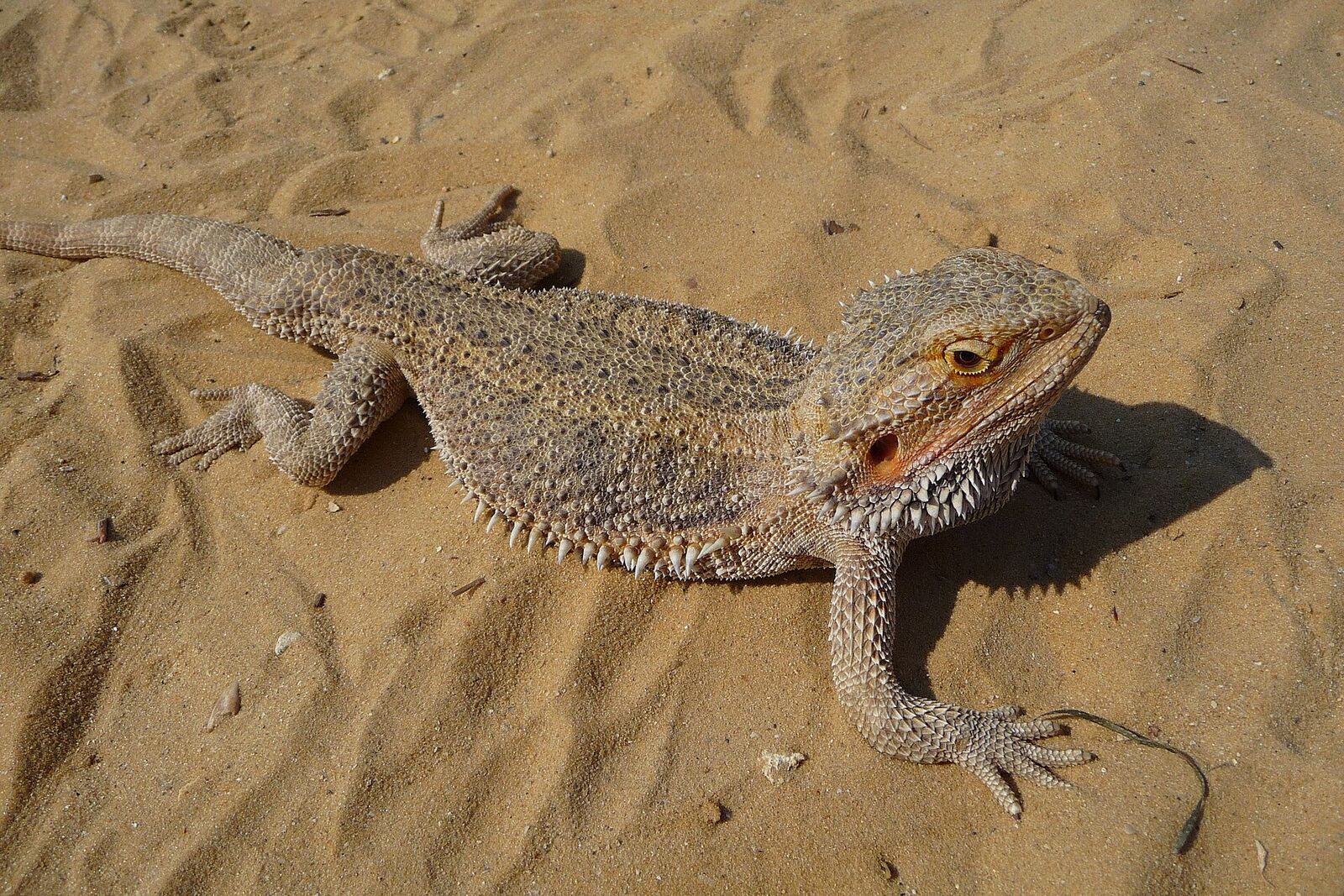
Bearded dragon
Pogona vitticeps
Sun-loving, friendly and endlessly popular.
Pet trade

(Sulawesi) Sailfin Lizard
Hydrosaurus celebensis
Pet trade

(Sulawesi) Sailfin Lizard (Hydrosaurus microlophus)
Hydrosaurus microlophus
Pet trade

Australian water dragon
Intellagama lesueurii
Pet trade

Bent's Mastigure
Uromastyx benti
Pet trade

Black-necked agama
Acanthocercus atricollis
Zoos & aquariums