
Home / Reptiles / Lizards / Agamidae / Peters's Rock Agama
No federal permit to keepPeters's Rock Agama
Agama picticauda
Reptiles › Lizards (Lacertilia) › Agamidae (Agamas and dragons)
Agama picticauda, also known commonly as Peters's rock agama and the African redhead agama, is a species of lizard in the family Agamidae.
From Wikipedia: Agama picticauda, CC BY-SA 4.0 (excerpt)

Care at a glance
Species-specific values
Values researched for this exact species. Air, surface and water temperatures are listed separately, and each source is kept as published rather than averaged.
| Minimum enclosure | A single agama should have an enclosure at least 36”L x 18”W x 16”H (~40 gallons). Source: reptilesupply.com | |
| Basking surface temperature | 95 °F Source: reptilesupply.com | |
| Cool side air temperature | 75–85 °F Source: reptilesupply.com | |
| Night temperature | Turn heating off at night. Source: reptilesupply.com | |
| Humidity | 70–85 % Source: reptilesupply.com | |
| Uvb lighting | Provide UVB, with the basking surface 8–12 inches below the lamp; provide 12 hours of light daily. Source: reptilesupply.com | |
| Diet | Primarily insectivorous; offer a variety of feeder insects, with flowers as treats. Source: reptilesupply.com | |
| Feeding frequency | Provide meals each morning, giving as much as they finish in a single day. Source: reptilesupply.com | |
| Social housing | Cohabitation is generally not recommended. Source: reptilesupply.com |
Understanding the animal
About this animal
About this animal
The species is native to West Africa.
From Wikipedia: Agama picticauda, CC BY-SA 4.0 (excerpt)
In the wild
In the wild
| Overview | Agama picticauda, also known commonly as Peters's rock agama and the African redhead agama, is a species of lizard in the family Agamidae. The species is native to West Africa. — From Wikipedia: Agama picticauda, CC BY-SA 4.0 (excerpt) |
Read about this species in the wild at The Reptile Database.
Native climate (measured)
Native climate (measured)
| Warm-season highs | about 97°F (up to 109°F in the hottest sampled areas) |
| Cool-season lows | about 65°F (down to 59°F in the coldest sampled areas) |
| Average temperature | 78–85°F across sampled records |
| Relative humidity | 43–78% on average (driest month about 40%) |
| Rainfall | about 1064 mm a year, with strong wet and dry seasons |
Measured at 184 wild occurrence records sampled against WorldClim 2.1 climate data (1970–2000 averages). Air conditions in the range are ecological context, not enclosure settings: microhabitats such as burrows, leaf litter or basking rocks can be cooler, warmer or more humid.
Profile
Profile
Researched for this exact species. Sources are listed under In the wild above.
Sources for this sheet
- The Reptile Database Peer-reviewed researchScientist-curated catalog of every reptile species, with taxonomy and literature.
- GBIF Backbone Taxonomy (Global Biodiversity Information Facility) (CC BY 4.0) Peer-reviewed researchInternational scientific taxonomy used here for classification. GBIF Secretariat (2023). GBIF Backbone Taxonomy. Checklist dataset https://doi.org/10.15468/39omei, accessed via GBIF.org.
- Wikipedia (species article) (CC BY-SA 4.0) Community referenceFree encyclopedia; useful overviews with their own citations. Short excerpts are quoted under CC BY-SA 4.0, each credited with a link to its article.
- iNaturalist (captive observations) Community referenceCommunity observation platform run by the California Academy of Sciences and National Geographic; observations marked captive show animals living in homes, zoos and aquariums.
More agamas and dragons
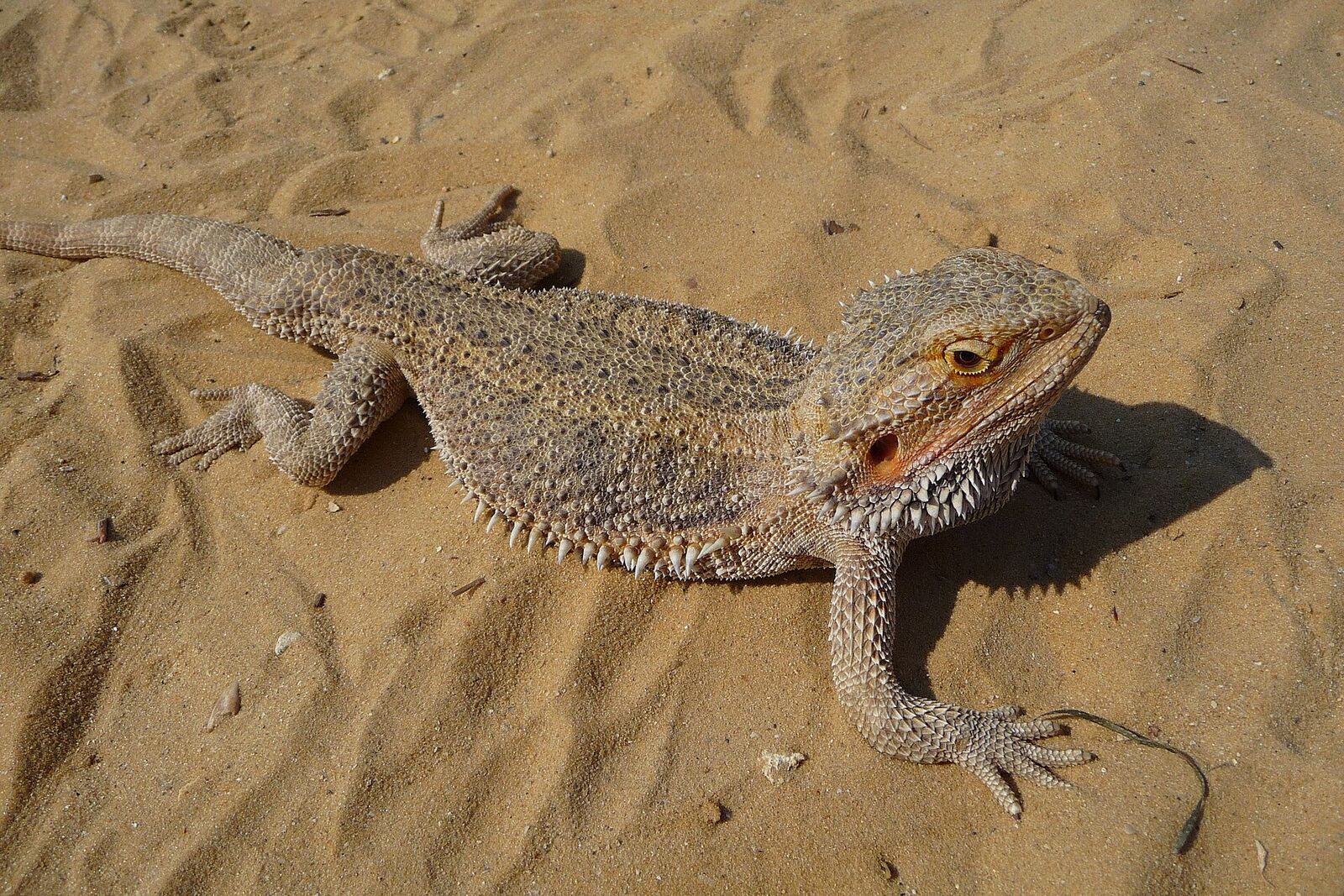
Bearded dragon
Pogona vitticeps
Sun-loving, friendly and endlessly popular.
Pet trade

(Sulawesi) Sailfin Lizard
Hydrosaurus celebensis
Pet trade

(Sulawesi) Sailfin Lizard (Hydrosaurus microlophus)
Hydrosaurus microlophus
Pet trade

Australian water dragon
Intellagama lesueurii
Pet trade

Bent's Mastigure
Uromastyx benti
Pet trade

Black-necked agama
Acanthocercus atricollis
Zoos & aquariums