
Home / Reptiles / Turtles and tortoises / Aldabra giant tortoise
Some federal rules applyAldabra giant tortoise
Aldabrachelys gigantea
Reptiles › Turtles and tortoises (Testudines) › Testudinidae (Tortoises)
The Aldabra giant tortoise (Aldabrachelys gigantea), Aldabra tortoise, or simply giant tortoise, is a species of tortoise in the family Testudinidae and genus Aldabrachelys.

Care at a glance
Species-specific values
Values researched for this exact species. Air, surface and water temperatures are listed separately, and each source is kept as published rather than averaged.
| Minimum enclosure | No minimum enclosure size is stated. Source: floridaiguana.com | |
| Basking surface temperature | A suitable basking area is recommended, but no temperature is given. Source: floridaiguana.com | |
| Night temperature | 65 °F Source: floridaiguana.com | |
| Uvb lighting | Indoor enclosures need UVB exposure; outdoor housing should provide direct sunlight and shade. Source: floridaiguana.com | |
| Diet | Juveniles eat Mazuri 5M21, varied greens, grasses, vines, weeds, cactus and selected vegetables. Source: floridaiguana.com | |
| Drinking water | Provide clean, shallow drinking water in a low-sided bowl. Source: floridaiguana.com | |
| Seasonal cooling | 65–75 °F Source: floridaiguana.com |
Understanding the animal
About this animal
About this animal
The species is endemic to the Seychelles, with the nominate subspecies, A. g. gigantea native to Aldabra atoll.
From Wikipedia: Aldabra giant tortoise, CC BY-SA 4.0 (excerpt)
In the wild
In the wild
Researched for this exact species, not its family. Wild conditions are context, not enclosure settings.12
| Where it lives | Native to Aldabra Atoll in the Seychelles, especially its low grass-and-herb 'tortoise turf' and open mixed scrub. Uses nearby trees, shrubs, caves and seasonal pools as thermal refuges. |
| Ground it lives on | Low turf over coral limestone, sandy patches and soil beneath scrub; seasonal mud wallows |
| Climate | Aldabra monthly mean air temperatures are 75–82°F (24–28°C), with midday temperatures exceeding 97°F (36°C). Wetter northwest monsoon November–April and drier southeast monsoon May–October; a numerical wild relative-humidity range was not established. |
| Active | Daytime activity interrupted by prolonged sheltering from heat; no winter brumation is documented in the sources used. |
| Social life | Often aggregates under shared shade and is comparatively social for a tortoise; males can fight over breeding access. |
| Wild diet | Grasses, sedges, herbs and woody browse; more leaf litter during the dry season. Carrion and feces are sometimes consumed. |
| Behavior to plan for | Seeks thermal refuges for much of the day and may wallow in mud. Large animals can knock over small woody plants to reach leaves. |
Data and studies
The numbers
The numbers
Each bar is what one source reports. Where several sources weigh in, the dashed gold band marks their average.
Maximum recorded lifespan
Longest recorded lifespan reported by each database; typical lifespans are usually shorter. The AnAge record comes from an animal in human care.
Typical adult weight
Average adult body mass in each database (FishBase gives the maximum recorded weight).
Incubation
Female maturity
Veterinary & husbandry research
Veterinary & husbandry research
- Echocardiographic evaluation of four giant Aldabra tortoises (Aldabrachelys gigantea) Campolo M et al., Veterinary record open 2019
- Patterns of activity and body temperature of Aldabra giant tortoises in relation to environmental temperature Falcón W et al., Ecology and evolution 2018
- Assessing preferences of two zoo-housed Aldabran giant tortoises (Aldabrachelys gigantea) for three stimuli using a novel preference test Learmonth MJ et al., Zoo biology 2021
Peer-reviewed papers that mention this species alongside captivity, zoos, veterinary care or aquaculture. Some cover several species or mention it only in passing, so check the abstract. See all 15 on PubMed → PubMed
Sources for this sheet
- AnAge: The Animal Ageing and Longevity Database (Human Ageing Genomic Resources) (CC BY 3.0) Peer-reviewed researchCurated, referenced longevity and life-history records for thousands of species; maximum lifespans are often from zoo animals.
- Myhrvold et al. (2015). An amniote life-history database. Ecology 96: 3109 Peer-reviewed researchPeer-reviewed compilation of life-history data for over 21,000 birds, mammals and reptiles.
- Species+ (UNEP-WCMC and the CITES Secretariat) Zoo, university or veterinaryThe official database of species listed under CITES. UNEP (2026). The Species+ Website. Nairobi, Kenya. Compiled by UNEP-WCMC, Cambridge, UK. Available at: www.speciesplus.net. [Accessed 04/10/2026].
- USFWS International Affairs: CITES Zoo, university or veterinaryFederal agency that issues CITES permits.
- 21 CFR 1240.62: Turtles under 4 inches (FDA) Zoo, university or veterinaryFederal ban on selling small turtles.
- The Reptile Database Peer-reviewed researchScientist-curated catalog of every reptile species, with taxonomy and literature.
- GBIF Backbone Taxonomy (Global Biodiversity Information Facility) (CC BY 4.0) Peer-reviewed researchInternational scientific taxonomy used here for classification. GBIF Secretariat (2023). GBIF Backbone Taxonomy. Checklist dataset https://doi.org/10.15468/39omei, accessed via GBIF.org.
- Wikipedia (species article) (CC BY-SA 4.0) Community referenceFree encyclopedia; useful overviews with their own citations. Short excerpts are quoted under CC BY-SA 4.0, each credited with a link to its article.
- PubMed (U.S. National Library of Medicine) Peer-reviewed researchIndex of peer-reviewed veterinary, zoo and husbandry research.
- iNaturalist (captive observations) Community referenceCommunity observation platform run by the California Academy of Sciences and National Geographic; observations marked captive show animals living in homes, zoos and aquariums.
More tortoises
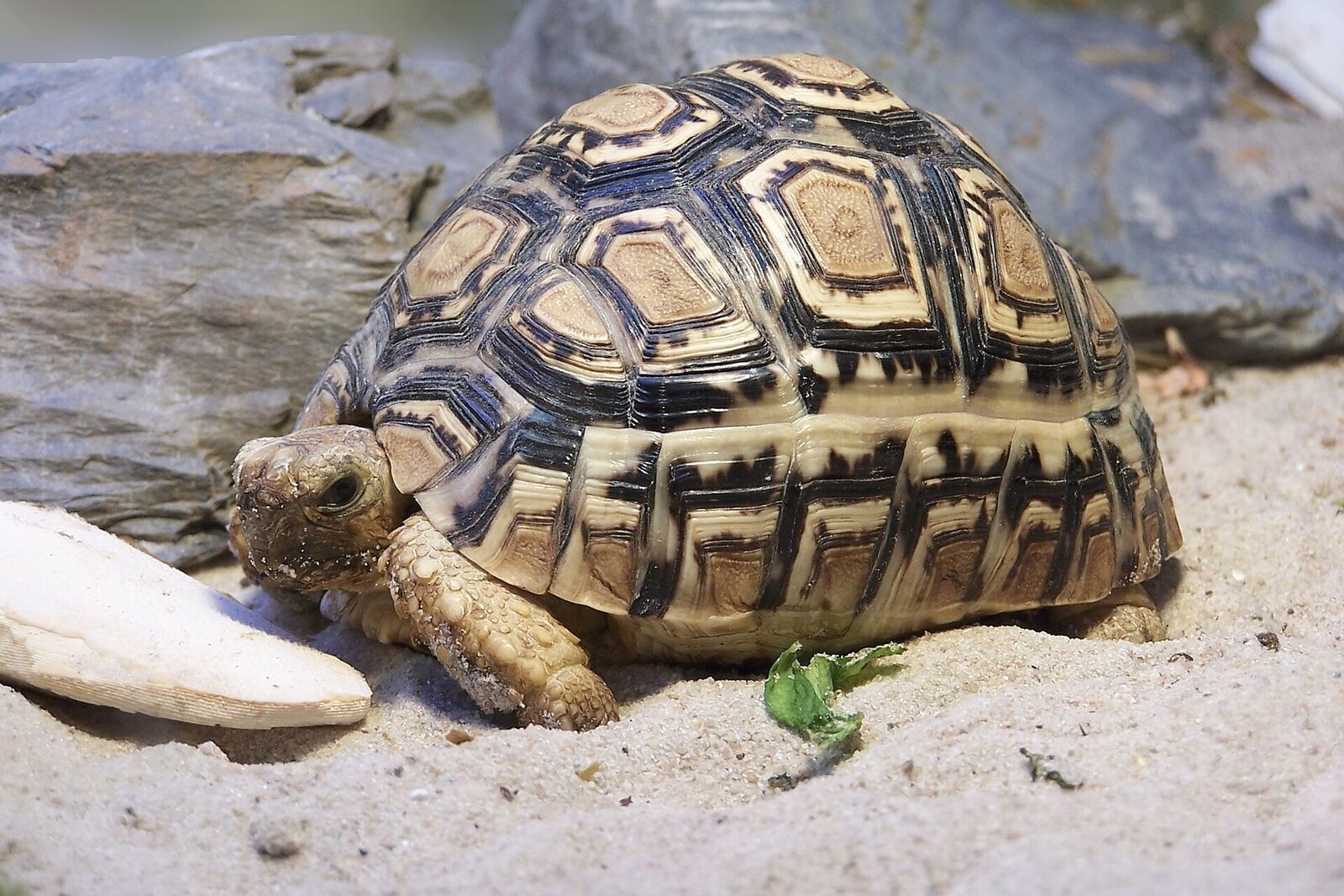
Leopard tortoise
Stigmochelys pardalis
A spotted savanna grazer.
Pet trade
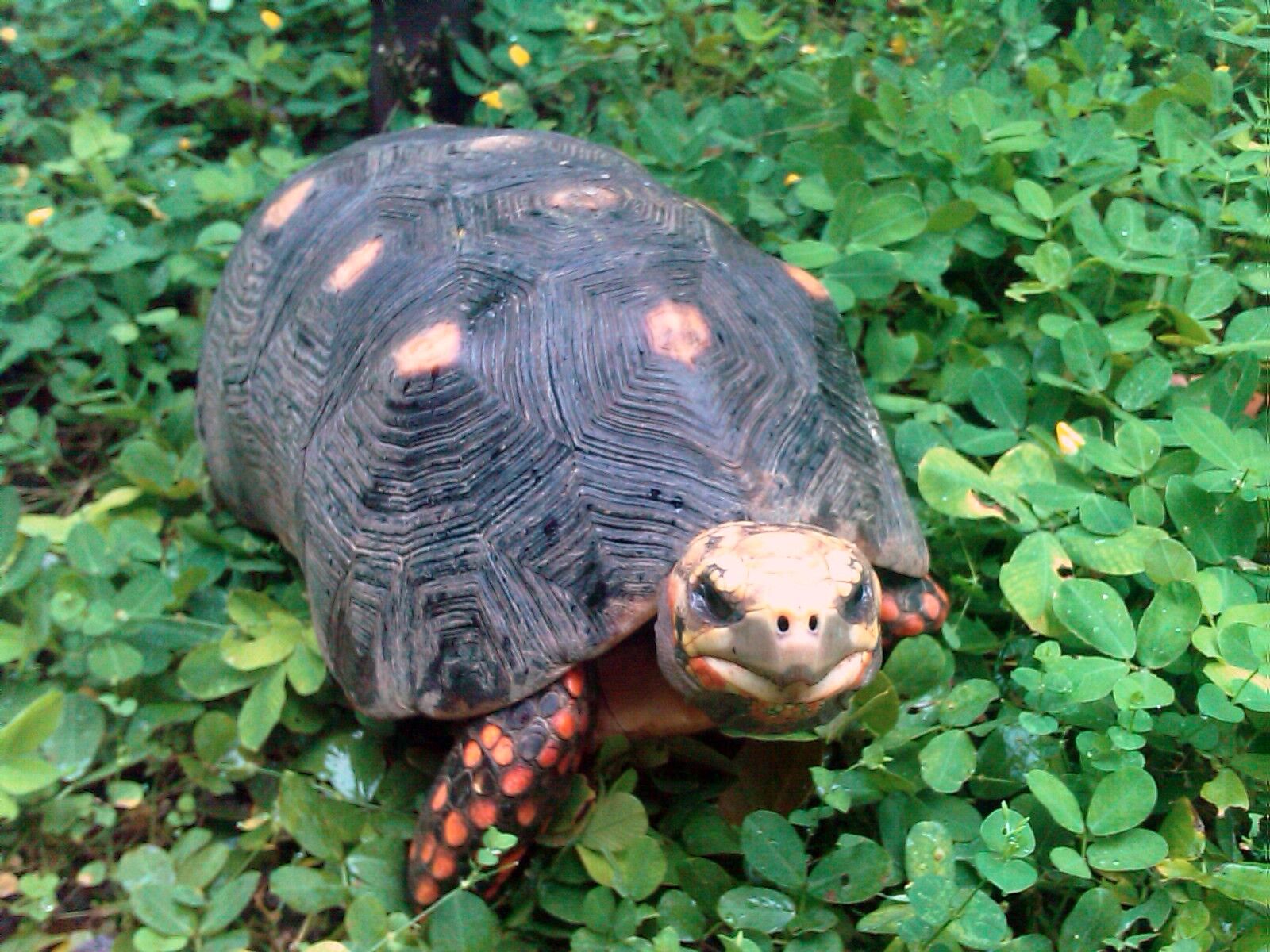
Red-footed tortoise
Chelonoidis carbonarius
A humid-forest tortoise that eats fruit.
Pet trade
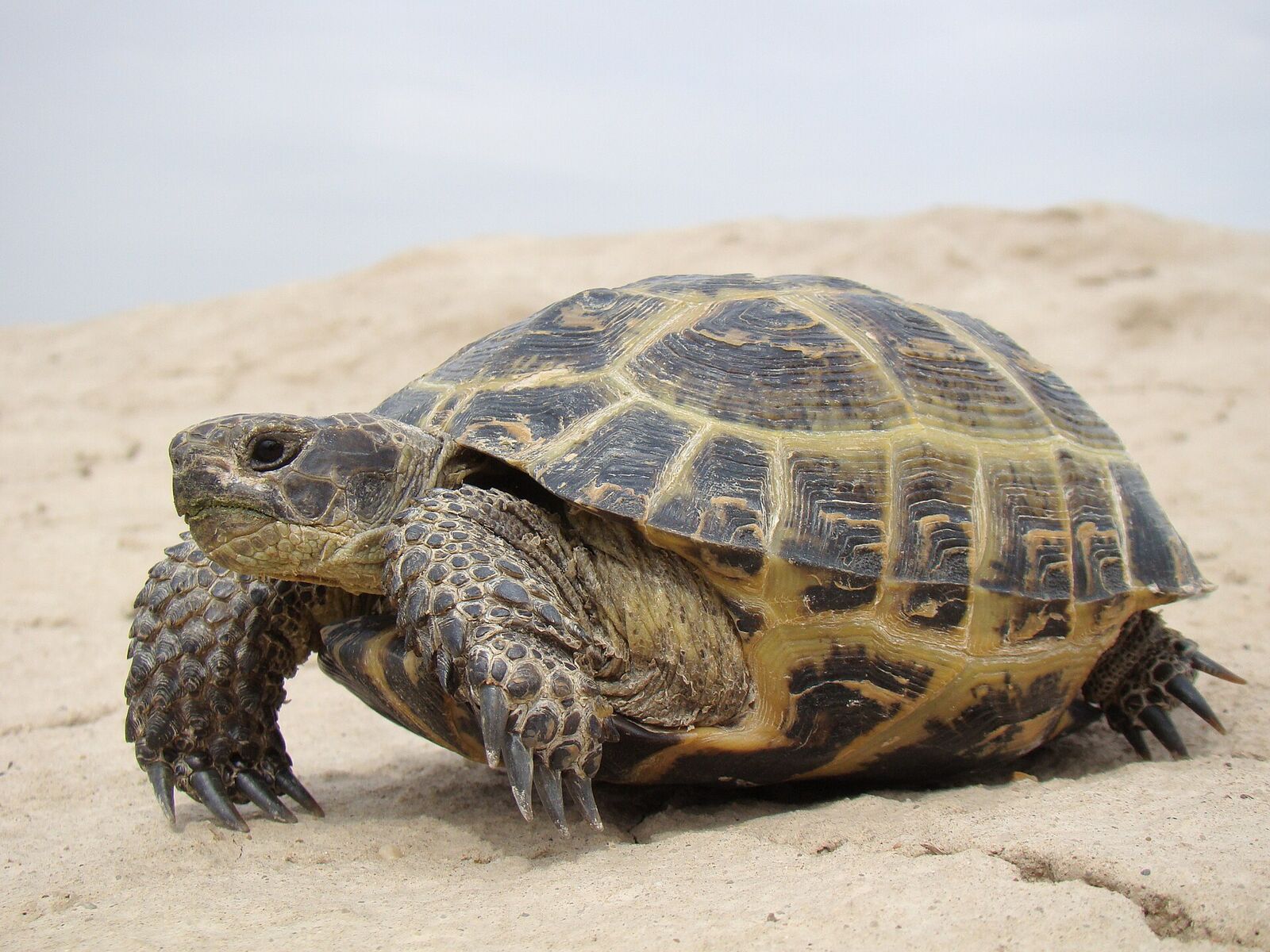
Russian tortoise
Testudo horsfieldii
Small, tough and a great first tortoise.
Pet trade
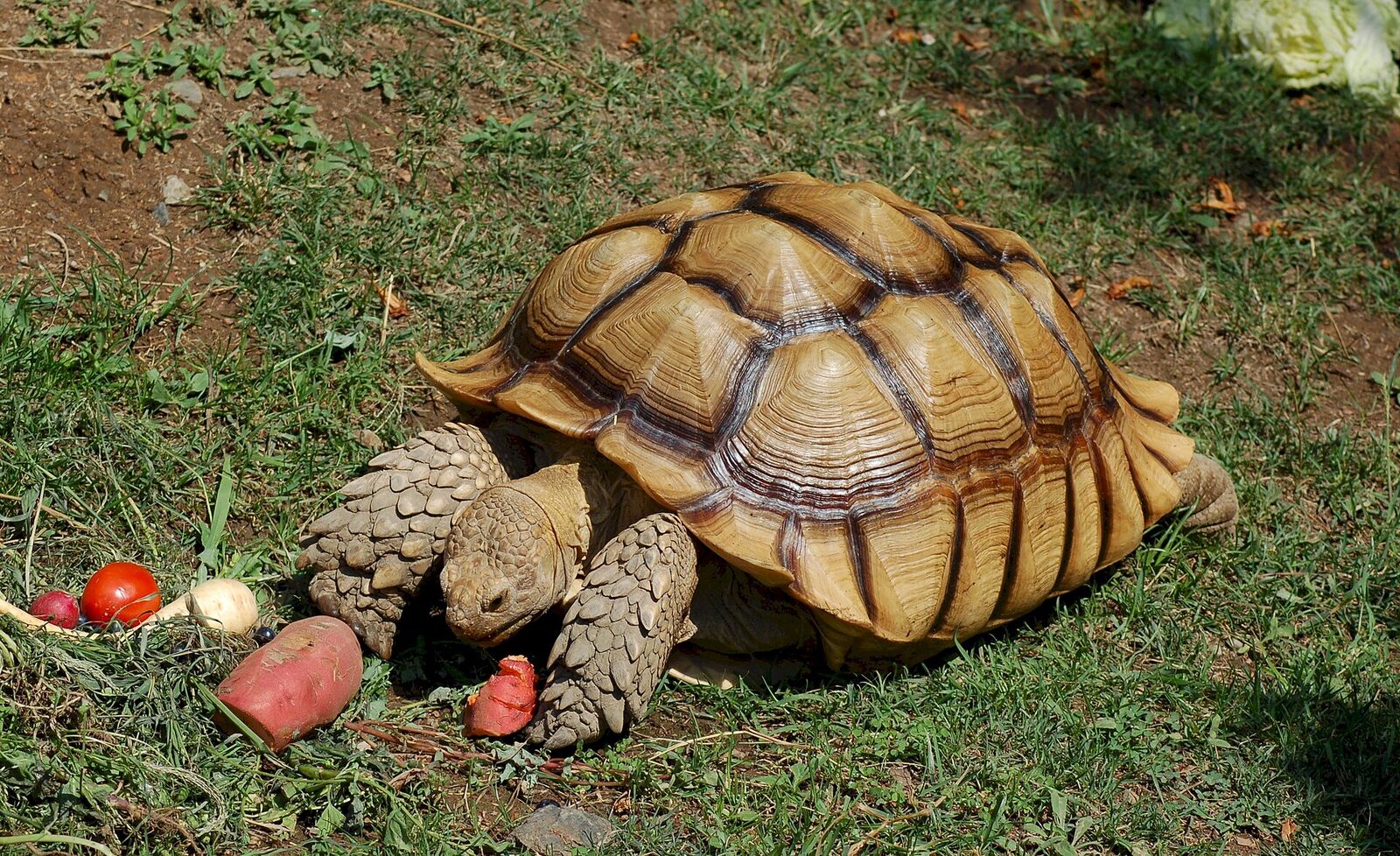
Sulcata (African spurred) tortoise
Centrochelys sulcata
The giant backyard tortoise, best adopted.
Pet trade

Angulate tortoise
Chersina angulata
Pet trade
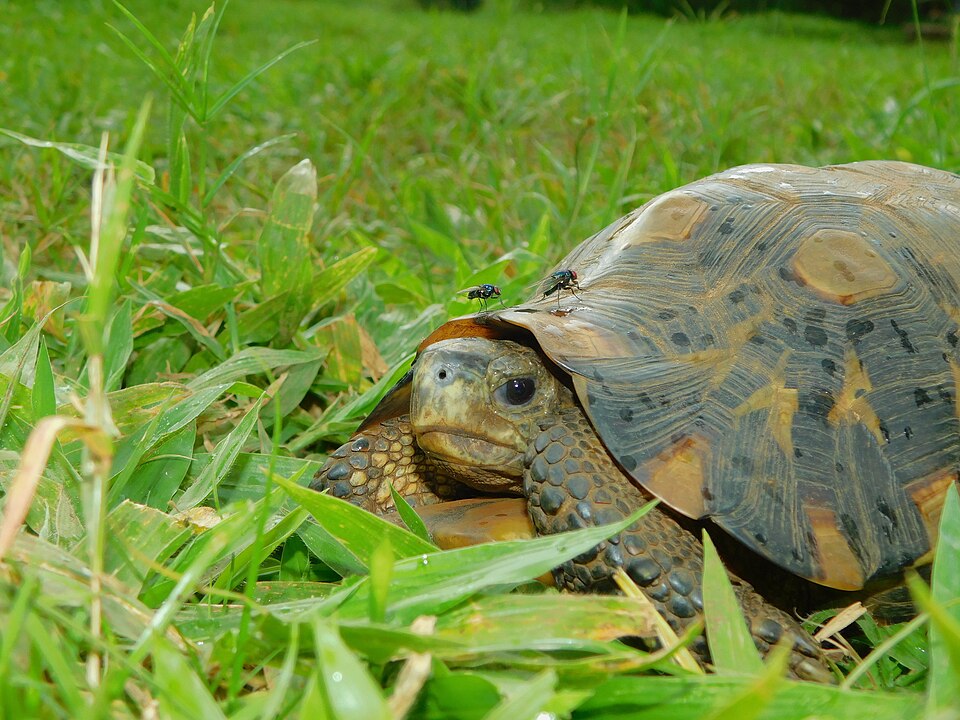
Bell's hinge-back tortoise
Kinixys belliana
Pet trade