
Home / Invertebrates / Crabs, shrimp and crayfish / Amano shrimp
No federal permit to keepAmano shrimp
Caridina multidentata
Invertebrates › Crabs, shrimp and crayfish (Decapoda) › Atyidae (Freshwater shrimp)
Caridina multidentata is a species of shrimp in the family Atyidae.
From Wikipedia: Caridina multidentata, CC BY-SA 4.0 (excerpt)

Care at a glance
Species-specific values
Values researched for this exact species. Air, surface and water temperatures are listed separately, and each source is kept as published rather than averaged.
| Water temperature | 65–82 degF Aquarium Co-Op recommendation | aquariumcoop.com |
| Water temperature alternative | 64–80 degF Aquatic Arts captive-bred stock range; middle preferred. Do not collapse differing sources into invented consensus. | aquaticarts.com |
| Water pH | 6–8 pH Aquarium Co-Op range; not transferable to all Caridina species. | aquariumcoop.com |
| Larval environment | Larvae need highly brackish/saline water; adults can be maintained in freshwater. Freshwater adult husbandry does not describe larval culture. | aquariumcoop.com |
Understanding the animal
About this animal
About this animal
It is native to Japan and Taiwan. Its common names include Yamato shrimp, Japanese shrimp, Amano shrimp, and algae shrimp.
From Wikipedia: Caridina multidentata, CC BY-SA 4.0 (excerpt)
In the wild
In the wild
| Overview | Caridina multidentata is a species of shrimp in the family Atyidae. It is native to Japan and Taiwan. Its common names include Yamato shrimp, Japanese shrimp, Amano shrimp, and algae shrimp. — From Wikipedia: Caridina multidentata, CC BY-SA 4.0 (excerpt) |
| Appearance and size | Caridina multidentata are freshwater shrimp in the family Atyidae and are commonly found in southwestern Japan. They typically grow to 25–35 mm. This species of shrimp is amphidromous. — From Wikipedia: Caridina multidentata, CC BY-SA 4.0 (excerpt) |
Read about this species in the wild at SeaLifeBase.
Sources for this sheet
- SeaLifeBase (Palomares & Pauly, eds.), version 24.07 (CC BY-NC 4.0) Peer-reviewed researchFishBase's sister database for non-fish marine and freshwater life; values are referenced.
- GBIF Backbone Taxonomy (Global Biodiversity Information Facility) (CC BY 4.0) Peer-reviewed researchInternational scientific taxonomy used here for classification. GBIF Secretariat (2023). GBIF Backbone Taxonomy. Checklist dataset https://doi.org/10.15468/39omei, accessed via GBIF.org.
- Wikipedia (species article) (CC BY-SA 4.0) Community referenceFree encyclopedia; useful overviews with their own citations. Short excerpts are quoted under CC BY-SA 4.0, each credited with a link to its article.
- iNaturalist (captive observations) Community referenceCommunity observation platform run by the California Academy of Sciences and National Geographic; observations marked captive show animals living in homes, zoos and aquariums.
More freshwater shrimp

Bamboo shrimp
Atyopsis moluccensis
Aquarium hobby

Cherry shrimp
Neocaridina davidi
Aquarium hobby

Crystal red (bee) shrimp
Caridina cantonensis
Aquarium hobby

Neocaridina denticulata
Neocaridina denticulata
Aquarium hobby
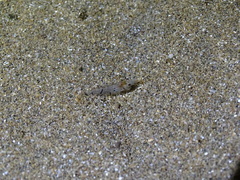
Neocaridina ketagalan
Neocaridina ketagalan
Aquarium hobby

Vampire shrimp
Atya gabonensis
Aquarium hobby