
Home / Reptiles / Snakes / Boidae / Amazon tree boa
No federal permit to keepAmazon tree boa
Corallus hortulana
Reptiles › Snakes (Serpentes) › Boidae (Boas)
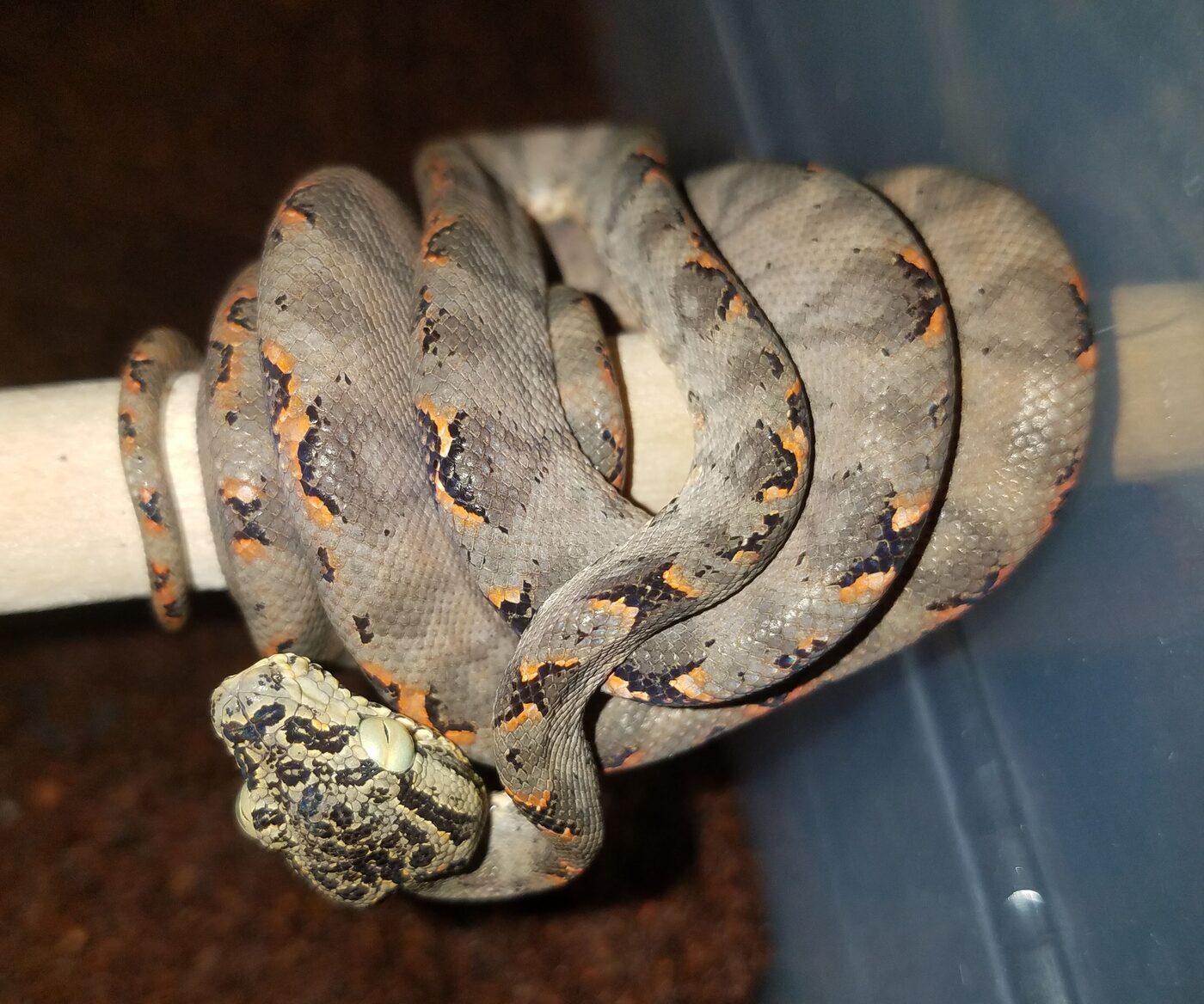
Corallus hortulana, previously known as Corallus hortulanus, and commonly known as the Amazon tree boa, common tree boa, garden tree boa, and macabrel, is a boa species found in South America.
From Wikipedia: Corallus hortulana, CC BY-SA 4.0 (excerpt)
Care at a glance
Species-specific values
Values researched for this exact species. Air, surface and water temperatures are listed separately, and each source is kept as published rather than averaged.
| Basking surface temperature | 88–93 °F Source: reptilesmagazine.com | |
| Warm side air temperature | 82–85 °F Source: reptilesmagazine.com | |
| Humidity | 40–70 % Source: reptilesmagazine.com | |
| Diet | Most Amazon tree boas, including neonates, readily eat domestic rodents. Source: reptilesmagazine.com | |
| Feeding frequency | Adults: a moderate-sized meal every 10 to 14 days; neonates and growing juveniles: every seven days until subadults. Source: reptilesmagazine.com | |
| Substrate | Naturalistic substrate may use mulch, coconut fiber, leaf litter, or a combination; avoid cedar. Newspaper is an option for sterile enclosures. Source: reptilesmagazine.com |
Understanding the animal
About this animal
About this animal
Previously, there were two recognized subspecies, Corallus hortulanus, and Corallus hortulanus cooki, though the species has undergone taxonomic revision and has been broken up into several species. It is primarily nocturnal and arboreal, though it has been observed feeding and reproducing on the ground.
From Wikipedia: Corallus hortulana, CC BY-SA 4.0 (excerpt)
In the wild
In the wild
| Overview | Corallus hortulana, previously known as Corallus hortulanus, and commonly known as the Amazon tree boa, common tree boa, garden tree boa, and macabrel, is a boa species found in South America. Previously, there were two recognized subspecies, Corallus hortulanus, and Corallus hortulanus cooki, though the species has undergone taxonomic revision and has been broken up into several species. It is primarily nocturnal and arboreal, though it has been observed feeding and reproducing on the ground. Like all boas, it is non-venomous. — From Wikipedia: Corallus hortulana, CC BY-SA 4.0 (excerpt) |
| Where it lives | Corallus hortulana lives in the Guianas, Amazonia, and southeastern Brazil (to the Tropic of Capricorn). Amazon tree boas are found in a wide variety of habitats. They are common in arboreal regions with high humidity, especially Amazon rainforest. — From Wikipedia: Corallus hortulana, CC BY-SA 4.0 (excerpt) |
| Wild diet | Like all other Boidae, Amazon Tree Boas feed by constricting whole, live prey. They have long teeth which help it to catch potentially flying prey while in trees. The diet is described as being "very euryphagic", which means it consumes a wide variety of prey. — From Wikipedia: Corallus hortulana, CC BY-SA 4.0 (excerpt) |
| Reproduction | Amazon Tree Boas, like other Boas are ovoviparous, which means they give birth to live young. The reproductive season of Corallus hortulana can vary between locations, and has variously been attributed to food availability and seasonal conditions. — From Wikipedia: Corallus hortulana, CC BY-SA 4.0 (excerpt) |
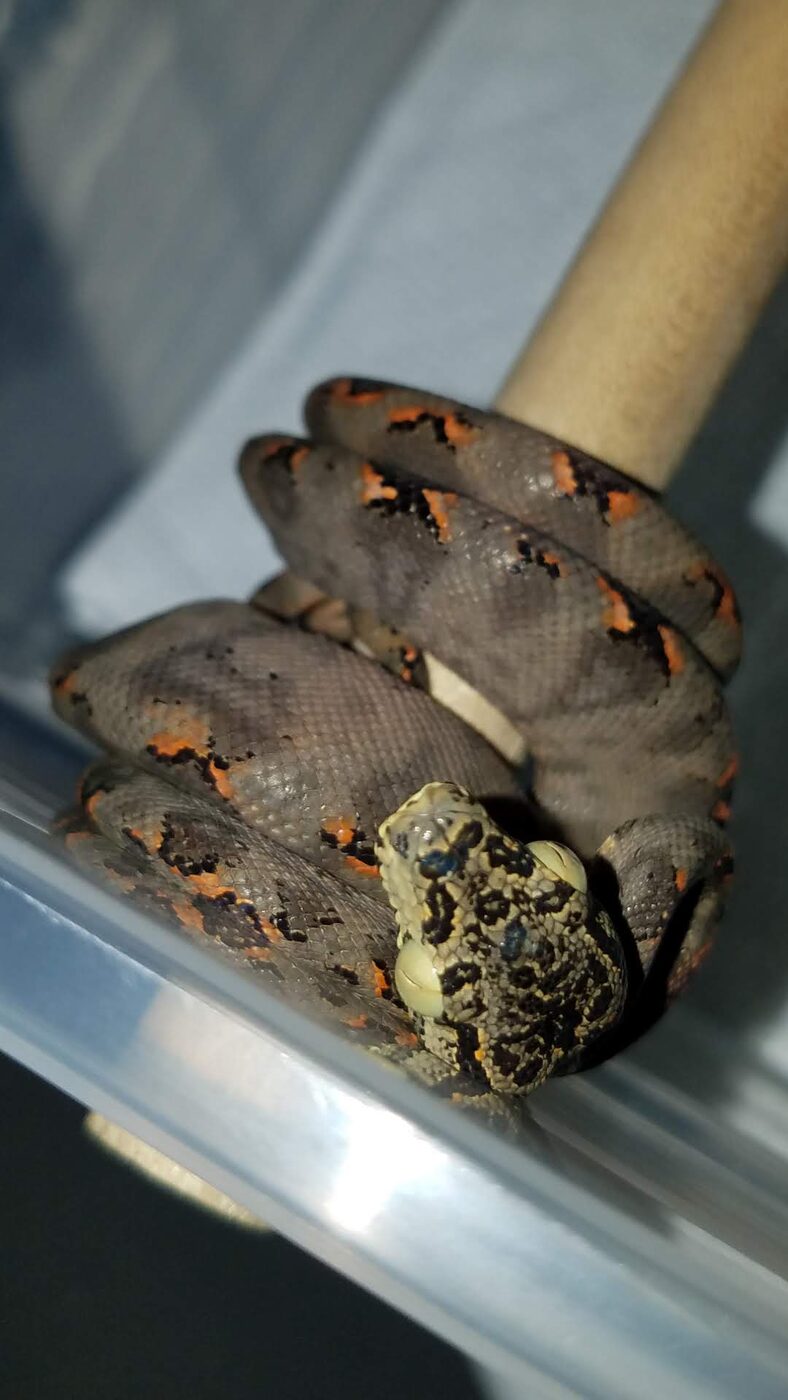
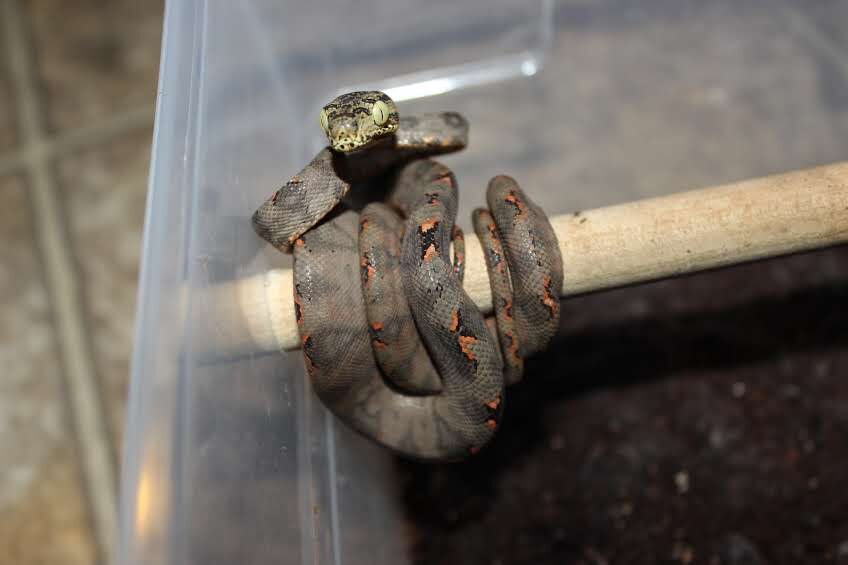
| Appearance and size | Adults grow to an average of 5 and 6.5 feet (1.5–2 m). This species exhibits an array of colors and patterns. The basic color can be anywhere from black, brown, or gray, to any shade of red, orange, yellow, or many colors in between. — From Wikipedia: Corallus hortulana, CC BY-SA 4.0 (excerpt) |
Native climate (measured)
Native climate (measured)
| Warm-season highs | about 89°F (up to 92°F in the hottest sampled areas) |
| Cool-season lows | about 70°F (down to 63°F in the coldest sampled areas) |
| Average temperature | 77–81°F across sampled records |
| Relative humidity | 79–85% on average (driest month about 79%) |
| Rainfall | about 2556 mm a year |
Measured at 127 wild occurrence records sampled against WorldClim 2.1 climate data (1970–2000 averages). Air conditions in the range are ecological context, not enclosure settings: microhabitats such as burrows, leaf litter or basking rocks can be cooler, warmer or more humid.
More photos
Data and studies
Care articles for this species
Care articles for this species
- Amazon Tree Boa Care Tips (Reptiles Magazine)
- Expert Care For Amazon Tree Boas (Reptiles Magazine)
Written by keepers, breeders and vets Reptiles MagazineReptiFiles
Sources for this sheet
- The Reptile Database Peer-reviewed researchScientist-curated catalog of every reptile species, with taxonomy and literature.
- GBIF Backbone Taxonomy (Global Biodiversity Information Facility) (CC BY 4.0) Peer-reviewed researchInternational scientific taxonomy used here for classification. GBIF Secretariat (2023). GBIF Backbone Taxonomy. Checklist dataset https://doi.org/10.15468/39omei, accessed via GBIF.org.
- Wikipedia (species article) (CC BY-SA 4.0) Community referenceFree encyclopedia; useful overviews with their own citations. Short excerpts are quoted under CC BY-SA 4.0, each credited with a link to its article.
- iNaturalist (captive observations) Community referenceCommunity observation platform run by the California Academy of Sciences and National Geographic; observations marked captive show animals living in homes, zoos and aquariums.
- Reptiles Magazine (care articles) Experienced keeper or breederEstablished reptile and amphibian hobby magazine; care articles are written by breeders, keepers and veterinarians.
More boas
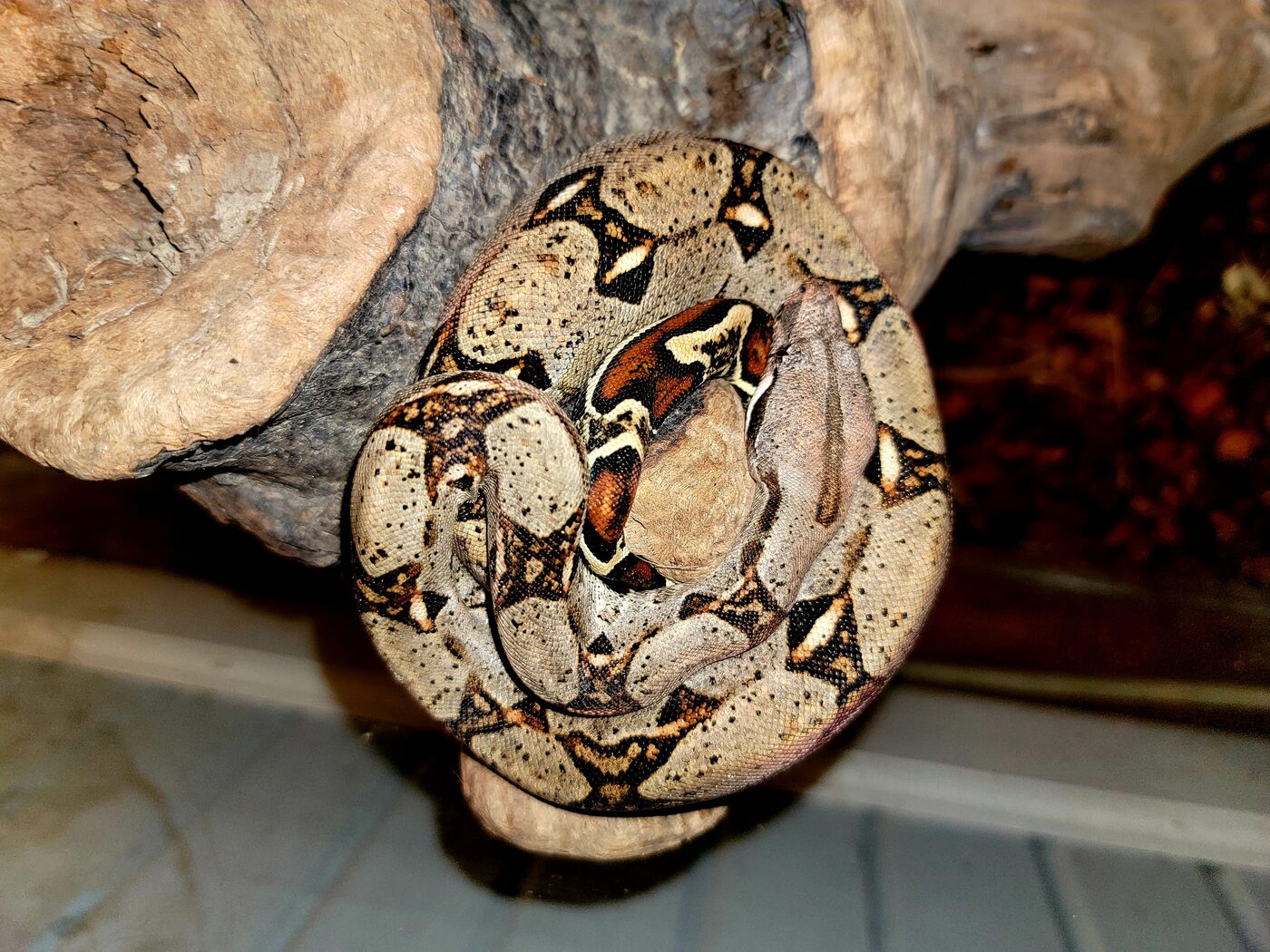
Common boa constrictor (red-tailed boa)
Boa constrictor
A powerful but famously steady big snake.
Pet trade
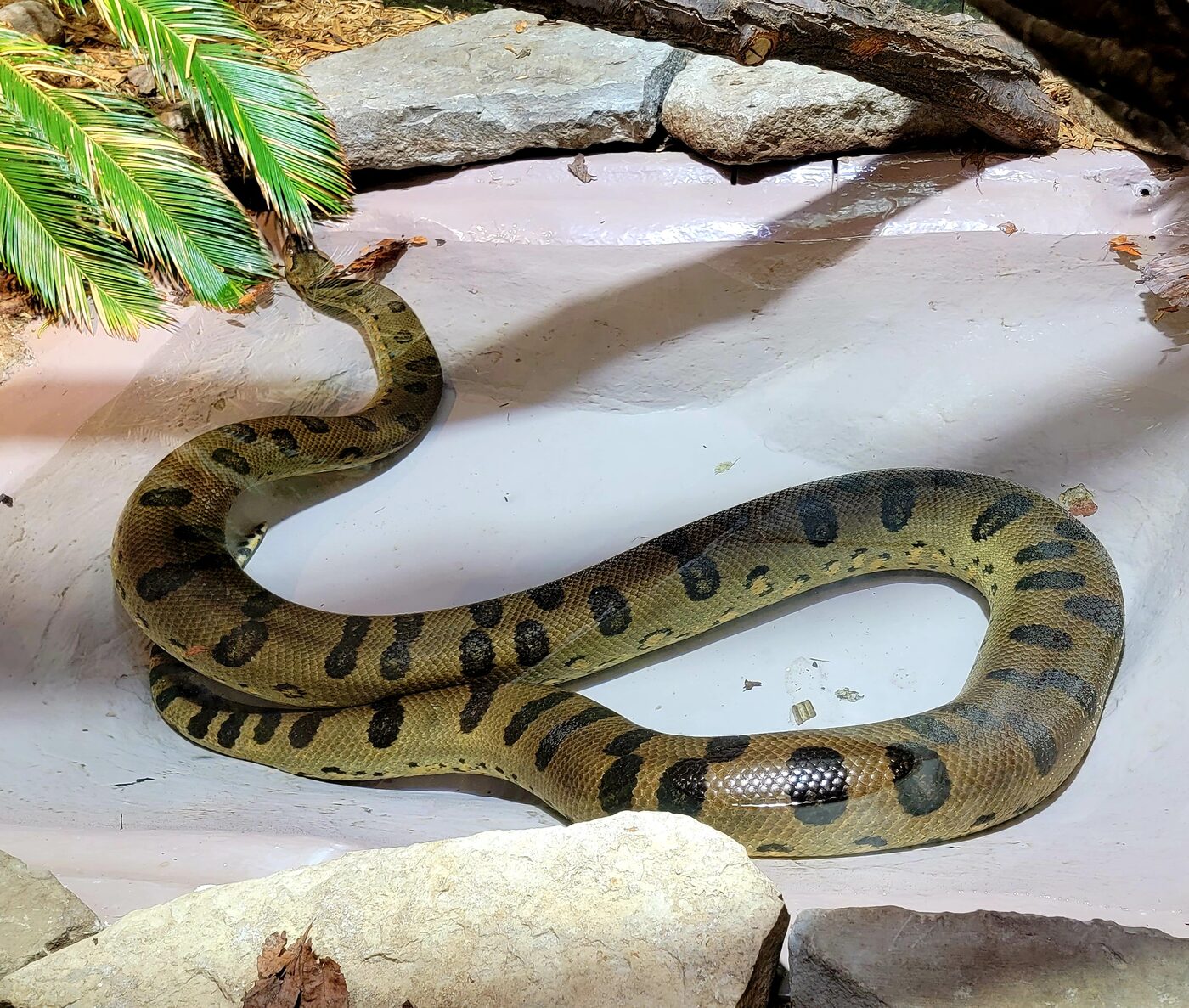
Green anaconda
Eunectes murinus
The heaviest snake on Earth, at home in the water.
Pet trade

Amazon basin emerald tree boa
Corallus batesii
Pet trade

Annulated tree boa
Corallus annulatus
Pet trade

Arabian sand boa
Eryx jayakari
Pet trade

Argentine rainbow boa
Epicrates alvarezi
Pet trade