
Home / Amphibians / Salamanders and newts / Blue-spotted salamander
Federal restrictions applyBlue-spotted salamander
Ambystoma laterale
Amphibians › Salamanders and newts (Caudata) › Ambystomatidae (Axolotls and mole salamanders)
The blue-spotted salamander (Ambystoma laterale) is a mole salamander native to the Great Lakes states and northeastern United States, and parts of Ontario and Quebec in Canada.
From Wikipedia: Blue-spotted salamander, CC BY-SA 4.0 (excerpt)

Care at a glance
Species-specific values
Values researched for this exact species. Air, surface and water temperatures are listed separately, and each source is kept as published rather than averaged.
| Minimum enclosure | A single adult can be housed in a 40-litre (10-gallon) terrarium. Source: vetverified.com | |
| Warm side air temperature | 59–68 °F (15–20 °C) Source: vetverified.com | |
| Cool side air temperature | Avoid temperatures above 22°C (72°F). Source: vetverified.com | |
| Humidity | 70–85 % Source: vetverified.com | |
| Uvb lighting | UVB lighting is optional and can support plant growth in bioactive enclosures. Source: vetverified.com | |
| Diet | Offer small earthworms, nightcrawlers, crickets, black soldier fly larvae, isopods, springtails, small roaches, and occasional waxworms or mealworms. Source: vetverified.com | |
| Feeding frequency | Feed juveniles daily or every other day; adults 2–3 times per week. Source: vetverified.com | |
| Social housing | Communal housing is possible with sufficient space and multiple hides per individual. Source: vetverified.com | |
| Substrate | Use a 7–10 cm deep layer of moisture-retentive, burrow-friendly substrate. Source: vetverified.com |
Warnings
Understanding the animal
About this animal
About this animal
Their range is known to extend to James Bay to the north, and southeastern Manitoba to the west. Blue-spotted salamanders include unisexual lineages that can reproduce without fertilization (gynogenesis).
From Wikipedia: Blue-spotted salamander, CC BY-SA 4.0 (excerpt)
In the wild
In the wild
| Overview | The blue-spotted salamander (Ambystoma laterale) is a mole salamander native to the Great Lakes states and northeastern United States, and parts of Ontario and Quebec in Canada. Their range is known to extend to James Bay to the north, and southeastern Manitoba to the west. Blue-spotted salamanders include unisexual lineages that can reproduce without fertilization (gynogenesis). — From Wikipedia: Blue-spotted salamander, CC BY-SA 4.0 (excerpt) |
Read about this species in the wild at Animal Diversity Web.
Native climate (measured)
Native climate (measured)
| Warm-season highs | about 77°F (up to 83°F in the hottest sampled areas) |
| Cool-season lows | about 4°F (down to -11°F in the coldest sampled areas) |
| Average temperature | 34–48°F across sampled records |
| Relative humidity | 74–81% on average (driest month about 65%) |
| Rainfall | about 876 mm a year, spread fairly evenly |
| Winters | Cool to cold winters (lows around 4°F) in much of its native range. Seasonal slowdown may be relevant, but species-specific biology determines whether brumation or hibernation occurs. |
Measured at 1063 wild occurrence records sampled against WorldClim 2.1 climate data (1970–2000 averages). Air conditions in the range are ecological context, not enclosure settings: microhabitats such as burrows, leaf litter or basking rocks can be cooler, warmer or more humid.
Sources for this sheet
- 50 CFR Part 16: Injurious wildlife (Lacey Act) Zoo, university or veterinaryCurrent federal regulation, read from eCFR.
- U.S. Association of Reptile Keepers v. Zinke (D.C. Cir. 2017) Zoo, university or veterinaryAppeals ruling that the Lacey Act's shipping ban does not cover moves between the continental states.
- AmphibiaWeb (University of California, Berkeley) (CC BY-NC) Peer-reviewed researchUniversity-hosted database of amphibian biology and conservation.
- GBIF Backbone Taxonomy (Global Biodiversity Information Facility) (CC BY 4.0) Peer-reviewed researchInternational scientific taxonomy used here for classification. GBIF Secretariat (2023). GBIF Backbone Taxonomy. Checklist dataset https://doi.org/10.15468/39omei, accessed via GBIF.org.
- Wikipedia (species article) (CC BY-SA 4.0) Community referenceFree encyclopedia; useful overviews with their own citations. Short excerpts are quoted under CC BY-SA 4.0, each credited with a link to its article.
- iNaturalist (captive observations) Community referenceCommunity observation platform run by the California Academy of Sciences and National Geographic; observations marked captive show animals living in homes, zoos and aquariums.
More axolotls and mole salamanders
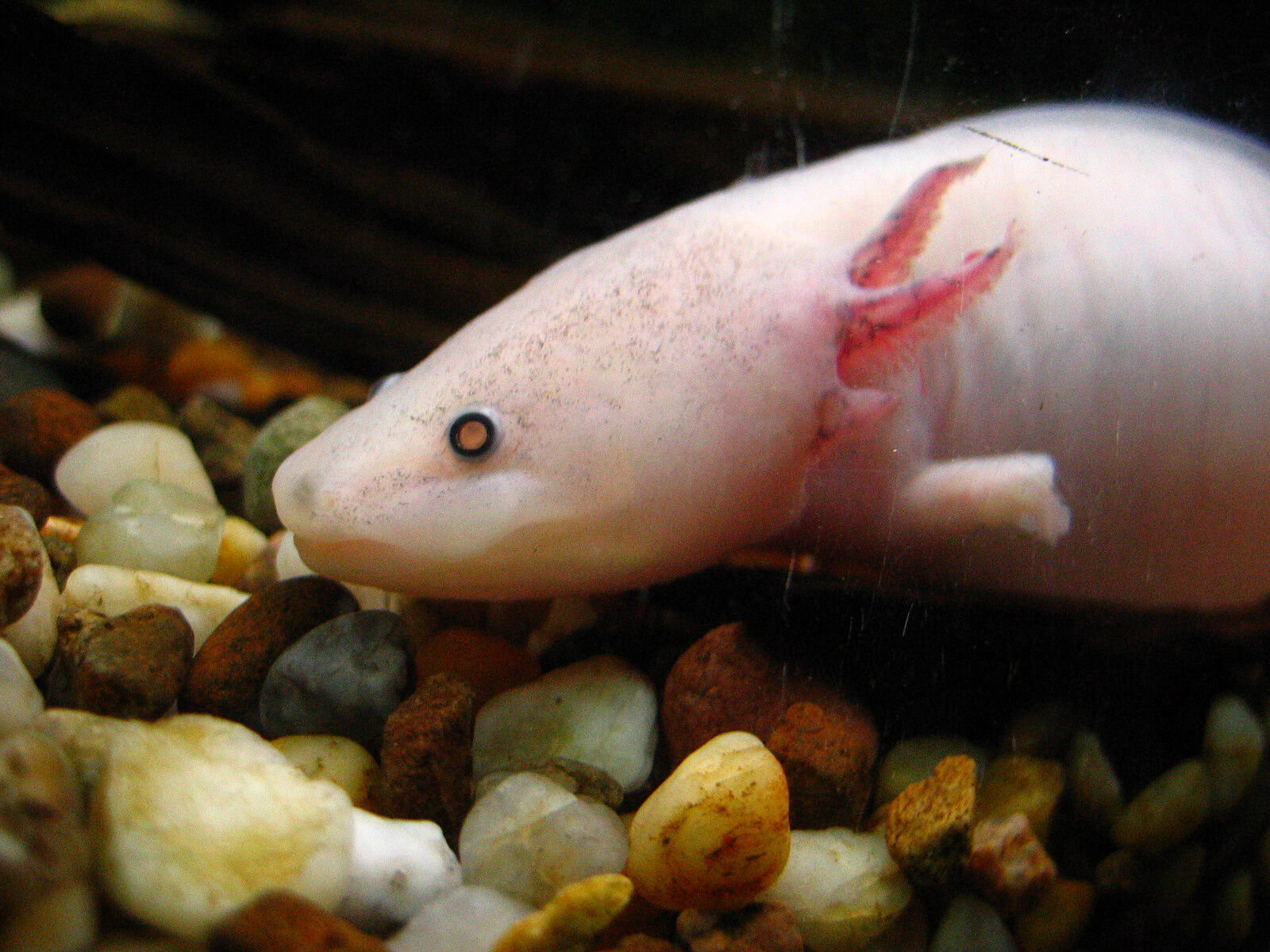
Axolotl
Ambystoma mexicanum
The forever-young salamander that regrows its limbs.
Pet trade
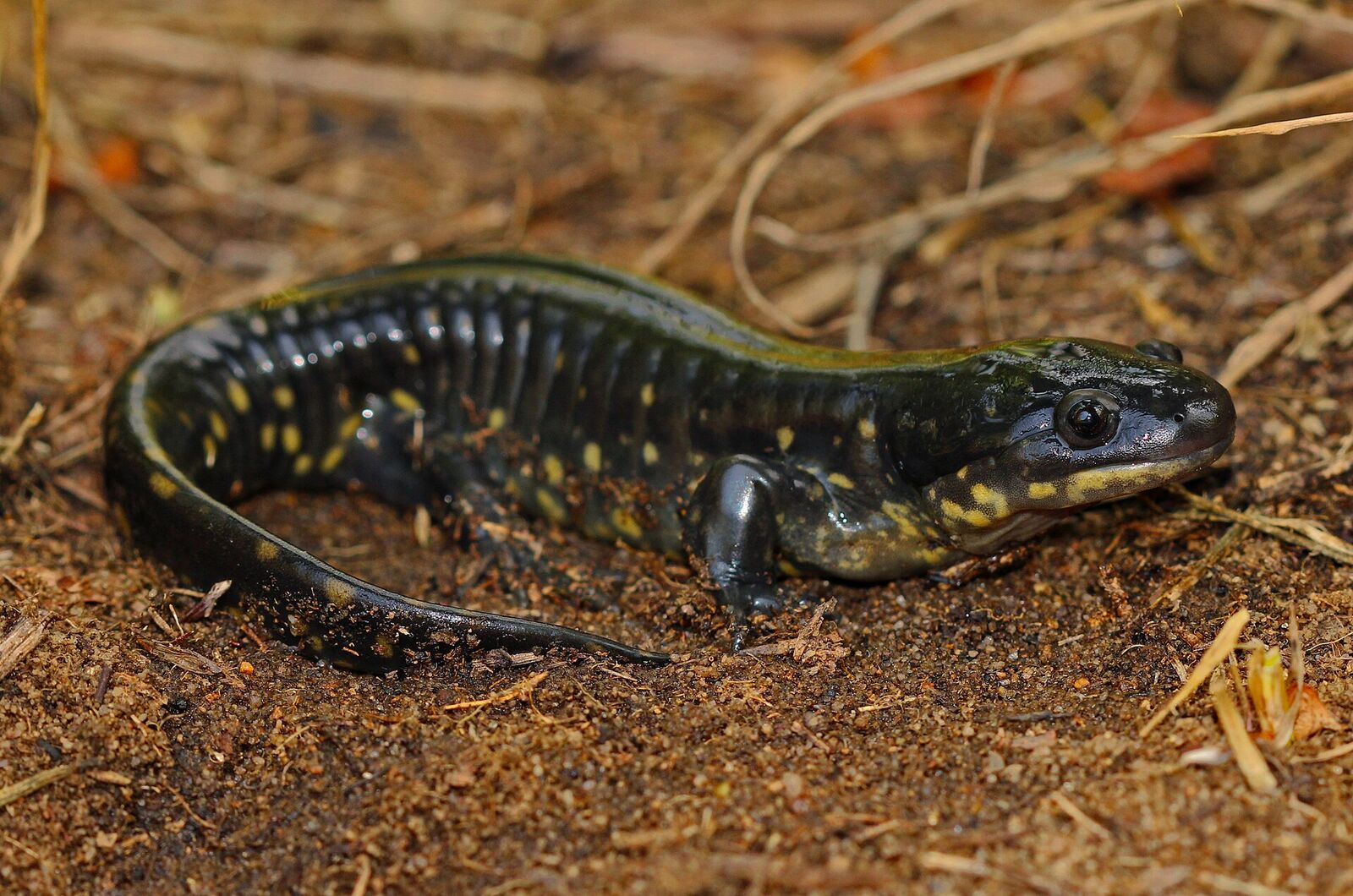
Eastern tiger salamander
Ambystoma tigrinum
A big, burrowing salamander with a big appetite.
Pet trade

Barred tiger salamander
Ambystoma mavortium
Pet trade

Lake Patzcuaro salamander
Ambystoma dumerilii
Pet trade

Marbled salamander
Ambystoma opacum
Pet trade

Spotted salamander
Ambystoma maculatum
Pet trade