Home / Fishes / Killifish and livebearers / Anatolian giant killifish
No federal permit to keepAnatolian giant killifish
Anatolichthys anatoliae
Fishes › Killifish and livebearers (Cyprinodontiformes) › Aphaniidae (Aphanius killifish)
Anatolichthys anatoliae, commonly known as the Anatolian giant killifish or Laz Tuz killifish, is a species of fish in the family Aphaniidae that is endemic to Central Anatolia, Turkey.
Care at a glance
Species-specific aquarium care
- Tank: At least 24 in long and 12 in front to back for one adult (adults commonly reach about 2.2 in / 5.57 cm).
- Water: Freshwater.
- Temperature: 50–77°F (range recorded for this species).
- Layout: Uses both the bottom and open water: give open swimming space plus cover near the substrate.
Calculated from this species' own FishBase record: tank size from its typical adult length and swimming zone, water values from its recorded ranges. The group guide below fills in general care.
Care guide
Species care notes
- Tank: a base of at least 47 × 12 in (roughly 29 US gallons); space needed is rated “large tank”.
- Water: a fairly wide range, from slightly acidic to slightly alkaline, 36–86 °F, pH 7–8.5, 10–30 dGH.
- Behaviour: a shoaling fish best kept in a group of six or more.
- Difficulty: Moderate (Seriously Fish rating).
Short excerpts from the species profile:
- Setup: “Even for long-term maintenance a simple set-up will suffice.”
- Diet: “Anatolichthys species are basically micropredators feeding on small aquatic crustaceans, worms, insect larvae and other zooplankton although algae and other plant material is also taken at times.”
- Tankmates: “Its particular water requirements and aggressive spawning behaviour make A.”
- Breeding: “Captive reproduction is not difficult if the tank or container is properly arranged and maintained (see 'tank set-up').”
From the Seriously Fish profile for this species, which has the full habitat, maintenance, diet, behaviour and breeding write-up 167
Aphanius killifish
Applies to most species in this group. Habitat: These toothcarps occupy vegetated Mediterranean coastal lagoons and inland Anatolian springs, streams and lake margins with locality-dependent salinity (fasciatus, anatoliae). Individual species can differ, so compare with the species numbers above and the linked sources.
Housing & setup
- For fasciatus/anatoliae groups use a footprint of at least 120 × 30 cm; fasciatus pairs/trios can use 60 × 30 cm (fasciatus, anatoliae).
- Fill substantial space with spawning mops or fine-leaved plants to break male sightlines (fasciatus, anatoliae).
- Provide hard alkaline water: fasciatus pH 7.5–9.0, anatoliae 7.0–8.5; both 10–30 dGH (fasciatus, anatoliae).
- Set salinity from collection locality, rather than treating every population as freshwater (fasciatus, anatoliae).
- Use gentle filtration for anatoliae and preserve a seasonal cool winter period (anatoliae).
Diet
- Live or frozen Artemia and Daphnia (fasciatus, anatoliae).
- Bloodworms (fasciatus, anatoliae).
- Spirulina-containing dried food and filamentous algae (fasciatus, anatoliae).
Social life
- Maintain species/locality breeding groups, with two or three females per male for anatoliae and refuges from dominant males (anatoliae).
Health watch
- Ammonia toxicity from inadequate biofiltration (fish_health).
- Parasitic skin and gill infections (fish_health).
- Nutritional deficiencies from unsuitable diets (fish_health).
Understanding the animal
About this animal
About this animal
It occupies clear, well-oxygenated running freshwaters and pools around Lake Tuz, the Lake Beyşehir basin, and regions extending from Konya eastward to Niğde. The species faces significant conservation pressures, and the International Union for Conservation of Nature (IUCN) lists it as Near Threatened, primarily due to habitat degradation from groundwater extraction, agricultural water use, and the desiccation of natural springs.
Quoted from the Wikipedia article “Anatolichthys anatoliae” (CC BY-SA 4.0) 174
In the wild
In the wild
From this species’ own FishBase record (habitat, bottom type, water and breeding data), not its family. Good care copies these conditions.1
| Where it lives | Lives in freshwater. Uses both the bottom and open water. Requires clear, well-oxygenated and, if possible running, water. Is threatened due to pollution. |
| Water it lives in | Freshwater, 50–77 °F (10–25 °C). |
| Climate | Temperate climate. |
| Behavior to plan for | Breeding: open water/substratum egg scatterers. |
What this means for care
- Keep water within its wild range, 50–77 °F.
Native climate (measured)
Native climate (measured)
| Warm-season highs | about 85°F (up to 87°F in the hottest sampled areas) |
| Cool-season lows | about 23°F (down to 22°F in the coldest sampled areas) |
| Average temperature | 51–52°F across sampled records |
| Relative humidity | 60–64% on average (driest month about 46%) |
| Rainfall | about 424 mm a year |
| Winters | Cool to cold winters (lows around 23°F) in much of its native range. Seasonal slowdown may be relevant, but species-specific biology determines whether brumation or hibernation occurs. |
Measured at 22 wild occurrence records sampled against WorldClim 2.1 climate data (1970–2000 averages). Air conditions in the range are ecological context, not enclosure settings: microhabitats such as burrows, leaf litter or basking rocks can be cooler, warmer or more humid.
From the sources
From the sources
Quoted from the matching sections of reputable sources for this exact species. Specialist databases are used first; Wikipedia (community-edited, CC BY-SA 4.0) only fills gaps. Other sources are short credited quotes.
| Overview | Anatolichthys anatoliae, commonly known as the Anatolian giant killifish or Laz Tuz killifish, is a species of fish in the family Aphaniidae that is endemic to Central Anatolia, Turkey. It occupies clear, well-oxygenated running freshwaters and pools around Lake Tuz, the Lake Beyşehir basin, and regions extending from Konya eastward to Niğde. — Wikipedia (community-edited) |
| Where it lives | Home ranges Population dynamics Growth parameters Max. ages / sizes Length-weight rel. Length-frequencies Mass conversion Recruitment Abundance Life cycle Reproduction Maturity Maturity/Gills rel. — FishBase |
| Wild diet | In Lake Eğirdir, A. anatoliae typically live in areas near the surface (dorsa zone) and feed on both bottom-dwelling (benthic) and open-water (pelagic) sources. Their main diet includes Gammarus pulex (a type of freshwater shrimp, diatoms (from the Bacillariophyta group), and aquatic insects. — Wikipedia (community-edited) |
| Reproduction | Because A. anatoliae remains poorly described in scientific literature, its reproductive biology and behavior are not well understood. To provide context, researchers often refer to better-studied relatives within the family Aphaniidae. One such species is Anatolichthys meridonalis, whose reproductive cycle is well documented. — Wikipedia (community-edited) |
| Appearance and size | A. anatoliae have a slightly indented forehead and a gently curved back that becomes more rounded behind the head. Their underside is mostly straight or slightly curved, and the tail base is narrow and flat. The body is flattened from side to side and is tallest around where the dorsal fin begins, with the widest part near the pectoral fins. — Wikipedia (community-edited) |
| Biology | Requires clear, well-oxygenated and, if possible running, water. Is threatened due to pollution. 15 cm TL. Not a seasonal killifish. — FishBase |
| History and naming | Although the genus Aphanius has been well-studied overall, there is limited research on the length and lifespan of individual species. Reported maximum lengths for A. anatoliae vary slightly across different populations. According to FishBase, the maximum total length is 5.0 cm, whereas a study by Schulz-Mirbach et al. (2006) documents individuals up to 5.8 cm in Lake Salda. — Wikipedia (community-edited) |
| Conservation | According to IUCN, the A. anatoliae population is decreasing, and their status is “Near Threatened”. The primary threats to A. anatoliae include water abstraction and the drying of small streams and springs. Many of the springs where the species were once found during the 20th century have already dried up, leading to the loss of several local populations. — Wikipedia (community-edited) |
Data and studies
The numbers
The numbers
Each bar is what one source reports. Where several sources weigh in, the dashed gold band marks their average.
Adult length
Maximum recorded length. Measured as total length. Fish in home aquariums often stay smaller than wild records.
Water temperature
Range the species tolerates in nature; aim for the middle.
pH
Water hardness
Minimum tank footprint
Seriously Fish recommends a tank base of at least 47 × 12 in (about 29 US gallons).
Sources for this sheet
- FishBase (Froese & Pauly, eds.), version 24.07 Peer-reviewed researchThe global scientific database on fishes, maintained by a consortium of research institutions; every value is referenced.
- Seriously Fish species profiles Experienced keeper or breederLong-running aquarium reference written and peer-checked by experienced fishkeepers and ichthyologists; each profile covers habitat, tank size, water, diet, behaviour and breeding.
- Seriously Fish: Aphanius fasciatus Experienced keeper or breederAdded in the 2026 source-checked care-guide review.
- Seriously Fish: Aphanius anatoliae Experienced keeper or breederAdded in the 2026 source-checked care-guide review.
- Merck Veterinary Manual: Disorders and Diseases of Fish Zoo, university or veterinaryAdded in the 2026 source-checked care-guide review.
- Merck Veterinary Manual: Management of Aquarium Fish Zoo, university or veterinaryAdded in the 2026 source-checked care-guide review.
- Wikipedia (species article) Community referenceFree encyclopedia; useful overviews with their own citations. Intro text is quoted under CC BY-SA 4.0.
More aphanius killifish
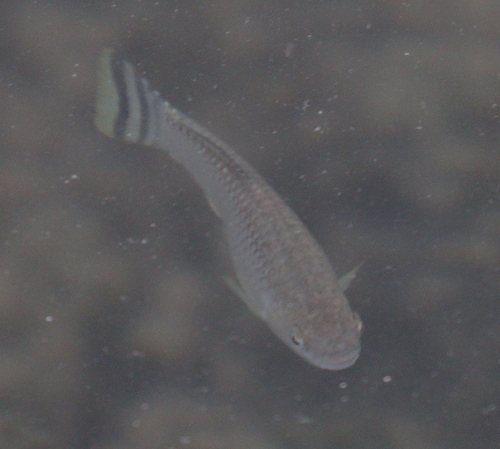
Arabian toothcarp
Aphaniops dispar
Aquarium hobby

Azraq Killifish
Aphaniops sirhani
Aquarium hobby
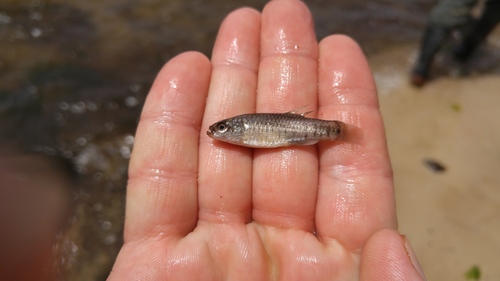
Mediterranean killifish
Aphanius fasciatus
Aquarium hobby
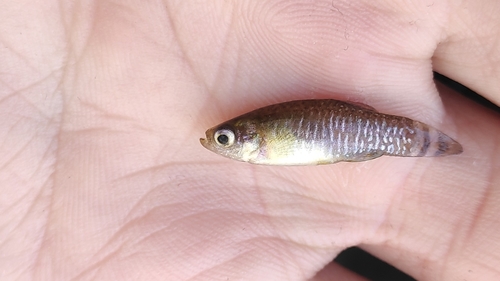
Spanish toothcarp
Apricaphanius iberus
Aquarium hobby
Acipinar killifish
Anatolichthys transgrediens
Aquarium hobby
Footless killifish
Tellia apoda
Aquarium hobby