
Home / Invertebrates / Spiders / Antilles pinktoe tarantula
Some federal rules applyAntilles pinktoe tarantula
Caribena versicolor
Invertebrates › Spiders (Araneae) › Theraphosidae (Tarantulas)
The Antilles pinktoe tarantula (Caribena versicolor), also known as the Martinique red tree spider or the Martinique pinktoe, is a species of spider belonging to the family Theraphosidae, the tarantulas.
From Wikipedia: Antilles pinktoe tarantula, CC BY-SA 4.0 (excerpt)

Care at a glance
Species-specific values
Values researched for this exact species. Air, surface and water temperatures are listed separately, and each source is kept as published rather than averaged.
| Enclosure | Arboreal vertical retreats with ample cross-ventilation; avoid stagnant, continuously wet housing. Source uses former name Avicularia versicolor. | tomsbigspiders.com |
| Humidity | Higher humidity is needed; mist every few days and add cups of water to the habitat. Source: fearnottarantulas.com | |
| Substrate | Keep substrate damp, but not soaking. Source: fearnottarantulas.com | |
| Diet | Adults take large dubia; slings take squirming prey dangled near them. Source: fearnottarantulas.com | |
| Minimum enclosure | Adults are kept in 12” x 12” x 18” enclosures; juveniles in 8” x 8” x 12”; spiderlings in 4x4x7. Source: marshallarachnids.com | |
| Warm side air temperature | 72–82 °F Source: marshallarachnids.com | |
| Diet | Adults are fed appropriately sized live dubia roaches or crickets; slings are offered food. Source: marshallarachnids.com | |
| Feeding frequency | Adults are fed every 7–14 days; slings are offered food about every 5–7 days or as needed. Source: marshallarachnids.com | |
| Substrate | Adults have 3–4 inches of tropical substrate. Source: marshallarachnids.com |
Understanding the animal
About this animal
About this animal
This species was previously placed in the genus Avicularia, C. versicolor is native to Martinique in the Caribbean Sea. Antilles pinktoe tarantulas are arboreal (tree-dwelling).
From Wikipedia: Antilles pinktoe tarantula, CC BY-SA 4.0 (excerpt)
In the wild
In the wild
| Overview | The Antilles pinktoe tarantula (Caribena versicolor), also known as the Martinique red tree spider or the Martinique pinktoe, is a species of spider belonging to the family Theraphosidae, the tarantulas. This species was previously placed in the genus Avicularia, C. versicolor is native to Martinique in the Caribbean Sea. Antilles pinktoe tarantulas are arboreal (tree-dwelling). They spin elaborate funnel webs in which they spend most of their time. — From Wikipedia: Antilles pinktoe tarantula, CC BY-SA 4.0 (excerpt) |
| Where it lives | The Antilles pinktoe tarantula is native to parts of the Lesser Antilles islands. It can be found on the island of Martinique. — From Wikipedia: Antilles pinktoe tarantula, CC BY-SA 4.0 (excerpt) |
| History and naming | Mygale versicolor was first described by Charles Athanase Walckenaer in 1837. In the description, Walckenaer used a female he said was from Guadeloupe and a male from Brazil. However, the two actually belong to different species. — From Wikipedia: Antilles pinktoe tarantula, CC BY-SA 4.0 (excerpt) |
Profile
Profile
Researched for this exact species. Sources are listed under In the wild above.
History
Mygale versicolor was first described by Charles Athanase Walckenaer in 1837. In the description, Walckenaer used a female he said was from Guadeloupe and a male from Brazil. However, the two actually belong to different species.
From Wikipedia: Antilles pinktoe tarantula, CC BY-SA 4.0 (excerpt)
Sources for this sheet
- Species+ (UNEP-WCMC and the CITES Secretariat) Zoo, university or veterinaryThe official database of species listed under CITES. UNEP (2026). The Species+ Website. Nairobi, Kenya. Compiled by UNEP-WCMC, Cambridge, UK. Available at: www.speciesplus.net. [Accessed 04/10/2026].
- USFWS International Affairs: CITES Zoo, university or veterinaryFederal agency that issues CITES permits.
- GBIF Backbone Taxonomy (Global Biodiversity Information Facility) (CC BY 4.0) Peer-reviewed researchInternational scientific taxonomy used here for classification. GBIF Secretariat (2023). GBIF Backbone Taxonomy. Checklist dataset https://doi.org/10.15468/39omei, accessed via GBIF.org.
- Wikipedia (species article) (CC BY-SA 4.0) Community referenceFree encyclopedia; useful overviews with their own citations. Short excerpts are quoted under CC BY-SA 4.0, each credited with a link to its article.
- iNaturalist (captive observations) Community referenceCommunity observation platform run by the California Academy of Sciences and National Geographic; observations marked captive show animals living in homes, zoos and aquariums.
More tarantulas
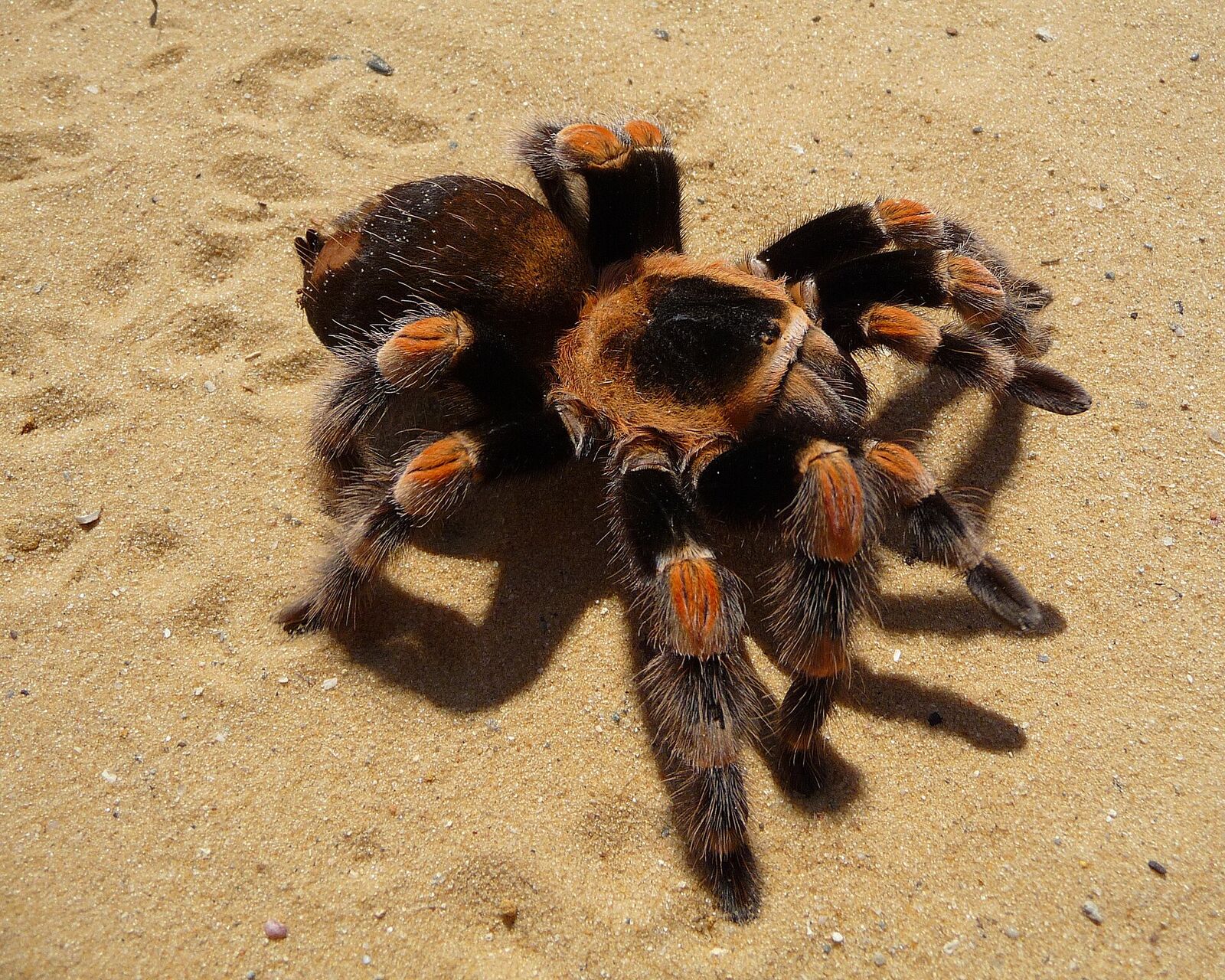
Mexican redknee tarantula
Brachypelma hamorii
A docile spider where females live 25–30 years.
Pet trade

African Horned Baboon Tarantula
Ceratogyrus darlingi
Pet trade
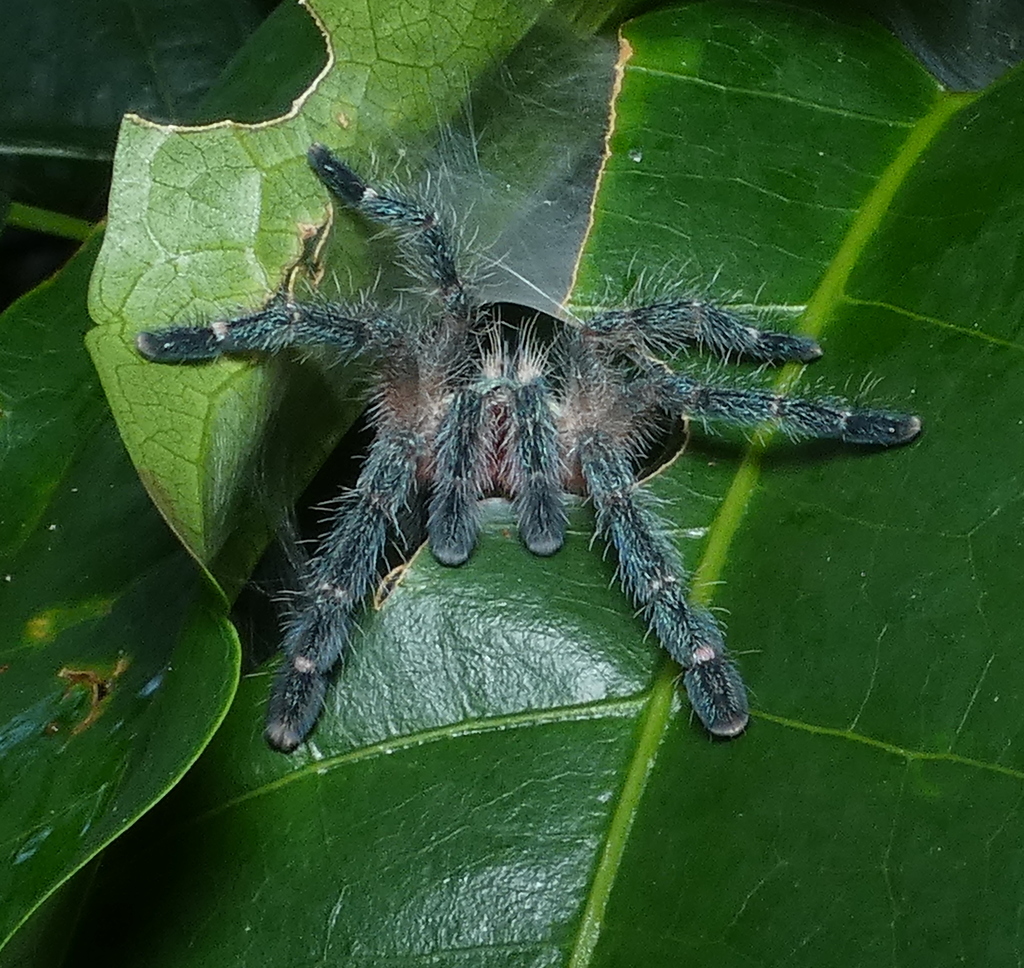
Amazon Ribbed Tarantula
Iridopelma hirsutum
Pet trade

Amula Redrump Tarantula
Brachypelma albiceps
Pet trade

Anantagiri’s Parachute Spider
Poecilotheria tigrinawesseli
Pet trade

Arizona blond tarantula
Aphonopelma chalcodes
Pet trade