
Home / Fishes / Killifish and livebearers / Argentine pearlfish
No federal permit to keepArgentine pearlfish
Austrolebias bellottii
Fishes › Killifish and livebearers (Cyprinodontiformes) › Rivulidae (New World killifish)
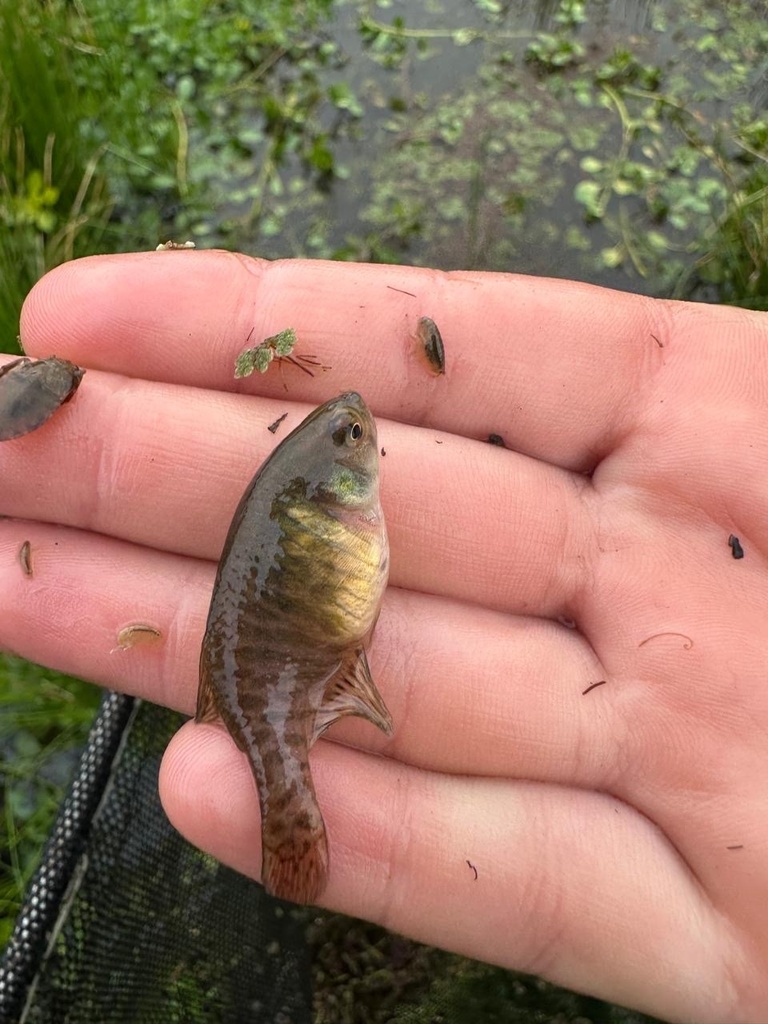
Austrolebias bellottii, the Argentine pearlfish, is a species of killifish from the family Rivulidae which occurs in the basins of the Paraná River and Uruguay River, in Argentina and Uruguay.
Care at a glance
Species-specific values
Values researched for this exact species. Air, surface and water temperatures are listed separately, and each source is kept as published rather than averaged.
| Minimum enclosure | Small tanks around 8″ × 6″ × 6″; tanks larger than 2 × 1 × 1 ft are discouraged. Source: killis.org.uk | |
| Water temperature | 44–71 °F Source: killis.org.uk | |
| Substrate | Cover the bottom with very fine peat 60–70 mm deep; peat fibre is not preferred. Source: killis.org.uk | |
| Diet | All live food is accepted; tested specimens refused dry food. Source: killis.org.uk | |
| Social housing | To get high-quality specimens, isolate males from females and limit each tank to one fish only. Source: killis.org.uk | |
| Feeding frequency | Fry should be fed well, if possible several times a day. Source: killis.org.uk | |
| Seasonal cooling | Keeping the temperature below 71F is advised to obtain large specimens and extend lifespan. Source: killis.org.uk |
Species-specific aquarium care
- Tank: At least 24 in long and 12 in front to back for one adult (adults commonly reach about 2.8 in / 7 cm).
- Water: Freshwater.
- Temperature: 64–72°F (range recorded for this species).
- pH: 6.5–7.
- Hardness: 5–8 dGH.
- Layout: Uses both the bottom and open water: give open swimming space plus cover near the substrate.
- Diet: A predator: feed meaty foods sized to its mouth (frozen fish, shrimp, worms); it will eat tankmates that fit in its mouth. FishBase classes it as a carnivore.
Calculated from this species' own FishBase record: tank size from its typical adult length and swimming zone, water values from its recorded ranges. The group guide below fills in general care.
Understanding the animal
About this animal
About this animal
This species was described as Cynolebias bellottii by the Austrian ichthyologist Franz Steindachner in 1881 from types collected at La Plata, Argentina. The specific name honours the Italian biologist and paleontologist Cristoforo Bellotti (1823–1919), who supplied Steindachner with specimens from his collection at Museo Civico di Storia Naturale di Milano.
From Wikipedia: Austrolebias bellottii, CC BY-SA 4.0 (excerpt)
In the wild
In the wild
From this species’ own FishBase record (habitat, bottom type, water and breeding data), not its family. Wild conditions are context, not enclosure settings.1
| Where it lives | Lives in freshwater, in rivers and streams, lakes. Uses both the bottom and open water. |
| Climate | Subtropical climate. |
| Wild diet | Hunting macrofauna (predator). |
| Behavior to plan for | Breeding: open water/substratum egg scatterers. |
Data and studies
The numbers
The numbers
Each bar is what one source reports. Where several sources weigh in, the dashed gold band marks their average.
Maximum recorded lifespan
Longest recorded lifespan reported by each database; typical lifespans are usually shorter.
Adult length
Maximum recorded length. Measured as total length. Fish in home aquariums often stay smaller than wild records.
Sources for this sheet
- AnAge: The Animal Ageing and Longevity Database (Human Ageing Genomic Resources) (CC BY 3.0) Peer-reviewed researchCurated, referenced longevity and life-history records for thousands of species; maximum lifespans are often from zoo animals.
- FishBase (Froese & Pauly, eds.), version 24.07 (CC BY-NC 4.0) Peer-reviewed researchThe global scientific database on fishes, maintained by a consortium of research institutions; every value is referenced.
- Wikipedia (species article) (CC BY-SA 4.0) Community referenceFree encyclopedia; useful overviews with their own citations. Short excerpts are quoted under CC BY-SA 4.0, each credited with a link to its article.
- iNaturalist (captive observations) Community referenceCommunity observation platform run by the California Academy of Sciences and National Geographic; observations marked captive show animals living in homes, zoos and aquariums.
More new world killifish

Anablepsoides micropus
Anablepsoides micropus
Aquarium hobby

Austrolebias luteoflammulatus
Austrolebias luteoflammulatus
Aquarium hobby

Featherfin pearlfish
Simpsonichthys constanciae
Aquarium hobby
Magdalena rivulus
Cynodonichthys magdalenae
Aquarium hobby

Mangrove rivulus
Kryptolebias marmoratus
Aquarium hobby

Papiliolebias bitteri
Papiliolebias bitteri
Aquarium hobby