
Home / Invertebrates / Nassarius and assassin snails / Assassin snail
No federal permit to keepAssassin snail
Anentome helena
Invertebrates › Nassarius and assassin snails (Neogastropoda) › Nassariidae (Nassarius and assassin snails)
Anentome helena, common name assassin snail or bumblebee snail, is a species of freshwater snail with an operculum, an aquatic gastropod in the family Nassariidae, most of which are marine.
From Wikipedia: Anentome helena, CC BY-SA 4.0 (excerpt)

Care at a glance
Species-specific values
Values researched for this exact species. Air, surface and water temperatures are listed separately, and each source is kept as published rather than averaged.
| Diet | Feed assassin snails to support their natural feeding behavior; remove uneaten snail tablets. Source: tankandtendril.com | |
| Minimum enclosure | At least a 10-gallon tank is recommended. Source: aquariumsource.com | |
| Water temperature | 70–80 °F Source: aquariumsource.com | |
| Substrate | Use fine sand so the snails can burrow without damaging their tentacles or skin. Source: aquariumsource.com | |
| Diet | Carnivores that eat protein-based foods, especially smaller snails; alternatives include shrimp fry and bloodworms. Source: aquariumsource.com | |
| Social housing | Solitary creatures that like to keep to themselves. Source: aquariumsource.com |
Understanding the animal
In the wild
In the wild
| Overview | Anentome helena, common name assassin snail or bumblebee snail, is a species of freshwater snail with an operculum, an aquatic gastropod in the family Nassariidae, most of which are marine. — From Wikipedia: Anentome helena, CC BY-SA 4.0 (excerpt) |
| Where it lives | The assassin snail spends much of its time buried in substrate. They are least active during mid-day; however, they can sense food and will become active if fed. — From Wikipedia: Anentome helena, CC BY-SA 4.0 (excerpt) |
| Wild diet | Like all snails in the clade Neogastropoda, the assassin snail is carnivorous. It feeds on worms and gastropods, garnering it the common moniker of "assassin snail" for its habit of eating other snails. The snail will often feed on larger snails, often burying itself in order to ambush prey. — From Wikipedia: Anentome helena, CC BY-SA 4.0 (excerpt) |
| Appearance and size | The assassin snail typically grows to 0.7–1.25 in size, though this is dependent on food sources; they are usually smaller when kept in an aquarium. The shell, which is conical in shape, often consists of dark brown and yellowish tan bands, leading to some people to refer to it as the bumble bee snail, a name also applied to the marine snail Engina mendicaria. — From Wikipedia: Anentome helena, CC BY-SA 4.0 (excerpt) |
Data and studies
Veterinary & husbandry research
Veterinary & husbandry research
- Quid est Clea helena? Evidence for a previously unrecognized radiation of assassin snails (Gastropoda: Buccinoidea: Nassariidae) Strong EE et al., PeerJ 2017
- Morphological and molecular characterization of larval trematodes infecting the assassin snail genus Anentome in Thailand Chomchoei N et al., Journal of helminthology 2022
Peer-reviewed papers that mention this species alongside captivity, zoos, veterinary care or aquaculture. Some cover several species or mention it only in passing, so check the abstract. PubMed
Sources for this sheet
- GBIF Backbone Taxonomy (Global Biodiversity Information Facility) (CC BY 4.0) Peer-reviewed researchInternational scientific taxonomy used here for classification. GBIF Secretariat (2023). GBIF Backbone Taxonomy. Checklist dataset https://doi.org/10.15468/39omei, accessed via GBIF.org.
- Wikipedia (species article) (CC BY-SA 4.0) Community referenceFree encyclopedia; useful overviews with their own citations. Short excerpts are quoted under CC BY-SA 4.0, each credited with a link to its article.
- PubMed (U.S. National Library of Medicine) Peer-reviewed researchIndex of peer-reviewed veterinary, zoo and husbandry research.
- iNaturalist (captive observations) Community referenceCommunity observation platform run by the California Academy of Sciences and National Geographic; observations marked captive show animals living in homes, zoos and aquariums.
More nassarius and assassin snails
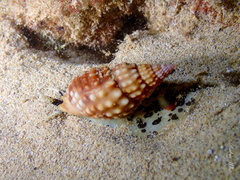
Nassarius papillosus
Nassarius papillosus
Aquarium hobby
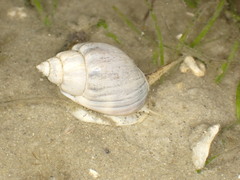
Snail
Nassarius coronatus
Aquarium hobby
Cone-shaped nassa
Nassarius conoidalis
Aquarium hobby
Nassarius glans
Nassarius glans
Aquarium hobby