
Home / Fishes / Gouramis, bettas, snakeheads / Fierce Betta
No federal permit to keepFierce Betta
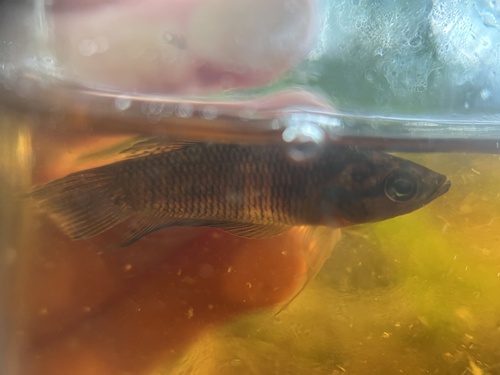
Betta ferox
Fishes › Gouramis, bettas, snakeheads (Anabantiformes) › Osphronemidae (Gouramis and bettas)
Betta ferox is a species of gourami endemic to Thailand.

Care at a glance
Species-specific values
Values researched for this exact species. Air, surface and water temperatures are listed separately, and each source is kept as published rather than averaged.
| Minimum enclosure | A 15 US gal or more tank is suitable for a single pair or small group with one male. Source: cichlidatlas.com | |
| Diet | Aquarium diet includes live and frozen foods; individuals can be trained onto high-quality small pellets or micro-wafers. Source: cichlidatlas.com | |
| Social housing | House a pair or small group with one male; males require visual barriers and significant space if co-housed. Source: cichlidatlas.com | |
| Substrate | Decorate with dense planting, driftwood, leaf litter, and subdued lighting. Source: cichlidatlas.com |
Species-specific aquarium care
- Tank: At least 24 in long and 12 in front to back for one adult (adults commonly reach about 2.5 in / 6.29 cm).
- Water: Freshwater.
- Layout: An open-water swimmer: needs long, open swimming space with few obstacles.
- Availability: Rarely or never seen in the aquarium trade; expect to source it from specialists or not at all.
Calculated from this species' own FishBase record: tank size from its typical adult length and swimming zone, water values from its recorded ranges. The group guide below fills in general care.
Understanding the animal
About this animal
About this animal
It is only found in rivers in Songkhla Province, where it resides along shallow riverbanks among vegetation. This species grows to a length of 6.3 centimetres (2.5 in) SL. This species is closely related to Betta pugnax and is also a paternal mouthbrooder.
From Wikipedia: Betta ferox, CC BY-SA 4.0 (excerpt)
In the wild
In the wild
From this species’ own FishBase record (habitat, bottom type, water and breeding data), not its family. Wild conditions are context, not enclosure settings.1
| Where it lives | Lives in freshwater. |
| Water it lives in | Freshwater. |
| Climate | Tropical climate. |
Data and studies
The numbers
The numbers
Each bar is what one source reports. Where several sources weigh in, the dashed gold band marks their average.
Adult length
Maximum recorded length. Measured as standard length (snout to the base of the tail, not counting the tail fin). Fish in home aquariums often stay smaller than wild records.
Sources for this sheet
- FishBase (Froese & Pauly, eds.), version 24.07 (CC BY-NC 4.0) Peer-reviewed researchThe global scientific database on fishes, maintained by a consortium of research institutions; every value is referenced.
- Wikipedia (species article) (CC BY-SA 4.0) Community referenceFree encyclopedia; useful overviews with their own citations. Short excerpts are quoted under CC BY-SA 4.0, each credited with a link to its article.
More gouramis and bettas

Alfred's Licorice Gourami
Parosphromenus alfredi
Aquarium hobby

Banded gourami
Trichogaster fasciata
Aquarium hobby

Barito Betta
Betta pallifina
Aquarium hobby
Betta hipposideros
Betta hipposideros
Aquarium hobby

Betta stigmosa
Betta stigmosa
Aquarium hobby

Black Dwarf Betta
Betta persephone
Aquarium hobby