Home / Fishes / Gouramis, bettas, snakeheads / Blotched snakehead
Federal restrictions applyBlotched snakehead
Channa maculata
Fishes › Gouramis, bettas, snakeheads (Anabantiformes) › Channidae (Snakeheads)
The blotched snakehead (Channa maculata) is a species of snakehead.

Care at a glance
Species-specific aquarium care
- Tank: At least 24 in long and 12 in front to back for one adult (adults commonly reach about 4.3 in / 11 cm; the largest recorded was 7.9 in).
- Water: Freshwater.
- Layout: Uses both the bottom and open water: give open swimming space plus cover near the substrate.
- Diet: A predator: feed meaty foods sized to its mouth (frozen fish, shrimp, worms); it will eat tankmates that fit in its mouth. FishBase classes it as a carnivore.
Calculated from this species' own FishBase record: tank size from its typical adult length and swimming zone, water values from its recorded ranges. The group guide below fills in general care.
Warnings
Care guide
Species care notes
- Behaviour: in a pair; not a community fish.
- Difficulty: Difficult (Seriously Fish rating).
Short excerpts from the species profile:
- Diet: “An obligate predator which feeds on invertebrates, amphibians, and smaller fishes in nature but in most cases adapts well to dead alternatives in captivity.”
- Breeding: “This species is a biparental free spawner.”
From the Seriously Fish profile for this species, which has the full habitat, maintenance, diet, behaviour and breeding write-up 167
Snakeheads
Applies to most species in this group. Habitat: Asian and African rivers. Individual species can differ, so compare with the species numbers above and the linked sources.
Housing & setup
- Not available legally in most of the U.S.
Diet
- Predatory: fish and meaty foods.
Health watch
- All snakeheads are federally listed injurious wildlife.
Understanding the animal
About this animal
About this animal
It is one of four species of the genus Channa native to China. It is also native to northern Vietnam and Taiwan, but has been widely introduced to other countries, where it is an invasive species.
Quoted from the Wikipedia article “Blotched snakehead” (CC BY-SA 4.0) 174
In the wild
In the wild
From this species’ own FishBase record (habitat, bottom type, water and breeding data), not its family. Good care copies these conditions.1
| Where it lives | Lives in freshwater, in rivers and streams, lakes, rice paddies. Uses both the bottom and open water. Adults inhabit silty and weedy bottoms of rivers and ponds or lakes. |
| Water it lives in | Freshwater. |
| Climate | Tropical climate. |
| Wild diet | Hunting macrofauna (predator). |
| Behavior to plan for | Breeding: nesters. |
Native climate (measured)
Native climate (measured)
| Warm-season highs | about 89°F (up to 91°F in the hottest sampled areas) |
| Cool-season lows | about 51°F (down to 34°F in the coldest sampled areas) |
| Average temperature | 60–75°F across sampled records |
| Relative humidity | 75–81% on average (driest month about 71%) |
| Rainfall | about 1712 mm a year |
Measured at 60 wild occurrence records sampled against WorldClim 2.1 climate data (1970–2000 averages). Air conditions in the range are ecological context, not enclosure settings: microhabitats such as burrows, leaf litter or basking rocks can be cooler, warmer or more humid.
From the sources
From the sources
Quoted from the matching sections of reputable sources for this exact species. Specialist databases are used first; Wikipedia (community-edited, CC BY-SA 4.0) only fills gaps. Other sources are short credited quotes.
| Overview | The blotched snakehead (Channa maculata) is a species of snakehead. It is one of four species of the genus Channa native to China. It is also native to northern Vietnam and Taiwan, but has been widely introduced to other countries, where it is an invasive species. This predatory species typically grows to a length of 20–30 cm, but it has been confirmed at 33 cm and some suggest it may reach a far larger size. — Wikipedia (community-edited) |
| Where it lives | Home ranges Population dynamics Growth parameters Max. ages / sizes Length-weight rel. Length-frequencies Mass conversion Recruitment Abundance Life cycle Reproduction Maturity Maturity/Gills rel. — FishBase |
| Reproduction | Distinct pairing during breeding in shallow freshwater areas amid plants. — FishBase |
| Biology | Obligate air-breathing; Adults inhabit silty and weedy bottoms of rivers and ponds or lakes. They feed on crustaceans, large insects, frogs and fishes. Recorded as having been or being farmed in rice fields. — FishBase |
Data and studies
The numbers
The numbers
Each bar is what one source reports. Where several sources weigh in, the dashed gold band marks their average.
Sources for this sheet
- FishBase (Froese & Pauly, eds.), version 24.07 Peer-reviewed researchThe global scientific database on fishes, maintained by a consortium of research institutions; every value is referenced.
- Seriously Fish species profiles Experienced keeper or breederLong-running aquarium reference written and peer-checked by experienced fishkeepers and ichthyologists; each profile covers habitat, tank size, water, diet, behaviour and breeding.
- 50 CFR Part 16: Injurious wildlife (Lacey Act) Zoo, university or veterinaryCurrent federal regulation, read from eCFR.
- U.S. Association of Reptile Keepers v. Zinke (D.C. Cir. 2017) Zoo, university or veterinaryAppeals ruling that the Lacey Act's shipping ban does not cover moves between the continental states.
- Merck Veterinary Manual: Management of aquarium fish Zoo, university or veterinaryThe Merck Veterinary Manual: a standard veterinary reference written and reviewed by veterinary specialists.
- Merck Veterinary Manual: Types and features of aquatic systems Zoo, university or veterinaryThe Merck Veterinary Manual: a standard veterinary reference written and reviewed by veterinary specialists.
- Merck Veterinary Manual: Nutritional diseases of fish Zoo, university or veterinaryThe Merck Veterinary Manual: a standard veterinary reference written and reviewed by veterinary specialists.
- Wikipedia (species article) Community referenceFree encyclopedia; useful overviews with their own citations. Intro text is quoted under CC BY-SA 4.0.
- iNaturalist (captive observations) Community referenceCommunity observation platform run by the California Academy of Sciences and National Geographic; observations marked captive show animals living in homes, zoos and aquariums.
More snakeheads
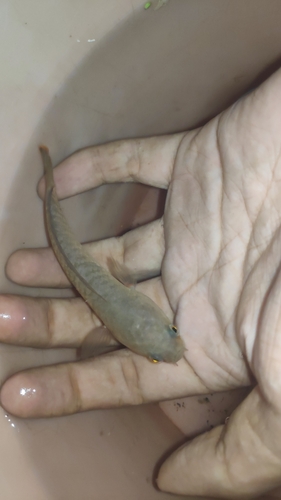
Assamese snakehead
Channa stewartii
Aquarium hobby
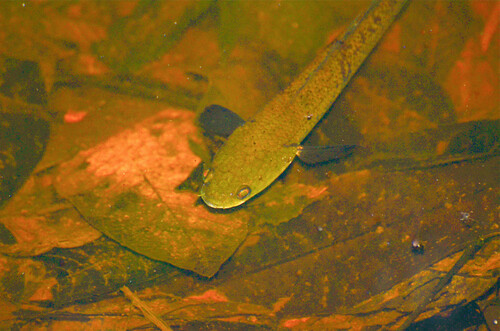
Baram snakehead
Channa baramensis
Aquarium hobby

Barca snakehead
Channa barca
Aquarium hobby

Bluefinned snakehead
Channa bleheri
Aquarium hobby

Ceylon snakehead
Channa orientalis
Aquarium hobby

Forest snakehead
Channa lucius
Aquarium hobby