
Home / Invertebrates / Ants and bees / Blue orchard mason bee
No federal permit to keepBlue orchard mason bee
Osmia lignaria
Invertebrates › Ants and bees (Hymenoptera) › Megachilidae
Experience: Beginner
FamilyMegachilidae
Kept byFarm & ranch
Care at a glance
Species-specific values
Values researched for this exact species. Air, surface and water temperatures are listed separately, and each source is kept as published rather than averaged.
| Minimum enclosure | Provide nesting tubes about 6 inches long, 5/16 inch in diameter, closed at one end, or a suitable laminated block system inside a nesting house. Source: extension.oregonstate.edu | |
| Humidity | 60–70 % Source: extension.oregonstate.edu | |
| Substrate | Provide moist clay mud; sandy soil is unsuitable because it crumbles. Source: extension.oregonstate.edu | |
| Diet | Plant continuous spring blooms; mason bees prefer nectar and pollen from fruit trees and also forage on dandelions and Oregon grape. Source: extension.oregonstate.edu |
Understanding the animal
In the wild
In the wild
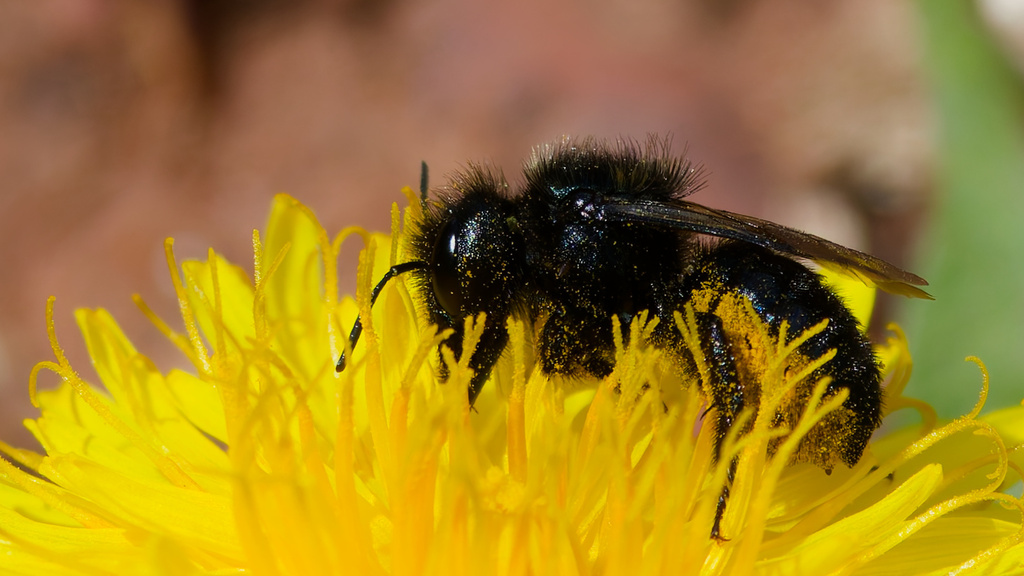
| Overview | Osmia lignaria, commonly known as the orchard mason bee or blue orchard bee, is a megachilid bee that makes nests in natural holes and reeds, creating individual cells for its brood that are separated by mud dividers. Unlike carpenter bees, it cannot drill holes in wood. O. lignaria is a common species used for early spring fruit bloom in the United States and Canada, though a number of other Osmia species are cultured for use in pollination. — From Wikipedia: Osmia lignaria, CC BY-SA 4.0 (excerpt) |
| Appearance and size | Osmia lignaria are relatively small bees, with dry weight of 33.5 ± 1.1 mg. — From Wikipedia: Osmia lignaria, CC BY-SA 4.0 (excerpt) |
Sources for this sheet
- GBIF Backbone Taxonomy (Global Biodiversity Information Facility) (CC BY 4.0) Peer-reviewed researchInternational scientific taxonomy used here for classification. GBIF Secretariat (2023). GBIF Backbone Taxonomy. Checklist dataset https://doi.org/10.15468/39omei, accessed via GBIF.org.