
Home / Reptiles / Lizards / Varanidae / Blue tree monitor
Some federal rules applyBlue tree monitor
Varanus macraei
Reptiles › Lizards (Lacertilia) › Varanidae (Monitor lizards)
Varanus macraei, also known commonly as the blue-spotted tree monitor and the blue tree monitor, is a species of monitor lizard endemic to the island of Batanta in Indonesia.
From Wikipedia: Varanus macraei, CC BY-SA 4.0 (excerpt)

Care at a glance
Species-specific values
Values researched for this exact species. Air, surface and water temperatures are listed separately, and each source is kept as published rather than averaged.
| Minimum enclosure | Minimum 120 x 60 x 150 cm space required; bigger tanks are better. Source: academy.herpeton.net | |
| Basking surface temperature | 100–113 °F (38–45 °C) Source: academy.herpeton.net | |
| Warm side air temperature | 82–88 °F (28–31 °C) Source: academy.herpeton.net | |
| Cool side air temperature | 75–79 °F (24–26 °C) Source: academy.herpeton.net | |
| Night temperature | 72–75 °F (22–24 °C) Source: academy.herpeton.net | |
| Humidity | 75–90 % Source: academy.herpeton.net | |
| Uvb lighting | Provide linear UVB and about UVI 2-3 in the upper basking zone, with shaded retreats. Source: academy.herpeton.net | |
| Diet | Carnivorous and insectivorous; suitable foods include insects, snails, chicks, or small whole prey sparingly. Source: academy.herpeton.net | |
| Feeding frequency | Feed juveniles smaller meals more often and adults less often, according to body condition. Source: academy.herpeton.net | |
| Social housing | House alone unless breeding is planned and you have immediate separation capacity. Source: academy.herpeton.net | |
| Substrate | Use soil-based substrate appropriate to humidity needs. Source: academy.herpeton.net |
Understanding the animal
About this animal
About this animal
The species is named after herpetologist Duncan Malcolm MacRae.
From Wikipedia: Varanus macraei, CC BY-SA 4.0 (excerpt)
In the wild
In the wild
| Overview | Varanus macraei, also known commonly as the blue-spotted tree monitor and the blue tree monitor, is a species of monitor lizard endemic to the island of Batanta in Indonesia. The species is named after herpetologist Duncan Malcolm MacRae. — From Wikipedia: Varanus macraei, CC BY-SA 4.0 (excerpt) |
| Where it lives | The blue-spotted tree monitor inhabits tropical forests that average 83–100 F. In the dry season the humidity is around 65%, but it spikes to 100% in the wet season. — From Wikipedia: Varanus macraei, CC BY-SA 4.0 (excerpt) |
| Wild diet | Varanus macreai is diurnal and arboreal; thus it avoids predators by fleeing up a tree and keeping the trunk between itself and the intruder, as many anoles do. No studies have been published on the diet of V. macraei, but it is likely primarily made up of (in order) stick insects, orthopterans (grasshoppers, katydids and crickets), moths, beetles, smaller lizards, small eggs, and the occasional berry. — From Wikipedia: Varanus macraei, CC BY-SA 4.0 (excerpt) |
| Reproduction | Varanus macreai is oviparous. — From Wikipedia: Varanus macraei, CC BY-SA 4.0 (excerpt) |
| Appearance and size | Varanus macraei is part of the prasinus-group and the subgenus (Hapturosaurus). As its common names suggest, it is black with scattered blue scales, forming ocellations that may in turn form bands across the back. The tip of the snout is light blue, and the lower jaw is white with uniform green scales along the neck, forming a v-shaped pattern. — From Wikipedia: Varanus macraei, CC BY-SA 4.0 (excerpt) |
Read about this species in the wild at The Reptile Database.
Profile
Profile
Researched for this exact species. Sources are listed under In the wild above.
Data and studies
The numbers
The numbers
Each bar is what one source reports. Where several sources weigh in, the dashed gold band marks their average.
Adult snout-to-vent length
Body length without the tail.
Incubation
Veterinary & husbandry research
Veterinary & husbandry research
- Hematology and Plasma Biochemistry Reference Values of the Subgenus Hapturosaurus (Varanus macraei, Varanus prasinus, Varanus beccarii) Under Human Care Sobrino-Yacobi J et al., Veterinary sciences 2025
Peer-reviewed papers that mention this species alongside captivity, zoos, veterinary care or aquaculture. Some cover several species or mention it only in passing, so check the abstract. See all 2 on PubMed → PubMed
Sources for this sheet
- Myhrvold et al. (2015). An amniote life-history database. Ecology 96: 3109 Peer-reviewed researchPeer-reviewed compilation of life-history data for over 21,000 birds, mammals and reptiles.
- Species+ (UNEP-WCMC and the CITES Secretariat) Zoo, university or veterinaryThe official database of species listed under CITES. UNEP (2026). The Species+ Website. Nairobi, Kenya. Compiled by UNEP-WCMC, Cambridge, UK. Available at: www.speciesplus.net. [Accessed 04/10/2026].
- USFWS International Affairs: CITES Zoo, university or veterinaryFederal agency that issues CITES permits.
- The Reptile Database Peer-reviewed researchScientist-curated catalog of every reptile species, with taxonomy and literature.
- GBIF Backbone Taxonomy (Global Biodiversity Information Facility) (CC BY 4.0) Peer-reviewed researchInternational scientific taxonomy used here for classification. GBIF Secretariat (2023). GBIF Backbone Taxonomy. Checklist dataset https://doi.org/10.15468/39omei, accessed via GBIF.org.
- Wikipedia (species article) (CC BY-SA 4.0) Community referenceFree encyclopedia; useful overviews with their own citations. Short excerpts are quoted under CC BY-SA 4.0, each credited with a link to its article.
- PubMed (U.S. National Library of Medicine) Peer-reviewed researchIndex of peer-reviewed veterinary, zoo and husbandry research.
- iNaturalist (captive observations) Community referenceCommunity observation platform run by the California Academy of Sciences and National Geographic; observations marked captive show animals living in homes, zoos and aquariums.
More monitor lizards
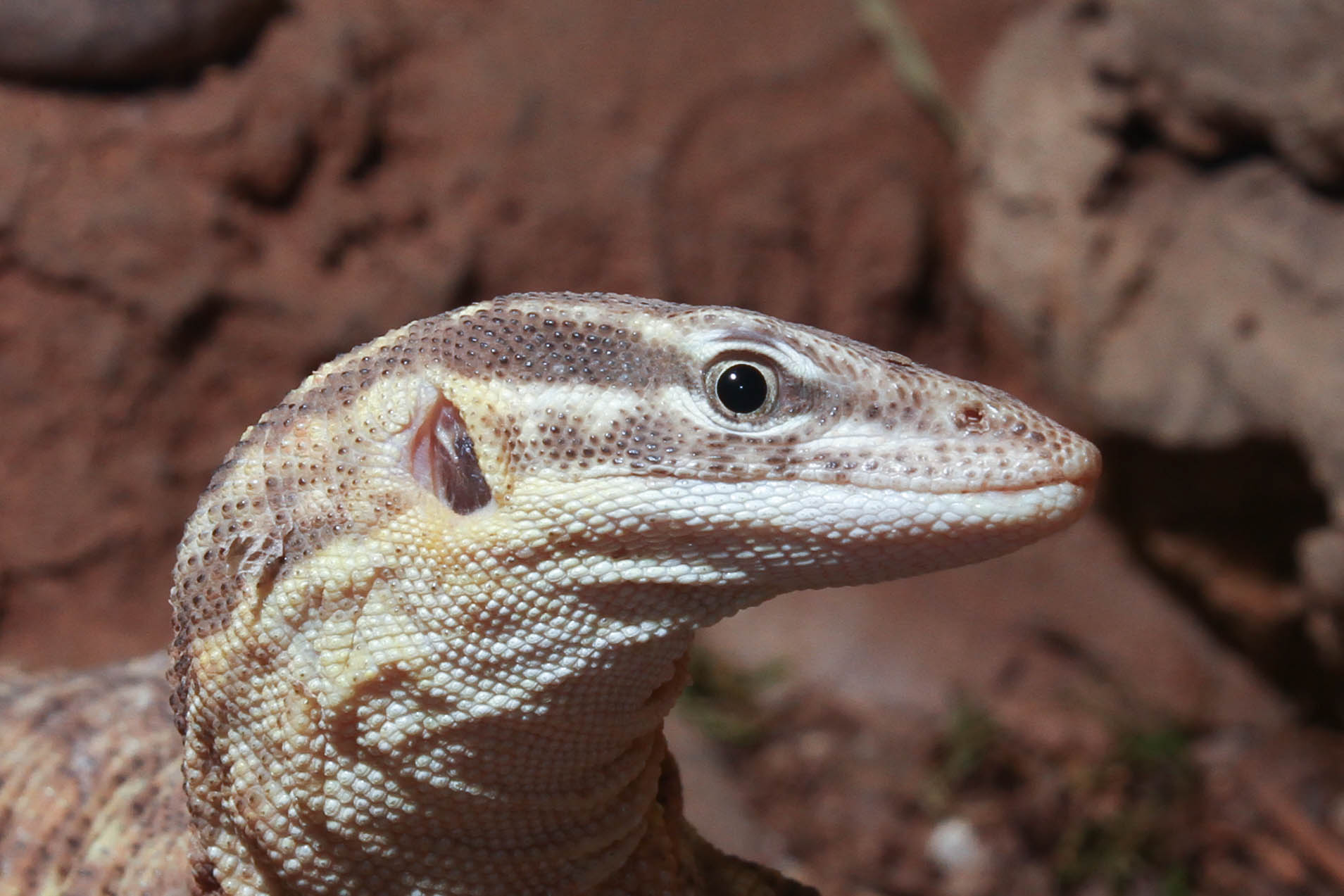
Ackie (spiny-tailed) monitor
Varanus acanthurus
A pint-sized monitor with a huge personality.
Pet trade
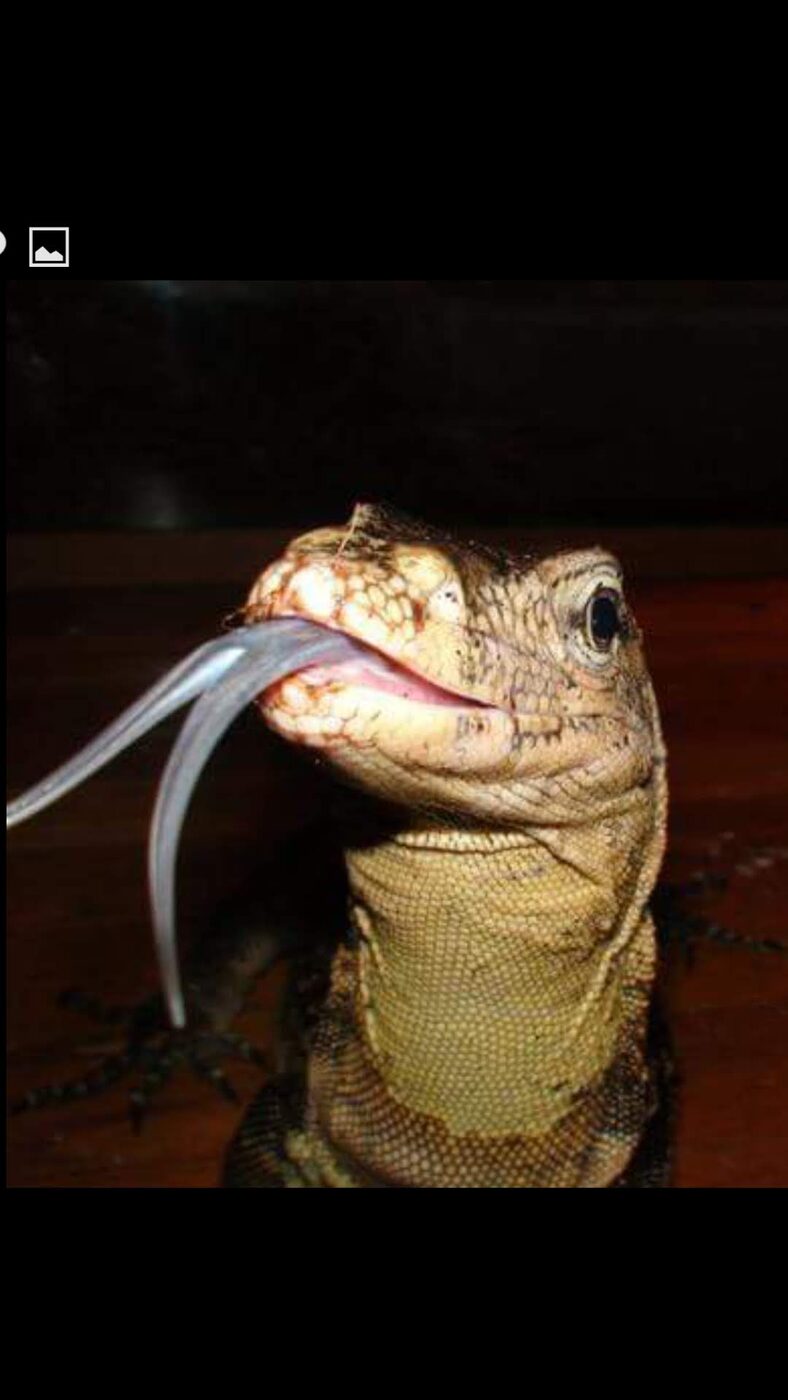
Asian water monitor
Varanus salvator
An intelligent, swimming giant: the "gentle giant" of monitors.
Pet trade
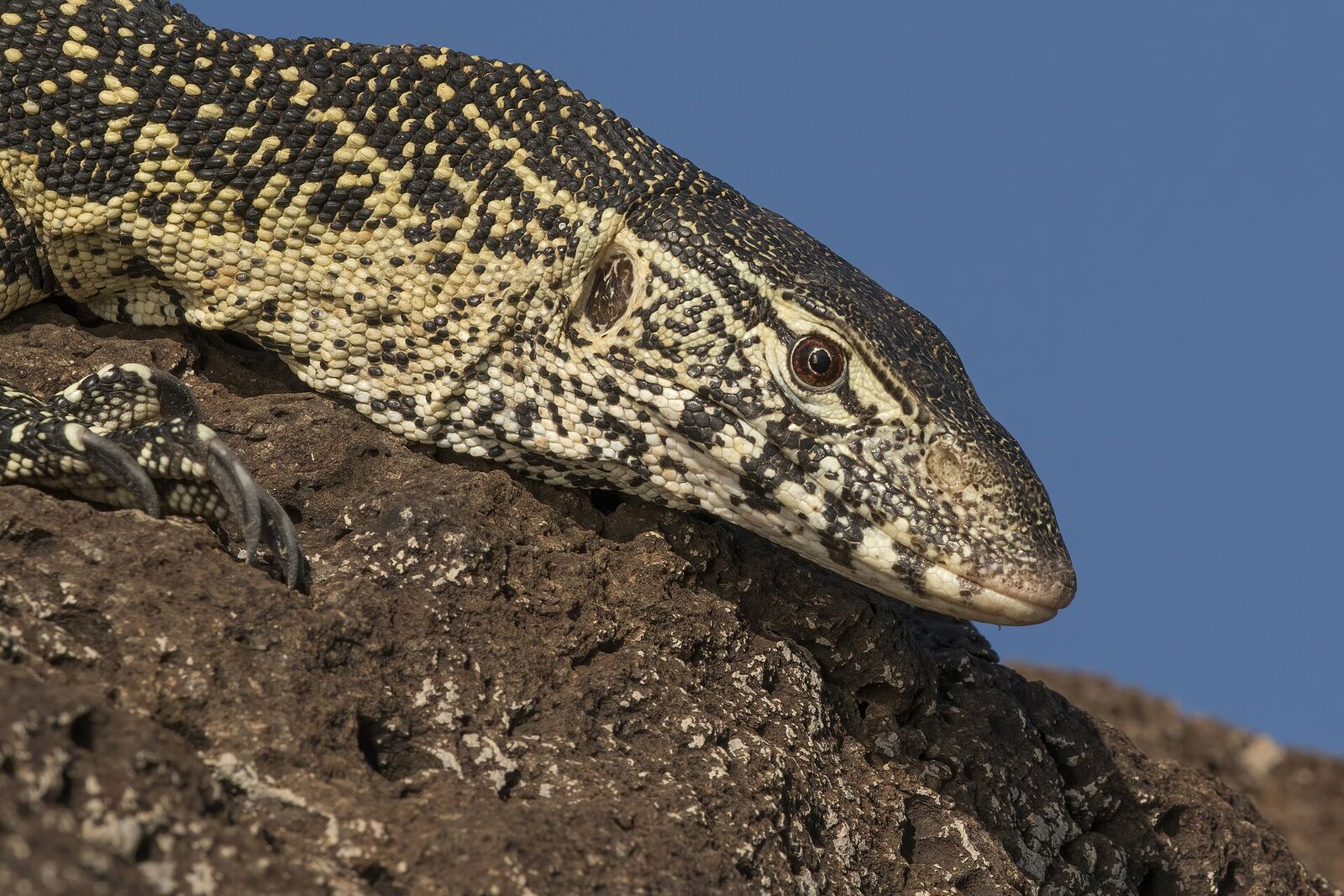
Nile monitor
Varanus niloticus
Africa's longest lizard, fast, bold and powerful.
Pet trade

Argus monitor
Varanus panoptes
Pet trade

Biak Emerald Monitor
Varanus kordensis
Pet trade

Black tree monitor
Varanus beccarii
Pet trade