
Home / Mammals / Rodents / California deermouse
State permit usually requiredCalifornia deermouse
Peromyscus californicus
Mammals › Rodents (Rodentia) › Cricetidae (Hamsters, voles, American mice)
The California deermouse or California mouse is a species of rodent in the subfamily Neotominae in the family Cricetidae.

Care at a glance
Setup
One answer per setting. Where sources differ, the smaller figure is the minimum and the larger is what we recommend.
| Floor space | 64.5 cm2 per adult (lab minimum) the Guide's floor space for each adult mouse in lab cages | charleston.edu |
| Temperature | At least 64°F Preferably 73°F | pmc.ncbi.nlm.nih.gov |
| Bedding | Aspen bedding, cages changed weekly | pmc.ncbi.nlm.nih.gov |
| Food | A standard commercial rodent diet, with filtered water ad libitum | pmc.ncbi.nlm.nih.gov |
Warnings
Understanding the animal
About this animal
About this animal
It is a species of the genus Peromyscus, a closely related group of New World mice often called "deermice", and the only in the Peromyscus californicus species group. It is found in northwestern Mexico and central to southern California. It is the largest Peromyscus species in the United States.
From Wikipedia: California deermouse, CC BY-SA 4.0 (excerpt)
Data and studies
Veterinary & husbandry research
Veterinary & husbandry research
- Comparative anatomical analysis of dopamine systems in Mus musculus and Peromyscus californicus. et al., Brain structure & function 2022
- California mice (Peromyscus californicus) adjust mouth movements for vocal production during early postnatal development. et al., BMC biology 2024
- Pair bonding and disruption impact lung transcriptome in monogamous Peromyscus californicus. et al., BMC genomics 2023
- Developmental trajectories in laryngeal anatomy of California mice (Peromyscus californicus). et al., Royal Society open science 2025
Peer-reviewed papers that mention this species alongside captivity, zoos, veterinary care or aquaculture. Some cover several species or mention it only in passing, so check the abstract. PubMed
Sources for this sheet
- Iacuc rodent husbandry (charleston.edu) Peer-reviewed researchPublished research.
- Official websites use.gov (pmc.ncbi.nlm.nih.gov) Peer-reviewed researchPublished research.
- Wikipedia: Peromyscus californicus (CC BY-SA 4.0) Community referenceEncyclopedia article.
- GBIF Backbone Taxonomy (Global Biodiversity Information Facility) (CC BY 4.0) Peer-reviewed researchInternational scientific taxonomy used here for classification. GBIF Secretariat (2023). GBIF Backbone Taxonomy. Checklist dataset https://doi.org/10.15468/39omei, accessed via GBIF.org.
- Wikipedia (species article) (CC BY-SA 4.0) Community referenceFree encyclopedia; useful overviews with their own citations. Short excerpts are quoted under CC BY-SA 4.0, each credited with a link to its article.
- PubMed (U.S. National Library of Medicine) Peer-reviewed researchIndex of peer-reviewed veterinary, zoo and husbandry research.
More hamsters, voles, american mice
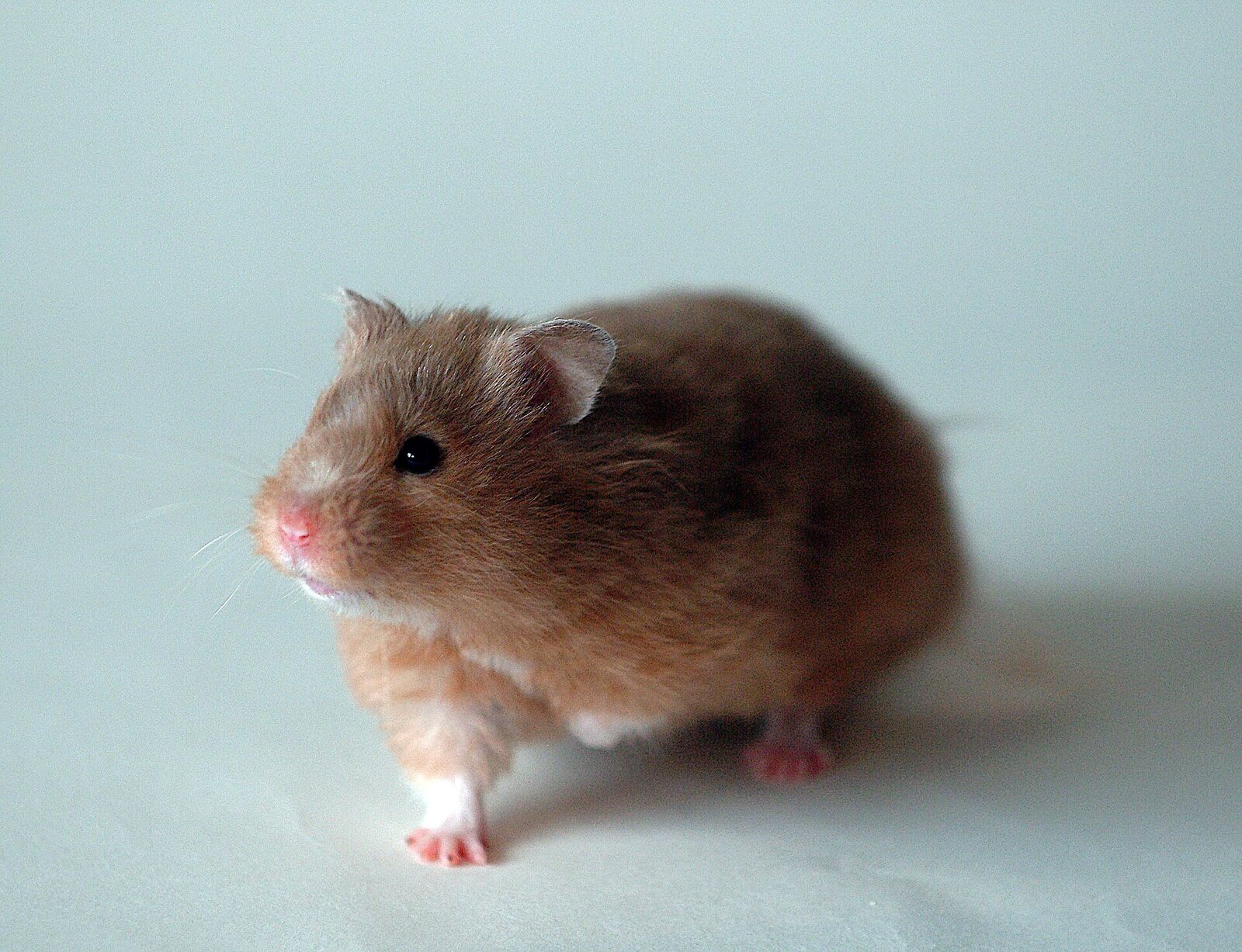
Golden (Syrian) hamster
Mesocricetus auratus
Small, nocturnal and fiercely independent.
Pet trade

Campbell's dwarf hamster
Phodopus campbelli
Pet trade

Chinese hamster
Cricetulus griseus
Pet trade

Deer mouse
Peromyscus maniculatus
Zoos & aquariums

European hamster
Cricetus cricetus
Zoos & aquariums

Günther's vole
Microtus guentheri
Pet trade