
Home / Invertebrates / Praying mantises / Indian Flower Mantis
No federal permit to keepIndian Flower Mantis
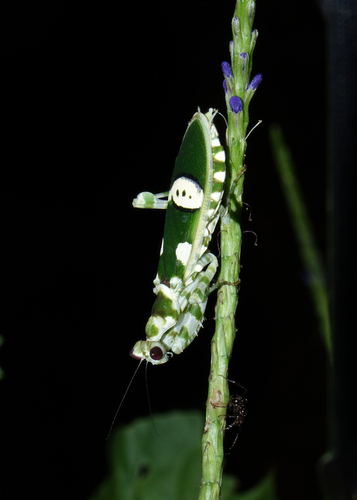
Creobroter pictipennis
Invertebrates › Praying mantises (Mantodea) › Hymenopodidae (Flower and ghost mantises)
Creobroter pictipennis, with the common name Indian flower mantis, is a species of praying mantis native to Asia. Males grow to about 1.5 in long (3.8 cm) and females are slightly larger.
From Wikipedia: Creobroter pictipennis, CC BY-SA 4.0 (excerpt)
Care at a glance
Species-specific values
Values researched for this exact species. Air, surface and water temperatures are listed separately, and each source is kept as published rather than averaged.
| Warm side air temperature | 73–86 °F (23–30 °C) Source: keepinginsects.com | |
| Humidity | 60–80 % Source: keepinginsects.com | |
| Minimum enclosure | At least 3 times the animal’s length in height and 2 times its length in width. Source: keepinginsects.com | |
| Diet | Fruit flies throughout life; green or blue bottle flies can also be offered, while flies are preferred. Source: keepinginsects.com | |
| Social housing | House separately; nymphs may stay together until about L5 if fed constantly and given ample space. Source: keepinginsects.com | |
| Minimum enclosure | At least 3 times the mantis’s length tall and 2 times its length wide. Source: panterrapets.com | |
| Humidity | 60–80 % Source: panterrapets.com | |
| Diet | Flying insects are preferred throughout life; prey varies by life stage. Source: panterrapets.com | |
| Substrate | Temporary enclosures may use no substrate, sphagnum moss, or paper towel; replace substrate weekly. Source: panterrapets.com |
Understanding the animal
Native climate (measured)
Native climate (measured)
| Warm-season highs | about 93°F (up to 103°F in the hottest sampled areas) |
| Cool-season lows | about 66°F (down to 51°F in the coldest sampled areas) |
| Average temperature | 75–82°F across sampled records |
| Relative humidity | 63–76% on average (driest month about 56%) |
| Rainfall | about 1235 mm a year, with strong wet and dry seasons |
Measured at 53 wild occurrence records sampled against WorldClim 2.1 climate data (1970–2000 averages). Air conditions in the range are ecological context, not enclosure settings: microhabitats such as burrows, leaf litter or basking rocks can be cooler, warmer or more humid.
Sources for this sheet
- GBIF Backbone Taxonomy (Global Biodiversity Information Facility) (CC BY 4.0) Peer-reviewed researchInternational scientific taxonomy used here for classification. GBIF Secretariat (2023). GBIF Backbone Taxonomy. Checklist dataset https://doi.org/10.15468/39omei, accessed via GBIF.org.
- Wikipedia (species article) (CC BY-SA 4.0) Community referenceFree encyclopedia; useful overviews with their own citations. Short excerpts are quoted under CC BY-SA 4.0, each credited with a link to its article.
- iNaturalist (captive observations) Community referenceCommunity observation platform run by the California Academy of Sciences and National Geographic; observations marked captive show animals living in homes, zoos and aquariums.
More flower and ghost mantises

Asian Boxer Mantis
Theopropus elegans
Pet trade
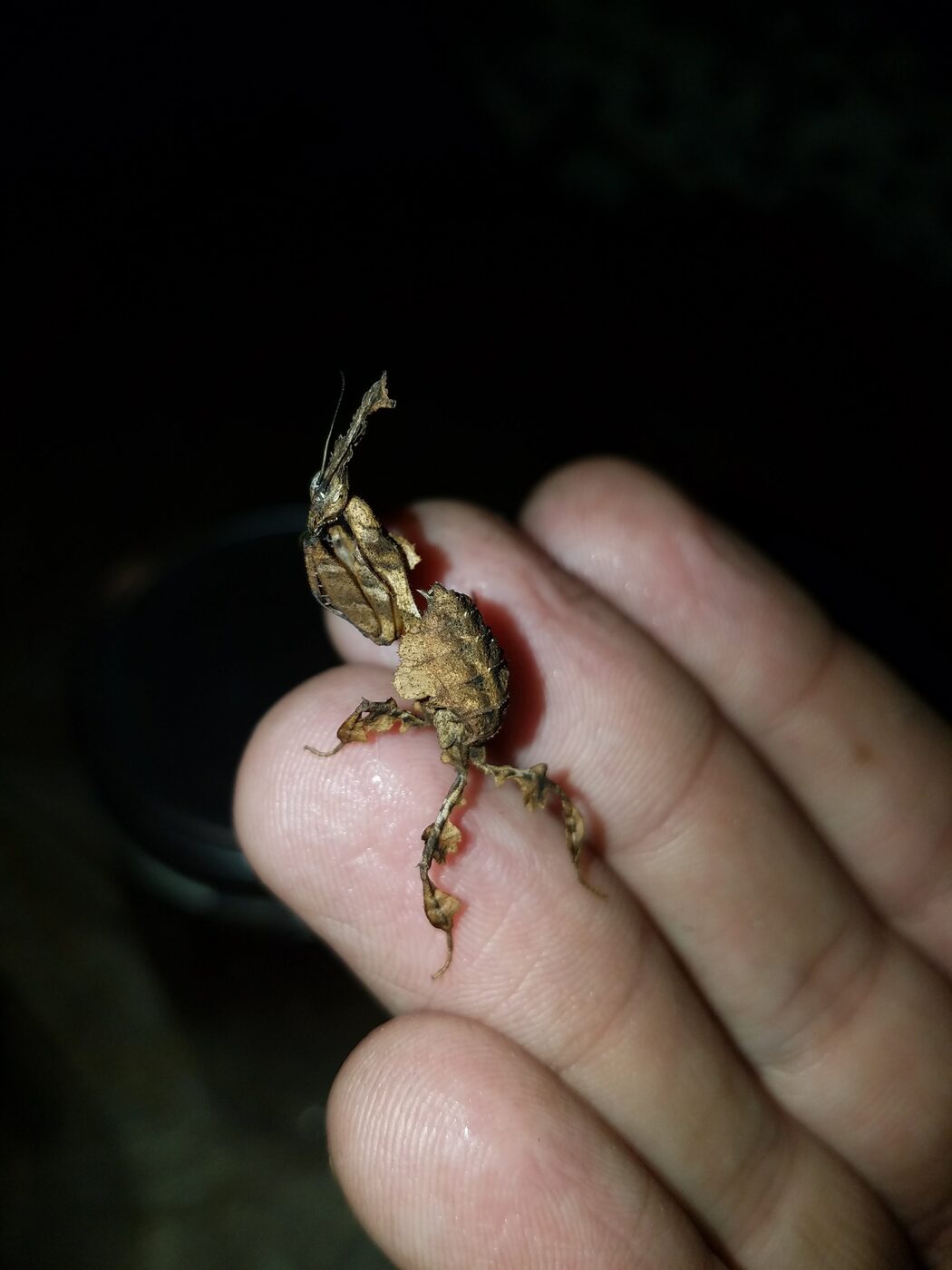
Ghost mantis
Phyllocrania paradoxa
Pet trade

Orchid mantis
Hymenopus coronatus
Pet trade

Spiny flower mantis
Pseudocreobotra wahlbergi
Pet trade

Jeweled flower mantis
Creobroter gemmatus
Pet trade
Chinese Flower Mantis
Creobroter nebulosa
Pet trade