
Home / Fishes / Seahorses and pipefish / Crowned seahorse
Some federal rules applyCrowned seahorse
Hippocampus coronatus
Fishes › Seahorses and pipefish (Syngnathiformes) › Syngnathidae (Seahorses and pipefish)
Hippocampus coronatus, commonly known as the high-crowned seahorse or crowned seahorse, is a species of fish of the family Syngnathidae.
Care at a glance
Species-specific values
Values researched for this exact species. Air, surface and water temperatures are listed separately, and each source is kept as published rather than averaged.
| Minimum enclosure | Minimum aquarium volume is 100 l (26 gal). Source: reefapp.net | |
| Diet | Recommended food includes small crustaceans and zooplankton; enrich food with omega-3 and vitamins. Source: reefapp.net | |
| Feeding frequency | Live mysis or artemia are particularly suitable; captive-bred seahorses may accept frozen mysis. Source: reefapp.net | |
| Social housing | This species does best as a pair or in a small group. Source: reefapp.net |
Species-specific aquarium care
- Tank: At least 24 in long and 12 in front to back for one adult (adults commonly reach about 2.4 in / 6 cm; the largest recorded was 5.2 in).
- Water: Marine.
- Layout: Lives on or near the bottom: floor space and hiding places matter more than height.
- Diet: A predator: feed meaty foods sized to its mouth (frozen fish, shrimp, worms); it will eat tankmates that fit in its mouth. FishBase classes it as a carnivore.
- Availability: Rarely or never seen in the aquarium trade; expect to source it from specialists or not at all.
Calculated from this species' own FishBase record: tank size from its typical adult length and swimming zone, water values from its recorded ranges. The group guide below fills in general care.
Understanding the animal
About this animal
About this animal
It is endemic to the Pacific coastal waters of Japan (found in shallow coastal waters from Tokyo bay and Sagami bay), where it lives among Zostera seagrasses. It can grow to lengths of 10.8 centimetres (4.3 in), but is more commonly 6 centimetres (2.4 in).
From Wikipedia: Crowned seahorse, CC BY-SA 4.0 (excerpt)
In the wild
In the wild
From this species’ own FishBase record (habitat, bottom type, water and breeding data), not its family. Wild conditions are context, not enclosure settings.1
| Where it lives | Lives in the sea, in open ocean. Stays near the bottom. |
| Ground it lives on | Over aquatic plants. |
| Water it lives in | Marine, depth 0–20 m. |
| Climate | Subtropical climate. |
| Wild diet | Hunting macrofauna (predator). |
| Behavior to plan for | Breeding: external brooders, paternal parental care. |
Data and studies
Researched care notes
Researched care notes
Findings checked against veterinary, zoo, welfare, keeper and peer-reviewed sources. Air, basking-surface and water temperatures are kept separate, and where sources disagree both are shown. “Study” notes report what a paper measured, not a universal rule.
Seahorses (group; historical propagation evidence)
Researched for this genus; applies to its species unless a species note says otherwise.
- The report found value in mysid prey and noted that Artemia requires enrichment to improve nutritional usefulness. Reported institutional practice; confidence LOW.1
- Separate species breeding tanks provided vertical courtship space. Obtain current species-specific guidance before adapting this system. Confidence: LOW.1
The numbers
The numbers
Each bar is what one source reports. Where several sources weigh in, the dashed gold band marks their average.
Adult length
Common length to maximum recorded length. Measured as standard length (snout to the base of the tail, not counting the tail fin). Fish in home aquariums often stay smaller than wild records.
Sources for this sheet
- FishBase (Froese & Pauly, eds.), version 24.07 (CC BY-NC 4.0) Peer-reviewed researchThe global scientific database on fishes, maintained by a consortium of research institutions; every value is referenced.
- Species+ (UNEP-WCMC and the CITES Secretariat) Zoo, university or veterinaryThe official database of species listed under CITES. UNEP (2026). The Species+ Website. Nairobi, Kenya. Compiled by UNEP-WCMC, Cambridge, UK. Available at: www.speciesplus.net. [Accessed 04/10/2026].
- USFWS International Affairs: CITES Zoo, university or veterinaryFederal agency that issues CITES permits.
- Wikipedia (species article) (CC BY-SA 4.0) Community referenceFree encyclopedia; useful overviews with their own citations. Short excerpts are quoted under CC BY-SA 4.0, each credited with a link to its article.
More seahorses and pipefish
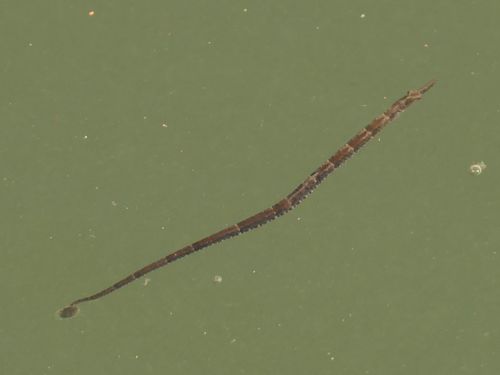
Bellybarred pipefish
Hippichthys spicifer
Aquarium hobby

Bluestripe pipefish
Doryrhamphus excisus
Aquarium hobby

Chain pipefish
Syngnathus louisianae
Aquarium hobby

Dwarf seahorse
Hippocampus zosterae
Aquarium hobby
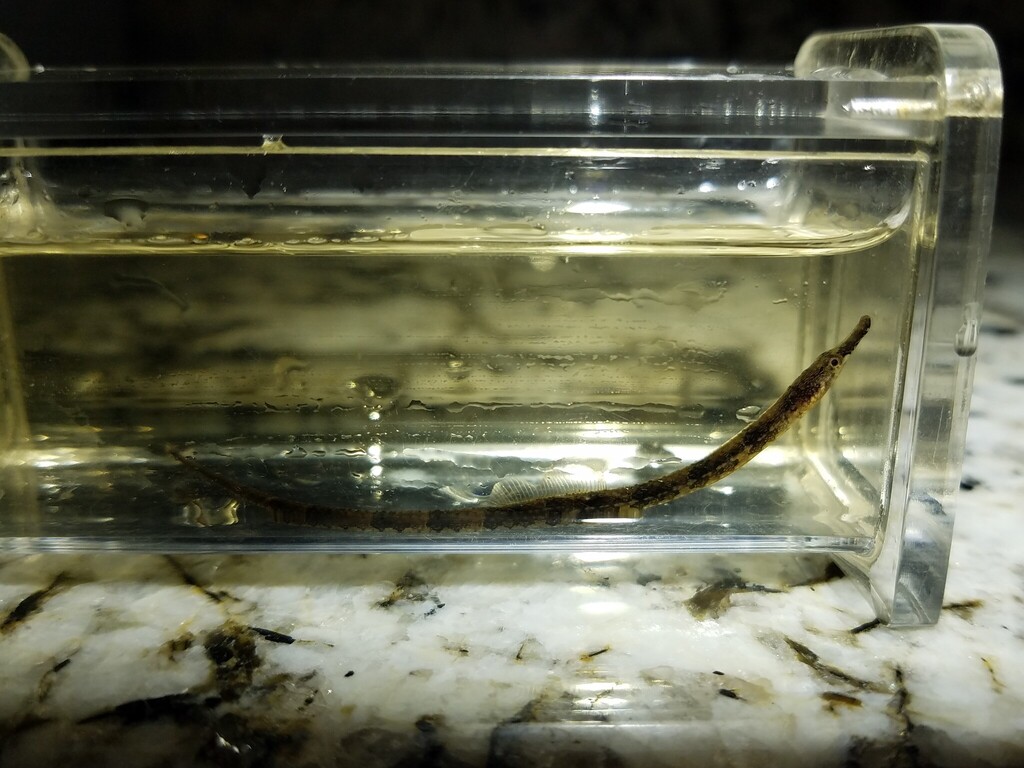
Gulf pipefish
Syngnathus scovelli
Aquarium hobby

Honshu pipefish
Doryrhamphus japonicus
Aquarium hobby