
Home / Birds / Parrots / Solomons corella
Some federal rules applySolomons corella
Cacatua ducorpsii
Birds › Parrots (Psittaciformes) › Cacatuidae (Cockatoos and cockatiel)
The Solomons corella (Cacatua ducorpsii), also known as Solomons cockatoo, Ducorps's cockatoo or broad-crested corella, is a species of cockatoo endemic to the Solomon Islands archipelago.
From Wikipedia: Solomons corella, CC BY-SA 4.0 (excerpt)

Care at a glance
Species-specific values
Values researched for this exact species. Air, surface and water temperatures are listed separately, and each source is kept as published rather than averaged.
| Diet | Feed formulated Kaytee Exact with fresh fruits and vegetables daily. Source: susanclubb.com | |
| Feeding frequency | Feed approximately ¼ cup each of Kaytee Exact and fresh fruits and vegetables daily. Source: susanclubb.com | |
| Minimum enclosure | Provide a cage large enough to fully spread the wings; ideally allow room for flight. Source: susanclubb.com | |
| Social housing | Keep a male and female together; do not house Solomons cockatoos alone. Source: articles.pangovet.com | |
| Diet | At least 50% of the diet should be a cockatoo seed mix; supplement it with fresh foods. Source: articles.pangovet.com | |
| Feeding frequency | Provide seeds and water, supplemented with fruits, vegetables, legumes, and other fresh foods. Source: articles.pangovet.com |
Warnings
Understanding the animal
About this animal
About this animal
This small white cockatoo is larger than the Tanimbar corella yet smaller than the umbrella cockatoo. The species is common across most of the Solomons, absent only from Makira in the south.
From Wikipedia: Solomons corella, CC BY-SA 4.0 (excerpt)
In the wild
In the wild
| Overview | The Solomons corella (Cacatua ducorpsii), also known as Solomons cockatoo, Ducorps's cockatoo or broad-crested corella, is a species of cockatoo endemic to the Solomon Islands archipelago. This small white cockatoo is larger than the Tanimbar corella yet smaller than the umbrella cockatoo. The species is common across most of the Solomons, absent only from Makira in the south. It inhabits lowland rainforests, secondary forests, cleared areas and gardens. — From Wikipedia: Solomons corella, CC BY-SA 4.0 (excerpt) |
| Where it lives | The Solomons corella is abundant on all islands in the archipelago except Makira and surrounding islands. Ornithologists estimate that the bird has a population of around 100,000 individual birds. It has been listed as Least Concern by the International Union for Conservation of Nature. — From Wikipedia: Solomons corella, CC BY-SA 4.0 (excerpt) |
| Reproduction | The Solomons corella nests in tree cavities. The eggs are white and there are usually two in a clutch. The eggs are incubated for about 25 days and the chicks leave the nest about 62 days after hatching. — From Wikipedia: Solomons corella, CC BY-SA 4.0 (excerpt) |
| Appearance and size | The Solomons corella is about 30 cm long. They are predominantly white. They have a blue eye ring and a recumbent crest which resembles a sail in its raised state. — From Wikipedia: Solomons corella, CC BY-SA 4.0 (excerpt) |
Native climate (measured)
Native climate (measured)
| Warm-season highs | about 87°F (up to 88°F in the hottest sampled areas) |
| Cool-season lows | about 73°F (down to 68°F in the coldest sampled areas) |
| Average temperature | 76–81°F across sampled records |
| Relative humidity | 83–87% on average (driest month about 82%) |
| Rainfall | about 3276 mm a year, spread fairly evenly |
Measured at 43 wild occurrence records sampled against WorldClim 2.1 climate data (1970–2000 averages). Air conditions in the range are ecological context, not enclosure settings: microhabitats such as burrows, leaf litter or basking rocks can be cooler, warmer or more humid.
Data and studies
The numbers
The numbers
Each bar is what one source reports. Where several sources weigh in, the dashed gold band marks their average.
Maximum recorded lifespan
Longest recorded lifespan reported by each database; typical lifespans are usually shorter. The AnAge record comes from an animal in human care.
Typical adult weight
Average adult body mass in each database (FishBase gives the maximum recorded weight).
Sources for this sheet
- AnAge: The Animal Ageing and Longevity Database (Human Ageing Genomic Resources) (CC BY 3.0) Peer-reviewed researchCurated, referenced longevity and life-history records for thousands of species; maximum lifespans are often from zoo animals.
- Myhrvold et al. (2015). An amniote life-history database. Ecology 96: 3109 Peer-reviewed researchPeer-reviewed compilation of life-history data for over 21,000 birds, mammals and reptiles.
- Species+ (UNEP-WCMC and the CITES Secretariat) Zoo, university or veterinaryThe official database of species listed under CITES. UNEP (2026). The Species+ Website. Nairobi, Kenya. Compiled by UNEP-WCMC, Cambridge, UK. Available at: www.speciesplus.net. [Accessed 04/10/2026].
- USFWS International Affairs: CITES Zoo, university or veterinaryFederal agency that issues CITES permits.
- 9 CFR 2.1: Animal Welfare Act licensing (USDA) Zoo, university or veterinaryWho needs a USDA license to breed, sell or exhibit animals.
- Wikipedia (species article) (CC BY-SA 4.0) Community referenceFree encyclopedia; useful overviews with their own citations. Short excerpts are quoted under CC BY-SA 4.0, each credited with a link to its article.
- iNaturalist (captive observations) Community referenceCommunity observation platform run by the California Academy of Sciences and National Geographic; observations marked captive show animals living in homes, zoos and aquariums.
More cockatoos and cockatiel
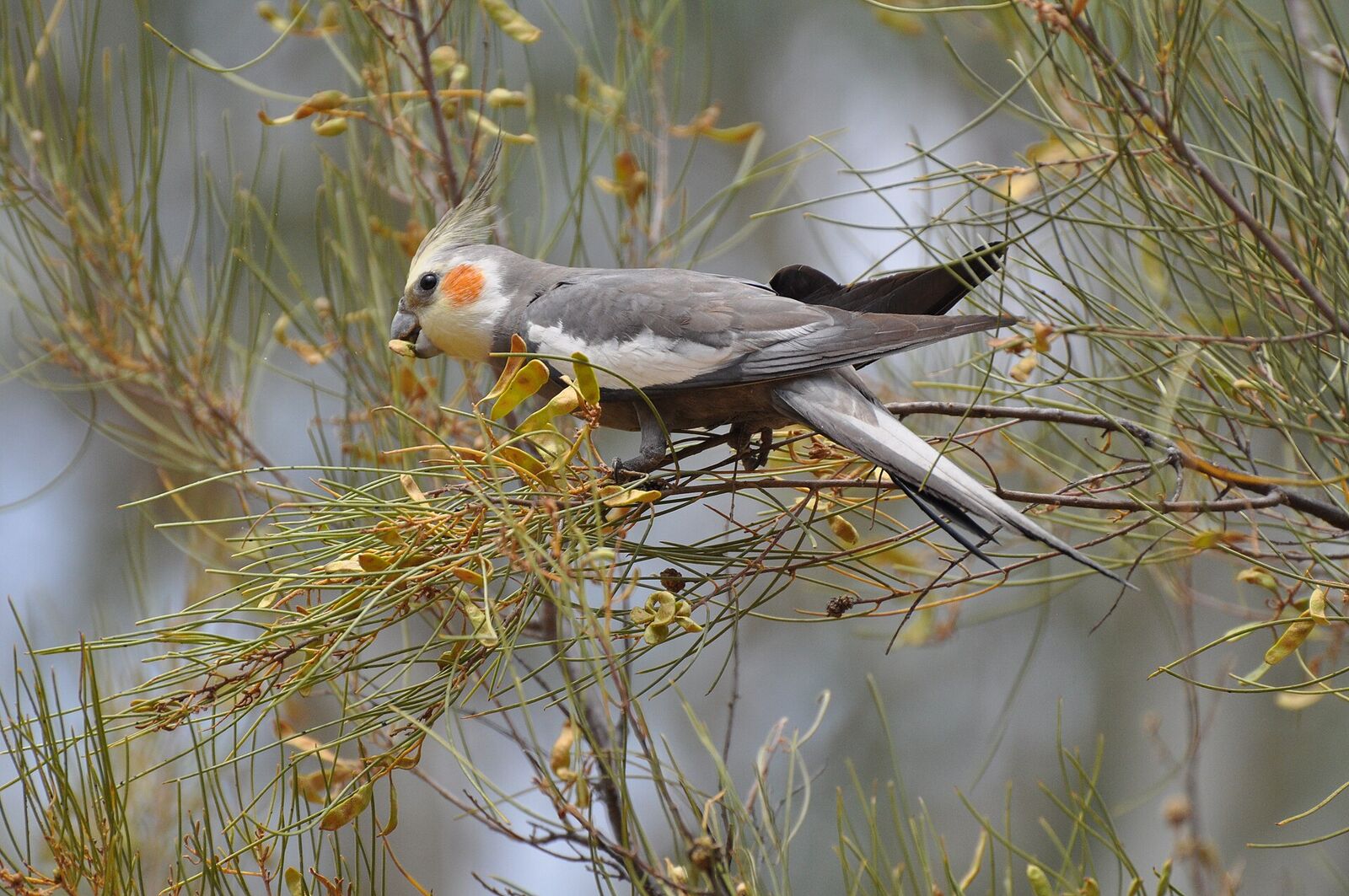
Cockatiel
Nymphicus hollandicus
Crested, affectionate and great whistlers.
Pet trade

Galah
Eolophus roseicapilla
Pet trade

Goffin's cockatoo (Tanimbar corella)
Cacatua goffiniana
Pet trade

Little corella (bare-eyed cockatoo)
Cacatua sanguinea
Pet trade

Red-tailed black cockatoo
Calyptorhynchus banksii
Pet trade

Sulphur-crested cockatoo
Cacatua galerita
Pet trade