
Home / Reptiles / Lizards / Varanidae / Dumeril's monitor
Some federal rules applyDumeril's monitor
Varanus dumerilii
Reptiles › Lizards (Lacertilia) › Varanidae (Monitor lizards)
Dumeril's monitor (Varanus dumerilii), also known as the brown rough-necked monitor, is a species of lizard in the family Varanidae.
From Wikipedia: Dumeril's monitor, CC BY-SA 4.0 (excerpt)

Care at a glance
Species-specific values
Values researched for this exact species. Air, surface and water temperatures are listed separately, and each source is kept as published rather than averaged.
| Warm side air temperature | 82–90 °F Source: reptilescove.com | |
| Basking surface temperature | 95–97 °F Source: reptilescove.com | |
| Humidity | 80 % Source: reptilescove.com | |
| Minimum enclosure | Cage dimensions should be a minimum of 6x4x6 feet. Source: reptilescove.com | |
| Substrate | Use aspen shavings, eucalyptus bark, or cypress mulch; ensure the natural substrate mix holds moisture and offers burrowing depth. Source: reptilescove.com | |
| Diet | Captive foods mentioned include rodents and snakes occasionally, plus roaches, crickets, crabs, and mic. Source: reptilescove.com | |
| Feeding frequency | Provide supplements once or twice a week. Source: reptilescove.com | |
| Social housing | A single male may be housed with one or two females; monitor closely for fighting and injury. Source: reptilescove.com |
Understanding the animal
About this animal
About this animal
The species is endemic to Southeast Asia.
From Wikipedia: Dumeril's monitor, CC BY-SA 4.0 (excerpt)
In the wild
In the wild
| Overview | Dumeril's monitor (Varanus dumerilii), also known as the brown rough-necked monitor, is a species of lizard in the family Varanidae. The species is endemic to Southeast Asia. — From Wikipedia: Dumeril's monitor, CC BY-SA 4.0 (excerpt) |
| Where it lives | The preferred natural habitat of V. dumerilii is dense evergreen forests with high humidity and mangrove swamps, at altitudes from sea level to 900 m. — From Wikipedia: Dumeril's monitor, CC BY-SA 4.0 (excerpt) |
| Wild diet | V. dumerilii is a crab specialist; however, it has been observed eating snails, other molluscs, insects, fish, frogs, turtle eggs, birds, and smaller rodents. Little is known overall about this species compared to other monitor lizards. — From Wikipedia: Dumeril's monitor, CC BY-SA 4.0 (excerpt) |
| Behavior | V. dumerilii is arboreal and diurnal. — From Wikipedia: Dumeril's monitor, CC BY-SA 4.0 (excerpt) |
| Reproduction | V. dumerilii is oviparous. Clutch size is 4–23 eggs, with up to 3 clutches a year. Hatchlings have a snout-to-vent length (SVL) of about 8 cm, and a tail slightly longer than SVL. — From Wikipedia: Dumeril's monitor, CC BY-SA 4.0 (excerpt) |
| Appearance and size | Adult Dumeril's monitors can reach up to 4.5 ft in total length (including tail) although typical total length is 4 ft. Adult Dumeril's monitors are largely dark brown, with occasional brighter indistinct crossbars. "The major color is a dark varnish black which is interrupted by several yellow crossways bars on the back." The head of juveniles is shiny orange-red or sometimes yellow. — From Wikipedia: Dumeril's monitor, CC BY-SA 4.0 (excerpt) |
| Conservation | The species has been successfully bred in captivity, ie, both in zoos and private collections. Due to its demand in the pet trade, and because it is not a nationally protected species within Indonesia, Indonesia has exported up to 1,060 individuals per year between 2010 and 2018. The EU has prohibited the import of wild caught specimens since 1997. — From Wikipedia: Dumeril's monitor, CC BY-SA 4.0 (excerpt) |
Read about this species in the wild at The Reptile Database.
Native climate (measured)
Native climate (measured)
| Warm-season highs | about 89°F (up to 91°F in the hottest sampled areas) |
| Cool-season lows | about 71°F (down to 67°F in the coldest sampled areas) |
| Average temperature | 74–81°F across sampled records |
| Relative humidity | 80–84% on average (driest month about 78%) |
| Rainfall | about 2654 mm a year, spread fairly evenly |
Measured at 31 wild occurrence records sampled against WorldClim 2.1 climate data (1970–2000 averages). Air conditions in the range are ecological context, not enclosure settings: microhabitats such as burrows, leaf litter or basking rocks can be cooler, warmer or more humid.
Profile
Profile
Researched for this exact species. Sources are listed under In the wild above.
Data and studies
The numbers
The numbers
Each bar is what one source reports. Where several sources weigh in, the dashed gold band marks their average.
Maximum recorded lifespan
Longest recorded lifespan reported by each database; typical lifespans are usually shorter. The AnAge record comes from an animal in human care.
Typical adult weight
Average adult body mass in each database (FishBase gives the maximum recorded weight).
Adult snout-to-vent length
Body length without the tail.
Incubation
Sources for this sheet
- AnAge: The Animal Ageing and Longevity Database (Human Ageing Genomic Resources) (CC BY 3.0) Peer-reviewed researchCurated, referenced longevity and life-history records for thousands of species; maximum lifespans are often from zoo animals.
- Myhrvold et al. (2015). An amniote life-history database. Ecology 96: 3109 Peer-reviewed researchPeer-reviewed compilation of life-history data for over 21,000 birds, mammals and reptiles.
- Species+ (UNEP-WCMC and the CITES Secretariat) Zoo, university or veterinaryThe official database of species listed under CITES. UNEP (2026). The Species+ Website. Nairobi, Kenya. Compiled by UNEP-WCMC, Cambridge, UK. Available at: www.speciesplus.net. [Accessed 04/10/2026].
- USFWS International Affairs: CITES Zoo, university or veterinaryFederal agency that issues CITES permits.
- The Reptile Database Peer-reviewed researchScientist-curated catalog of every reptile species, with taxonomy and literature.
- GBIF Backbone Taxonomy (Global Biodiversity Information Facility) (CC BY 4.0) Peer-reviewed researchInternational scientific taxonomy used here for classification. GBIF Secretariat (2023). GBIF Backbone Taxonomy. Checklist dataset https://doi.org/10.15468/39omei, accessed via GBIF.org.
- Wikipedia (species article) (CC BY-SA 4.0) Community referenceFree encyclopedia; useful overviews with their own citations. Short excerpts are quoted under CC BY-SA 4.0, each credited with a link to its article.
- iNaturalist (captive observations) Community referenceCommunity observation platform run by the California Academy of Sciences and National Geographic; observations marked captive show animals living in homes, zoos and aquariums.
More monitor lizards
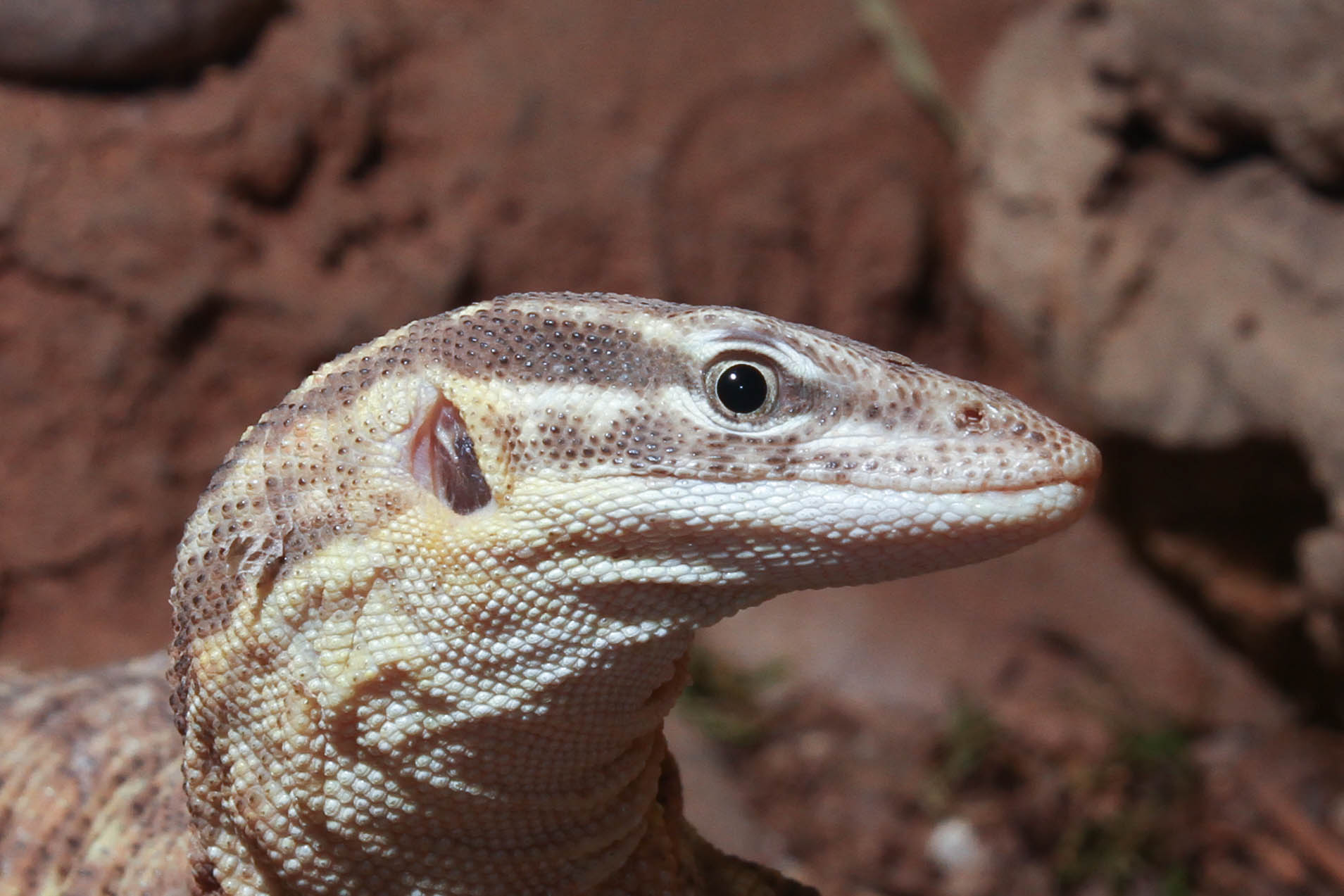
Ackie (spiny-tailed) monitor
Varanus acanthurus
A pint-sized monitor with a huge personality.
Pet trade
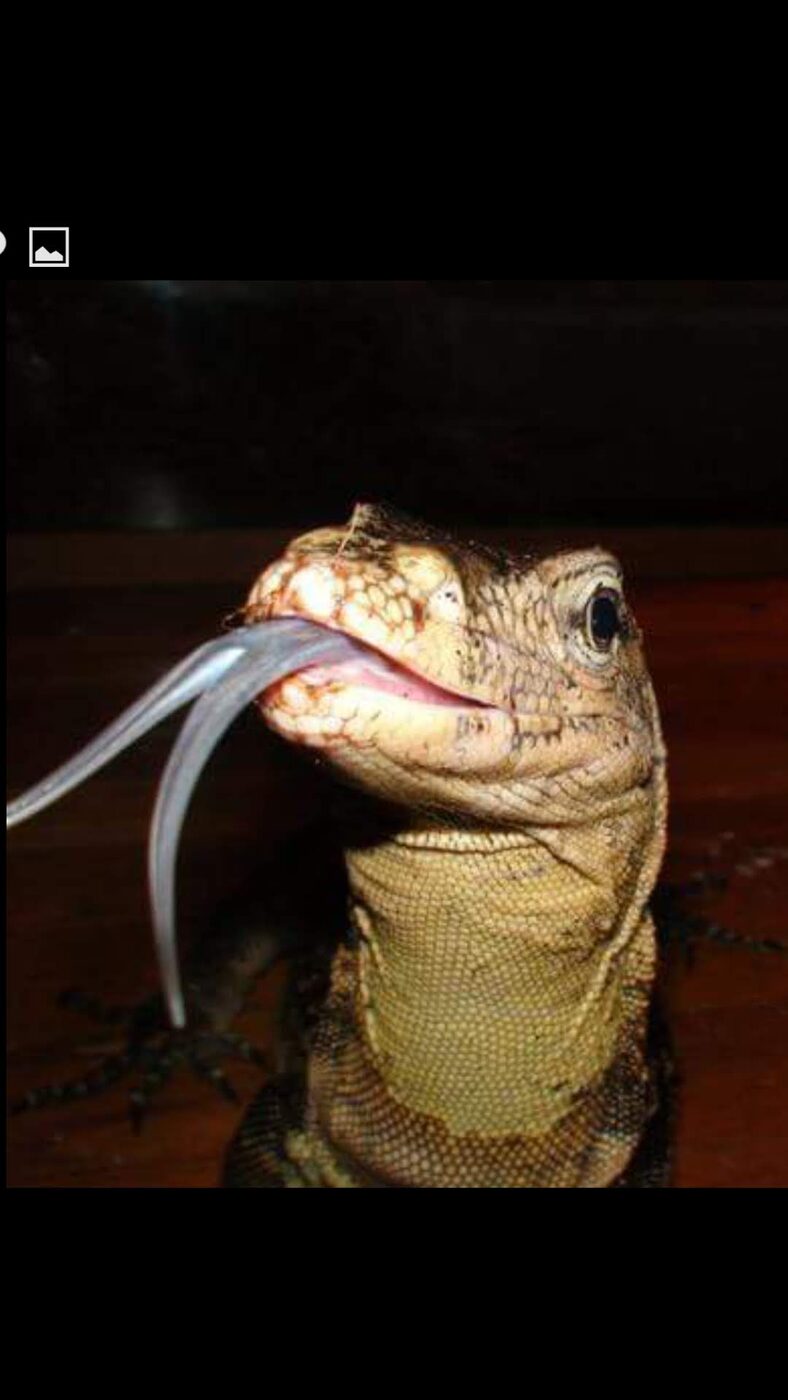
Asian water monitor
Varanus salvator
An intelligent, swimming giant: the "gentle giant" of monitors.
Pet trade
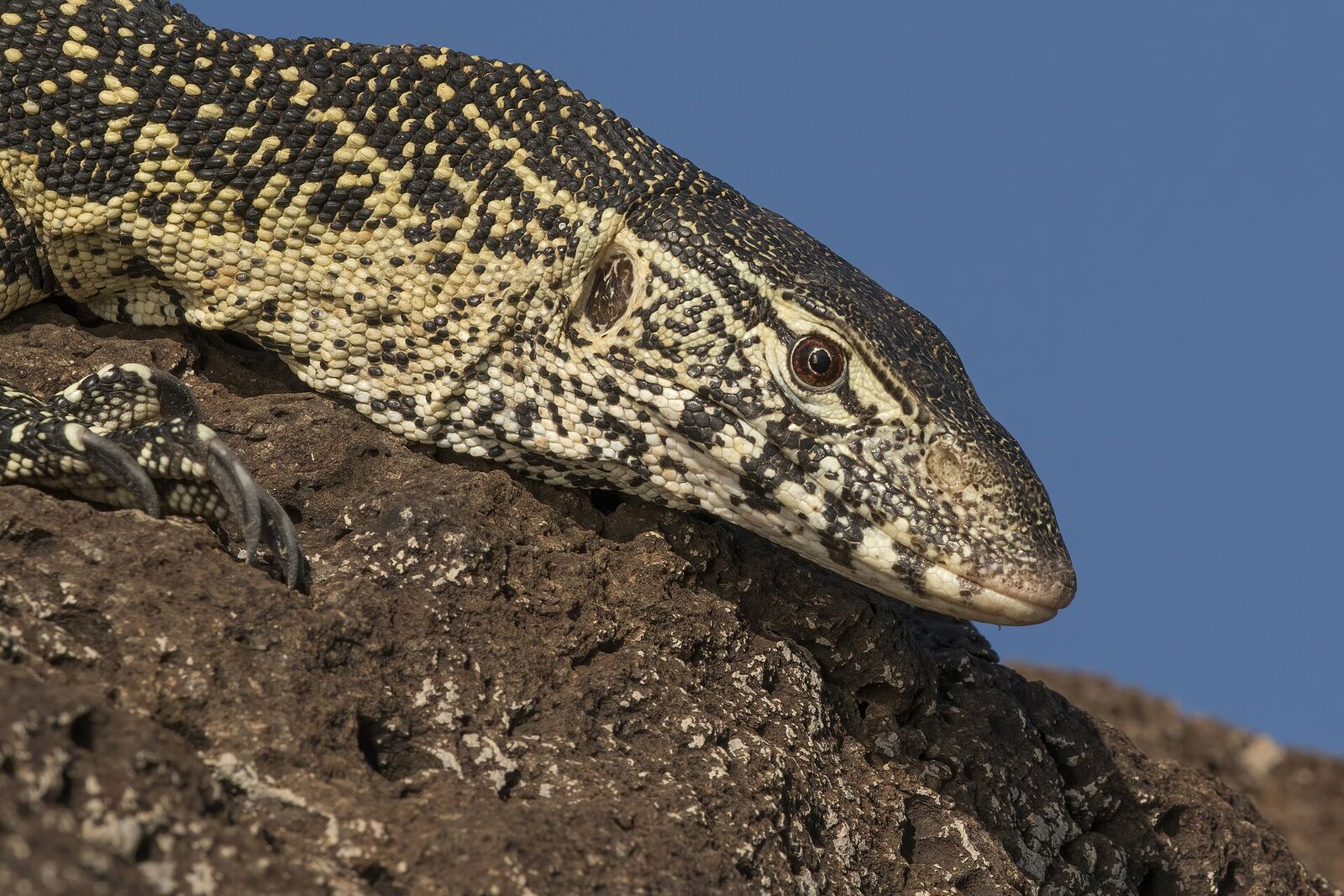
Nile monitor
Varanus niloticus
Africa's longest lizard, fast, bold and powerful.
Pet trade

Argus monitor
Varanus panoptes
Pet trade

Biak Emerald Monitor
Varanus kordensis
Pet trade

Black tree monitor
Varanus beccarii
Pet trade