Home / Fishes / Tetras, piranhas and pacus / Rainbow Wolf Fish
No federal permit to keepRainbow Wolf Fish
Erythrinus erythrinus
Fishes › Tetras, piranhas and pacus (Characiformes) › Erythrinidae (Wolf fish)
Erythrinus erythrinus, the red wolf fish, is a relatively small species of trahira (family Erythrinidae) from freshwater habitats in South America.
Intro from Wikipedia (CC BY-SA 4.0)
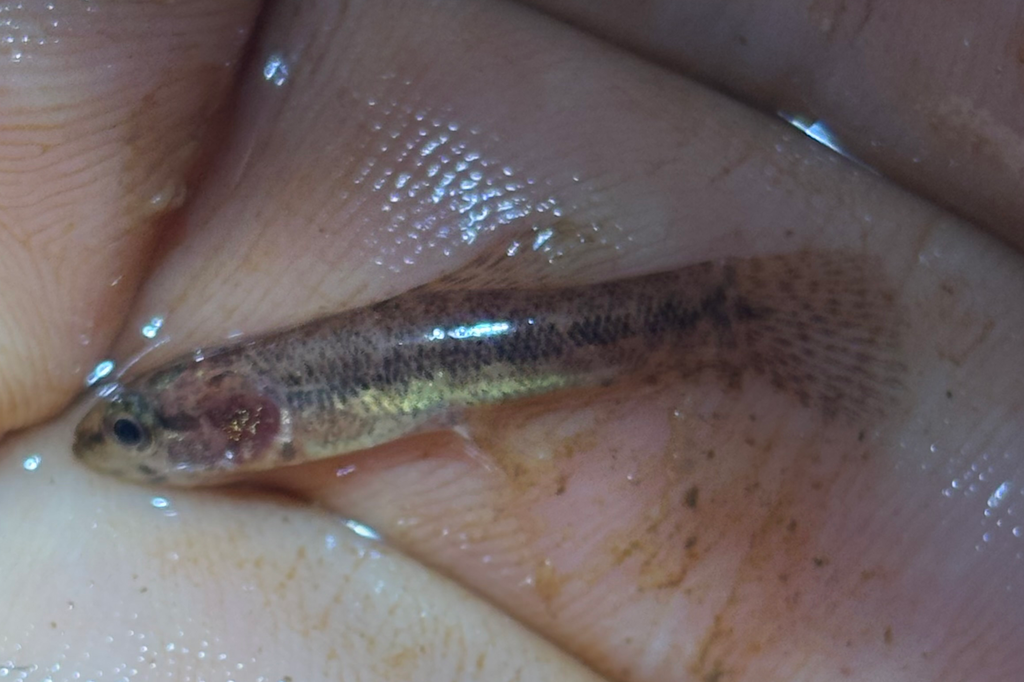
Care at a glance
Species-specific aquarium care
- Tank: At least 30 in long and 15 in front to back for one adult (adults commonly reach about 7.9 in / 20 cm).
- Water: Freshwater.
- Temperature: 72–79°F (range recorded for this species).
- pH: 5.6–7.8.
- Hardness: 0–30 dGH.
- Layout: Lives on or near the bottom: floor space and hiding places matter more than height.
- Diet: A predator: feed meaty foods sized to its mouth (frozen fish, shrimp, worms); it will eat tankmates that fit in its mouth. FishBase classes it as a carnivore.
Calculated from this species' own FishBase record: tank size from its typical adult length and swimming zone, water values from its recorded ranges. The group guide below fills in general care.
Care guide
Species care notes
- Tank: a base of at least 47 × 12 in (roughly 29 US gallons); space needed is rated “large tank”.
- Water: a fairly wide range, from slightly acidic to slightly alkaline, 72–79 °F, pH 5.5–7.5, 2–25 dGH.
- Behaviour: temperament predatory.
- Difficulty: Moderate (Seriously Fish rating).
Short excerpts from the species profile:
- Setup: “Ideally keep it in a heavily planted tank with plenty of floating vegetation, which will allow it to exhibit its natural behaviour.”
- Diet: “Feeds on both insects and fish in nature.”
- Tankmates: “Despite its fearsome appearance, it can be combined with other similarly-sized species in a large tank.”
- Breeding: “Has not been bred in the hobby.”
From the Seriously Fish profile for this species, which has the full habitat, maintenance, diet, behaviour and breeding write-up 167
Wolf fish
Applies to most species in this group. Habitat: Erythrinus and Hoplerythrinus occupy shallow vegetated tributaries and floodplain waters, while giant Hoplias aimara occur in fast rivers and rapids. [fg305-rainbow, fg305-gold, fg305-wolves]. Individual species can differ, so compare with the species numbers above and the linked sources.
Housing & setup
- For one Erythrinus erythrinus, the keeper profile specifies 120 x 30 x 30 cm; this does not apply to giant wolf fish.
- For one Hoplerythrinus unitaeniatus, the profile specifies 120 x 45 x 45 cm.
- Provide abundant refuges and floating vegetation for smaller species; leave surface access for their air breathing.
- Fit a tightly secured cover because wolf fish escape and jump.
- Adult H. aimara need expert-designed housing and fast-moving, well-oxygenated water; acrylic is recommended for very large individuals.
Diet
- Earthworms.
- Prawns and mussels.
- White fish such as lancefish; routine live feeder fish risk introducing disease.
Social life
- Keep Erythrinus singly because severe conspecific fighting is documented. Sources disagree on grouping Hoplerythrinus, so solitary housing is conservative. H. aimara may attack large companions; grouping belongs to experts with extensive space.
Handling
- Keep hands away from the mouth during maintenance; wolf fish strike equipment.
- Specialist containment is needed to move adult H. aimara: bites can penetrate gloves and transport bags.
Health watch
- Bite wounds from territorial fighting.
- Jaw and tooth injuries from H. aimara striking tank walls.
- Disease or parasites introduced with live feeder fish.
Understanding the animal
In the wild
In the wild
From this species’ own FishBase record (habitat, bottom type, water and breeding data), not its family. Good care copies these conditions.1
| Where it lives | Lives in freshwater, in rivers and streams. Stays near the bottom. Lives in creeks and marshy zones where it can survive in water with low oxygen levels due to some anatomical modification of its swim bladder which serves as a respiratory appendage. It stays on the bottom as well as at the surface among floating vegetation. |
| Water it lives in | Freshwater, 72–79 °F (22–26 °C), pH 5.6–7.8, hardness 30 dH. |
| Climate | Tropical climate. |
| Wild diet | Hunting macrofauna (predator). |
What this means for care
- Keep water within its wild range, 72–79 °F.
Native climate (measured)
Native climate (measured)
| Warm-season highs | about 90°F (up to 92°F in the hottest sampled areas) |
| Cool-season lows | about 69°F (down to 56°F in the coldest sampled areas) |
| Average temperature | 74–80°F across sampled records |
| Relative humidity | 79–84% on average (driest month about 76%) |
| Rainfall | about 2228 mm a year |
Measured at 467 wild occurrence records sampled against WorldClim 2.1 climate data (1970–2000 averages). Air conditions in the range are ecological context, not enclosure settings: microhabitats such as burrows, leaf litter or basking rocks can be cooler, warmer or more humid.
From the sources
From the sources
Quoted from the matching sections of reputable sources for this exact species. Specialist databases are used first; Wikipedia (community-edited, CC BY-SA 4.0) only fills gaps. Other sources are short credited quotes.
| Overview | Erythrinus erythrinus, the red wolf fish, is a relatively small species of trahira (family Erythrinidae) from freshwater habitats in South America. — Wikipedia (community-edited) |
| Where it lives | Home ranges Population dynamics Growth parameters Max. ages / sizes Length-weight rel. Length-frequencies Mass conversion Recruitment Abundance Life cycle Reproduction Maturity Maturity/Gills rel. — FishBase |
| Behavior | E. erythrinus can reach a maximum standard length of 20 cm, although other reports suggest it can reach about 25 cm. It feeds primarily on small fish, insects, and benthic crustaceans. Juveniles are aggressive mimics of female aplocheilid killifish, notably Laimosemion agilae, and they use this to catch male killifish that seek a mate. — Wikipedia (community-edited) |
| Biology | Obligate air-breathing; Lives in creeks and marshy zones where it can survive in water with low oxygen levels due to some anatomical modification of its swim bladder which serves as a respiratory appendage. It stays on the bottom as well as at the surface among floating vegetation. Feeds on small fishes and insects. — FishBase |
| History and naming | It was described by Marcus Elieser Bloch and Johann Gottlob Schneider in 1801, originally under the lizardfish genus Synodus. The species was first placed in Erythrinus in 1854 by Gray (under the name Erythrinus salmoneus, a junior synonym of Erythrinus erythrinus), and this treatment has been recognized by recent authorities such as Osvaldo Takeshi Oyakawa in 2003. — Wikipedia (community-edited) |
Data and studies
The numbers
The numbers
Each bar is what one source reports. Where several sources weigh in, the dashed gold band marks their average.
Adult length
Maximum recorded length. Measured as standard length (snout to the base of the tail, not counting the tail fin). Fish in home aquariums often stay smaller than wild records.
Water temperature
Range the species tolerates in nature; aim for the middle.
Water hardness
Minimum tank footprint
Seriously Fish recommends a tank base of at least 47 × 12 in (about 29 US gallons).
Sources for this sheet
- FishBase (Froese & Pauly, eds.), version 24.07 Peer-reviewed researchThe global scientific database on fishes, maintained by a consortium of research institutions; every value is referenced.
- Seriously Fish species profiles Experienced keeper or breederLong-running aquarium reference written and peer-checked by experienced fishkeepers and ichthyologists; each profile covers habitat, tank size, water, diet, behaviour and breeding.
- Seriously Fish: Erythrinus erythrinus Experienced keeper or breederAdded in the 2026 source-checked care-guide review.
- Seriously Fish: Hoplerythrinus unitaeniatus Experienced keeper or breederAdded in the 2026 source-checked care-guide review.
- Oliver Lucanus, Practical Fishkeeping: Predators: Hoplias, wolves of the water Experienced keeper or breederAdded in the 2026 source-checked care-guide review.
- Wikipedia (species article) Community referenceFree encyclopedia; useful overviews with their own citations. Intro text is quoted under CC BY-SA 4.0.
- iNaturalist (captive observations) Community referenceCommunity observation platform run by the California Academy of Sciences and National Geographic; observations marked captive show animals living in homes, zoos and aquariums.
