
Home / Amphibians / Frogs and toads / European fire-bellied toad
No federal permit to keepEuropean fire-bellied toad
Bombina bombina
Amphibians › Frogs and toads (Anura) › Bombinatoridae (Fire-bellied toads)
The European fire-bellied toad (Bombina bombina) is a species of fire-bellied toad native to eastern parts of mainland Europe, where it can be found near waterbodies such as ponds and marshes.
From Wikipedia: European fire-bellied toad, CC BY-SA 4.0 (excerpt)

Care at a glance
Species-specific values
Values researched for this exact species. Air, surface and water temperatures are listed separately, and each source is kept as published rather than averaged.
| Minimum enclosure | At least 60 x 30 x 30 cm Source: reptilesmagazine.com | |
| Water temperature | Water temperature should be room temperature. Source: reptilesmagazine.com | |
| Uvb lighting | UVB is recommended for Italian yellow-bellied toads, not this species. Source: reptilesmagazine.com |
Understanding the animal
About this animal
About this animal
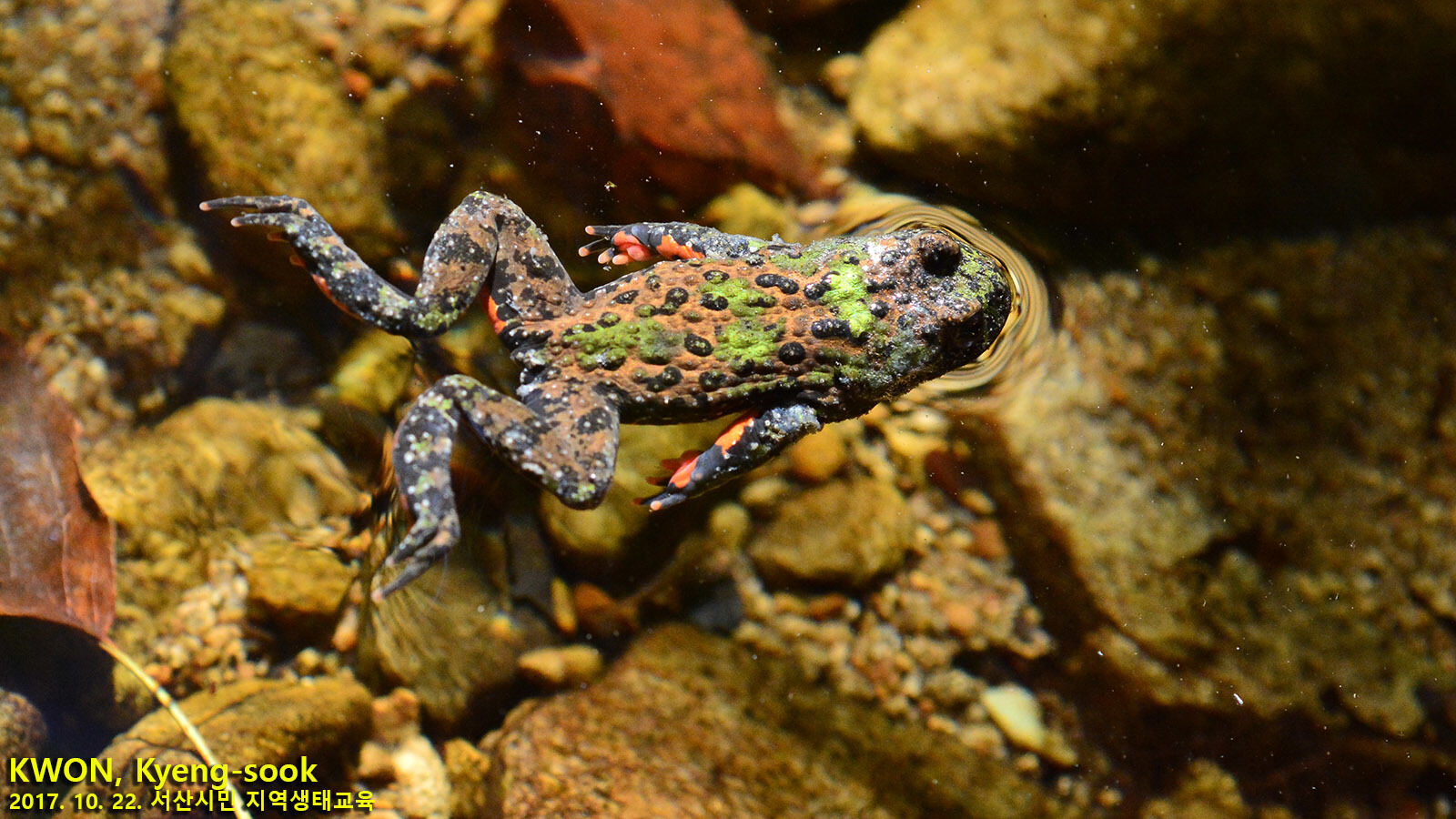
It is known for its red colored belly used to ward off predators, an example of aposematism, and its distinctive "whoop" call.
From Wikipedia: European fire-bellied toad, CC BY-SA 4.0 (excerpt)
In the wild
In the wild
| Overview | The European fire-bellied toad (Bombina bombina) is a species of fire-bellied toad native to eastern parts of mainland Europe, where it can be found near waterbodies such as ponds and marshes. It is known for its red colored belly used to ward off predators, an example of aposematism, and its distinctive "whoop" call. — From Wikipedia: European fire-bellied toad, CC BY-SA 4.0 (excerpt) |
| Where it lives | The European fire-bellied toad is found throughout Central and Eastern Europe. More particularly, its range starts in eastern Germany (including eastern Denmark and parts of southern Sweden), and then east to the Volga District of Russia where they are stopped by the Ural Mountains. The frog's most southern range is Bulgaria and the Marmara region of Turkey. — From Wikipedia: European fire-bellied toad, CC BY-SA 4.0 (excerpt) |
| Appearance and size | The European fire-bellied toad is a medium-sized frog, growing up to approximately 5.6 cm. The dorsal coloration can vary from gray to brown to green, while the stomach is red with thick black mottling. The backs of these frogs are covered in warts. — From Wikipedia: European fire-bellied toad, CC BY-SA 4.0 (excerpt) |
Native climate (measured)
Native climate (measured)
| Warm-season highs | about 76°F (up to 81°F in the hottest sampled areas) |
| Cool-season lows | about 26°F (down to 14°F in the coldest sampled areas) |
| Average temperature | 44–51°F across sampled records |
| Relative humidity | 73–79% on average (driest month about 66%) |
| Rainfall | about 589 mm a year, spread fairly evenly |
| Winters | Cool to cold winters (lows around 26°F) in much of its native range. Seasonal slowdown may be relevant, but species-specific biology determines whether brumation or hibernation occurs. |
Measured at 310 wild occurrence records sampled against WorldClim 2.1 climate data (1970–2000 averages). Air conditions in the range are ecological context, not enclosure settings: microhabitats such as burrows, leaf litter or basking rocks can be cooler, warmer or more humid.
Data and studies
Researched care notes
Researched care notes
Findings checked against veterinary, zoo, welfare, keeper and peer-reviewed sources. Air, basking-surface and water temperatures are kept separate, and where sources disagree both are shown. “Study” notes report what a paper measured, not a universal rule.
Fire-Bellied Toad
Researched for this genus; applies to its species unless a species note says otherwise.
- Provide both accessible land and shallow water, with a slope or other safe transition between them.1
- For the Oriental fire-bellied toad described, PetMD recommends a semi-aquatic setup with approximately half land and half water; this is design guidance, not a universal measured optimum.1
- Compatible same-species groups may be housed together, but introductions require observation and fighting animals require separation.1
- PetMD gives 75–78°F for enclosure temperature and 65–82°F as broader limits; it does not provide separately measured air, water and surface temperatures.1
- Minimize handling and avoid transferring skin secretions to eyes, mouth or open wounds.1
- Feed varied appropriately sized invertebrates on the dry part of the habitat; PetMD recommends prey no wider than the toad's head.1
The numbers
The numbers
Each bar is what one source reports. Where several sources weigh in, the dashed gold band marks their average.
Maximum recorded lifespan
Longest recorded lifespan reported by each database; typical lifespans are usually shorter. The AnAge record comes from an animal in human care.
Female maturity
Care articles for this species
Care articles for this species
- Care and Breeding Fire-bellied Toads (Reptiles Magazine)
- Breeding Oriental Fire-Bellied Toads (Reptiles Magazine)
Written by keepers, breeders and vets Reptiles MagazineReptiFiles
Sources for this sheet
- AnAge: The Animal Ageing and Longevity Database (Human Ageing Genomic Resources) (CC BY 3.0) Peer-reviewed researchCurated, referenced longevity and life-history records for thousands of species; maximum lifespans are often from zoo animals.
- AmphibiaWeb (University of California, Berkeley) (CC BY-NC) Peer-reviewed researchUniversity-hosted database of amphibian biology and conservation.
- GBIF Backbone Taxonomy (Global Biodiversity Information Facility) (CC BY 4.0) Peer-reviewed researchInternational scientific taxonomy used here for classification. GBIF Secretariat (2023). GBIF Backbone Taxonomy. Checklist dataset https://doi.org/10.15468/39omei, accessed via GBIF.org.
- Wikipedia (species article) (CC BY-SA 4.0) Community referenceFree encyclopedia; useful overviews with their own citations. Short excerpts are quoted under CC BY-SA 4.0, each credited with a link to its article.
- iNaturalist (captive observations) Community referenceCommunity observation platform run by the California Academy of Sciences and National Geographic; observations marked captive show animals living in homes, zoos and aquariums.
- Reptiles Magazine (care articles) Experienced keeper or breederEstablished reptile and amphibian hobby magazine; care articles are written by breeders, keepers and veterinarians.
More fire-bellied toads
Oriental fire-bellied toad
Bombina orientalis
A tough little toad with a warning-red belly.
Pet trade

Yellow-bellied toad
Bombina variegata
Pet trade
Small-webbed bell toad
Bombina microdeladigitora
Pet trade