
Home / Fishes / Wrasses, breams and drums / Goldstripe wrasse
No federal permit to keepGoldstripe wrasse
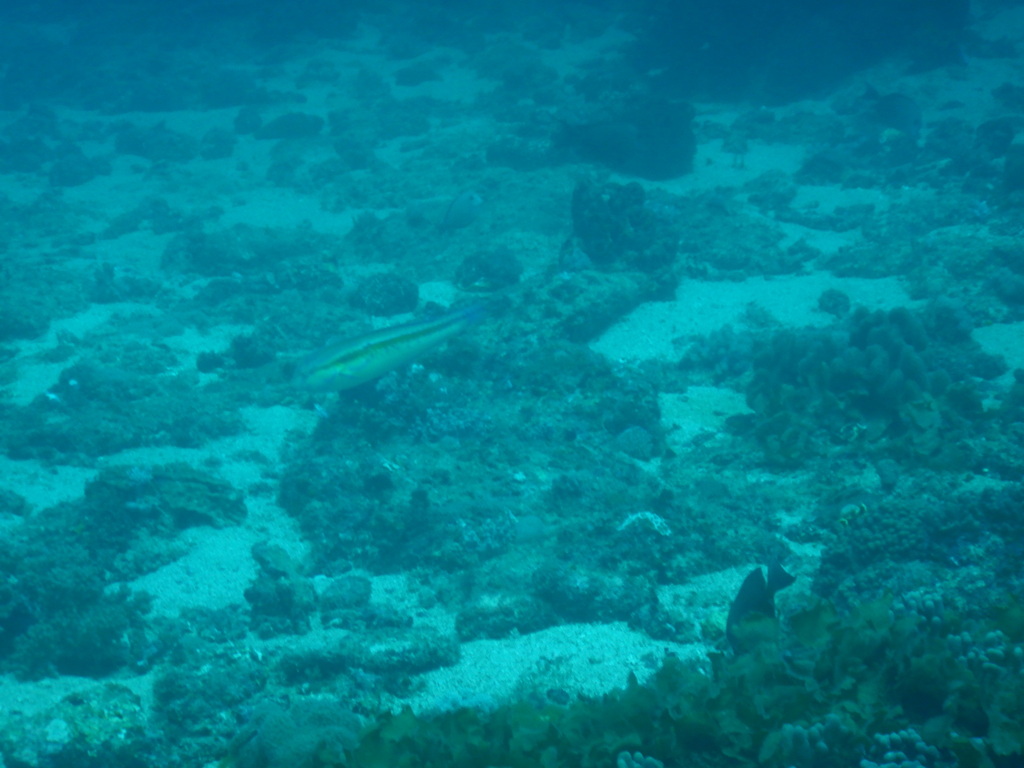
Halichoeres zeylonicus
Fishes › Wrasses, breams and drums (Eupercaria) › Labridae (Wrasses)
Care at a glance
Species-specific values
Values researched for this exact species. Air, surface and water temperatures are listed separately, and each source is kept as published rather than averaged.
| Minimum enclosure | Minimum tank volume is at least 300 L. Source: atlarium.bio | |
| Water temperature | 72–79 °F (22–26 °C) Source: atlarium.bio | |
| Diet | Feed meaty foods including mysis shrimp, brine shrimp, krill, table shrimp, and protein-rich sinking pellets. Source: atlarium.bio | |
| Feeding frequency | Feed small portions multiple times daily. Source: atlarium.bio | |
| Social housing | Usually keep singly, or as one male with multiple females in an exceptionally large tank. Source: atlarium.bio | |
| Substrate | Provide fine sand at least 5–8 cm deep. Source: atlarium.bio | |
| Minimum enclosure | 200 liter (53 gallons) minimum volume Source: reeflings.com | |
| Water temperature | 75–82 °F (24–28 °C) Source: reeflings.com | |
| Diet | Omnivore; varied meaty foods including frozen mysis shrimp, brine shrimp, and finely chopped seafood. Source: reeflings.com | |
| Social housing | Solo; may be territorial. Source: reeflings.com |
Species-specific aquarium care
- Tank: At least 30 in long and 15 in front to back for one adult (adults commonly reach about 7.9 in / 20 cm).
- Water: Marine.
- Layout: Lives around reefs and rockwork: give caves, overhangs and swimming room along the rock.
- Diet: FishBase classes it as a carnivore.
Calculated from this species' own FishBase record: tank size from its typical adult length and swimming zone, water values from its recorded ranges. The group guide below fills in general care.
Understanding the animal
In the wild
In the wild
From this species’ own FishBase record (habitat, bottom type, water and breeding data), not its family. Wild conditions are context, not enclosure settings.1
| Where it lives | Lives in the sea, in seagrass beds. Lives around reefs. |
| Climate | Tropical climate. |
Data and studies
The numbers
The numbers
Each bar is what one source reports. Where several sources weigh in, the dashed gold band marks their average.
Adult length
Maximum recorded length. Measured as total length. Fish in home aquariums often stay smaller than wild records.
Sources for this sheet
- FishBase (Froese & Pauly, eds.), version 24.07 (CC BY-NC 4.0) Peer-reviewed researchThe global scientific database on fishes, maintained by a consortium of research institutions; every value is referenced.
More wrasses

African coris
Coris gaimard
Aquarium hobby

Argus wrasse
Halichoeres argus
Aquarium hobby

Axil spot wrasse
Halichoeres podostigma
Aquarium hobby

Axilspot hogfish
Bodianus axillaris
Aquarium hobby

Barred thicklip
Hemigymnus fasciatus
Aquarium hobby

Batu coris
Coris batuensis
Aquarium hobby