
Home / Fishes / Carp, barbs, minnows, loaches / Cobitidae / Guntea loach
No federal permit to keepGuntea loach
Lepidocephalichthys guntea
Fishes › Carp, barbs, minnows, loaches (Cypriniformes) › Cobitidae (Spined loaches)
Lepidocephalichthys guntea, also known as guntea loach, scavenger loach or peppered loach, is a species of cobitid loach native to southern and south-eastern Asia.

Care at a glance
Species care notes
- Tank: a base of at least 31 × 12 in (roughly 19 US gallons); space needed is rated “modest tank”.
- Water: a fairly wide range, from slightly acidic to slightly alkaline, 68–77 °F, pH 6–8, 2–12 dGH.
- Behaviour: a shoaling fish best kept in a group; suited to a community tank.
- Difficulty: Easy (Seriously Fish rating).
Short excerpts from the species profile:
- Setup: “Not difficult to keep but must be provided with a soft, sandy substrate since some of its time will be spent completely buried, or with only eyes protruding.”
- Diet: “Chiefly a micropredator sifting mouthfuls of substrate through the gills from which insect larvae, small crustaceans and suchlike are extracted.”
- Breeding: “Presumably a seasonal spawner in nature but hasn't been bred in captivity as far as we know.”
From the Seriously Fish profile for this species, which has the full habitat, maintenance, diet, behaviour and breeding write-up 167
Understanding the animal
About this animal
About this animal
This species reaches a length of 15 centimetres (5.9 in) TL. It uses its intestines to breathe, which gives it the ability to adapt to live in a variety of stagnant and flowing environments. This fish is found in the aquarium trade.
Quoted from the Wikipedia article “Lepidocephalichthys guntea” (CC BY-SA 4.0) 175
In the wild
In the wild
From this species’ own FishBase record (habitat, bottom type, water and breeding data), not its family. Wild conditions are context, not enclosure settings.1
| Where it lives | Lives in freshwater and brackish water. Stays near the bottom. Found in flowing or even clear standing waters. |
| Climate | Tropical climate. |
Native climate (measured)
Native climate (measured)
| Warm-season highs | about 93°F (up to 104°F in the hottest sampled areas) |
| Cool-season lows | about 52°F (down to 46°F in the coldest sampled areas) |
| Average temperature | 72–80°F across sampled records |
| Relative humidity | 65–76% on average (driest month about 57%) |
| Rainfall | about 1906 mm a year, with strong wet and dry seasons |
Measured at 130 wild occurrence records sampled against WorldClim 2.1 climate data (1970–2000 averages). Air conditions in the range are ecological context, not enclosure settings: microhabitats such as burrows, leaf litter or basking rocks can be cooler, warmer or more humid.
Data and studies
The numbers
The numbers
Each bar is what one source reports. Where several sources weigh in, the dashed gold band marks their average.
Sources for this sheet
- FishBase (Froese & Pauly, eds.), version 24.07 Peer-reviewed researchThe global scientific database on fishes, maintained by a consortium of research institutions; every value is referenced.
- Seriously Fish species profiles Experienced keeper or breederLong-running aquarium reference written and peer-checked by experienced fishkeepers and ichthyologists; each profile covers habitat, tank size, water, diet, behaviour and breeding.
- Wikipedia (species article) Community referenceFree encyclopedia; useful overviews with their own citations. Intro text is quoted under CC BY-SA 4.0.
- iNaturalist (captive observations) Community referenceCommunity observation platform run by the California Academy of Sciences and National Geographic; observations marked captive show animals living in homes, zoos and aquariums.
More spined loaches
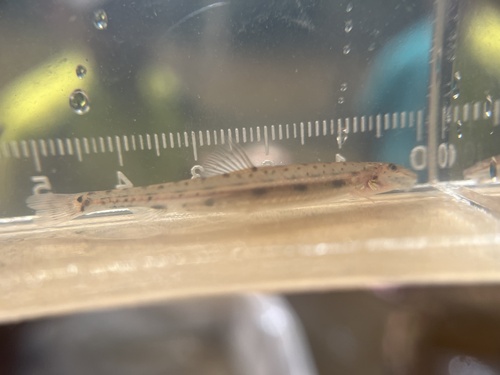
Acanthopsoides molobrion
Acanthopsoides molobrion
Aquarium hobby
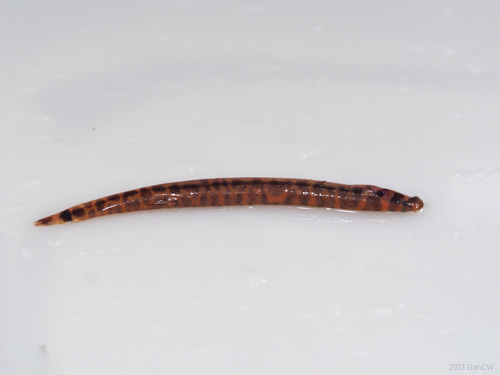
Borneo loach
Pangio shelfordii
Aquarium hobby
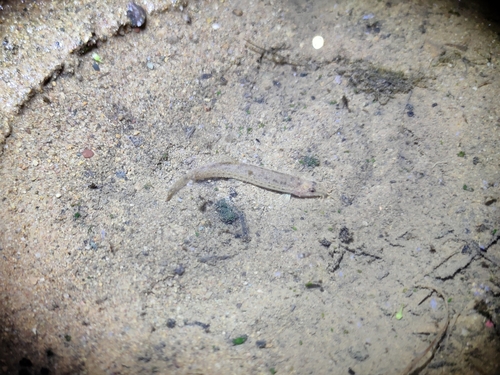
Burmese loach
Lepidocephalichthys berdmorei
Aquarium hobby

Common spiny loach
Lepidocephalichthys thermalis
Aquarium hobby

Giant Kuhli Loach
Pangio myersi
Aquarium hobby

Golden Kuhli Loach
Pangio doriae
Aquarium hobby