
Home / Fishes / Catfish / Loricariidae / Hemiancistrus guahiborum
No federal permit to keepHemiancistrus guahiborum
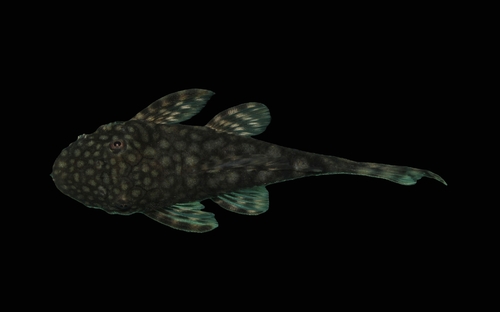
Hemiancistrus guahiborum
Fishes › Catfish (Siluriformes) › Loricariidae (Plecos)
Hemiancistrus guahiborum is a species of freshwater ray-finned fish belonging to the family Loricariidae, the suckermouth armoured catfishes, and the subfamily Hypostominae, the suckermouth catfishes.
Care at a glance
Species care notes
Read the full care sheet at Seriously Fish: habitat, aquarium size, water conditions, diet, behaviour and breeding.
Understanding the animal
About this animal
About this animal
This catfish is found in the basin of the Orinoco in the Ventuari, Caura and Ocamo rivers, as well as the Casiquiare River, which connects the Orinoco to the Rio Negro, suggesting that H. guahiborum may be found in the Rio Negro basin too. It appears in the aquarium trade, where it is usually known either as the orange-seam pleco or by its L-number, which is L-106.
From Wikipedia: Hemiancistrus guahiborum, CC BY-SA 4.0 (excerpt)
In the wild
In the wild
From this species’ own FishBase record (habitat, bottom type, water and breeding data), not its family. Wild conditions are context, not enclosure settings.1
| Where it lives | Lives in freshwater. Stays near the bottom. |
| Climate | Tropical climate. |
Data and studies
The numbers
The numbers
Each bar is what one source reports. Where several sources weigh in, the dashed gold band marks their average.
Adult length
Sources for this sheet
- Seriously Fish species profiles Experienced keeper or breederLong-running aquarium reference written and peer-checked by experienced fishkeepers and ichthyologists; each profile covers habitat, tank size, water, diet, behaviour and breeding.
- FishBase (Froese & Pauly, eds.), version 24.07 (CC BY-NC 4.0) Peer-reviewed researchThe global scientific database on fishes, maintained by a consortium of research institutions; every value is referenced.
- Wikipedia (species article) (CC BY-SA 4.0) Community referenceFree encyclopedia; useful overviews with their own citations. Short excerpts are quoted under CC BY-SA 4.0, each credited with a link to its article.
More plecos
Ancistrus claro
Ancistrus claro
Aquarium hobby

Ancistrus multispinis
Ancistrus multispinis
Aquarium hobby

Aphanotorulus unicolor
Aphanotorulus unicolor
Aquarium hobby

Armbruster's Pleco
Panaque armbrusteri
Aquarium hobby

Baryancistrus chrysolomus
Baryancistrus chrysolomus
Aquarium hobby

Baryancistrus demantoides
Baryancistrus demantoides
Aquarium hobby