
Home / Fishes / Tetras, piranhas and pacus / Characidae / Minor tetra
No federal permit to keepMinor tetra
Hyphessobrycon minor
Fishes › Tetras, piranhas and pacus (Characiformes) › Characidae (Tetras)
The minor tetra (Hyphessobrycon minor) is a species of freshwater ray-finned fish belonging to the family Acestrorhamphidae, the American characins.

Care at a glance
Species-specific values
Values researched for this exact species. Air, surface and water temperatures are listed separately, and each source is kept as published rather than averaged.
| Water temperature | 73–81 °F Source: aquaristatlas.com | |
| Diet | In captivity, it readily accepts quality flake and micro-pellet foods, as well as live and frozen foods. Source: aquaristatlas.com | |
| Social housing | Groups of six or more show schooling behaviour and better colouration; it is peaceful in a community aquarium. Source: aquaristatlas.com | |
| Substrate | A dark substrate helps show the fish’s red colouration. Source: aquaristatlas.com |
Species-specific aquarium care
- Tank: At least 24 in long and 12 in front to back for one adult (adults commonly reach about 1.2 in / 3.12 cm).
- Water: Freshwater.
- Temperature: 73–81°F (range recorded for this species).
- Layout: Uses both the bottom and open water: give open swimming space plus cover near the substrate.
Calculated from this species' own FishBase record: tank size from its typical adult length and swimming zone, water values from its recorded ranges. The group guide below fills in general care.
Understanding the animal
About this animal
About this animal
This fish is from the Essequibo River in Guyana in South America, closely resembling its relative, the serpae tetra, from the Amazon and Paraguay. These two very similar species are separated geographically, so they would not interbreed.
From Wikipedia: Minor tetra, CC BY-SA 4.0 (excerpt)
In the wild
In the wild
From this species’ own FishBase record (habitat, bottom type, water and breeding data), not its family. Wild conditions are context, not enclosure settings.1
| Where it lives | Lives in freshwater. Uses both the bottom and open water. |
| Climate | Tropical climate. |
Data and studies
The numbers
The numbers
Each bar is what one source reports. Where several sources weigh in, the dashed gold band marks their average.
Adult length
Maximum recorded length. Measured as standard length (snout to the base of the tail, not counting the tail fin). Fish in home aquariums often stay smaller than wild records.
Sources for this sheet
- FishBase (Froese & Pauly, eds.), version 24.07 (CC BY-NC 4.0) Peer-reviewed researchThe global scientific database on fishes, maintained by a consortium of research institutions; every value is referenced.
- Wikipedia (species article) (CC BY-SA 4.0) Community referenceFree encyclopedia; useful overviews with their own citations. Short excerpts are quoted under CC BY-SA 4.0, each credited with a link to its article.
More tetras

Aphyocharax dentatus
Aphyocharax dentatus
Aquarium hobby
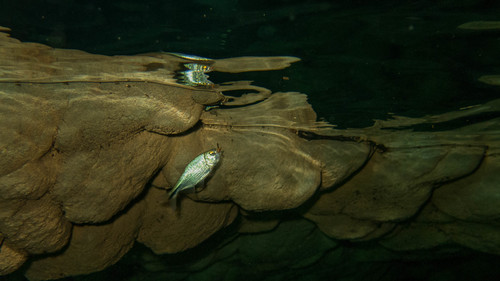
Astyanax lineatus
Astyanax lineatus
Aquarium hobby

Axelrodia stigmatias
Axelrodia stigmatias
Aquarium hobby
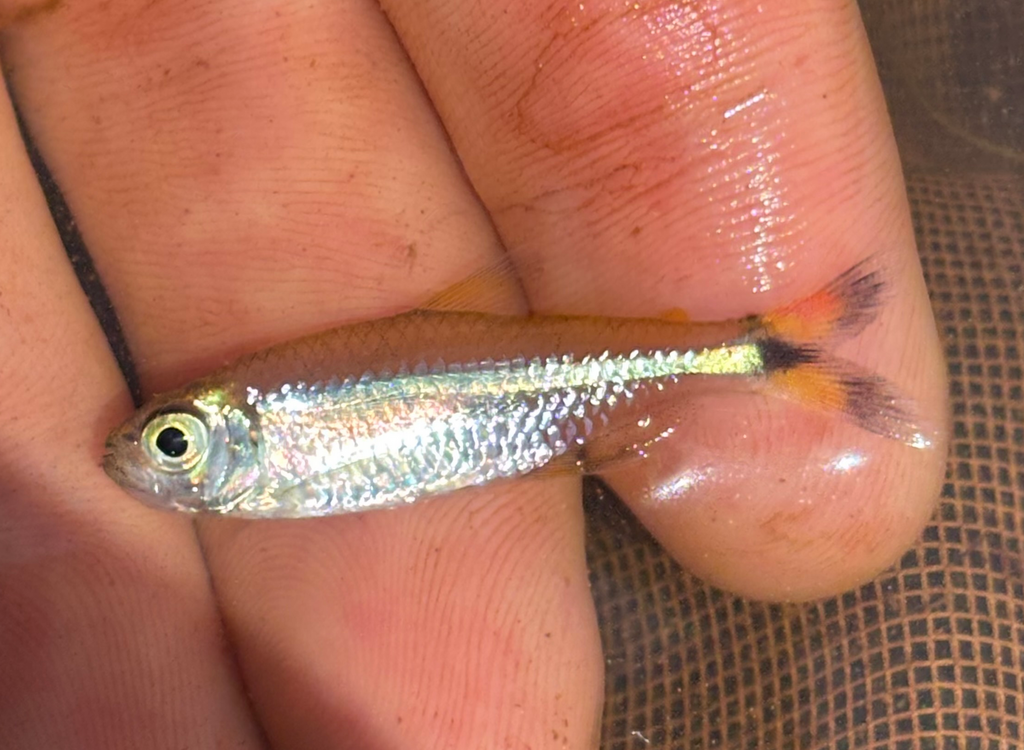
Bandtail tetra
Moenkhausia dichroura
Aquarium hobby

Black neon tetra
Hyphessobrycon herbertaxelrodi
Aquarium hobby

Black phantom tetra
Hyphessobrycon megalopterus
Aquarium hobby