
Home / Birds / Poultry and gamebirds / Japanese quail
No federal permit to keepJapanese quail
Coturnix japonica
Birds › Poultry and gamebirds (Galliformes) › Phasianidae (Chickens, pheasants and quail)
The Japanese quail (Coturnix japonica), also known as the coturnix quail, is a species of Old World quail found in East Asia.

Care at a glance
Species-specific values
Values researched for this exact species. Air, surface and water temperatures are listed separately, and each source is kept as published rather than averaged.
| Enclosure layout | Solid floor with friable litter, foraging enrichment, fine dust-bath material and covered nesting areas; enough height for safe upward jumps and flight. EFSA welfare recommendation; no numerical enclosure minimum supplied in this summary. | efsa.europa.eu |
| Minimum enclosure | At least half the roof should be covered, and one wall should be solid. Source: bitchinchickens.com | |
| Social housing | They do best in small groups of at least 2–3 birds; males may become territorial and aggressive together. Source: bitchinchickens.com | |
| Substrate | Avoid wire floors; cover concrete with clean, dry sand and a layer of dry leaves or shavings. Source: bitchinchickens.com | |
| Basking surface temperature | 65–75 °F Source: bitchinchickens.com | |
| Humidity | Keep the environment dry and avoid excessive humidity. Source: bitchinchickens.com | |
| Diet | Adults eat about 18–20 grams of commercial game bird crumbled feed daily; laying hens’ diet should contain about 24% protein. Source: bitchinchickens.com | |
| Feeding frequency | Adult Coturnix eat about 18–20 grams of commercial game bird crumbled feed per day. Source: bitchinchickens.com | |
| Minimum enclosure | Six birds are kept in a round cage 1.5 m across; the author says the larger 1.7 m² cage gives them more space than commercial minimums. Source: ourwayoflife.co.nz | |
| Uvb lighting | A low-wattage bulb on a timer can extend the laying season when daylight drops below 16 hours. Source: ourwayoflife.co.nz | |
| Diet | Use chick starter crumble for chicks; adults can have layer or meatbird crumble mixed with blood and bone or meat and bone. Source: ourwayoflife.co.nz | |
| Feeding frequency | Feed is provided ad lib. Source: ourwayoflife.co.nz | |
| Social housing | A cage can house one male and up to five females; mature males fight in confined spaces or around females. Source: ourwayoflife.co.nz | |
| Substrate | Provide a dust bath for feather care. Source: ourwayoflife.co.nz | |
| Minimum enclosure | Adults need 145 cm² of floor space per bird, or 125 cm² per bird on wire floors. Source: thepoultrysite.com | |
| Warm side air temperature | 95 °F (35 °C) Source: thepoultrysite.com | |
| Substrate | Use 5–10 cm of litter on the floor, with paper covering it for chicks’ first week. Source: thepoultrysite.com | |
| Uvb lighting | Provide laying and breeding quail with 14–18 hours of light daily; meat birds and nonbreeding males can have about 8 hours of low-intensity light. Source: thepoultrysite.com | |
| Diet | For the first six weeks, chicks need about 25% protein; laying diets should contain about 24% protein. Source: thepoultrysite.com | |
| Feeding frequency | Keep dry food available at all times. Source: thepoultrysite.com | |
| Social housing | For breeding, group one male with two or three females; colony pens can use one male to three females. Source: thepoultrysite.com |
Understanding the animal
About this animal
About this animal
First considered a subspecies of the common quail, it is now considered as a separate species. The Japanese quail has played an active role in the lives of humanity since the 12th century, and continues to play major roles in industry and scientific research.
From Wikipedia: Japanese quail, CC BY-SA 4.0 (excerpt)
In the wild
In the wild
Researched for this exact species, not its family. Wild conditions are context, not enclosure settings.12
| Where it lives | Wild Japanese quail occupy grasslands and cultivated fields in eastern Asia, favoring dense herbaceous cover. Migratory populations breed farther north and winter in southern East Asia. |
| Ground it lives on | Soil beneath grass and crop cover. |
| Wild diet | Grass and other plant seeds, plus small worms and insect larvae. |
| Behavior to plan for | A terrestrial forager that nests in concealed ground scrapes, but also undertakes substantial seasonal flights. |
Native climate (measured)
Native climate (measured)
| Warm-season highs | about 83°F (up to 89°F in the hottest sampled areas) |
| Cool-season lows | about 9°F (down to -24°F in the coldest sampled areas) |
| Average temperature | 29–72°F across sampled records |
| Relative humidity | 63–75% on average (driest month about 45%) |
| Rainfall | about 536 mm a year, with strong wet and dry seasons |
| Winters | Cool to cold winters (lows around 9°F) in much of its native range. Seasonal slowdown may be relevant, but species-specific biology determines whether brumation or hibernation occurs. |
Measured at 66 wild occurrence records sampled against WorldClim 2.1 climate data (1970–2000 averages). Air conditions in the range are ecological context, not enclosure settings: microhabitats such as burrows, leaf litter or basking rocks can be cooler, warmer or more humid.
Data and studies
The numbers
The numbers
Each bar is what one source reports. Where several sources weigh in, the dashed gold band marks their average.
Maximum recorded lifespan
Longest recorded lifespan reported by each database; typical lifespans are usually shorter.
Typical adult weight
Average adult body mass in each database (FishBase gives the maximum recorded weight).
Incubation
Female maturity
Sources for this sheet
- AnAge: The Animal Ageing and Longevity Database (Human Ageing Genomic Resources) (CC BY 3.0) Peer-reviewed researchCurated, referenced longevity and life-history records for thousands of species; maximum lifespans are often from zoo animals.
- Myhrvold et al. (2015). An amniote life-history database. Ecology 96: 3109 Peer-reviewed researchPeer-reviewed compilation of life-history data for over 21,000 birds, mammals and reptiles.
- GBIF Backbone Taxonomy (Global Biodiversity Information Facility) (CC BY 4.0) Peer-reviewed researchInternational scientific taxonomy used here for classification. GBIF Secretariat (2023). GBIF Backbone Taxonomy. Checklist dataset https://doi.org/10.15468/39omei, accessed via GBIF.org.
- Wikipedia (species article) (CC BY-SA 4.0) Community referenceFree encyclopedia; useful overviews with their own citations. Short excerpts are quoted under CC BY-SA 4.0, each credited with a link to its article.
- iNaturalist (captive observations) Community referenceCommunity observation platform run by the California Academy of Sciences and National Geographic; observations marked captive show animals living in homes, zoos and aquariums.
More chickens, pheasants and quail
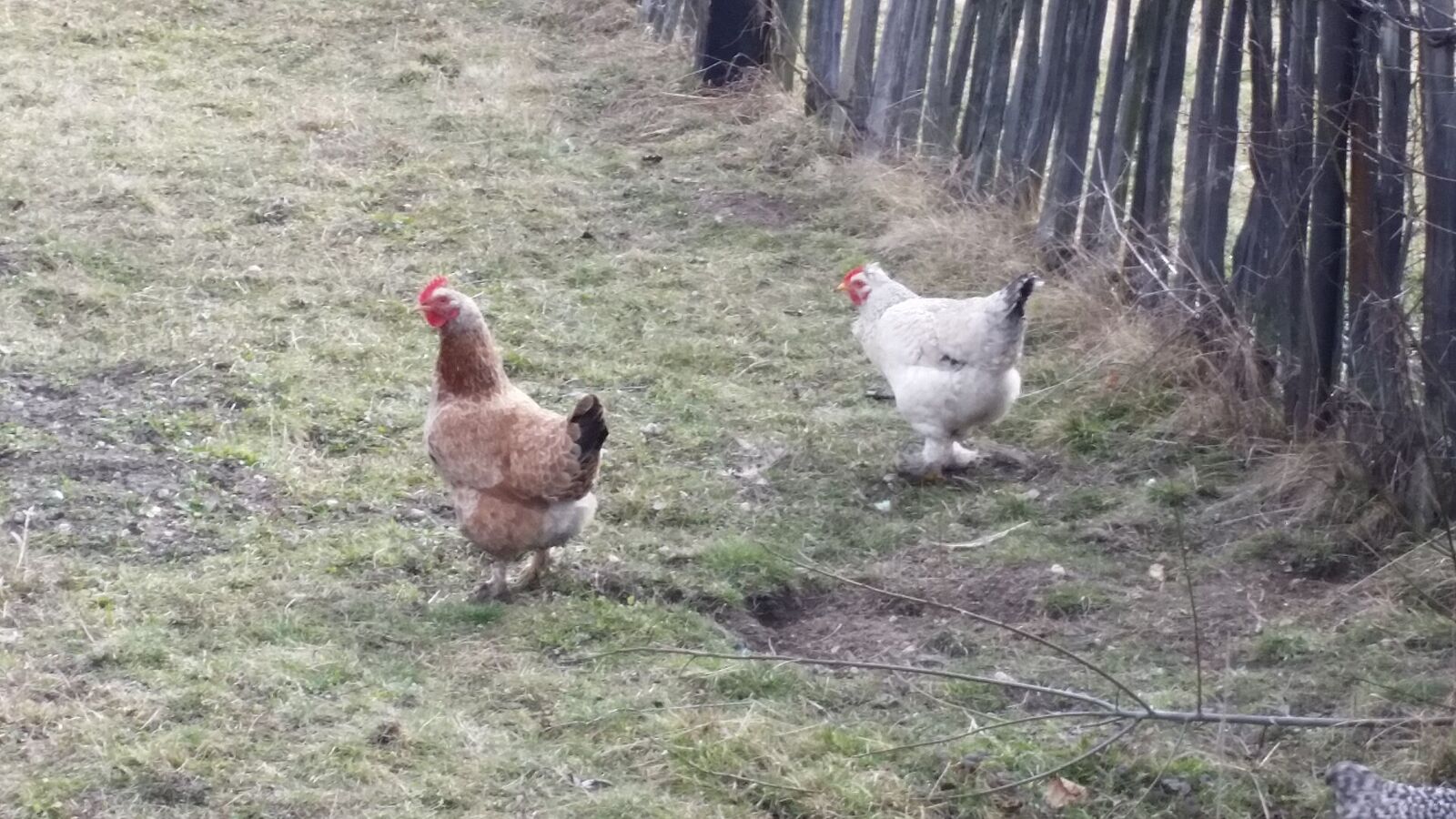
Chicken
Gallus gallus domesticus
Eggs, bug control and big personalities.
Farm & ranch

Cheer pheasant
Catreus wallichii
Aviary

Congo peafowl
Afropavo congensis
Aviary

Coqui francolin
Campocolinus coqui
Aviary

Edwards's pheasant
Lophura edwardsi
Aviary

King (blue-breasted) quail
Synoicus chinensis
Farm & ranch