Kea
Nestor notabilis
Birds › Parrots (Psittaciformes) › Psittacidae (Parrots and parakeets)
The kea ( KEE-ə; Māori: [kɛ.a]; Nestor notabilis) is a species of large parrot in the family Strigopidae that is endemic to the forested and alpine regions of the South Island of New Zealand.

Care guide
Specialist parrots (kea, palm and black cockatoos)
Applies to most species in this group. Habitat: Mountains and forests of Australasia. Individual species can differ, so compare with the species numbers above and the linked sources.
Housing & setup
- Kept almost entirely by zoos and specialist breeders in large, enriched aviaries.
Diet
- Species-specific diets; black cockatoos eat seeds and nuts of native trees.
Health watch
- Highly intelligent; poorly suited to cages.
Understanding the animal
About this animal
About this animal
About 48 cm (19 in) long, it is mostly olive-green, with brilliant orange under its wings, and has a large, narrow, curved, grey-brown upper beak. Its omnivorous diet consists mainly of roots, leaves, berries, nectar, and insects, but also includes carrion.
In the wild
In the wild
Quoted from the matching sections of reputable sources for this exact species. Specialist databases are used first; Wikipedia (community-edited, CC BY-SA 4.0) only fills gaps. Other sources are short credited quotes.
| Overview | The kea (; Nestor notabilis) is a species of large parrot in the family Strigopidae that is endemic to the forested and alpine regions of the South Island of New Zealand. About 48 cm long, it is mostly olive-green, with brilliant orange under its wings, and has a large, narrow, curved, grey-brown upper beak. Its omnivorous diet consists mainly of roots, leaves, berries, nectar, and insects, but also includes carrion. It was once killed for bounty due to concern by sheep farmers that it attacked livestock, especially sheep. — Wikipedia (community-edited) |
| Where it lives | Kea live in wooded valleys and southern beech ( Nothofagus ) forests that line sub-alpine scrublands at 600 to 2000 m. — Animal Diversity Web |
| Social life and communication | Kea perceive visual, tactile, auditory, and chemical stimuli. — Animal Diversity Web |
| Wild diet | Kea are opportunistic, omnivorous parrots. — Animal Diversity Web |
| Behavior | Kea are highly intelligent, social birds. — Animal Diversity Web |
| Reproduction | Kea have a polygynous mating system. — Animal Diversity Web |
| Lifespan | Kea can live 14.4 years in captivity. — Animal Diversity Web |
| Appearance and size | Kea are crow-sized parrots, about 48 cm long as adults. — Animal Diversity Web |
| History and naming | The kea was described by ornithologist John Gould in 1856, from two specimens shown to him by Walter Mantell, who obtained the birds in Murihiku. Eight years earlier, some elderly Māori had told Mantell about the bird, and how it used to visit the coast in winter but had not been seen in recent times. Mantell subsequently investigated and obtained the birds. — Wikipedia (community-edited) |
Native climate (measured)
Native climate (measured)
| Warm-season highs | about 63°F (up to 66°F in the hottest sampled areas) |
| Cool-season lows | about 27°F (down to 24°F in the coldest sampled areas) |
| Average temperature | 42–50°F across sampled records |
| Relative humidity | 71–75% on average (driest month about 67%) |
| Rainfall | about 3138 mm a year, spread fairly evenly |
| Winters | Cool to cold winters (lows around 27°F) in much of its native range. Seasonal slowdown may be relevant, but species-specific biology determines whether brumation or hibernation occurs. |
Measured at 94 wild occurrence records sampled against WorldClim 2.1 climate data (1970–2000 averages). Air conditions in the range are ecological context, not enclosure settings: microhabitats such as burrows, leaf litter or basking rocks can be cooler, warmer or more humid.
Profile
Profile
Researched for this exact species. Sources are listed under In the wild above.
History
The kea was described by ornithologist John Gould in 1856, from two specimens shown to him by Walter Mantell, who obtained the birds in Murihiku. Eight years earlier, some elderly Māori had told Mantell about the bird, and how it used to visit the coast in winter but had not been seen in recent times. Mantell subsequently investigated and obtained the birds.
Data and studies
Researched care notes
Researched care notes
Findings checked against veterinary, zoo, welfare, keeper and peer-reviewed sources. Air, basking-surface and water temperatures are kept separate, and where sources disagree both are shown. “Study” notes report what a paper measured, not a universal rule.
Kea (species)
- The manual strongly recommends managed conspecific company, considering seasonal and individual social differences.1
- Specific nutrient requirements remain incompletely known; some targets are approximated from poultry and other taxa. Evidence gap.1
- Energy equations are starting estimates. Assess weight, condition, activity, season, and reproductive state.1
The numbers
The numbers
Each bar is what one source reports. Where several sources weigh in, the dashed gold band marks their average.
Maximum recorded lifespan
Longest recorded lifespan reported by each database; typical lifespans are usually shorter. The AnAge record comes from an animal in human care.
Typical adult weight
Average adult body mass in each database (FishBase gives the maximum recorded weight).
Veterinary & husbandry research
Veterinary & husbandry research
- Kea (Nestor notabilis) decide early when to wait in food exchange task Schwing R et al., Journal of comparative psychology (Washington, D.C.: 1983) 2017
- Testing social learning in a wild mountain parrot, the kea (Nestor notabilis) Gajdon GK et al., Learning & behavior 2004
- Self-care tooling innovation in a disabled kea (Nestor notabilis) Bastos APM et al., Scientific reports 2021
- The evolution of the spindlin gene in birds: sequence analysis of an intron of the spindlin W and Z gene reveals four major divisions of the Psittaciformes de Kloet RS et al., Molecular phylogenetics and evolution 2005
Peer-reviewed papers that mention this species alongside captivity, zoos, veterinary care or aquaculture. Some cover several species or mention it only in passing, so check the abstract. See all 9 on PubMed → 170
Sources for this sheet
- AnAge: The Animal Ageing and Longevity Database (Human Ageing Genomic Resources) Peer-reviewed researchCurated, referenced longevity and life-history records for thousands of species; maximum lifespans are often from zoo animals.
- Myhrvold et al. (2015). An amniote life-history database. Ecology 96: 3109 Peer-reviewed researchPeer-reviewed compilation of life-history data for over 21,000 birds, mammals and reptiles.
- Species+ (UNEP-WCMC and the CITES Secretariat) Zoo, university or veterinaryThe official database of species listed under CITES.
- USFWS International Affairs: CITES Zoo, university or veterinaryFederal agency that issues CITES permits.
- 9 CFR 2.1: Animal Welfare Act licensing (USDA) Zoo, university or veterinaryWho needs a USDA license to breed, sell or exhibit animals.
- Merck Veterinary Manual: Management of pet birds Zoo, university or veterinaryThe Merck Veterinary Manual: a standard veterinary reference written and reviewed by veterinary specialists.
- Merck Veterinary Manual: Nutritional diseases of pet birds Zoo, university or veterinaryThe Merck Veterinary Manual: a standard veterinary reference written and reviewed by veterinary specialists.
- Merck Veterinary Manual: Management of zoo animals Zoo, university or veterinaryThe Merck Veterinary Manual: a standard veterinary reference written and reviewed by veterinary specialists.
- Merck Veterinary Manual: Nutrition: exotic and zoo animals Zoo, university or veterinaryThe Merck Veterinary Manual: a standard veterinary reference written and reviewed by veterinary specialists.
- GBIF Backbone Taxonomy (Global Biodiversity Information Facility) Peer-reviewed researchInternational scientific taxonomy used here for classification.
- Wikipedia (species article) Community referenceFree encyclopedia; useful overviews with their own citations. Intro text is quoted under CC BY-SA 4.0.
- PubMed (U.S. National Library of Medicine) Peer-reviewed researchIndex of peer-reviewed veterinary, zoo and husbandry research.
More parrots and parakeets
 In-depth
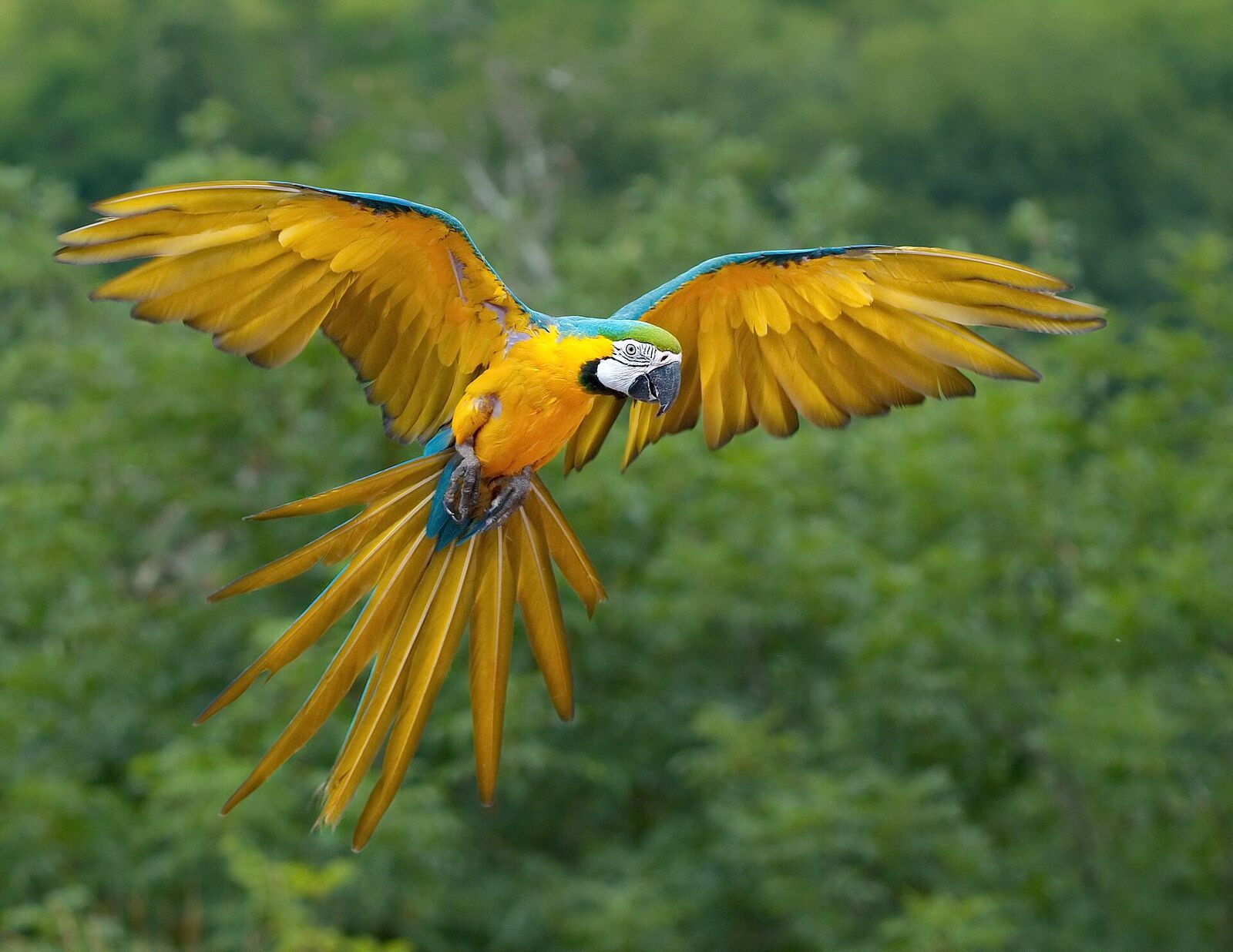
Blue-and-yellow macaw
Ara ararauna
A loud, brilliant, lifelong commitment.
Pet trade
 In-depth
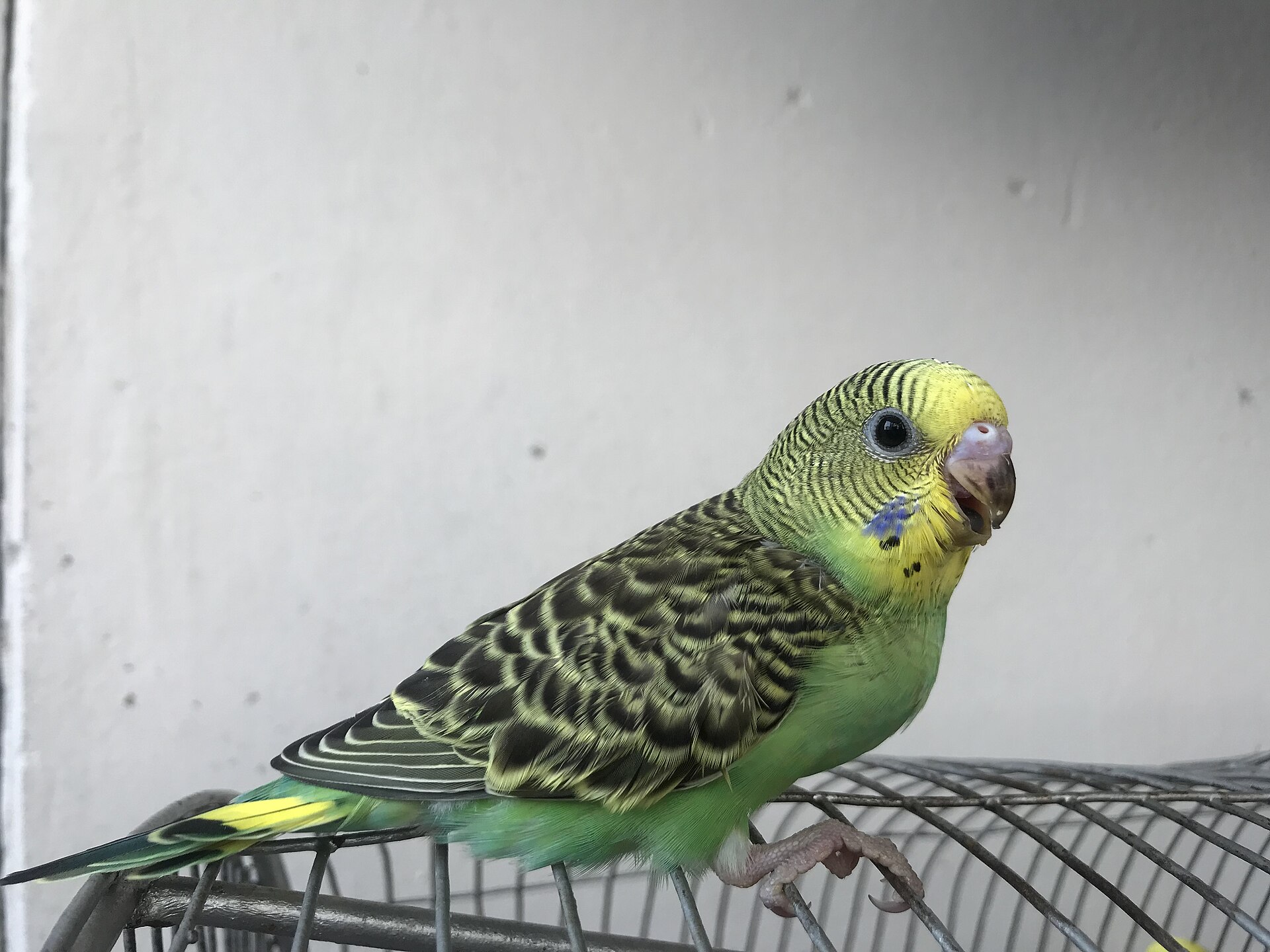
Budgerigar
Melopsittacus undulatus
A small parrot with a big vocabulary.
Pet trade
 In-depth
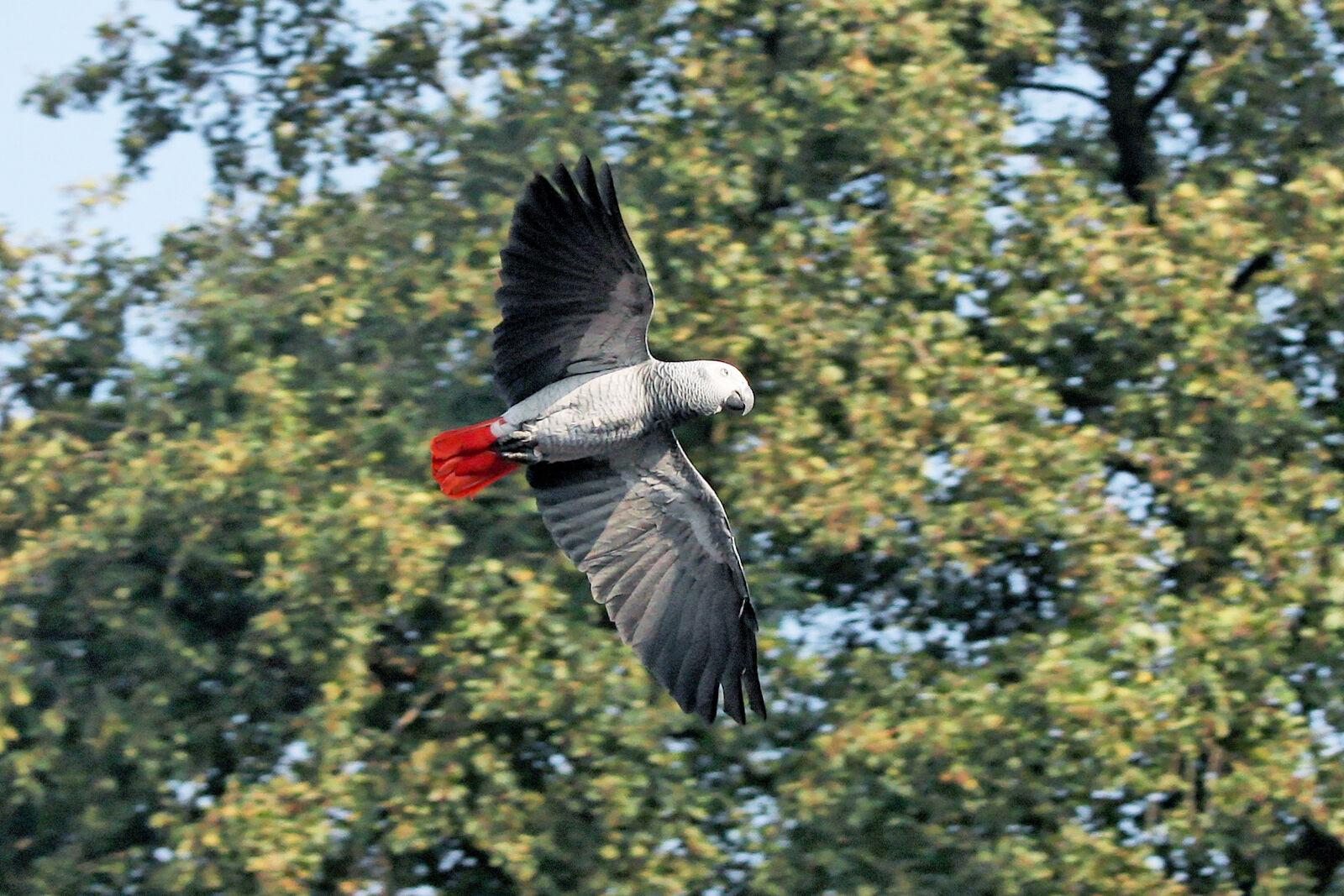
Gray parrot (Congo African grey)
Psittacus erithacus
One of the most intelligent birds on Earth.
Pet trade

Hyacinth macaw
Anodorhynchus hyacinthinus
Pet trade

Rosy-faced lovebird
Agapornis roseicollis
Pet trade