
Home / Fishes / Gouramis, bettas, snakeheads / Kissing gourami
No federal permit to keepKissing gourami
Helostoma temminckii
Fishes › Gouramis, bettas, snakeheads (Anabantiformes) › Helostomatidae (Kissing gouramis)
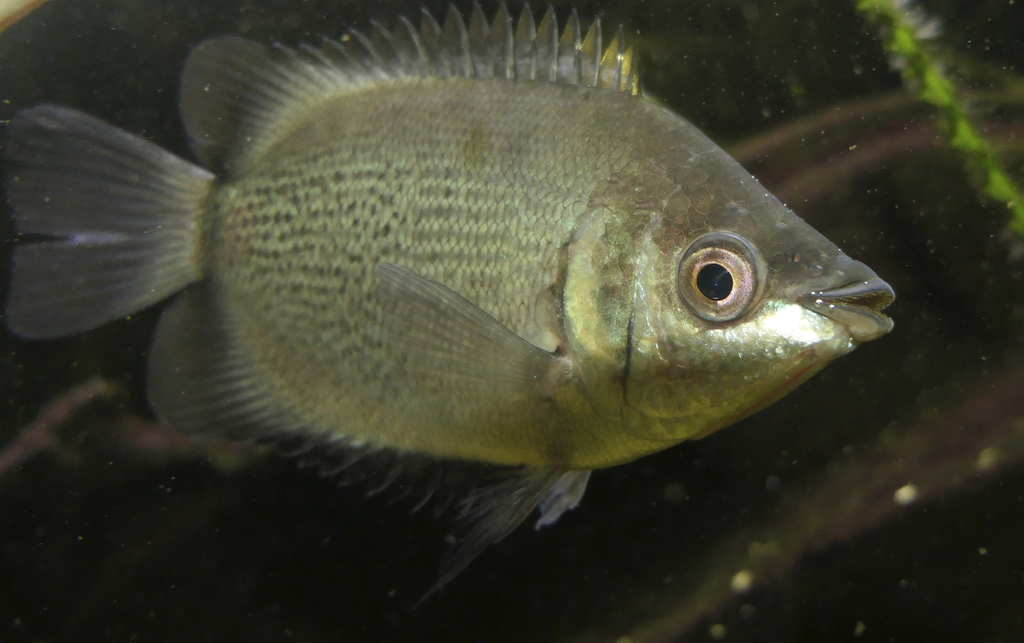
Kissing gouramis, also known as kissing fish or kissers (Helostoma temminckii), are medium-sized tropical freshwater fish comprising the monotypic labyrinth fish family Helostomatidae (from the Greek elos [stud, nail], stoma [mouth]).
Care at a glance
Species-specific values
Values researched for this exact species. Air, surface and water temperatures are listed separately, and each source is kept as published rather than averaged.
| Minimum enclosure | Recommended minimum tank size is 100 gallons. Source: aquariadise.com | |
| Water temperature | 72–82 °F Source: aquariadise.com | |
| Diet | Omnivorous; offer plant- and animal-based foods, including algae, small prepared/live foods, and vegetables. Source: aquariadise.com | |
| Water temperature | 72–86 °F (22–30 °C) Source: seriouslyfish.com | |
| Diet | Offer flake or small pellets, small live or frozen foods regularly, and dried foods with vegetable matter. Source: seriouslyfish.com | |
| Social housing | Can be kept in groups; purchase juveniles and introduce them together, and do not keep just two. Source: seriouslyfish.com |
Species-specific aquarium care
- Tank: At least 60 in long and 24 in front to back for one adult (adults commonly reach about 11.8 in / 30 cm).
- Water: Freshwater.
- Temperature: 72–82°F (range recorded for this species).
- pH: 6–8.
- Hardness: 5–19 dGH.
- Layout: Uses both the bottom and open water: give open swimming space plus cover near the substrate.
- Diet: FishBase classes it as a omnivore.
Calculated from this species' own FishBase record: tank size from its typical adult length and swimming zone, water values from its recorded ranges. The group guide below fills in general care.
Understanding the animal
About this animal
About this animal
These fish originate from Mainland Southeast Asia, the Greater Sundas and nearby smaller islands, but have also been introduced outside their native range. They are regarded as a food fish and they are sometimes farmed.
From Wikipedia: Kissing gourami, CC BY-SA 4.0 (excerpt)
In the wild
In the wild
From this species’ own FishBase record (habitat, bottom type, water and breeding data), not its family. Wild conditions are context, not enclosure settings.1
| Where it lives | Lives in freshwater, in rivers and streams, lakes, rice paddies, estuaries. Uses both the bottom and open water. |
| Climate | Tropical climate. |
| Behavior to plan for | Breeding: open water/substratum egg scatterers. |
Data and studies
The numbers
The numbers
Each bar is what one source reports. Where several sources weigh in, the dashed gold band marks their average.
Adult length
Maximum recorded length. Measured as total length. Fish in home aquariums often stay smaller than wild records.
Sources for this sheet
- FishBase (Froese & Pauly, eds.), version 24.07 (CC BY-NC 4.0) Peer-reviewed researchThe global scientific database on fishes, maintained by a consortium of research institutions; every value is referenced.
- Wikipedia (species article) (CC BY-SA 4.0) Community referenceFree encyclopedia; useful overviews with their own citations. Short excerpts are quoted under CC BY-SA 4.0, each credited with a link to its article.
- iNaturalist (captive observations) Community referenceCommunity observation platform run by the California Academy of Sciences and National Geographic; observations marked captive show animals living in homes, zoos and aquariums.