
Home / Reptiles / Lizards / Varanidae / Lace monitor
Some federal rules applyLace monitor
Varanus varius
Reptiles › Lizards (Lacertilia) › Varanidae (Monitor lizards)
The lace monitor (Varanus varius), also known as the tree goanna, is a member of the monitor lizard family native to eastern Australia.
From Wikipedia: Lace monitor, CC BY-SA 4.0 (excerpt)

Care at a glance
Species-specific values
Values researched for this exact species. Air, surface and water temperatures are listed separately, and each source is kept as published rather than averaged.
| Minimum enclosure | The adult monitors were housed in adjoining outdoor pits with combined measurements of 17 × 7 m. Source: amazingamazon.com.au | |
| Social housing | The author found individually housed lace monitors seemed to settle down more rapidly than group-housed ones. Source: amazingamazon.com.au | |
| Feeding frequency | Feeding took place most of the year except in colder winter months; the author did not feed them when it was cold. Source: amazingamazon.com.au |
Understanding the animal
About this animal
About this animal
A large lizard, it can reach 2 metres (6.6 ft) in total length and 14 kilograms (31 lb) in weight. The lace monitor is considered to be a least-concern species according to the International Union for Conservation of Nature.
From Wikipedia: Lace monitor, CC BY-SA 4.0 (excerpt)
In the wild
In the wild
| Overview | The lace monitor (Varanus varius), also known as the tree goanna, is a member of the monitor lizard family native to eastern Australia. A large lizard, it can reach 2 m in total length and 14 kg in weight. The lace monitor is considered to be a least-concern species according to the International Union for Conservation of Nature. — From Wikipedia: Lace monitor, CC BY-SA 4.0 (excerpt) |
| Where it lives | These common terrestrial and often arboreal monitors are found in eastern Australia and range from Cape Bedford on Cape York Peninsula to south-eastern South Australia. They frequent both open and closed forests and forage over long distances (up to 3 km a day). The lace monitor is considered to be a least-concern species according to the International Union for Conservation of Nature. — From Wikipedia: Lace monitor, CC BY-SA 4.0 (excerpt) |
| Wild diet | Lace monitors are predominantly carrion eaters, feeding on already dead carcasses of other wildlife. They consist of insects, reptiles, small mammals, birds, with eggs and young birds and mammals making up a larger part of their diet in spring and early summer. Lace monitors search for food on the ground, retreating to a nearby tree if disturbed. — From Wikipedia: Lace monitor, CC BY-SA 4.0 (excerpt) |
| Behavior | Despite its large size and mass, the lace monitor is an adept climber. One was recorded climbing a brick wall to seek shelter in a thunderstorm. Young lace monitors are even more arboreal than adults. — From Wikipedia: Lace monitor, CC BY-SA 4.0 (excerpt) |
| Reproduction | In at least the temperate regions, the breeding season takes place in the summer. Male lace monitors fight each other by grappling while standing on the hind legs in the breeding season, and up to six males may gather around a receptive female to try and court her. — From Wikipedia: Lace monitor, CC BY-SA 4.0 (excerpt) |
| History and naming | John White, the surgeon-general of New South Wales, described this species as the variegated lizard (Lacerta varia) in 1790. George Shaw reported that several specimens were taken back to England. French naturalist François Marie Daudin gave it the name Tupinambis variegatus in 1802, and noted two forms. — From Wikipedia: Lace monitor, CC BY-SA 4.0 (excerpt) |
Read about this species in the wild at The Reptile Database.
Native climate (measured)
Native climate (measured)
| Warm-season highs | about 83°F (up to 87°F in the hottest sampled areas) |
| Cool-season lows | about 44°F (down to 38°F in the coldest sampled areas) |
| Average temperature | 58–68°F across sampled records |
| Relative humidity | 68–72% on average (driest month about 65%) |
| Rainfall | about 1200 mm a year, spread fairly evenly |
Measured at 127 wild occurrence records sampled against WorldClim 2.1 climate data (1970–2000 averages). Air conditions in the range are ecological context, not enclosure settings: microhabitats such as burrows, leaf litter or basking rocks can be cooler, warmer or more humid.
Profile
Profile
Researched for this exact species. Sources are listed under In the wild above.
History
John White, the surgeon-general of New South Wales, described this species as the variegated lizard (Lacerta varia) in 1790. George Shaw reported that several specimens were taken back to England. French naturalist François Marie Daudin gave it the name Tupinambis variegatus in 1802, and noted two forms.
From Wikipedia: Lace monitor, CC BY-SA 4.0 (excerpt)
Data and studies
The numbers
The numbers
Each bar is what one source reports. Where several sources weigh in, the dashed gold band marks their average.
Maximum recorded lifespan
Longest recorded lifespan reported by each database; typical lifespans are usually shorter. The AnAge record comes from an animal in human care.
Typical adult weight
Average adult body mass in each database (FishBase gives the maximum recorded weight).
Adult snout-to-vent length
Body length without the tail.
Incubation
Veterinary & husbandry research
Veterinary & husbandry research
- Revision of Acanthotaenia von Linstow, 1903 (Cestoda: Proteocephalidae), parasites of monitors (Varanus spp.), based on morphological and molecular data de Chambrier A et al., Parasitology research 2019
Peer-reviewed papers that mention this species alongside captivity, zoos, veterinary care or aquaculture. Some cover several species or mention it only in passing, so check the abstract. PubMed
Sources for this sheet
- AnAge: The Animal Ageing and Longevity Database (Human Ageing Genomic Resources) (CC BY 3.0) Peer-reviewed researchCurated, referenced longevity and life-history records for thousands of species; maximum lifespans are often from zoo animals.
- Myhrvold et al. (2015). An amniote life-history database. Ecology 96: 3109 Peer-reviewed researchPeer-reviewed compilation of life-history data for over 21,000 birds, mammals and reptiles.
- Species+ (UNEP-WCMC and the CITES Secretariat) Zoo, university or veterinaryThe official database of species listed under CITES. UNEP (2026). The Species+ Website. Nairobi, Kenya. Compiled by UNEP-WCMC, Cambridge, UK. Available at: www.speciesplus.net. [Accessed 04/10/2026].
- USFWS International Affairs: CITES Zoo, university or veterinaryFederal agency that issues CITES permits.
- The Reptile Database Peer-reviewed researchScientist-curated catalog of every reptile species, with taxonomy and literature.
- GBIF Backbone Taxonomy (Global Biodiversity Information Facility) (CC BY 4.0) Peer-reviewed researchInternational scientific taxonomy used here for classification. GBIF Secretariat (2023). GBIF Backbone Taxonomy. Checklist dataset https://doi.org/10.15468/39omei, accessed via GBIF.org.
- Wikipedia (species article) (CC BY-SA 4.0) Community referenceFree encyclopedia; useful overviews with their own citations. Short excerpts are quoted under CC BY-SA 4.0, each credited with a link to its article.
- PubMed (U.S. National Library of Medicine) Peer-reviewed researchIndex of peer-reviewed veterinary, zoo and husbandry research.
- iNaturalist (captive observations) Community referenceCommunity observation platform run by the California Academy of Sciences and National Geographic; observations marked captive show animals living in homes, zoos and aquariums.
More monitor lizards
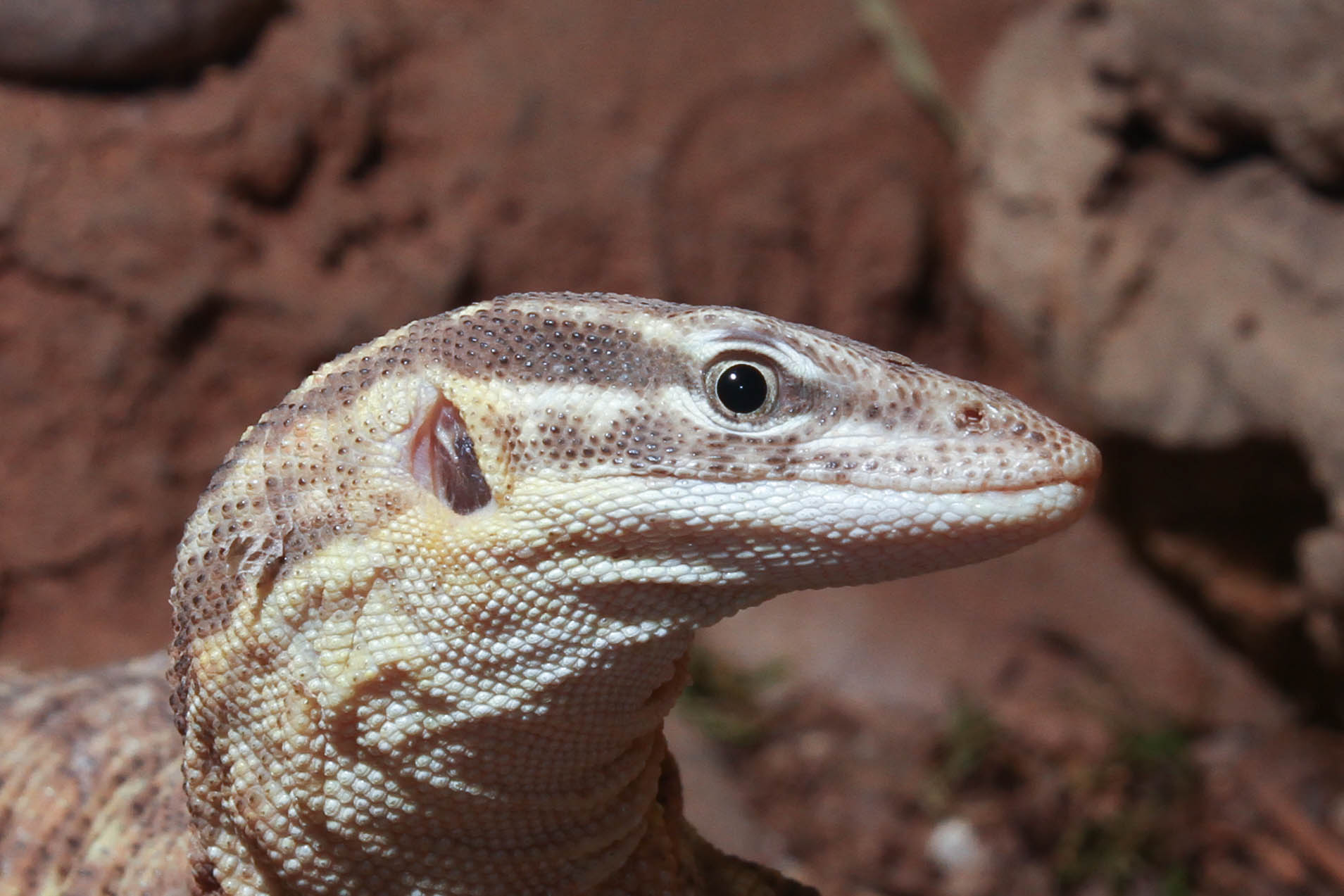
Ackie (spiny-tailed) monitor
Varanus acanthurus
A pint-sized monitor with a huge personality.
Pet trade
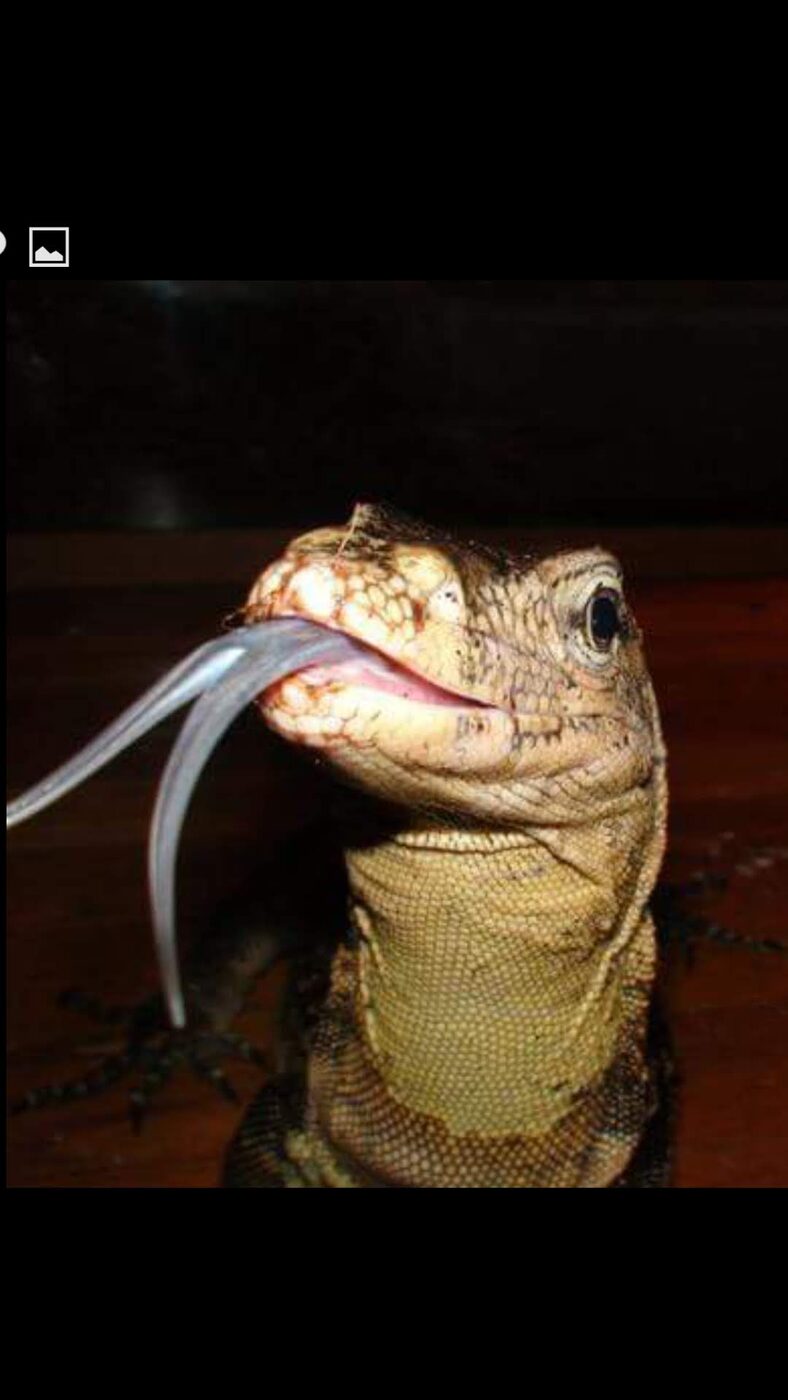
Asian water monitor
Varanus salvator
An intelligent, swimming giant: the "gentle giant" of monitors.
Pet trade
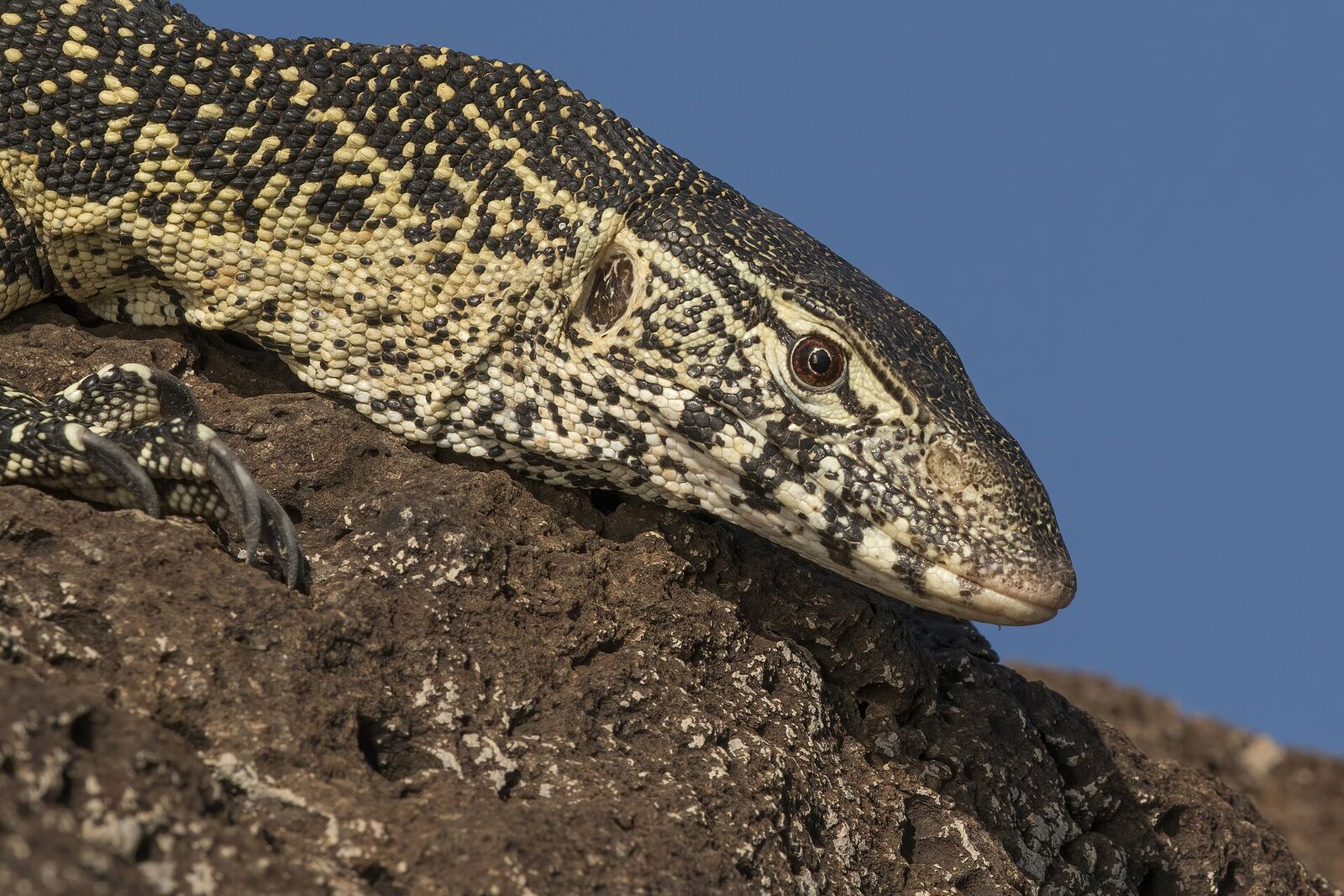
Nile monitor
Varanus niloticus
Africa's longest lizard, fast, bold and powerful.
Pet trade

Argus monitor
Varanus panoptes
Pet trade

Biak Emerald Monitor
Varanus kordensis
Pet trade

Black tree monitor
Varanus beccarii
Pet trade