Home / Amphibians / Salamanders and newts / Lesser siren
Federal restrictions applyLesser siren
Siren intermedia
Amphibians › Salamanders and newts (Caudata) › Sirenidae (Sirens)
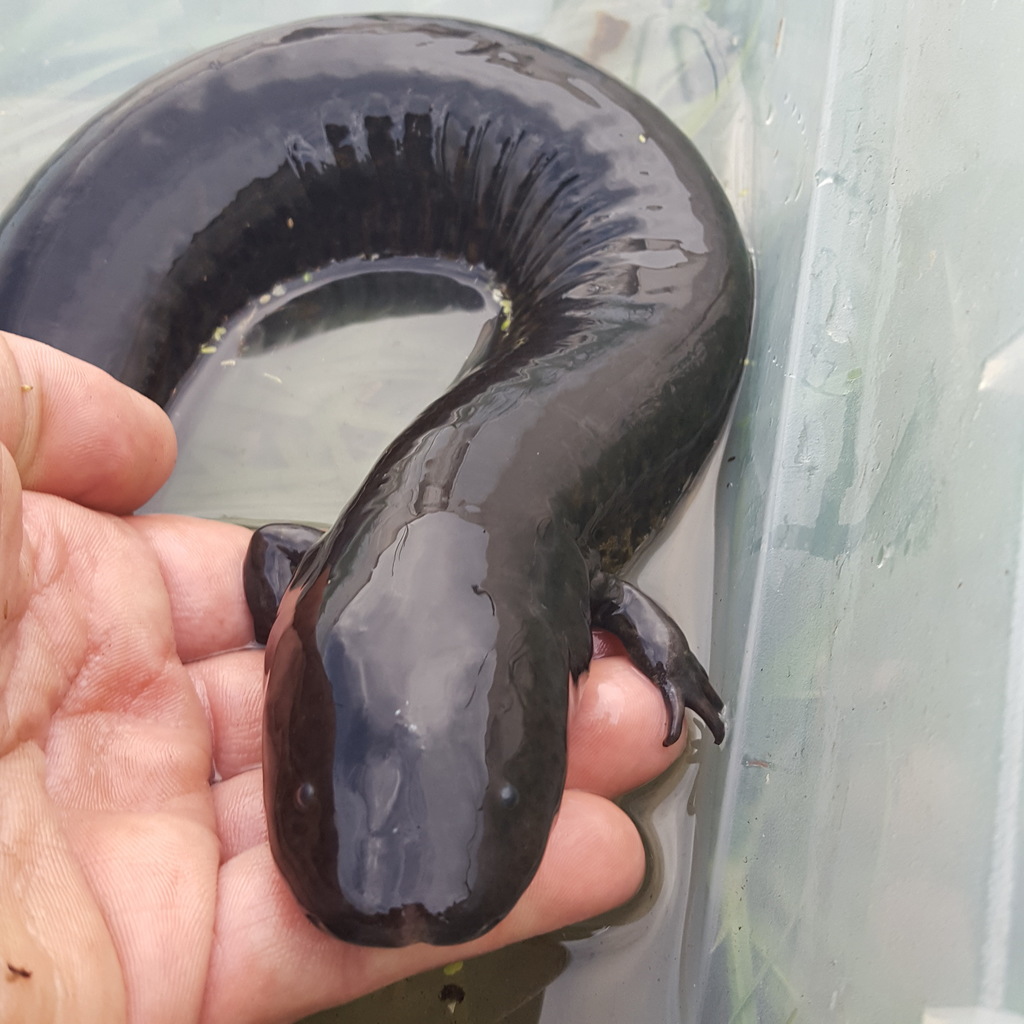
The lesser siren (Siren intermedia) is a species of aquatic salamander native to the eastern United States and northern Mexico.
From Wikipedia: Lesser siren, CC BY-SA 4.0 (excerpt)

Care at a glance
Species-specific values
Values researched for this exact species. Air, surface and water temperatures are listed separately, and each source is kept as published rather than averaged.
| Water temperature | 60–75 °F Source: salamantra.org | |
| Substrate | Sand is the best option, or use a bare-bottom tank; do not use gravel. Source: salamantra.org | |
| Social housing | Tankmates should be similarly sized lesser sirens or tiny fish and invertebrates intended as food; don't mix species or tropical fish besides tiny feeders. Source: salamantra.org | |
| Uvb lighting | Normal aquarium lights are fine if adequate hides and cover are provided. Source: salamantra.org | |
| Diet | Food options include earthworms, snails, frozen fish food, sinking carnivore pellets, and small feeders. Source: salamantra.org | |
| Minimum enclosure | A 20 gallon long (76 liter) setup comfortably fits an adult S. i. intermedia. Source: caudata.org | |
| Minimum enclosure | An adult S. i. nettingi may require an aquarium as large as 40 gallons (151 liters). Source: caudata.org | |
| Minimum enclosure | Place small juveniles in tanks of 10 gallons (38 liters) or bigger. Source: caudata.org | |
| Warm side air temperature | 65–80 °F Source: caudata.org | |
| Seasonal cooling | 44–46 °F Source: caudata.org |
Warnings
Understanding the animal
About this animal
About this animal
They are referred to by numerous common names, including two-legged eel, dwarf siren, and mud eel. The specific epithet intermedia denotes their intermediate size, between the greater siren, Siren lacertina, and the dwarf sirens, Pseudobranchus species.
From Wikipedia: Lesser siren, CC BY-SA 4.0 (excerpt)
In the wild
In the wild
| Overview | The lesser siren (Siren intermedia) is a species of aquatic salamander native to the eastern United States and northern Mexico. They are referred to by numerous common names, including two-legged eel, dwarf siren, and mud eel. The specific epithet intermedia denotes their intermediate size, between the greater siren, Siren lacertina, and the dwarf sirens, Pseudobranchus species. — From Wikipedia: Lesser siren, CC BY-SA 4.0 (excerpt) |
| Wild diet | Lesser sirens are filter feeders. They sift through pond bottoms and aquatic vegetation for prey items. They have heavily keratinized beaks and vomerine dental arrays that can inflict substantial wounds. — From Wikipedia: Lesser siren, CC BY-SA 4.0 (excerpt) |
| History and naming | Sources disagree on the number of subspecies within S. intermedia. The majority of the sources in the field agree there are at least two: an eastern and a western variety. — From Wikipedia: Lesser siren, CC BY-SA 4.0 (excerpt) |
| Conservation | The lesser siren is quite common through most of its range, but rarely seen due to its secretive nature. Like almost all species of amphibian, their numbers are believed to be declining due to general reductions in water quality caused by agricultural pesticide and fertilizer runoff. They are frequently collected and used as bait for fishing. — From Wikipedia: Lesser siren, CC BY-SA 4.0 (excerpt) |
Read about this species in the wild at Animal Diversity Web.
Native climate (measured)
Native climate (measured)
| Warm-season highs | about 92°F (up to 95°F in the hottest sampled areas) |
| Cool-season lows | about 33°F (down to 22°F in the coldest sampled areas) |
| Average temperature | 57–68°F across sampled records |
| Relative humidity | 68–72% on average (driest month about 65%) |
| Rainfall | about 1225 mm a year, spread fairly evenly |
| Winters | Cool to cold winters (lows around 33°F) in much of its native range. Seasonal slowdown may be relevant, but species-specific biology determines whether brumation or hibernation occurs. |
Measured at 79 wild occurrence records sampled against WorldClim 2.1 climate data (1970–2000 averages). Air conditions in the range are ecological context, not enclosure settings: microhabitats such as burrows, leaf litter or basking rocks can be cooler, warmer or more humid.
Profile
Profile
Researched for this exact species. Sources are listed under In the wild above.
History
Sources disagree on the number of subspecies within S. intermedia. The majority of the sources in the field agree there are at least two: an eastern and a western variety.
From Wikipedia: Lesser siren, CC BY-SA 4.0 (excerpt)
Data and studies
The numbers
The numbers
Each bar is what one source reports. Where several sources weigh in, the dashed gold band marks their average.
Maximum recorded lifespan
Longest recorded lifespan reported by each database; typical lifespans are usually shorter. The AnAge record comes from an animal in human care.
Incubation
Female maturity
Sources for this sheet
- AnAge: The Animal Ageing and Longevity Database (Human Ageing Genomic Resources) (CC BY 3.0) Peer-reviewed researchCurated, referenced longevity and life-history records for thousands of species; maximum lifespans are often from zoo animals.
- 50 CFR Part 16: Injurious wildlife (Lacey Act) Zoo, university or veterinaryCurrent federal regulation, read from eCFR.
- U.S. Association of Reptile Keepers v. Zinke (D.C. Cir. 2017) Zoo, university or veterinaryAppeals ruling that the Lacey Act's shipping ban does not cover moves between the continental states.
- AmphibiaWeb (University of California, Berkeley) (CC BY-NC) Peer-reviewed researchUniversity-hosted database of amphibian biology and conservation.
- GBIF Backbone Taxonomy (Global Biodiversity Information Facility) (CC BY 4.0) Peer-reviewed researchInternational scientific taxonomy used here for classification. GBIF Secretariat (2023). GBIF Backbone Taxonomy. Checklist dataset https://doi.org/10.15468/39omei, accessed via GBIF.org.
- Wikipedia (species article) (CC BY-SA 4.0) Community referenceFree encyclopedia; useful overviews with their own citations. Short excerpts are quoted under CC BY-SA 4.0, each credited with a link to its article.
- iNaturalist (captive observations) Community referenceCommunity observation platform run by the California Academy of Sciences and National Geographic; observations marked captive show animals living in homes, zoos and aquariums.