
Home / Reptiles / Lizards / Agamidae / Boyd's forest dragon
No federal permit to keepBoyd's forest dragon
Lophosaurus boydii
Reptiles › Lizards (Lacertilia) › Agamidae (Agamas and dragons)
Boyd's forest dragon (Lophosaurus boydii) is a species of arboreal lizard in the family Agamidae.
From Wikipedia: Boyd's forest dragon, CC BY-SA 4.0 (excerpt)

Care at a glance
Species-specific values
Values researched for this exact species. Air, surface and water temperatures are listed separately, and each source is kept as published rather than averaged.
| Basking surface temperature | 95 °F (at least 35 °C) Source: livefoods.com.au | |
| Humidity | Keep the enclosure consistently humid; spray regularly, possibly twice daily in summer. Source: livefoods.com.au | |
| Drinking (dripping) | Use dripping water to encourage drinking; drip over the snout 2–3 times weekly if needed. Source: livefoods.com.au | |
| Diet | Eats crickets, cockroaches, and mealworms. Source: livefoods.com.au | |
| Substrate | Keep at least part of the substrate constantly moist. Source: livefoods.com.au |
Understanding the animal
About this animal
About this animal
The species is native to rainforests and their margins in the Wet Tropics region of northern Queensland, Australia. It is the larger of the two species of Lophosaurus found in Australia.
From Wikipedia: Boyd's forest dragon, CC BY-SA 4.0 (excerpt)
In the wild
In the wild
| Overview | Boyd's forest dragon (Lophosaurus boydii) is a species of arboreal lizard in the family Agamidae. The species is native to rainforests and their margins in the Wet Tropics region of northern Queensland, Australia. It is the larger of the two species of Lophosaurus found in Australia. Another species, the southern angle-headed dragon, L. spinipes, is found in southern Queensland and northern New South Wales. — From Wikipedia: Boyd's forest dragon, CC BY-SA 4.0 (excerpt) |
| Where it lives | The species Lophosaurus boydii is restricted to rainforests and their margins in northern Queensland, Australia, from just north of Townsville to near Cooktown. It is found in both upland and lowland rainforest, and is often seen around Lake Eacham (Yidyam) and Lake Barrine, and in parts of Malanda Falls Conservation Park and at Mossman Gorge. It is recorded using tree-hollows. — From Wikipedia: Boyd's forest dragon, CC BY-SA 4.0 (excerpt) |
| Wild diet | Boyd's forest dragon is a sit-and-wait predator, catching prey that it spies from its perch, although once on the ground, it will frequently move over a wider area, catching prey as it goes. Its diet consists primarily of invertebrates, with earthworms making up a relatively high proportion. Small fruits and vertebrates are also occasionally consumed. — From Wikipedia: Boyd's forest dragon, CC BY-SA 4.0 (excerpt) |
| Behavior | Boyd's forest dragon spends the majority of its time perched on the trunks of trees, usually at around head height, although daily movements can exceed 100 m on the ground. When approached, it will usually move around to the opposite side of the tree, keeping the trunk between it and its harasser. — From Wikipedia: Boyd's forest dragon, CC BY-SA 4.0 (excerpt) |
| Reproduction | Reproduction in Lophosaurus boydii is via eggs, with clutch sizes varying from one to six eggs. Eggs are about 30 mm long and 15 mm wide, and weigh about 3–4.5 g. Egg size and weight are both higher in upland populations. — From Wikipedia: Boyd's forest dragon, CC BY-SA 4.0 (excerpt) |
Read about this species in the wild at The Reptile Database.
Native climate (measured)
Native climate (measured)
| Warm-season highs | about 87°F (up to 90°F in the hottest sampled areas) |
| Cool-season lows | about 56°F (down to 49°F in the coldest sampled areas) |
| Average temperature | 69–76°F across sampled records |
| Relative humidity | 72–78% on average (driest month about 70%) |
| Rainfall | about 1700 mm a year, with strong wet and dry seasons |
Measured at 28 wild occurrence records sampled against WorldClim 2.1 climate data (1970–2000 averages). Air conditions in the range are ecological context, not enclosure settings: microhabitats such as burrows, leaf litter or basking rocks can be cooler, warmer or more humid.
Profile
Profile
Researched for this exact species. Sources are listed under In the wild above.
Sources for this sheet
- The Reptile Database Peer-reviewed researchScientist-curated catalog of every reptile species, with taxonomy and literature.
- GBIF Backbone Taxonomy (Global Biodiversity Information Facility) (CC BY 4.0) Peer-reviewed researchInternational scientific taxonomy used here for classification. GBIF Secretariat (2023). GBIF Backbone Taxonomy. Checklist dataset https://doi.org/10.15468/39omei, accessed via GBIF.org.
- Wikipedia (species article) (CC BY-SA 4.0) Community referenceFree encyclopedia; useful overviews with their own citations. Short excerpts are quoted under CC BY-SA 4.0, each credited with a link to its article.
- iNaturalist (captive observations) Community referenceCommunity observation platform run by the California Academy of Sciences and National Geographic; observations marked captive show animals living in homes, zoos and aquariums.
More agamas and dragons
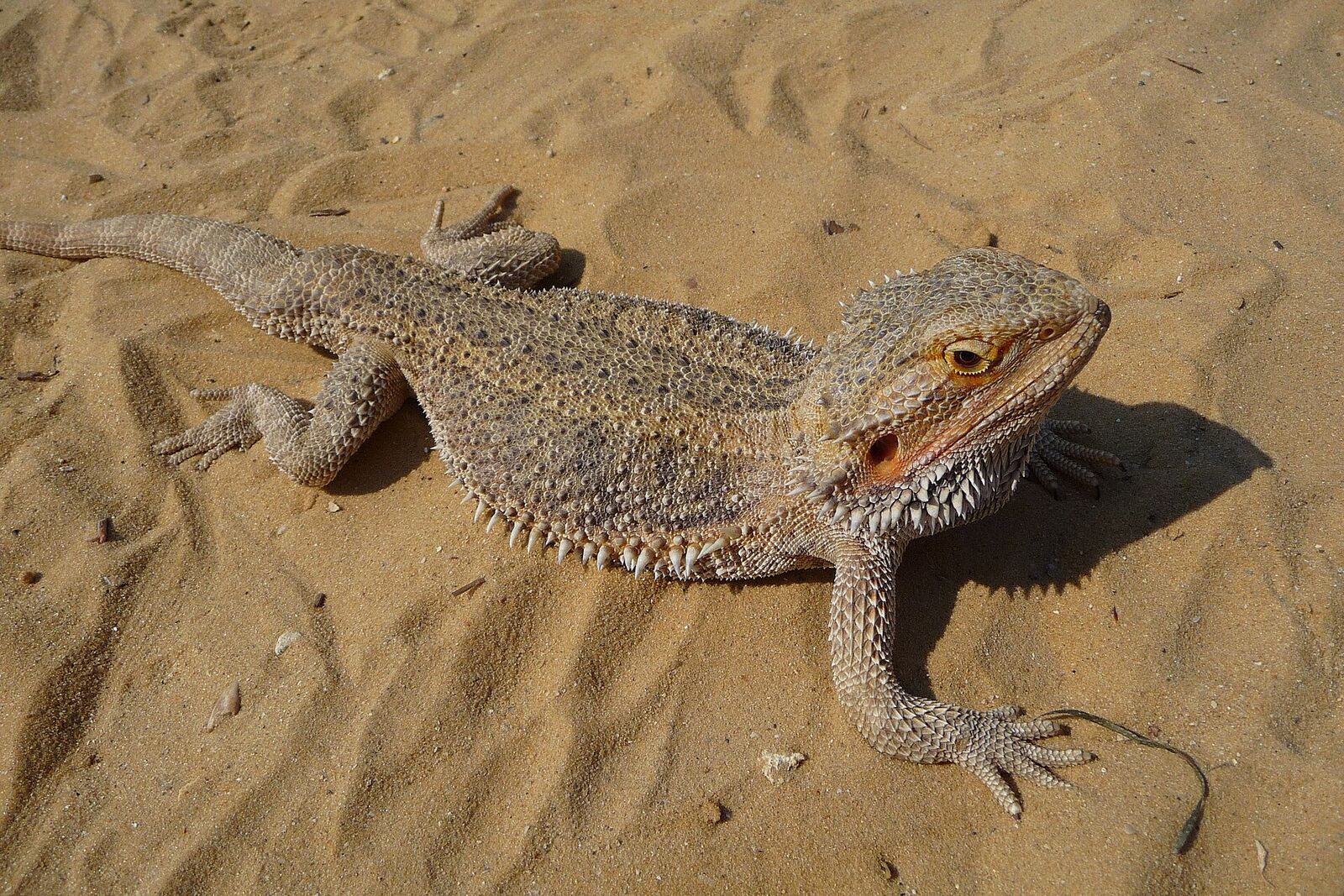
Bearded dragon
Pogona vitticeps
Sun-loving, friendly and endlessly popular.
Pet trade

(Sulawesi) Sailfin Lizard
Hydrosaurus celebensis
Pet trade

(Sulawesi) Sailfin Lizard (Hydrosaurus microlophus)
Hydrosaurus microlophus
Pet trade

Australian water dragon
Intellagama lesueurii
Pet trade

Bent's Mastigure
Uromastyx benti
Pet trade

Black-necked agama
Acanthocercus atricollis
Zoos & aquariums