
Home / Reptiles / Lizards / Agamidae / Indonesian Forest Dragon
No federal permit to keepIndonesian Forest Dragon
Lophosaurus dilophus
Reptiles › Lizards (Lacertilia) › Agamidae (Agamas and dragons)
Lophosaurus dilophus, the crowned forest dragon or Indonesian forest dragon, is a large arboreal agamid lizard found in New Guinea and the Moluccan islands, Indonesia.
From Wikipedia: Lophosaurus dilophus, CC BY-SA 4.0 (excerpt)

Care at a glance
Species-specific values
Values researched for this exact species. Air, surface and water temperatures are listed separately, and each source is kept as published rather than averaged.
| Minimum enclosure | Minimum enclosure dimensions are 1 × 1 × 2 meters high. Source: bebesaurus.com | |
| Night temperature | 68–72 °F (20–22 °C) Source: bebesaurus.com | |
| Humidity | Provide multiple daily mistings. Source: bebesaurus.com | |
| Uvb lighting | A UVB source is necessary; separate heat from UVB. Source: bebesaurus.com | |
| Diet | Once acclimated, it readily eats insects and fruits in captivity. Source: bebesaurus.com |
Understanding the animal
In the wild
In the wild
| Overview | Lophosaurus dilophus, the crowned forest dragon or Indonesian forest dragon, is a large arboreal agamid lizard found in New Guinea and the Moluccan islands, Indonesia. — From Wikipedia: Lophosaurus dilophus, CC BY-SA 4.0 (excerpt) |
| Appearance and size | A large, short-tailed species with heterogeneous dorsal scalation and a discontinuous vertebral crest. There are several slightly enlarged scales below the tympanum, a row of enlarged submaxillaries and a series of large, lanceolate scales on the anterior edge of the gular pouch. — From Wikipedia: Lophosaurus dilophus, CC BY-SA 4.0 (excerpt) |
| Conservation | Although lowland rainforest in Papua New Guinea is increasingly being cleared for logging and conversion to agriculture, this species is widespread across the island and can persist in some modified habitats, so it's unlikely to be in any imminent danger. The species is occasionally traded in small numbers from Papua Province in Indonesian New Guinea. — From Wikipedia: Lophosaurus dilophus, CC BY-SA 4.0 (excerpt) |
Read about this species in the wild at The Reptile Database.
Native climate (measured)
Native climate (measured)
| Warm-season highs | about 87°F (up to 90°F in the hottest sampled areas) |
| Cool-season lows | about 70°F (down to 63°F in the coldest sampled areas) |
| Average temperature | 72–80°F across sampled records |
| Relative humidity | 80–86% on average (driest month about 81%) |
| Rainfall | about 3025 mm a year, spread fairly evenly |
Measured at 39 wild occurrence records sampled against WorldClim 2.1 climate data (1970–2000 averages). Air conditions in the range are ecological context, not enclosure settings: microhabitats such as burrows, leaf litter or basking rocks can be cooler, warmer or more humid.
Profile
Profile
Researched for this exact species. Sources are listed under In the wild above.
Sources for this sheet
- The Reptile Database Peer-reviewed researchScientist-curated catalog of every reptile species, with taxonomy and literature.
- GBIF Backbone Taxonomy (Global Biodiversity Information Facility) (CC BY 4.0) Peer-reviewed researchInternational scientific taxonomy used here for classification. GBIF Secretariat (2023). GBIF Backbone Taxonomy. Checklist dataset https://doi.org/10.15468/39omei, accessed via GBIF.org.
- Wikipedia (species article) (CC BY-SA 4.0) Community referenceFree encyclopedia; useful overviews with their own citations. Short excerpts are quoted under CC BY-SA 4.0, each credited with a link to its article.
More agamas and dragons
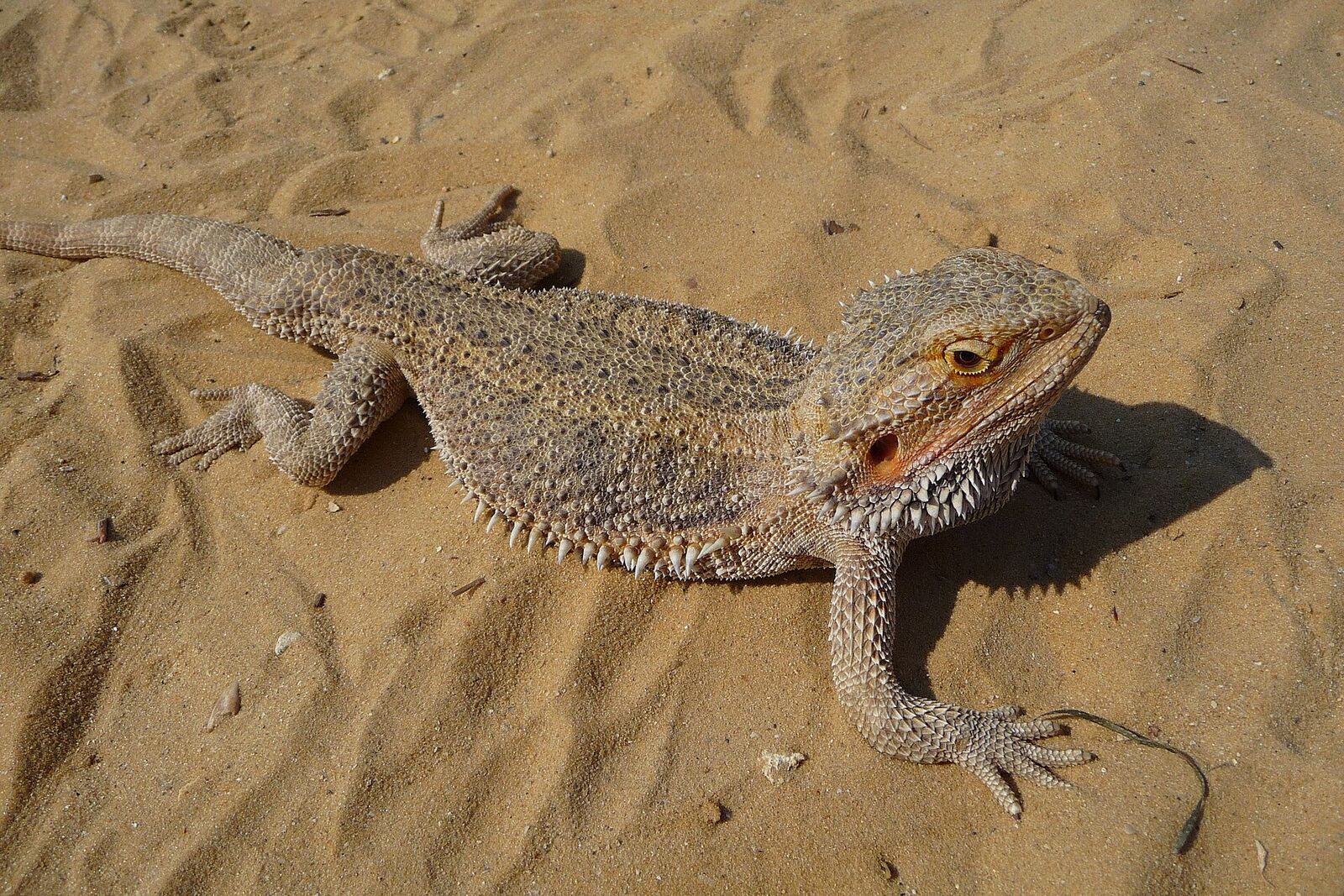
Bearded dragon
Pogona vitticeps
Sun-loving, friendly and endlessly popular.
Pet trade

(Sulawesi) Sailfin Lizard
Hydrosaurus celebensis
Pet trade

(Sulawesi) Sailfin Lizard (Hydrosaurus microlophus)
Hydrosaurus microlophus
Pet trade

Australian water dragon
Intellagama lesueurii
Pet trade

Bent's Mastigure
Uromastyx benti
Pet trade

Black-necked agama
Acanthocercus atricollis
Zoos & aquariums