
Home / Fishes / Killifish and livebearers / Mangrove rivulus
No federal permit to keepMangrove rivulus
Kryptolebias marmoratus
Fishes › Killifish and livebearers (Cyprinodontiformes) › Rivulidae (New World killifish)
The mangrove rivulus or mangrove killifish, Kryptolebias marmoratus (syn. Rivulus marmoratus), is a species of killifish in the family Rivulidae.

Care at a glance
Species-specific values
Values researched for this exact species. Air, surface and water temperatures are listed separately, and each source is kept as published rather than averaged.
| Water temperature | 72–82 °F Source: aquaristatlas.com | |
| Diet | In aquariums, it readily takes live and frozen foods such as Artemia, Daphnia, bloodworm, and small chironomid larvae. Source: aquaristatlas.com | |
| Social housing | Conspecifics can be housed together with care; intraspecific aggression is mild compared with many killies. Source: aquaristatlas.com |
Species-specific aquarium care
- Tank: At least 24 in long and 12 in front to back for one adult (adults commonly reach about 3.0 in / 7.5 cm).
- Water: Freshwater (tolerates brackish).
- Temperature: 64–75°F (range recorded for this species).
- Hardness: 0–16 dGH.
- Layout: Uses both the bottom and open water: give open swimming space plus cover near the substrate.
- Diet: FishBase classes it as a carnivore.
Calculated from this species' own FishBase record: tank size from its typical adult length and swimming zone, water values from its recorded ranges. The group guide below fills in general care.
Understanding the animal
About this animal
About this animal
It lives in brackish and marine waters (less frequently in fresh water) along the coasts of Florida, through the Antilles, and along the eastern and northern Atlantic coasts of Mexico, Central America and South America (south to Brazil).
From Wikipedia: Mangrove rivulus, CC BY-SA 4.0 (excerpt)
In the wild
In the wild
From this species’ own FishBase record (habitat, bottom type, water and breeding data), not its family. Wild conditions are context, not enclosure settings.1
| Where it lives | Lives in freshwater and brackish water, in marshes and swamps, estuaries. Uses both the bottom and open water. |
| Ground it lives on | Over mud, burrows, vegetation. |
| Climate | Tropical climate. |
| Behavior to plan for | Breeding: open water/substratum egg scatterers. |
Data and studies
The numbers
The numbers
Each bar is what one source reports. Where several sources weigh in, the dashed gold band marks their average.
Maximum recorded lifespan
Longest recorded lifespan reported by each database; typical lifespans are usually shorter.
Adult length
Maximum recorded length. Measured as total length. Fish in home aquariums often stay smaller than wild records.
Veterinary & husbandry research
Veterinary & husbandry research
- Identification and expression of mangrove rivulus (Kryptolebias marmoratus) histone deacetylase (HDAC) and lysine acetyltransferase (KAT) genes Fellous A et al., Gene 2019
- Genetic tools for the study of the mangrove killifish, Kryptolebias marmoratus, an emerging vertebrate model for phenotypic plasticity Li CY et al., Journal of experimental zoology. Part B, Molecular and developmental evolution 2024
Peer-reviewed papers that mention this species alongside captivity, zoos, veterinary care or aquaculture. Some cover several species or mention it only in passing, so check the abstract. See all 3 on PubMed → PubMed
Sources for this sheet
- FishBase (Froese & Pauly, eds.), version 24.07 (CC BY-NC 4.0) Peer-reviewed researchThe global scientific database on fishes, maintained by a consortium of research institutions; every value is referenced.
- Wikipedia (species article) (CC BY-SA 4.0) Community referenceFree encyclopedia; useful overviews with their own citations. Short excerpts are quoted under CC BY-SA 4.0, each credited with a link to its article.
- PubMed (U.S. National Library of Medicine) Peer-reviewed researchIndex of peer-reviewed veterinary, zoo and husbandry research.
More new world killifish

Anablepsoides micropus
Anablepsoides micropus
Aquarium hobby
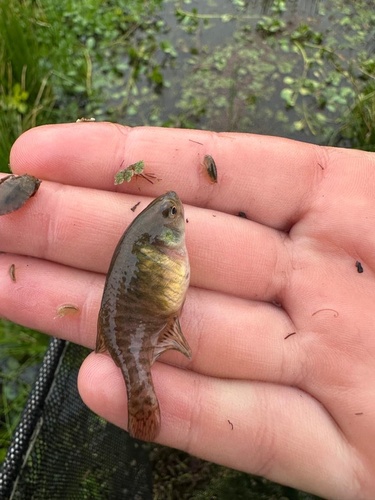
Argentine pearlfish
Austrolebias bellottii
Aquarium hobby

Austrolebias luteoflammulatus
Austrolebias luteoflammulatus
Aquarium hobby

Featherfin pearlfish
Simpsonichthys constanciae
Aquarium hobby
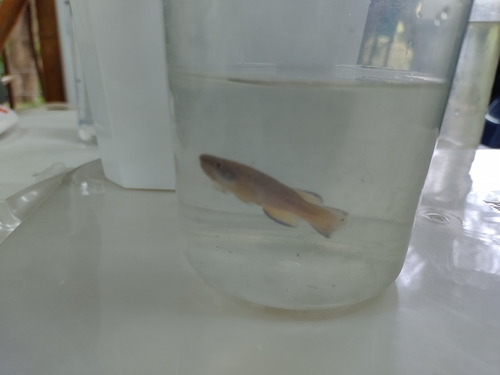
Magdalena rivulus
Cynodonichthys magdalenae
Aquarium hobby

Papiliolebias bitteri
Papiliolebias bitteri
Aquarium hobby