Home / Fishes / Catfish / Pigmy Synodontis
No federal permit to keepPigmy Synodontis
Microsynodontis polli
Fishes › Catfish (Siluriformes) › Mochokidae (Synodontis and squeaker catfish)
Microsynodontis polli is a species of upside-down catfish native to Guinea from the Gbin River and Liberia from Saint John.
Intro from Wikipedia (CC BY-SA 4.0)

Care at a glance
Species-specific aquarium care
- Tank: At least 24 in long and 12 in front to back for one adult (adults commonly reach about 1.6 in / 4.1 cm).
- Water: Freshwater.
- Temperature: 72–77°F (range recorded for this species).
- pH: 6.5–7.2.
- Hardness: 0–8 dGH.
- Layout: Lives on or near the bottom: floor space and hiding places matter more than height.
- Availability: Rarely or never seen in the aquarium trade; expect to source it from specialists or not at all.
Calculated from this species' own FishBase record: tank size from its typical adult length and swimming zone, water values from its recorded ranges. The group guide below fills in general care.
Care guide
Species care notes
- Tank: a base of at least 18 × 12 in (roughly 11 US gallons); space needed is rated “modest tank”.
- Water: a fairly wide range, from slightly acidic to slightly alkaline, 75–81 °F, pH 6.8–7.5, 10–15 dGH.
- Difficulty: Moderate (Seriously Fish rating).
Short excerpts from the species profile:
- Setup: “A dimly lit aquarium with a soft substrate and rocks, pieces of driftwood and twisted roots arranged to form hiding places suits this species.”
- Diet: “Frozen, live and dried foods are all accepted.”
From the Seriously Fish profile for this species, which has the full habitat, maintenance, diet, behaviour and breeding write-up 167
Synodontis and squeaker catfish
Applies to most species in this group. Habitat: African mochokids include Synodontis from vegetated riverbanks and distinct species from rocky habitats in the East African Rift lakes. Individual species can differ, so compare with the species numbers above and the linked sources.
Housing & setup
- For a small S. nigriventris group, provide at least 75 × 30 × 30 cm (30 × 12 × 12 in), about 70 litres; larger species need more space.
- Use sand or another soft substrate to protect sensitive barbels.
- Provide plentiful daytime shelters: wood and roots for river species, rock caves for Rift-lake species.
- For S. nigriventris, use dim lighting and broad-leaved or floating vegetation with sheltered undersides for inverted resting.
- Separate water-chemistry plans: S. nigriventris is listed at pH 6.0–7.5 and 5–20 dGH; S. petricola at pH 7.5–8.5 and 10–35 dGH.
Climate & lighting
| Water | 75–82°F |
Diet
- Complete dried foods appropriate to adult size.
- Live or frozen aquatic foods as part of an omnivorous diet.
- Shelled peas or cucumber; S. nigriventris may also feed inverted at the surface.
Social life
- Keep S. nigriventris in groups of at least three or four and S. petricola in groups of four or more. Larger Synodontis can be territorial toward other catfish and eat small tankmates; provide separate shelters and ample space.
Health watch
- Barbel damage associated with abrasive substrate.
- Ammonia-related illness in poorly maintained systems.
- Nutritional deficiencies from an unbalanced diet.
Understanding the animal
In the wild
In the wild
From this species’ own FishBase record (habitat, bottom type, water and breeding data), not its family. Good care copies these conditions.1
| Where it lives | Lives in freshwater. Stays near the bottom. |
| Water it lives in | Freshwater, 72–77 °F (22–25 °C), pH 6.5–7.2, hardness 8 dH. |
| Climate | Tropical climate. |
| Behavior to plan for | Breeding: open water/substratum egg scatterers. |
What this means for care
- Keep water within its wild range, 72–77 °F.
From the sources
From the sources
Quoted from the matching sections of reputable sources for this exact species. Specialist databases are used first; Wikipedia (community-edited, CC BY-SA 4.0) only fills gaps. Other sources are short credited quotes.
| Where it lives | Home ranges Population dynamics Growth parameters Max. ages / sizes Length-weight rel. Length-frequencies Mass conversion Recruitment Abundance Life cycle Reproduction Maturity Maturity/Gills rel. — FishBase |
| Reproduction | Distinct pairing during breeding. — FishBase |
Data and studies
The numbers
The numbers
Each bar is what one source reports. Where several sources weigh in, the dashed gold band marks their average.
Adult length
Maximum recorded length. Measured as total length. Fish in home aquariums often stay smaller than wild records.
Water temperature
Range the species tolerates in nature; aim for the middle.
Water hardness
Minimum tank footprint
Seriously Fish recommends a tank base of at least 18 × 12 in (about 11 US gallons).
Sources for this sheet
- FishBase (Froese & Pauly, eds.), version 24.07 Peer-reviewed researchThe global scientific database on fishes, maintained by a consortium of research institutions; every value is referenced.
- Seriously Fish species profiles Experienced keeper or breederLong-running aquarium reference written and peer-checked by experienced fishkeepers and ichthyologists; each profile covers habitat, tank size, water, diet, behaviour and breeding.
- Seriously Fish — synodontis nigriventris Experienced keeper or breederAdded in the 2026 source-checked care-guide review.
- Seriously Fish — synodontis petricola Experienced keeper or breederAdded in the 2026 source-checked care-guide review.
- Practical Fishkeeping — Frequently asked questions on Synodontis Experienced keeper or breederAdded in the 2026 source-checked care-guide review.
- Merck Veterinary Manual — Disorders and Diseases of Fish Zoo, university or veterinaryAdded in the 2026 source-checked care-guide review.
- Wikipedia (species article) Community referenceFree encyclopedia; useful overviews with their own citations. Intro text is quoted under CC BY-SA 4.0.
More synodontis and squeaker catfish
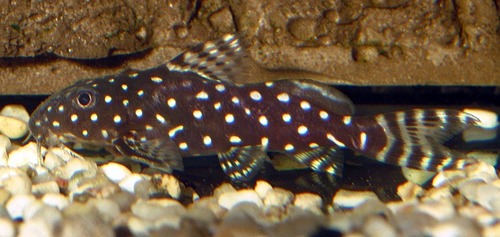
Angel squeaker
Synodontis angelicus
Aquarium hobby
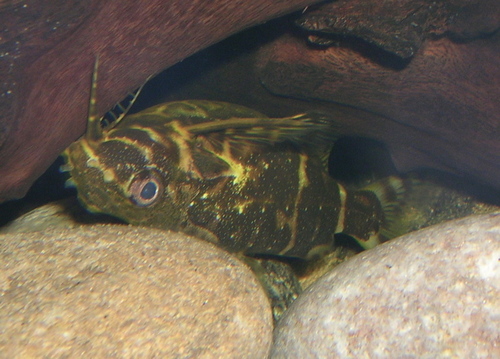
Blotched upsidedown catfish
Synodontis nigriventris
Aquarium hobby

Brichard's Synodontis
Synodontis brichardi
Aquarium hobby
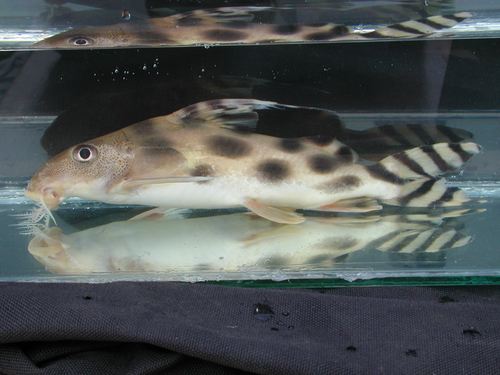
Clown squeaker
Synodontis decorus
Aquarium hobby
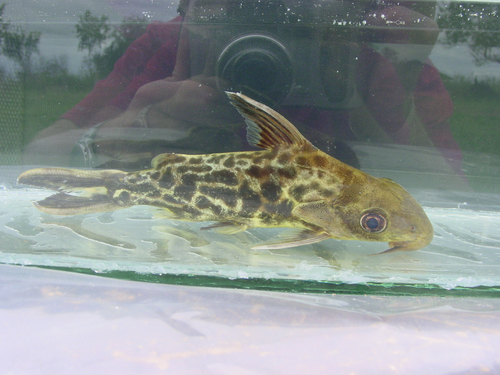
Congo squeaker
Synodontis pleurops
Aquarium hobby

Cuckoo catfish
Synodontis petricola
Aquarium hobby