Home / Fishes / Carp, barbs, minnows, loaches / Balitoridae / Neohomaloptera johorensis
No federal permit to keepNeohomaloptera johorensis
Neohomaloptera johorensis
Fishes › Carp, barbs, minnows, loaches (Cypriniformes) › Balitoridae (Hillstream loaches)
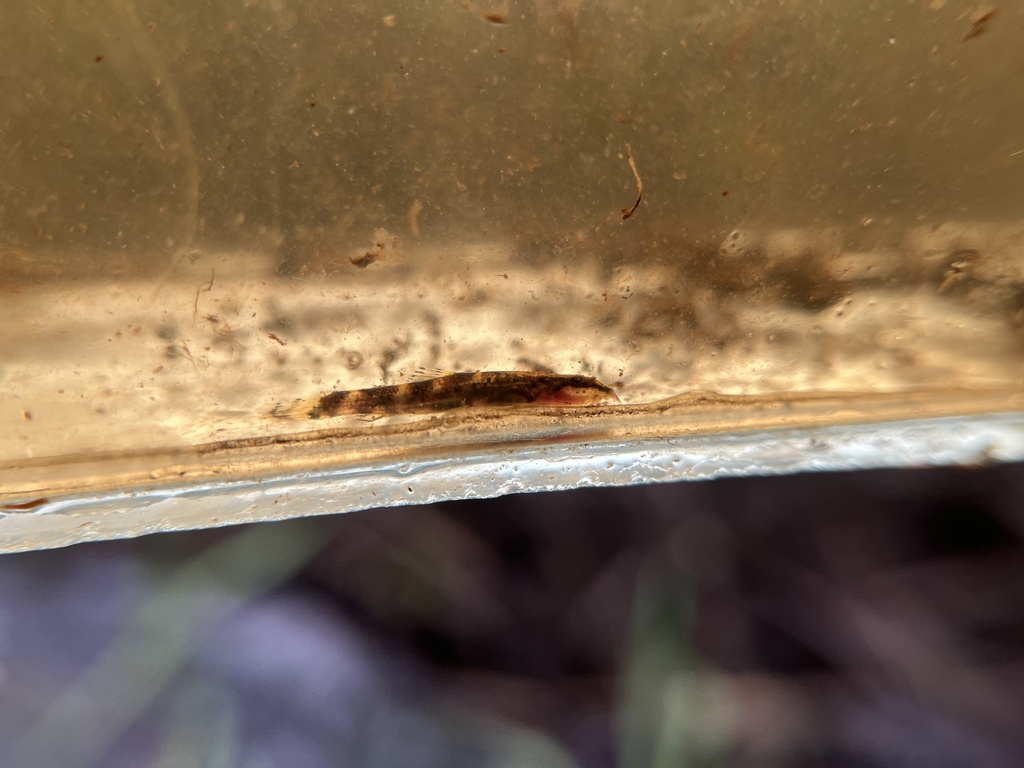
Neohomaloptera johorensis is a species of dwarf hillstream loach, it is the only member of its genus Neohomaloptera. Named after the state it was discovered in, Johor, Malaysia.
Care at a glance
Species-specific aquarium care
- Tank: At least 24 in long and 12 in front to back for one adult (adults commonly reach about 0.8 in / 2 cm).
- Water: Freshwater.
- Layout: Lives on or near the bottom: floor space and hiding places matter more than height.
- Availability: Rarely or never seen in the aquarium trade; expect to source it from specialists or not at all.
Calculated from this species' own FishBase record: tank size from its typical adult length and swimming zone, water values from its recorded ranges. The group guide below fills in general care.
Care guide
Species care notes
- Tank: a base of at least 18 × 12 in (roughly 11 US gallons); space needed is rated “modest tank”.
- Water: soft, acidic water, 73–79 °F, pH 3.5–6.5, 0–5 dGH.
- Behaviour: temperament peaceful; a shoaling fish best kept in a group of six or more; not a community fish.
- Difficulty: Moderate (Seriously Fish rating).
Short excerpts from the species profile:
- Setup: “Most importantly the water must be well-oxygenated and free of organic pollutants, though torrent-like conditions are unnecessary.”
- Diet: “This species is a specialised grazer feeding on biofilm, small crustaceans, insect larvae and other invertebrates in nature.”
- Tankmates: “Very peaceful but its environmental requirements and adult size limit the choice of suitable tankmates.”
- Breeding: “Presumably a seasonal spawner in nature but nothing has been recorded in aquaria as far as we know.”
From the Seriously Fish profile for this species, which has the full habitat, maintenance, diet, behaviour and breeding write-up 167
Hillstream loaches
Applies to most species in this group. Habitat: Balitora inhabit fast-flowing Asian hillstream riffles with rocky beds and abundant dissolved oxygen. [fg177-bal]. Individual species can differ, so compare with the species numbers above and the linked sources.
Housing & setup
- Use a long river aquarium; the river-tank reference recommends at least 3 feet of length, rather than a species-tested minimum.
- Provide strong directional current and vigorous aeration throughout the occupied area.
- Supply smooth pebbles, boulders and numerous rocky refuges out of the main current.
- Use bright lighting and an established aquarium with grazing growth on rocks.
- For B. brucei, maintain pH 7.0–8.0 and medium hardness up to 12 dGH.
Climate & lighting
| Water | 68–75°F |
Diet
- Algae and established rock biofilm.
- Frozen bloodworms and mysis shrimp.
- Pelleted foods.
Social life
- Provide separate resting and feeding surfaces; hillstream keepers report competition for favored rocks, but a Balitora-specific group size is not established here.
Health watch
- Oxygen deprivation, especially during overheating or inadequate aeration.
- Poor condition from inadequate access to established grazing growth.
- Skin disease with patchy coloration and loss of appetite; obtain a diagnosis rather than treating by appearance alone.
Understanding the animal
About this animal
About this animal
Although, it can still be found outside of the state.
Quoted from the Wikipedia article “Neohomaloptera” (CC BY-SA 4.0) 174
In the wild
In the wild
From this species’ own FishBase record (habitat, bottom type, water and breeding data), not its family. Good care copies these conditions.1
| Where it lives | Lives in freshwater. Stays near the bottom. |
| Water it lives in | Freshwater. |
| Climate | Tropical climate. |
Native climate (measured)
Native climate (measured)
| Warm-season highs | about 89°F (up to 90°F in the hottest sampled areas) |
| Cool-season lows | about 72°F (down to 72°F in the coldest sampled areas) |
| Average temperature | 80–81°F across sampled records |
| Relative humidity | 81–84% on average (driest month about 79%) |
| Rainfall | about 2580 mm a year, spread fairly evenly |
Measured at 12 wild occurrence records sampled against WorldClim 2.1 climate data (1970–2000 averages). Air conditions in the range are ecological context, not enclosure settings: microhabitats such as burrows, leaf litter or basking rocks can be cooler, warmer or more humid.
From the sources
From the sources
Quoted from the matching sections of reputable sources for this exact species. Specialist databases are used first; Wikipedia (community-edited, CC BY-SA 4.0) only fills gaps. Other sources are short credited quotes.
| Overview | Neohomaloptera johorensis is a species of dwarf hillstream loach, it is the only member of its genus Neohomaloptera. Named after the state it was discovered in, Johor, Malaysia. Although, it can still be found outside of the state. The species is previously known from only two specimens, the holotype and a topotype, both collected in 1940. — Wikipedia (community-edited) |
| Where it lives | Home ranges Population dynamics Growth parameters Max. ages / sizes Length-weight rel. Length-frequencies Mass conversion Recruitment Abundance Life cycle Reproduction Maturity Maturity/Gills rel. — FishBase |
| Wild diet | In the wild it can be seen grazing on biofilm, but it is also a micropredator that preys on small crustaceans, insect larvae and other aquatic invertebrates. — Wikipedia (community-edited) |
| Appearance and size | A very streamlined fish, growing to around 1.7 – 2.5 cm as adults. The distinguishing feature of the genus from its family, Balitoridae is by the 3 pair of barbels, instead of 1 barbel on each corner of the mouth. Also, the pectoral rays number at 12 or 13 instead of 14 to 20, with 3 or 4 simple rays instead of 4 to 8. — Wikipedia (community-edited) |
Data and studies
The numbers
The numbers
Each bar is what one source reports. Where several sources weigh in, the dashed gold band marks their average.
Adult length
Maximum recorded length. Measured as standard length (snout to the base of the tail, not counting the tail fin). Fish in home aquariums often stay smaller than wild records.
Water temperature
Range the species tolerates; aim for the middle.
pH
Water hardness
Minimum tank footprint
Seriously Fish recommends a tank base of at least 18 × 12 in (about 11 US gallons).
Sources for this sheet
- FishBase (Froese & Pauly, eds.), version 24.07 Peer-reviewed researchThe global scientific database on fishes, maintained by a consortium of research institutions; every value is referenced.
- Seriously Fish species profiles Experienced keeper or breederLong-running aquarium reference written and peer-checked by experienced fishkeepers and ichthyologists; each profile covers habitat, tank size, water, diet, behaviour and breeding.
- Loaches Online: Balitora brucei Experienced keeper or breederAdded in the 2026 source-checked care-guide review.
- Loaches Online: Hillstream Loaches — The Specialists at Life In The Fast Lane Experienced keeper or breederAdded in the 2026 source-checked care-guide review.
- Merck Veterinary Manual: Disorders and Diseases of Fish Zoo, university or veterinaryAdded in the 2026 source-checked care-guide review.
- Wikipedia (species article) Community referenceFree encyclopedia; useful overviews with their own citations. Intro text is quoted under CC BY-SA 4.0.
More hillstream loaches
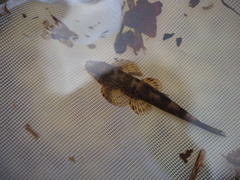
Green Gecko Loach
Homalopteroides smithi
Aquarium hobby

Green Lizard Hillstream
Homalopteroides tweediei
Aquarium hobby

Homaloptera bilineata
Homaloptera bilineata
Aquarium hobby

Homaloptera confuzona
Homaloptera confuzona
Aquarium hobby
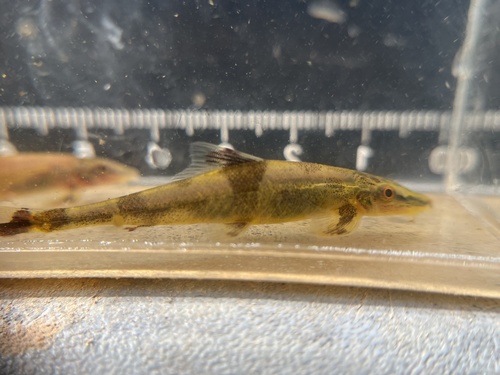
Homaloptera ogilviei
Homaloptera ogilviei
Aquarium hobby

Homaloptera orthogoniata
Homaloptera orthogoniata
Aquarium hobby