
Home / Fishes / Cichlids and convict blennies / Cichlidae / Lamprologus Multifasciatus
No federal permit to keepLamprologus Multifasciatus
Neolamprologus multifasciatus
Fishes › Cichlids and convict blennies (Cichliformes) › Cichlidae (Cichlids)
Neolamprologus multifasciatus (also known as Multies, Multi., or Shellies) are one of the small shell-dwelling cichlids endemic to Lake Tanganyika in east Africa.

Care at a glance
Species-specific values
Values researched for this exact species. Air, surface and water temperatures are listed separately, and each source is kept as published rather than averaged.
| Water temperature | 75–81 °F (24–27 °C) | seriouslyfish.com |
| Water pH | 7.5–9 | seriouslyfish.com |
| Water general hardness | 8–25 dGH | seriouslyfish.com |
| Adult standard length | 45 mm Maximum standard length reported by source; excludes caudal fin, not total body length. | seriouslyfish.com |
| Minimum tank base | length: 45 cm; width: 30 cm Minimum aquarium base recommended by this source, not a tank-volume specification. For a pair; use a larger base for a colony. | seriouslyfish.com |
| Social | Territorial shell-dwelling colony; provide more shells than fish and adequate sand between territories. | seriouslyfish.com |
| Note: Maintenance recommendations from this source | ||
Species care notes
Read the full care sheet at Seriously Fish: habitat, aquarium size, water conditions, diet, behaviour and breeding.
Understanding the animal
About this animal
About this animal
The male reaches 5 cm (2 in) in length, and the female only 2.5 cm (1 in) in the aquarium. In the wild, they reach only 3 centimetres (1.2 in) in standard length of male and female reaches less than 2.2 centimetres (0.87 in) in standard length.
From Wikipedia: Neolamprologus multifasciatus, CC BY-SA 4.0 (excerpt)
In the wild
In the wild
From this species’ own FishBase record (habitat, bottom type, water and breeding data), not its family. Wild conditions are context, not enclosure settings.1
| Where it lives | Lives in freshwater. Uses both the bottom and open water. |
| Climate | Tropical climate. |
| Wild diet | Filtering plankton. |
Data and studies
The numbers
The numbers
Each bar is what one source reports. Where several sources weigh in, the dashed gold band marks their average.
Adult length
Maximum recorded length. Measured as total length. Fish in home aquariums often stay smaller than wild records.
Sources for this sheet
- FishBase (Froese & Pauly, eds.), version 24.07 (CC BY-NC 4.0) Peer-reviewed researchThe global scientific database on fishes, maintained by a consortium of research institutions; every value is referenced.
- Seriously Fish species profiles Experienced keeper or breederLong-running aquarium reference written and peer-checked by experienced fishkeepers and ichthyologists; each profile covers habitat, tank size, water, diet, behaviour and breeding.
- Wikipedia (species article) (CC BY-SA 4.0) Community referenceFree encyclopedia; useful overviews with their own citations. Short excerpts are quoted under CC BY-SA 4.0, each credited with a link to its article.
- iNaturalist (captive observations) Community referenceCommunity observation platform run by the California Academy of Sciences and National Geographic; observations marked captive show animals living in homes, zoos and aquariums.
More cichlids
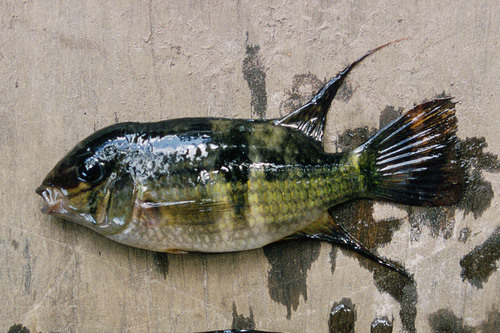
Aequidens potaroensis
Aequidens potaroensis
Aquarium hobby

Agassiz's dwarf cichlid
Apistogramma agassizii
Aquarium hobby

Altolamprologus calvus
Altolamprologus calvus
Aquarium hobby

Altum Angel
Pterophyllum altum
Aquarium hobby

Amatitlania myrnae
Amatitlania myrnae
Aquarium hobby
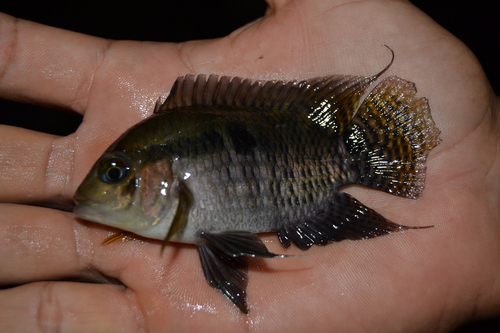
Amazon Cichlid
Cichlasoma amazonarum
Aquarium hobby