Home / Fishes / Cichlids / Cichlidae / Retroculus acherontos
No federal permit to keepRetroculus acherontos
Retroculus acherontos
Fishes › Cichlids (Cichliformes) › Cichlidae (Cichlids)
Care follows the oscars, peacock bass, pike cichlids and eartheaters guide below.
Care guide
Species care notes
- Behaviour: a shoaling fish best kept in a group of six or more; not a community fish.
- Difficulty: Difficult (Seriously Fish rating).
Short excerpts from the species profile:
- Diet: “The natural diet of the congener R.”
From the Seriously Fish profile for this species, which has the full habitat, maintenance, diet, behaviour and breeding write-up 167
Oscars, peacock bass, pike cichlids and eartheaters
Applies to most species in this group. Habitat: Large South American rivers. Individual species can differ, so compare with the species numbers above and the linked sources.
Housing & setup
- For one adult Astronotus ocellatus, plan at least a 150 × 60 cm base according to Seriously Fish; pairs and groups need more space. Use separate adult plans for Cichla and each eartheater species.
- Soft sand for eartheaters (Geophagus, Satanoperca), which sift substrate through their gills.
Climate & lighting
Starting point only: The blanket warm-water interval excludes the subtropical seasonal requirements of G. balzanii; use overrides. Check the species-specific values for this animal where shown.
| Water | 77–84°F |
Diet
- Astronotus ocellatus is an omnivore with a preference for animal foods; offer quality pellets and varied suitable foods rather than feeder-fish dependence. Cichla and substrate-sifting eartheaters require separate feeding plans.
Health watch
- Hole-in-the-head disease and lateral line erosion in poor water; eartheaters suffer on sharp gravel.
Understanding the animal
Data and studies
The numbers
The numbers
Each bar is what one source reports. Where several sources weigh in, the dashed gold band marks their average.
Adult length
Sources for this sheet
- Seriously Fish species profiles Experienced keeper or breederLong-running aquarium reference written and peer-checked by experienced fishkeepers and ichthyologists; each profile covers habitat, tank size, water, diet, behaviour and breeding.
- Merck Veterinary Manual: Management of aquarium fish Zoo, university or veterinaryThe Merck Veterinary Manual: a standard veterinary reference written and reviewed by veterinary specialists.
- Merck Veterinary Manual: Types and features of aquatic systems Zoo, university or veterinaryThe Merck Veterinary Manual: a standard veterinary reference written and reviewed by veterinary specialists.
- FishBase (Froese & Pauly, eds.), version 24.07 Peer-reviewed researchThe global scientific database on fishes, maintained by a consortium of research institutions; every value is referenced.
- Seriously Fish: Gymnogeophagus balzanii Experienced keeper or breederAdded in the 2026 source-checked care-guide review.
- Seriously Fish — Astronotus ocellatus Zoo, university or veterinaryAdded in the 2026 source-checked care-guide review.
- GBIF Backbone Taxonomy (Global Biodiversity Information Facility) Peer-reviewed researchInternational scientific taxonomy used here for classification.
More cichlids

Agassiz's dwarf cichlid
Apistogramma agassizii
Aquarium hobby

Altolamprologus calvus
Altolamprologus calvus
Aquarium hobby

Altum Angel
Pterophyllum altum
Aquarium hobby
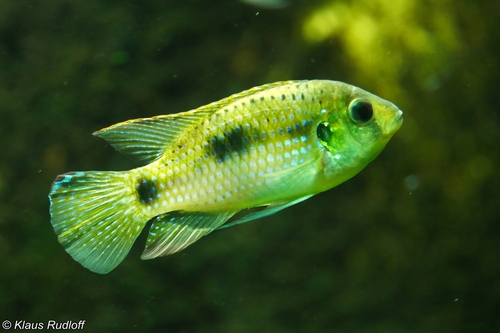
Anomalochromis thomasi
Anomalochromis thomasi
Aquarium hobby

Apistogramma eremnopyge
Apistogramma eremnopyge
Aquarium hobby
Argentine humphead
Gymnogeophagus balzanii
Aquarium hobby