
Home / Reptiles / Lizards / Agamidae / Sailfin lizard
No federal permit to keepSailfin lizard
Hydrosaurus amboinensis
Reptiles › Lizards (Lacertilia) › Agamidae (Agamas and dragons)
The Moluccan sail-finned lizard or Ambon sailfin dragon (Hydrosaurus amboinensis) is a large agamid lizard native to Moluccas or Maluku Islands in Indonesia, growing to about one metre (3.3 ft) in length.
From Wikipedia: Hydrosaurus amboinensis, CC BY-SA 4.0 (excerpt)

Care at a glance
Species-specific values
Values researched for this exact species. Air, surface and water temperatures are listed separately, and each source is kept as published rather than averaged.
| Minimum enclosure | An adequate habitat for one adult targets dimensions around 8 feet in length, 4 feet in depth, and 6 feet in height. Source: bigappleherp.com | |
| Basking surface temperature | 100–110 °F Source: bigappleherp.com | |
| Warm side air temperature | 82–88 °F Source: bigappleherp.com | |
| Cool side air temperature | 75–82 °F Source: bigappleherp.com | |
| Night temperature | 70–75 °F Source: bigappleherp.com | |
| Humidity | 70–90 % Source: bigappleherp.com | |
| Uvb lighting | Use appropriately sized linear UVB; overlap it with heat at major basking spots and provide shaded areas. Source: bigappleherp.com | |
| Diet | Provide a varied omnivorous diet combining animal prey with suitable plant foods. Source: bigappleherp.com | |
| Feeding frequency | Growing juveniles require frequent nutrition. Source: bigappleherp.com | |
| Social housing | Individual housing is the safest general recommendation for most private keepers; adult males should not be housed together. Source: bigappleherp.com | |
| Substrate | Use tropical soil-based substrate that retains moisture without becoming waterlogged; deep substrate is preferable where feasible. Source: bigappleherp.com | |
| Minimum enclosure | Adult minimum: 6’ x 3’ x 6’. Source: ohiopetdepot.com | |
| Basking surface temperature | 105–115 °F Source: ohiopetdepot.com | |
| Warm side air temperature | 85–90 °F Source: ohiopetdepot.com | |
| Cool side air temperature | 75–80 °F Source: ohiopetdepot.com | |
| Night temperature | at least 70 °F Source: ohiopetdepot.com | |
| Humidity | 70–90 % Source: ohiopetdepot.com | |
| Humidity | 80–90 % Source: ohiopetdepot.com | |
| Water temperature | 80–85 °F Source: ohiopetdepot.com | |
| Uvb lighting | High-output UVB is required; maintain a 12–14 hour light cycle and replace bulbs every 6–12 months. Source: ohiopetdepot.com | |
| Diet | Omnivorous diet includes insects, leafy greens, fruits, and flowers; juveniles eat more insects and adults more plant matter. Source: ohiopetdepot.com | |
| Feeding frequency | Juveniles: insects daily, 5–10 appropriately sized feeders; sub-adults: insects every other day; adults: insects 2–3 times weekly. Plant matter offered daily. Source: ohiopetdepot.com | |
| Substrate | Use a topsoil/coconut fiber blend or cypress mulch; maintain at least 3–4 inches of substrate. Source: ohiopetdepot.com | |
| Social housing | Males can be territorial. Source: ohiopetdepot.com |
Warnings
Understanding the animal
About this animal
About this animal
It is often confused for being the largest of the sailfin dragons, but that title belongs to Hydrosaurus microlophus, with the second-largest of the sailfin dragons being Hydrosaurus celebensis. The Amboina sail-finned lizard is found in wooded habitats near water in New Guinea and the central Moluccas.
From Wikipedia: Hydrosaurus amboinensis, CC BY-SA 4.0 (excerpt)
In the wild
In the wild
| Overview | The Moluccan sail-finned lizard or Ambon sailfin dragon (Hydrosaurus amboinensis) is a large agamid lizard native to Moluccas or Maluku Islands in Indonesia, growing to about 1 m in length. It is often confused for being the largest of the sailfin dragons, but that title belongs to Hydrosaurus microlophus, with the second-largest of the sailfin dragons being Hydrosaurus celebensis. The Amboina sail-finned lizard is found in wooded habitats near water in New Guinea and the central Moluccas. — From Wikipedia: Hydrosaurus amboinensis, CC BY-SA 4.0 (excerpt) |
Read about this species in the wild at The Reptile Database.
Native climate (measured)
Native climate (measured)
| Warm-season highs | about 88°F (up to 91°F in the hottest sampled areas) |
| Cool-season lows | about 71°F (down to 68°F in the coldest sampled areas) |
| Average temperature | 76–81°F across sampled records |
| Relative humidity | 81–84% on average (driest month about 79%) |
| Rainfall | about 2292 mm a year, spread fairly evenly |
Measured at 20 wild occurrence records sampled against WorldClim 2.1 climate data (1970–2000 averages). Air conditions in the range are ecological context, not enclosure settings: microhabitats such as burrows, leaf litter or basking rocks can be cooler, warmer or more humid.
Profile
Profile
Researched for this exact species. Sources are listed under In the wild above.
History
Named after the type locality.
Data and studies
The numbers
The numbers
Each bar is what one source reports. Where several sources weigh in, the dashed gold band marks their average.
Maximum recorded lifespan
Longest recorded lifespan reported by each database; typical lifespans are usually shorter. The AnAge record comes from an animal in human care.
Incubation
Care articles for this species
Care articles for this species
- Family Feeding Sailfin Lizards For 10 Years Spurs Authorities To Push For Critical Habitat Near Their Home (Reptiles Magazine)
Written by keepers, breeders and vets Reptiles MagazineReptiFiles
Sources for this sheet
- AnAge: The Animal Ageing and Longevity Database (Human Ageing Genomic Resources) (CC BY 3.0) Peer-reviewed researchCurated, referenced longevity and life-history records for thousands of species; maximum lifespans are often from zoo animals.
- Myhrvold et al. (2015). An amniote life-history database. Ecology 96: 3109 Peer-reviewed researchPeer-reviewed compilation of life-history data for over 21,000 birds, mammals and reptiles.
- The Reptile Database Peer-reviewed researchScientist-curated catalog of every reptile species, with taxonomy and literature.
- Wikipedia (species article) (CC BY-SA 4.0) Community referenceFree encyclopedia; useful overviews with their own citations. Short excerpts are quoted under CC BY-SA 4.0, each credited with a link to its article.
- iNaturalist (captive observations) Community referenceCommunity observation platform run by the California Academy of Sciences and National Geographic; observations marked captive show animals living in homes, zoos and aquariums.
- Reptiles Magazine (care articles) Experienced keeper or breederEstablished reptile and amphibian hobby magazine; care articles are written by breeders, keepers and veterinarians.
More agamas and dragons
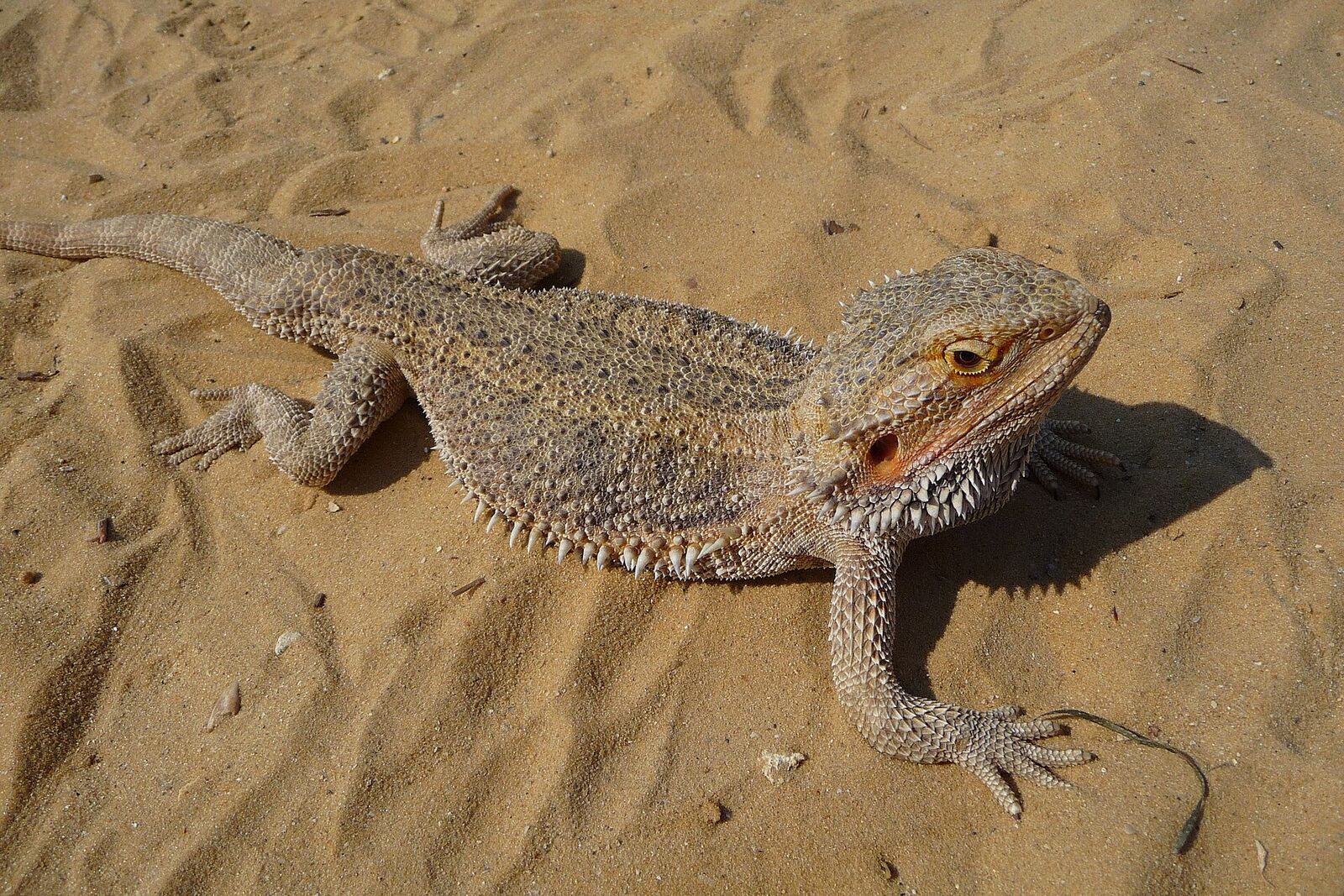
Bearded dragon
Pogona vitticeps
Sun-loving, friendly and endlessly popular.
Pet trade

(Sulawesi) Sailfin Lizard
Hydrosaurus celebensis
Pet trade

(Sulawesi) Sailfin Lizard (Hydrosaurus microlophus)
Hydrosaurus microlophus
Pet trade

Australian water dragon
Intellagama lesueurii
Pet trade

Bent's Mastigure
Uromastyx benti
Pet trade

Black-necked agama
Acanthocercus atricollis
Zoos & aquariums