
Home / Reptiles / Lizards / Varanidae / Storr's monitor
Some federal rules applyStorr's monitor
Varanus storri
Reptiles › Lizards (Lacertilia) › Varanidae (Monitor lizards)
Storr's monitor (Varanus storri) is a species of monitor lizard in the family Varanidae.
From Wikipedia: Varanus storri, CC BY-SA 4.0 (excerpt)
Care at a glance
Species-specific values
Values researched for this exact species. Air, surface and water temperatures are listed separately, and each source is kept as published rather than averaged.
| Minimum enclosure | At least 200 L minimum enclosure volume; the care section also specifies dimensions of 100x50x50 cm. Source: atlarium.bio | |
| Basking surface temperature | 113–122 °F (45–50 °C) Source: atlarium.bio | |
| Warm side air temperature | 95 °F (35 °C) Source: atlarium.bio | |
| Cool side air temperature | 82 °F (28 °C) Source: atlarium.bio | |
| Humidity | 35–45 % Source: atlarium.bio | |
| Uvb lighting | A 10% T5 UVB tube is required. Source: atlarium.bio | |
| Diet | Rotate feeders like locusts, mealworms, and crickets, plus Dubia or lateralise roaches. Source: atlarium.bio | |
| Feeding frequency | Provide captive prey regularly to sustain the species’ high metabolism. Source: atlarium.bio | |
| Social housing | Pairs or small harems may be housed together with adequate space; males must not be housed together. Source: atlarium.bio | |
| Substrate | Use a sand-clay mix at a 70:30 ratio, 10–15 cm deep. Source: atlarium.bio | |
| Seasonal cooling | A winter brumation period of roughly 8 weeks is recommended. Source: atlarium.bio |
Understanding the animal
About this animal
About this animal
The species is endemic to Australia.
From Wikipedia: Varanus storri, CC BY-SA 4.0 (excerpt)
In the wild
In the wild
| Overview | Storr's monitor (Varanus storri) is a species of monitor lizard in the family Varanidae. The species is endemic to Australia. — From Wikipedia: Varanus storri, CC BY-SA 4.0 (excerpt) |
| Where it lives | Varanus storri is found in the seasonal tropical regions of Australia, specifically in rocky environments. V. storri is found in eastern Australia, from Charters Tower to the Queensland, whereas V. storri ocreatus is predominantly located in Western Australia and the Northern Territory. Thus, both subspecies are found in the same climate and alike habitats. — From Wikipedia: Varanus storri, CC BY-SA 4.0 (excerpt) |
| Wild diet | Varanus storri preys on invertebrates especially orthopterans, but also ants, beetles and spiders. It also feeds on lizards such as skinks and geckos. Its diet is seasonal, and large fat reserves are built up through most of the year in order to last through the winter months when it becomes inactive. — From Wikipedia: Varanus storri, CC BY-SA 4.0 (excerpt) |
| Behavior | The species V. storri is terrestrial, and is even less arboreal than the related spiny-tailed monitor. The species lives in colonies in the wild, and as many as 50 animals may live together in a 0.75 km2 area, although each individual inhabits its own U-shaped burrow under a large rock or spinifex. Individuals sometimes wave their tails at each other. — From Wikipedia: Varanus storri, CC BY-SA 4.0 (excerpt) |
| Reproduction | In V. storri sexual maturity is attained by the time it is 9 cm long in snout-to-vent length (SVL). Enlarged testes chiefly occur in November, the late dry and early wet season, but do occur throughout the year. Similarly, breeding takes place throughout the year as well. — From Wikipedia: Varanus storri, CC BY-SA 4.0 (excerpt) |
Read about this species in the wild at The Reptile Database.
Native climate (measured)
Native climate (measured)
| Warm-season highs | about 93°F (up to 100°F in the hottest sampled areas) |
| Cool-season lows | about 52°F (down to 48°F in the coldest sampled areas) |
| Average temperature | 72–81°F across sampled records |
| Relative humidity | 51–61% on average (driest month about 46%) |
| Rainfall | about 752 mm a year, with strong wet and dry seasons |
Measured at 88 wild occurrence records sampled against WorldClim 2.1 climate data (1970–2000 averages). Air conditions in the range are ecological context, not enclosure settings: microhabitats such as burrows, leaf litter or basking rocks can be cooler, warmer or more humid.
Profile
Profile
Researched for this exact species. Sources are listed under In the wild above.
Data and studies
The numbers
The numbers
Each bar is what one source reports. Where several sources weigh in, the dashed gold band marks their average.
Typical adult weight
Average adult body mass in each database (FishBase gives the maximum recorded weight).
Adult snout-to-vent length
Body length without the tail.
Incubation
Sources for this sheet
- Myhrvold et al. (2015). An amniote life-history database. Ecology 96: 3109 Peer-reviewed researchPeer-reviewed compilation of life-history data for over 21,000 birds, mammals and reptiles.
- Species+ (UNEP-WCMC and the CITES Secretariat) Zoo, university or veterinaryThe official database of species listed under CITES. UNEP (2026). The Species+ Website. Nairobi, Kenya. Compiled by UNEP-WCMC, Cambridge, UK. Available at: www.speciesplus.net. [Accessed 04/10/2026].
- USFWS International Affairs: CITES Zoo, university or veterinaryFederal agency that issues CITES permits.
- The Reptile Database Peer-reviewed researchScientist-curated catalog of every reptile species, with taxonomy and literature.
- GBIF Backbone Taxonomy (Global Biodiversity Information Facility) (CC BY 4.0) Peer-reviewed researchInternational scientific taxonomy used here for classification. GBIF Secretariat (2023). GBIF Backbone Taxonomy. Checklist dataset https://doi.org/10.15468/39omei, accessed via GBIF.org.
- Wikipedia (species article) (CC BY-SA 4.0) Community referenceFree encyclopedia; useful overviews with their own citations. Short excerpts are quoted under CC BY-SA 4.0, each credited with a link to its article.
- iNaturalist (captive observations) Community referenceCommunity observation platform run by the California Academy of Sciences and National Geographic; observations marked captive show animals living in homes, zoos and aquariums.
More monitor lizards
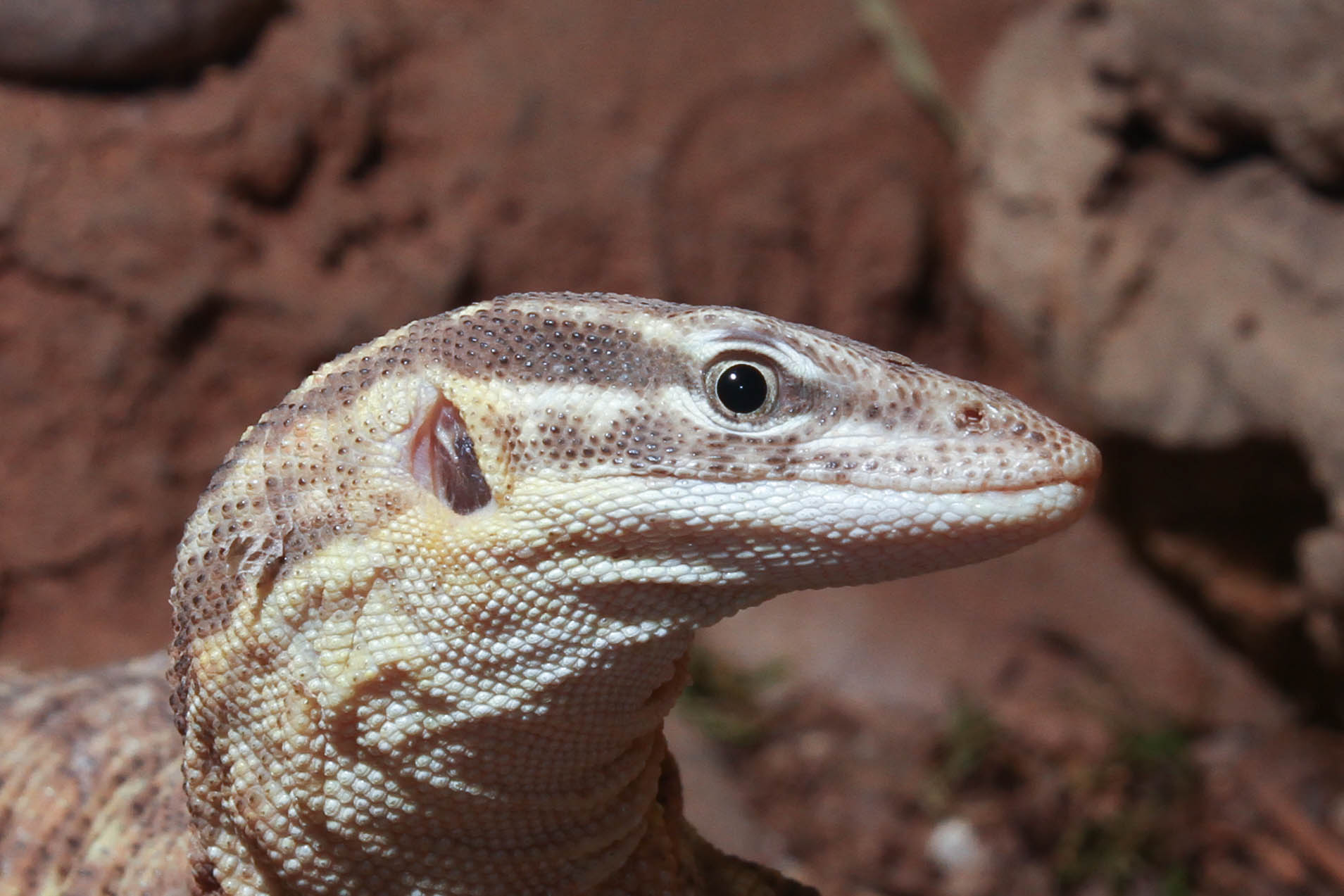
Ackie (spiny-tailed) monitor
Varanus acanthurus
A pint-sized monitor with a huge personality.
Pet trade
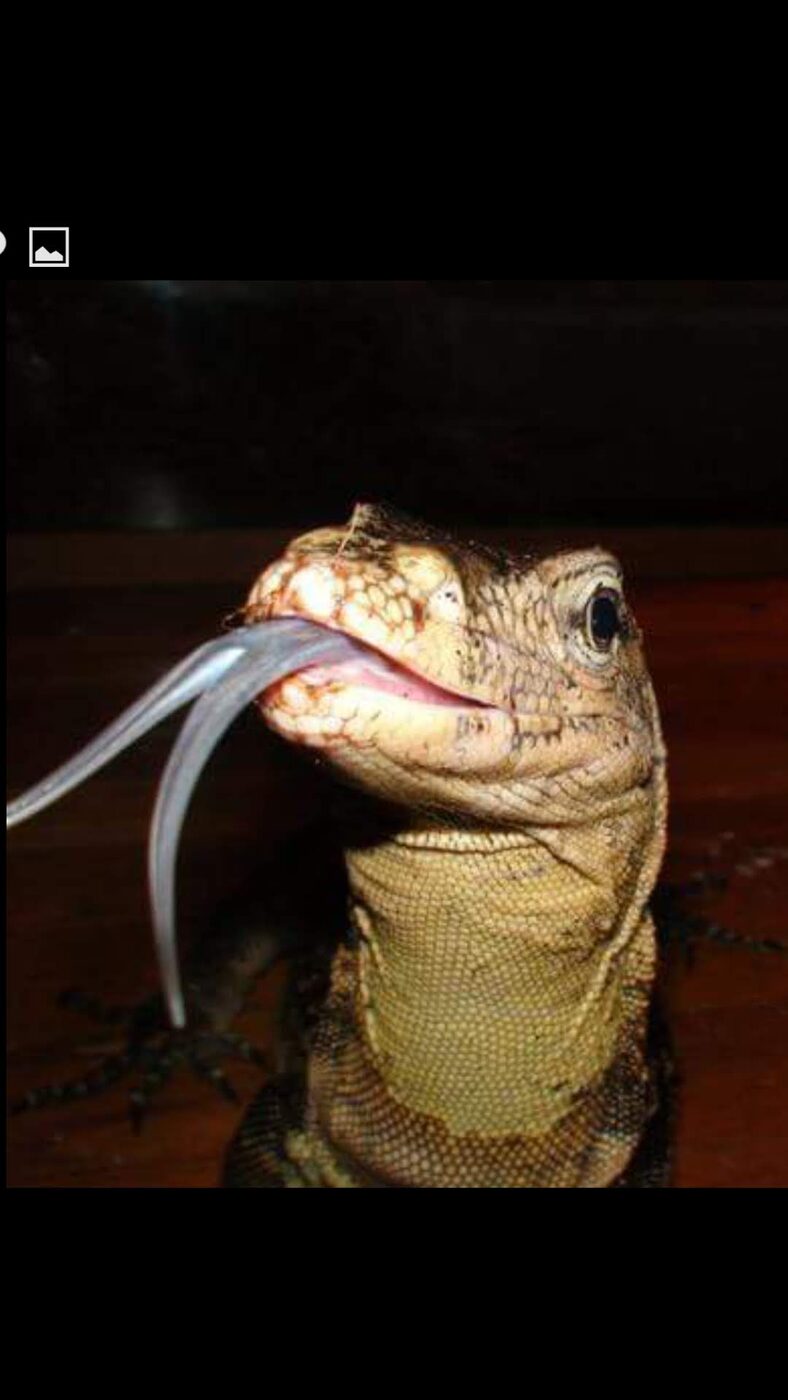
Asian water monitor
Varanus salvator
An intelligent, swimming giant: the "gentle giant" of monitors.
Pet trade
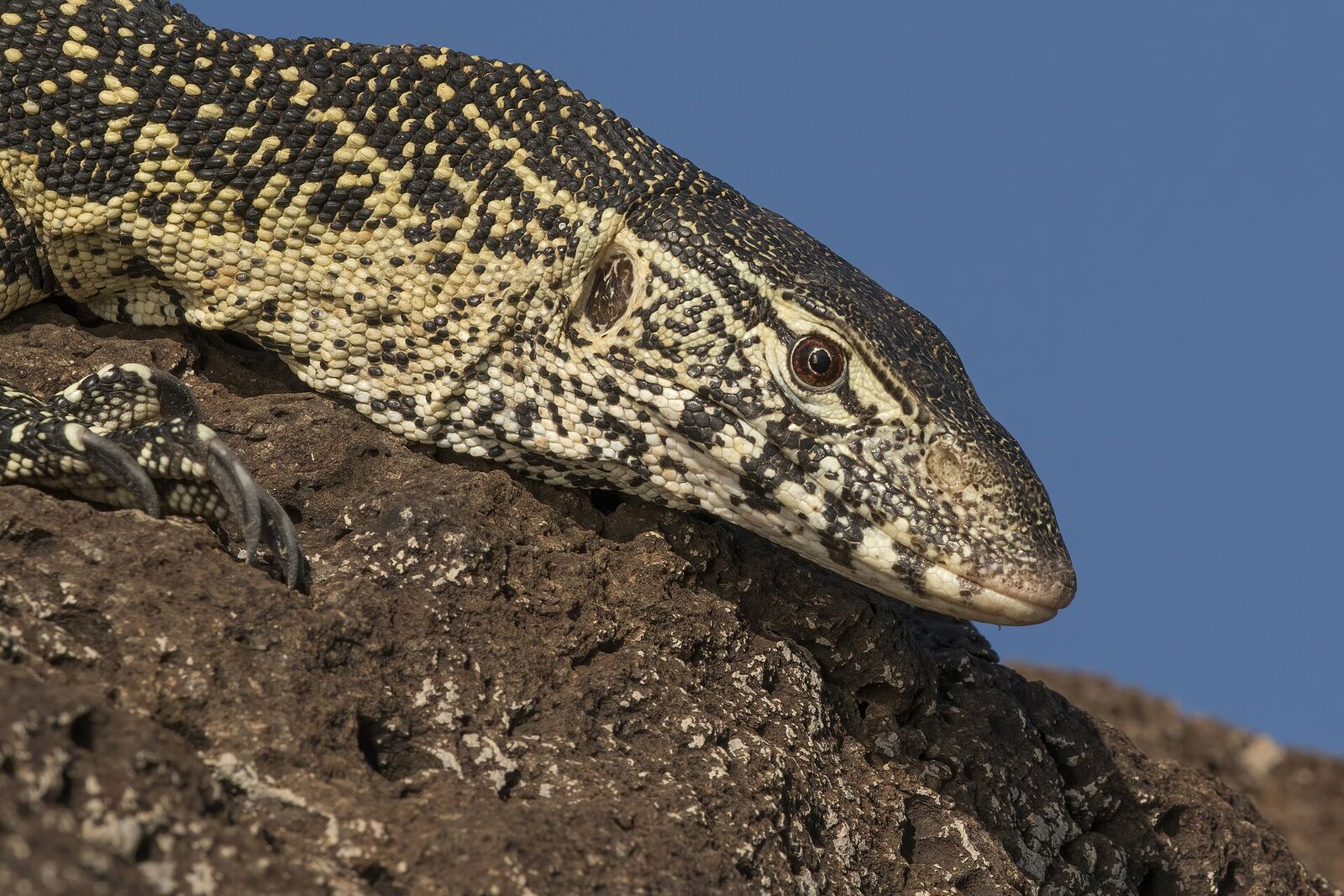
Nile monitor
Varanus niloticus
Africa's longest lizard, fast, bold and powerful.
Pet trade

Argus monitor
Varanus panoptes
Pet trade

Biak Emerald Monitor
Varanus kordensis
Pet trade

Black tree monitor
Varanus beccarii
Pet trade