
Home / Fishes / Catfish / Clariidae / Walking catfish (Clarias brachysoma)
Federal restrictions applyWalking catfish (Clarias brachysoma)
Clarias brachysoma
Fishes › Catfish (Siluriformes) › Clariidae (Air-breathing catfish)
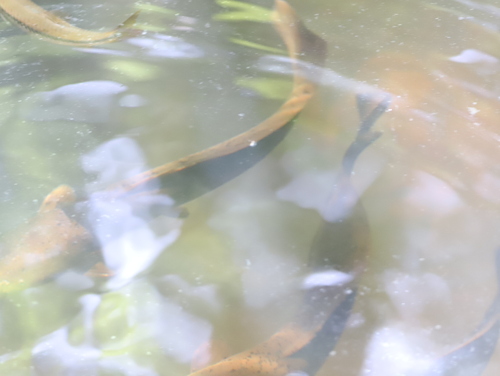
The Sri Lankan walking catfish (Clarias brachysoma) is a species of fish in the family Clariidae.
Care at a glance
Species-specific values
Values researched for this exact species. Air, surface and water temperatures are listed separately, and each source is kept as published rather than averaged.
| Water temperature | 75–82 °F Source: aquaristatlas.com | |
| Diet | In aquariums, accepts whole fish, prawn, chunks of fish flesh, earthworms, and sinking or carnivore pellets. Source: aquaristatlas.com | |
| Social housing | Tankmates must be too large to fit in its mouth. Source: aquaristatlas.com | |
| Minimum enclosure | Needs a very large, dedicated system of many hundreds of litres, or pond-scale facilities. Source: aquaristatlas.com |
Species-specific aquarium care
- Tank: At least 78 in long and 39 in front to back for one adult (adults commonly reach about 19.7 in / 50 cm).
- Water: Freshwater.
- Layout: Lives on or near the bottom: floor space and hiding places matter more than height.
- Diet: A predator: feed meaty foods sized to its mouth (frozen fish, shrimp, worms); it will eat tankmates that fit in its mouth. FishBase classes it as a carnivore.
- Safety: Venomous spines or sting: handle with care and keep a first-aid plan; never handle with bare hands.
Calculated from this species' own FishBase record: tank size from its typical adult length and swimming zone, water values from its recorded ranges. The group guide below fills in general care.
Warnings
Understanding the animal
About this animal
About this animal
It is endemic to Sri Lanka. Its natural habitats are rain forest streams and lowland rivers.
From Wikipedia: Clarias brachysoma, CC BY-SA 4.0 (excerpt)
In the wild
In the wild
From this species’ own FishBase record (habitat, bottom type, water and breeding data), not its family. Wild conditions are context, not enclosure settings.1
| Where it lives | Lives in freshwater, in rivers and streams. Stays near the bottom. |
| Climate | Tropical climate. |
| Wild diet | Hunting macrofauna (predator). |
| Behavior to plan for | Breeding: nesters. |
Data and studies
The numbers
The numbers
Each bar is what one source reports. Where several sources weigh in, the dashed gold band marks their average.
Typical adult weight
Average adult body mass in each database (FishBase gives the maximum recorded weight).
Adult length
Maximum recorded length. Measured as total length. Fish in home aquariums often stay smaller than wild records.
Sources for this sheet
- FishBase (Froese & Pauly, eds.), version 24.07 (CC BY-NC 4.0) Peer-reviewed researchThe global scientific database on fishes, maintained by a consortium of research institutions; every value is referenced.
- 50 CFR Part 16: Injurious wildlife (Lacey Act) Zoo, university or veterinaryCurrent federal regulation, read from eCFR.
- U.S. Association of Reptile Keepers v. Zinke (D.C. Cir. 2017) Zoo, university or veterinaryAppeals ruling that the Lacey Act's shipping ban does not cover moves between the continental states.
- Wikipedia (species article) (CC BY-SA 4.0) Community referenceFree encyclopedia; useful overviews with their own citations. Short excerpts are quoted under CC BY-SA 4.0, each credited with a link to its article.

