
Home / Invertebrates / Spiders / Bolivian Pink
No federal permit to keepBolivian Pink
Acanthoscurria chacoana
Invertebrates › Spiders (Araneae) › Theraphosidae (Tarantulas)
Acanthoscurria chacoana, also known as the Bolivian red rump tarantula, is a fast growing, docile tarantula found in Brazil, Bolivia, Paraguay, and Argentina.
From Wikipedia: Acanthoscurria chacoana, CC BY-SA 4.0 (excerpt)

Care at a glance
Species-specific values
Values researched for this exact species. Air, surface and water temperatures are listed separately, and each source is kept as published rather than averaged.
| Minimum enclosure | Adults need 40 × 30 cm floor space for an adult female. Source: tarantulahub.co.uk | |
| Warm side air temperature | 72–82 °F (22–28 °C) Source: tarantulahub.co.uk | |
| Humidity | 60–75 % Source: tarantulahub.co.uk | |
| Feeding frequency | Adults are fed every 10–14 days. Source: tarantulahub.co.uk | |
| Substrate | Maintain substrate from dry to barely moist without soaking. Source: tarantulahub.co.uk | |
| Uvb lighting | No special lighting is needed; ambient room light is enough. Source: tarantulahub.co.uk |
Understanding the animal
About this animal
About this animal
It is commonly kept as a pet, preferring 70–80% humidity and a horizontally large enclosure, as it is terrestrial. This species of spider does create burrows and is a reddish-brown with tan stripes on its legs.
From Wikipedia: Acanthoscurria chacoana, CC BY-SA 4.0 (excerpt)
In the wild
In the wild
| Overview | Acanthoscurria chacoana, also known as the Bolivian red rump tarantula, is a fast growing, docile tarantula found in Brazil, Bolivia, Paraguay, and Argentina. It is commonly kept as a pet, preferring 70–80% humidity and a horizontally large enclosure, as it is terrestrial. This species of spider does create burrows and is a reddish-brown with tan stripes on its legs. — From Wikipedia: Acanthoscurria chacoana, CC BY-SA 4.0 (excerpt) |
| Lifespan | Female tarantulas of this species can live up to 20 years, while males tend to only live 3–4. — From Wikipedia: Acanthoscurria chacoana, CC BY-SA 4.0 (excerpt) |
Native climate (measured)
Native climate (measured)
| Warm-season highs | about 92°F (up to 94°F in the hottest sampled areas) |
| Cool-season lows | about 58°F (down to 49°F in the coldest sampled areas) |
| Average temperature | 71–79°F across sampled records |
| Relative humidity | 66–73% on average (driest month about 61%) |
| Rainfall | about 1210 mm a year |
Measured at 40 wild occurrence records sampled against WorldClim 2.1 climate data (1970–2000 averages). Air conditions in the range are ecological context, not enclosure settings: microhabitats such as burrows, leaf litter or basking rocks can be cooler, warmer or more humid.
Data and studies
Researched care notes
Researched care notes
Findings checked against veterinary, zoo, welfare, keeper and peer-reviewed sources. Air, basking-surface and water temperatures are kept separate, and where sources disagree both are shown. “Study” notes report what a paper measured, not a universal rule.
Terrestrial Tarantulas (beginner housing module)
Researched for this whole family or group; check species differences before applying.
- Use a secure terrestrial enclosure with refuge, appropriate substrate, and available water. Arboreal and deep-burrowing species require separate designs.1
- The keeper essay recommends managing substrate moisture, drinking water, and ventilation rather than chasing a generic RH number. Keeper experience; confidence LOW.2
Terrestrial Tarantulas
Researched for this whole family or group; check species differences before applying.
- A spider lying on its back may be molting; do not turn it upright or disturb the molt.1,3
- Remove loose living prey when a tarantula stops feeding before a molt, because prey insects can injure or kill the vulnerable spider.1
- Resume feeding only after the new exoskeleton has hardened; the BTS notes that newly molted adults can need more than a week.1
- Minimize fall risk and routine handling; the BTS recommends no handling because even a short fall can seriously injure a tarantula.1
- Arrange rocks and other heavy furnishings so they cannot fall onto the spider or create hazardous falls.3
Sources for this sheet
- GBIF Backbone Taxonomy (Global Biodiversity Information Facility) (CC BY 4.0) Peer-reviewed researchInternational scientific taxonomy used here for classification. GBIF Secretariat (2023). GBIF Backbone Taxonomy. Checklist dataset https://doi.org/10.15468/39omei, accessed via GBIF.org.
- Wikipedia (species article) (CC BY-SA 4.0) Community referenceFree encyclopedia; useful overviews with their own citations. Short excerpts are quoted under CC BY-SA 4.0, each credited with a link to its article.
- iNaturalist (captive observations) Community referenceCommunity observation platform run by the California Academy of Sciences and National Geographic; observations marked captive show animals living in homes, zoos and aquariums.
More tarantulas
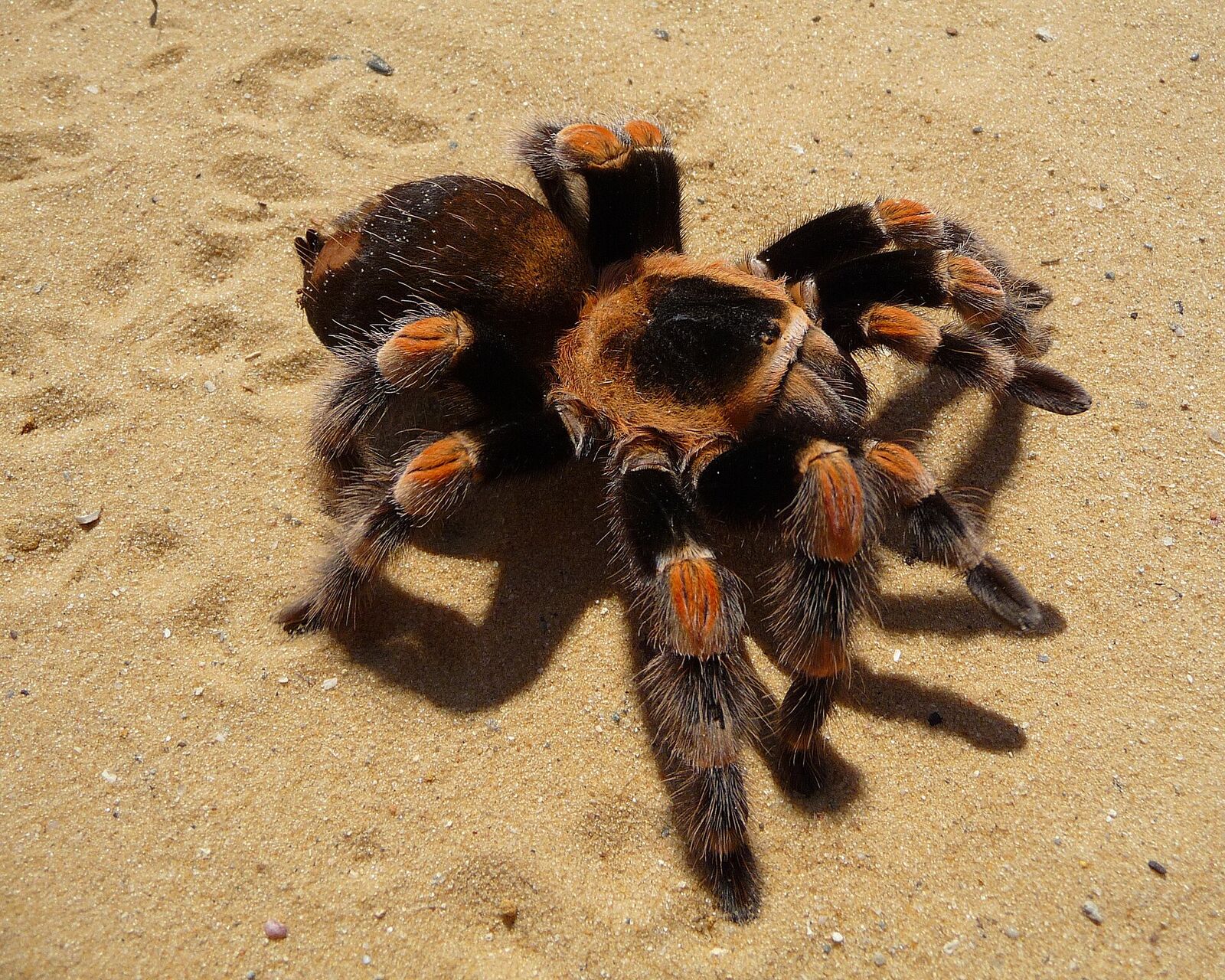
Mexican redknee tarantula
Brachypelma hamorii
A docile spider where females live 25–30 years.
Pet trade

African Horned Baboon Tarantula
Ceratogyrus darlingi
Pet trade
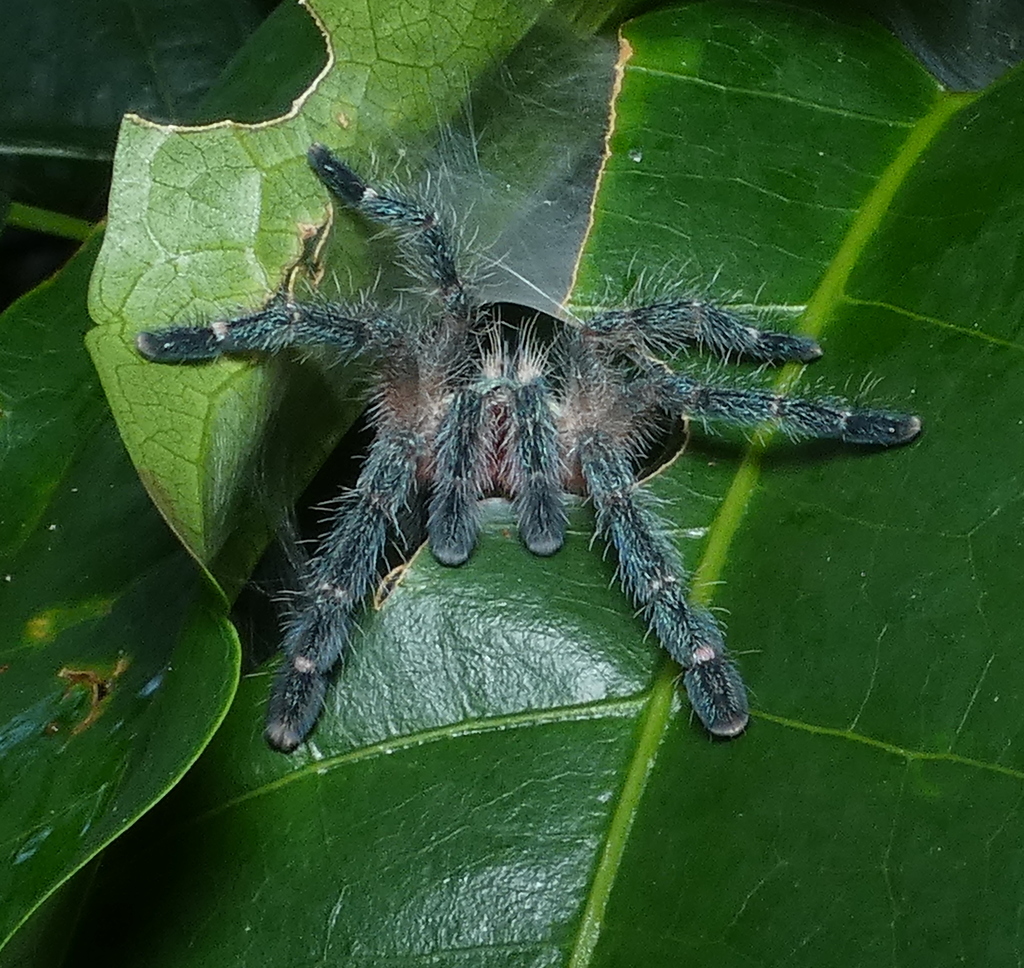
Amazon Ribbed Tarantula
Iridopelma hirsutum
Pet trade

Amula Redrump Tarantula
Brachypelma albiceps
Pet trade

Anantagiri’s Parachute Spider
Poecilotheria tigrinawesseli
Pet trade

Antilles pinktoe tarantula
Caribena versicolor
Pet trade