
Home / Invertebrates / Spiders / Mexican Blood Leg
No federal permit to keepMexican Blood Leg
Aphonopelma bicoloratum
Invertebrates › Spiders (Araneae) › Theraphosidae (Tarantulas)
Aphonopelma bicoloratum (also known as Mexican blood leg), is a species of tarantula found in Mexico.
From Wikipedia: Aphonopelma bicoloratum, CC BY-SA 4.0 (excerpt)

Care at a glance
Species-specific values
Values researched for this exact species. Air, surface and water temperatures are listed separately, and each source is kept as published rather than averaged.
| Minimum enclosure | Spiderling enclosures should be at least three times the tarantula’s leg span; juveniles 3–4×; adults at least 3×, ideally 4×. Source: thetarantulacollective.com | |
| Warm side air temperature | 68–76 °F Source: thetarantulacollective.com | |
| Diet | Offer prey sized for the tarantula’s life stage, including insects such as crickets, roaches, fruit flies, beetles, or mealworms. Source: thetarantulacollective.com | |
| Feeding frequency | Feed spiderlings twice a week, juveniles every 7–10 days, and adults every 2–3 weeks or as needed. Source: thetarantulacollective.com | |
| Substrate | Use deep substrate for burrowing; spiderlings get at least two-thirds fill, juveniles and adults one-half to two-thirds. Source: thetarantulacollective.com | |
| Minimum enclosure | Specimens over 2 inches can be housed in a 7×7×11-inch or 8×8×14-inch terrestrial enclosure. Source: jamiestarantulas.com | |
| Warm side air temperature | 70–75 °F Source: jamiestarantulas.com | |
| Humidity | Humidity is described as low to medium. Source: jamiestarantulas.com | |
| Diet | Provide roaches, mealworms, or crickets to grown spiders; for spiderlings below 1/3 inch, provide tiny prey or pre-killed items. Source: jamiestarantulas.com | |
| Feeding frequency | Adults eat every 10–18 days; spiderlings every 7–14 days. Source: jamiestarantulas.com | |
| Substrate | Organic, chemical- and fertilizer-free cocofiber, vermiculite, peat moss, potting soil, or a mix are suitable. Source: jamiestarantulas.com |
Understanding the animal
About this animal
About this animal
As its common name aptly states it is found in Mexico, and was first described by Ronny Struchen, D. Brändle and Gunter Schmidt in 1996. It is named after the Latin word bicoloratum, meaning bicolored.
From Wikipedia: Aphonopelma bicoloratum, CC BY-SA 4.0 (excerpt)
In the wild
In the wild
| Overview | Aphonopelma bicoloratum (also known as Mexican blood leg), is a species of tarantula found in Mexico. As its common name aptly states it is found in Mexico, and was first described by Ronny Struchen, D. Brändle and Gunter Schmidt in 1996. It is named after the Latin word bicoloratum, meaning bicolored. — From Wikipedia: Aphonopelma bicoloratum, CC BY-SA 4.0 (excerpt) |
| Where it lives | It is found in South Western Mexico, though it is not clearly stated where, there habitat where they are found are mainly deserts and scrublands, alongside the pacific side of the country. The deserts and scrublands of South Western Mexico, are few and far between. This are found mainly in Puebla, where the main plants are Agave, Yuca, Opuntia, Aristida and Stipa. — From Wikipedia: Aphonopelma bicoloratum, CC BY-SA 4.0 (excerpt) |
| Behavior | As a new world species, this tarantula possesses urticating hairs, which it may kick if it feels threatened. As a terrestrial species, it does not usually make webbings or burrows. Similarly to other species in its genus, it is considered docile and slow moving. — From Wikipedia: Aphonopelma bicoloratum, CC BY-SA 4.0 (excerpt) |
| Appearance and size | As its common name suggests, its legs are an orange color, which ranges from the metatarsus to the femur, the tarsus and trochanters being black. Its carapace is the same orange color as the legs, with the opisthosoma and chelicerae being black. The opisthosoma is also covered with long slender reddish hairs. — From Wikipedia: Aphonopelma bicoloratum, CC BY-SA 4.0 (excerpt) |
Data and studies
Researched care notes
Researched care notes
Findings checked against veterinary, zoo, welfare, keeper and peer-reviewed sources. Air, basking-surface and water temperatures are kept separate, and where sources disagree both are shown. “Study” notes report what a paper measured, not a universal rule.
Terrestrial Tarantulas (beginner housing module)
Researched for this whole family or group; check species differences before applying.
- Use a secure terrestrial enclosure with refuge, appropriate substrate, and available water. Arboreal and deep-burrowing species require separate designs.1
- The keeper essay recommends managing substrate moisture, drinking water, and ventilation rather than chasing a generic RH number. Keeper experience; confidence LOW.2
Terrestrial Tarantulas
Researched for this whole family or group; check species differences before applying.
- A spider lying on its back may be molting; do not turn it upright or disturb the molt.1,3
- Remove loose living prey when a tarantula stops feeding before a molt, because prey insects can injure or kill the vulnerable spider.1
- Resume feeding only after the new exoskeleton has hardened; the BTS notes that newly molted adults can need more than a week.1
- Minimize fall risk and routine handling; the BTS recommends no handling because even a short fall can seriously injure a tarantula.1
- Arrange rocks and other heavy furnishings so they cannot fall onto the spider or create hazardous falls.3
Sources for this sheet
- GBIF Backbone Taxonomy (Global Biodiversity Information Facility) (CC BY 4.0) Peer-reviewed researchInternational scientific taxonomy used here for classification. GBIF Secretariat (2023). GBIF Backbone Taxonomy. Checklist dataset https://doi.org/10.15468/39omei, accessed via GBIF.org.
- Wikipedia (species article) (CC BY-SA 4.0) Community referenceFree encyclopedia; useful overviews with their own citations. Short excerpts are quoted under CC BY-SA 4.0, each credited with a link to its article.
- iNaturalist (captive observations) Community referenceCommunity observation platform run by the California Academy of Sciences and National Geographic; observations marked captive show animals living in homes, zoos and aquariums.
More tarantulas
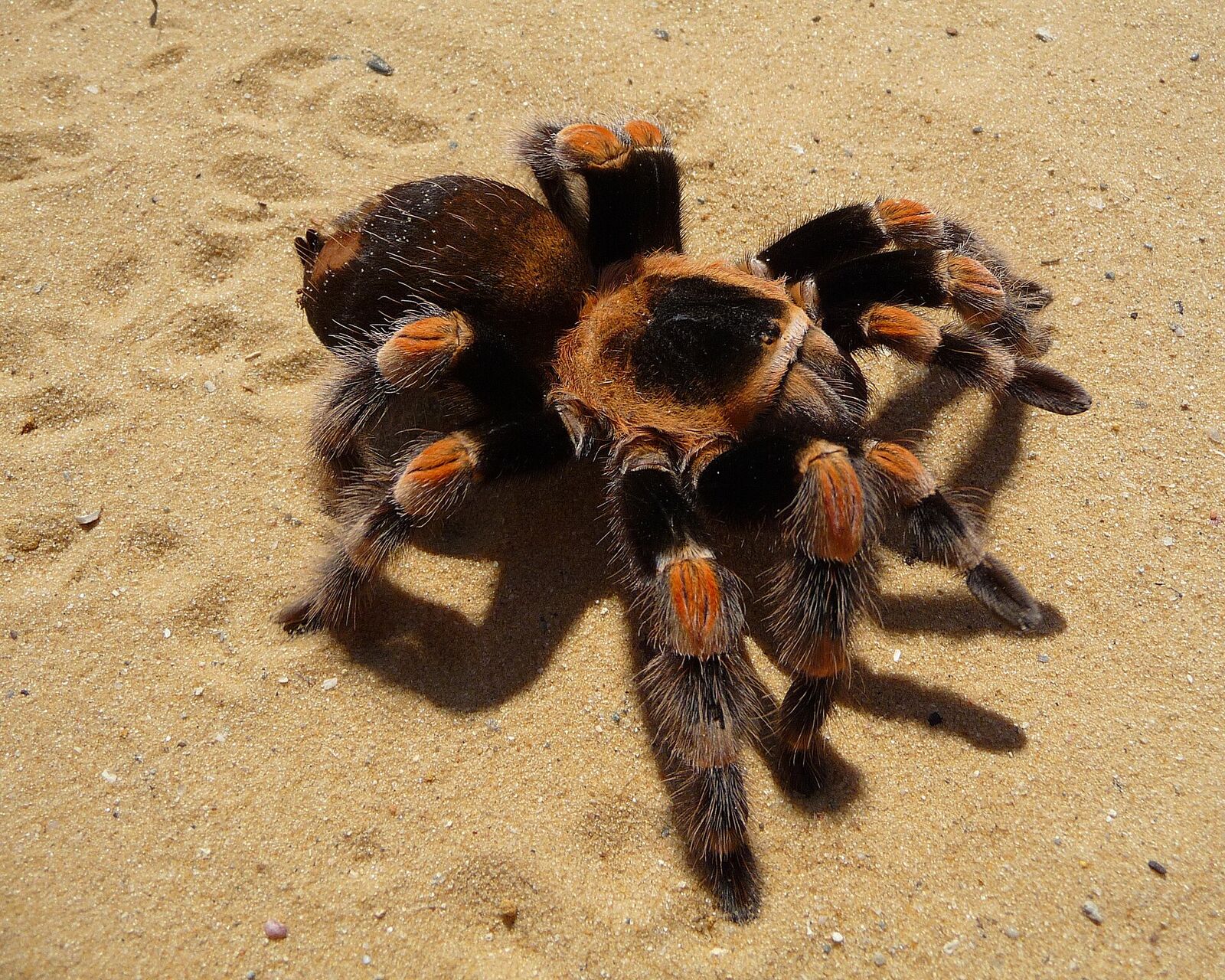
Mexican redknee tarantula
Brachypelma hamorii
A docile spider where females live 25–30 years.
Pet trade

African Horned Baboon Tarantula
Ceratogyrus darlingi
Pet trade
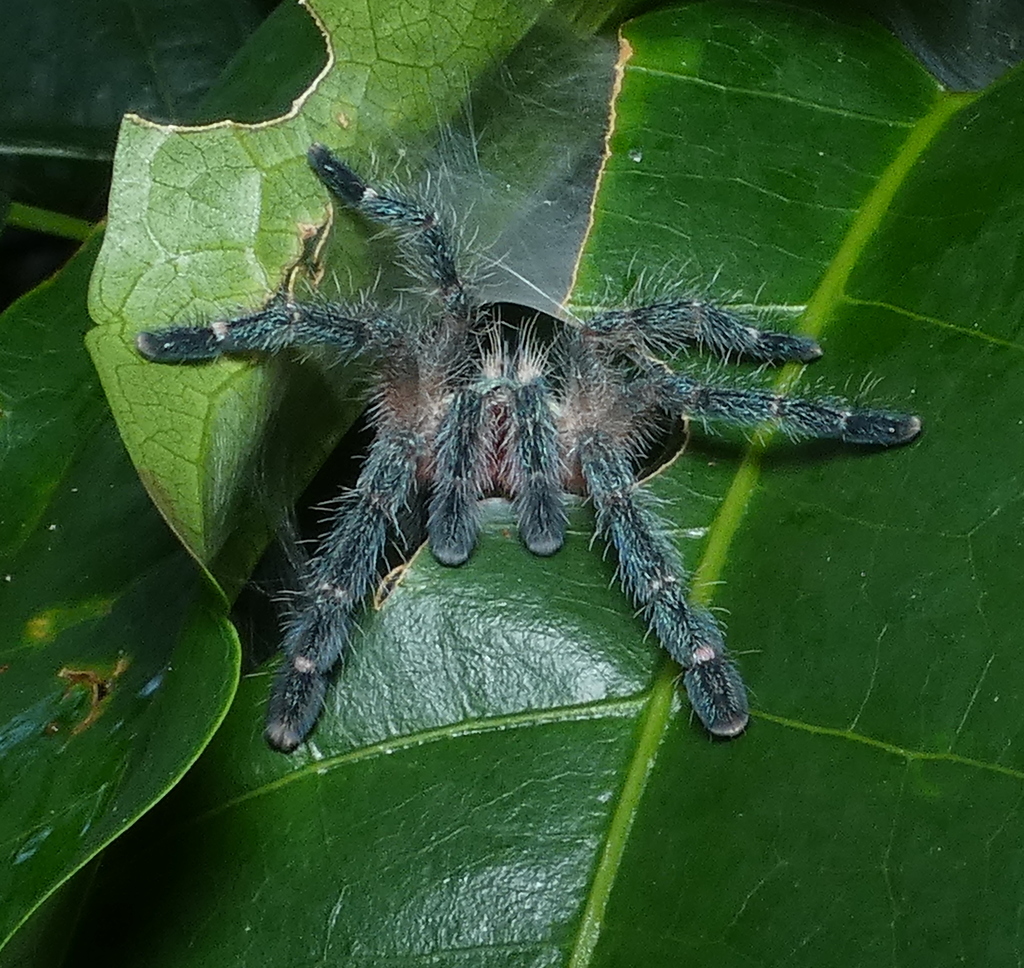
Amazon Ribbed Tarantula
Iridopelma hirsutum
Pet trade

Amula Redrump Tarantula
Brachypelma albiceps
Pet trade

Anantagiri’s Parachute Spider
Poecilotheria tigrinawesseli
Pet trade

Antilles pinktoe tarantula
Caribena versicolor
Pet trade