
Home / Reptiles / Snakes / Pythonidae / Ball python
Some federal rules applyBall python
Python regius
Reptiles › Snakes (Serpentes) › Pythonidae (Pythons)
Ball pythons are docile, manageable pythons that rarely exceed 5 feet.
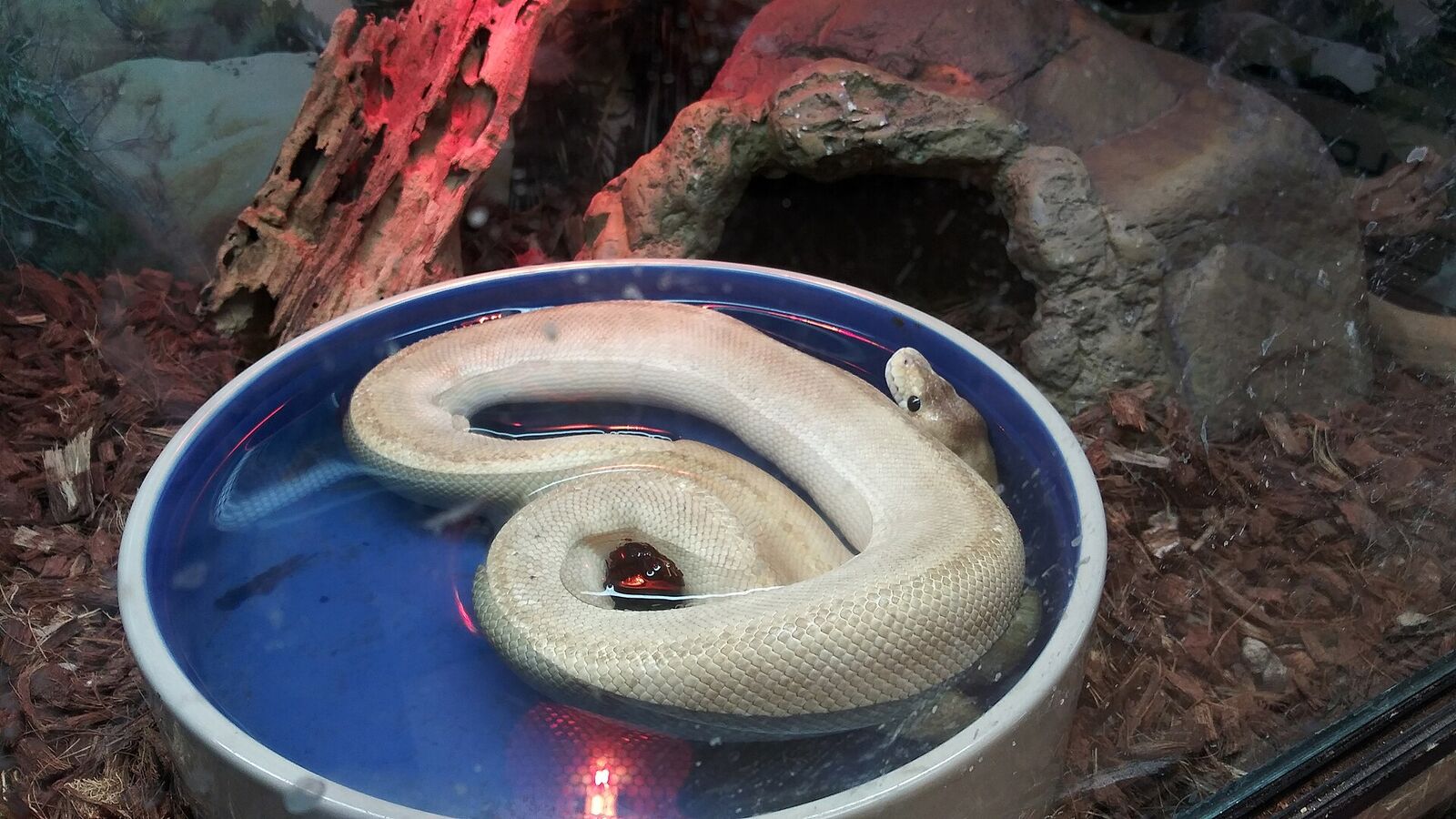
Care at a glance
Species-specific values
Values researched for this exact species. Air, surface and water temperatures are listed separately, and each source is kept as published rather than averaged.
| Warm hide temperature | 86–90 °F | reptifiles.com |
| Cool hide temperature | 72–80 °F | reptifiles.com |
| Air temperature night | 70–78 °F | reptifiles.com |
| Humidity day | 60–80 % RH | reptifiles.com |
| Humidity night | 80–100 % RH | reptifiles.com |
| UV index basking | 2–3 UVI | reptifiles.com |
| Enclosure minimum | length: 48 in; width: 24 in; height: 24 in Adult baseline; length must also equal or exceed the individual snake | reptifiles.com |
| Social | House individually. | reptifiles.com |
| Preferred air temperature zone | 77–86 °F (25–30 °C) Veterinary POTZ; not water or basking surface. | merckvetmanual.com |
| Relative humidity | 50–80 % Veterinary table; corn snake, leopard gecko, bearded dragon and savannah monitor require more humidity during shedding. | merckvetmanual.com |
| Note: ReptiFiles recommendation | ||
Care guide
Enclosure
- Absolute minimum 48×24×24 in for an adult; cool end about 75°F.
Sources rvc.ac.uk
Feeding
- Adults usually eat every 1–2 weeks depending on weight; warm thawed prey to blood temperature.
Sources rvc.ac.uk
Understanding the animal
In the wild
In the wild
Researched for this exact species, not its family. Wild conditions are context, not enclosure settings.1234
| Where it lives | West and Central African savanna, open woodland and cultivated clearings. It spends substantial time in underground refuges and mammal burrows. |
| Ground it lives on | Savanna soil beneath grass and brush, especially sheltered burrows. |
| Climate | Tropical savanna with wet and dry seasons; activity is greater during the wet season. Numeric wild temperature and relative-humidity ranges were not established in the source. |
| Active | Primarily nocturnal, also active around dawn and dusk. |
| Social life | Solitary. |
| Wild diet | Small mammals, especially African rodents such as grass mice, shaggy rats, rufous-nosed rats and giant pouched rats. |
| Behavior to plan for | Uses sheltered ambush positions and can climb despite its frequent use of burrows. When threatened it may coil into a tight ball with its head protected inside. |
Native climate (measured)
Native climate (measured)
| Warm-season highs | about 97°F (up to 102°F in the hottest sampled areas) |
| Cool-season lows | about 66°F (down to 61°F in the coldest sampled areas) |
| Average temperature | 78–82°F across sampled records |
| Relative humidity | 60–77% on average (driest month about 45%) |
| Rainfall | about 1132 mm a year, with strong wet and dry seasons |
Measured at 105 wild occurrence records sampled against WorldClim 2.1 climate data (1970–2000 averages). Air conditions in the range are ecological context, not enclosure settings: microhabitats such as burrows, leaf litter or basking rocks can be cooler, warmer or more humid.
Data and studies
Researched care notes
Researched care notes
Findings checked against veterinary, zoo, welfare, keeper and peer-reviewed sources. Air, basking-surface and water temperatures are kept separate, and where sources disagree both are shown. “Study” notes report what a paper measured, not a universal rule.
Ball / Royal Python (species)
- RSPCA gives a 30–32°C basking zone and a 24–26°C cool end. Measure the basking zone at snake level and the cool end with a digital thermometer.1
- ReptiFiles gives a 30–32°C warm hide and a 22–27°C cool hide. These are hide temperatures, not necessarily whole-enclosure air.2
- RSPCA describes 50–60% RH at the cool end, with brief increases near 80% that fall between misting.1
- ReptiFiles recommends 60–80% daytime RH with a central probe and higher night readings.2
- The veterinary table lists 50–80% RH; probe location is unspecified.3
- UVI recommendations disagree: RSPCA gives 1.0 at basking, while ReptiFiles gives 2–3. Measure at the animal’s basking position.1
- Provide enough length for full extension, cover, and multiple hides. A furnished enclosure differs from a large bare space.1
- RSPCA recommends thawed whole rodents and says additional supplementation is usually unnecessary with good-quality whole prey.1
- Housing research supports evaluating behavioural opportunities; survival in rack housing does not itself establish adequate welfare. Research interpretation.4
The numbers
The numbers
Each bar is what one source reports. Where several sources weigh in, the dashed gold band marks their average.
Hot spot / basking
Humidity
Lifespan
Maximum recorded lifespan
Longest recorded lifespan reported by each database; typical lifespans are usually shorter. The AnAge record comes from an animal in human care.
Clutch size
Average per litter or clutch.
Incubation
Female maturity
Care articles for this species
Care articles for this species
- Ball Python Care Guide (ReptiFiles)
- Ball Python Care Sheet (Reptiles Magazine)
- Ball Python Feeding Tips (ReptiFiles)
- Ball Python Terrarium Size Guidelines (ReptiFiles)
- Ball Python History, Care And Breeding (Reptiles Magazine)
- Feeding Ball Pythons (Reptiles Magazine)
Written by keepers, breeders and vets Reptiles MagazineReptiFiles
Veterinary & husbandry research
Veterinary & husbandry research
- Oral, Cloacal, and Hemipenal Actinomycosis in Captive Ball Pythons (Python regius) Tillis SB et al., Frontiers in veterinary science 2020
- The effects of UV light on calcium metabolism in ball pythons (Python regius) Hedley J et al., The Veterinary record 2013
Peer-reviewed papers that mention this species alongside captivity, zoos, veterinary care or aquaculture. Some cover several species or mention it only in passing, so check the abstract. See all 51 on PubMed → PubMed
Sources for this sheet
- Royal Veterinary College Exotics Service: Royal (ball) python care Zoo, university or veterinaryVet-school exotics hospital factsheet, reviewed 2021–2024.
- Clint's Reptiles (YouTube): Ball Python, The Best Pet Reptile? Expert educator & keeperClint Laidlaw, PhD in Biology Education and MS in Evolutionary Ecology; owner of Clint's Reptile Room and a longtime keeper. His "Best Pet?" series reviews each species' care in depth.
- ReptiFiles: Ball python care Experienced keeper or breederWell-researched care guide.
- AnAge: The Animal Ageing and Longevity Database (Human Ageing Genomic Resources) (CC BY 3.0) Peer-reviewed researchCurated, referenced longevity and life-history records for thousands of species; maximum lifespans are often from zoo animals.
- Myhrvold et al. (2015). An amniote life-history database. Ecology 96: 3109 Peer-reviewed researchPeer-reviewed compilation of life-history data for over 21,000 birds, mammals and reptiles.
- Species+ (UNEP-WCMC and the CITES Secretariat) Zoo, university or veterinaryThe official database of species listed under CITES. UNEP (2026). The Species+ Website. Nairobi, Kenya. Compiled by UNEP-WCMC, Cambridge, UK. Available at: www.speciesplus.net. [Accessed 04/10/2026].
- USFWS International Affairs: CITES Zoo, university or veterinaryFederal agency that issues CITES permits.
- Clint's Reptiles (YouTube): Ball Python, The Best Pet Reptile? Expert educator & keeperClint Laidlaw, PhD in Biology Education and MS in Evolutionary Ecology; owner of Clint's Reptile Room and a longtime keeper. His "Best Pet?" series reviews each species' care in depth.
- The Reptile Database Peer-reviewed researchScientist-curated catalog of every reptile species, with taxonomy and literature.
- GBIF Backbone Taxonomy (Global Biodiversity Information Facility) (CC BY 4.0) Peer-reviewed researchInternational scientific taxonomy used here for classification. GBIF Secretariat (2023). GBIF Backbone Taxonomy. Checklist dataset https://doi.org/10.15468/39omei, accessed via GBIF.org.
- Wikipedia (species article) (CC BY-SA 4.0) Community referenceFree encyclopedia; useful overviews with their own citations. Short excerpts are quoted under CC BY-SA 4.0, each credited with a link to its article.
- PubMed (U.S. National Library of Medicine) Peer-reviewed researchIndex of peer-reviewed veterinary, zoo and husbandry research.
- iNaturalist (captive observations) Community referenceCommunity observation platform run by the California Academy of Sciences and National Geographic; observations marked captive show animals living in homes, zoos and aquariums.
- ReptiFiles (care guides) Experienced keeper or breederWell-researched reptile care guides that cite herpetological literature and experienced keepers.
- Reptiles Magazine (care articles) Experienced keeper or breederEstablished reptile and amphibian hobby magazine; care articles are written by breeders, keepers and veterinarians.
More pythons
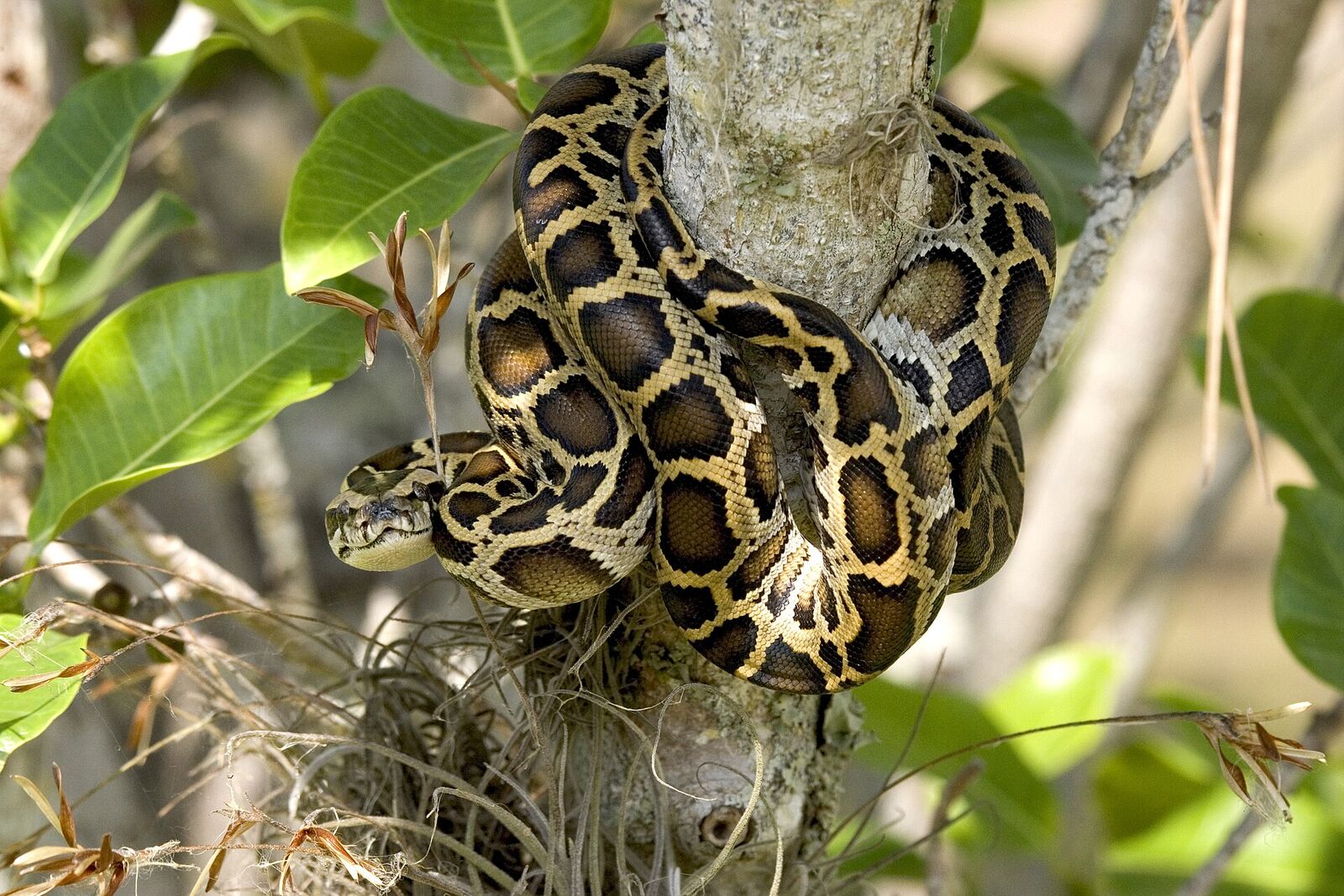
Burmese python
Python bivittatus
A heavy-bodied giant with a famously calm reputation.
Pet trade
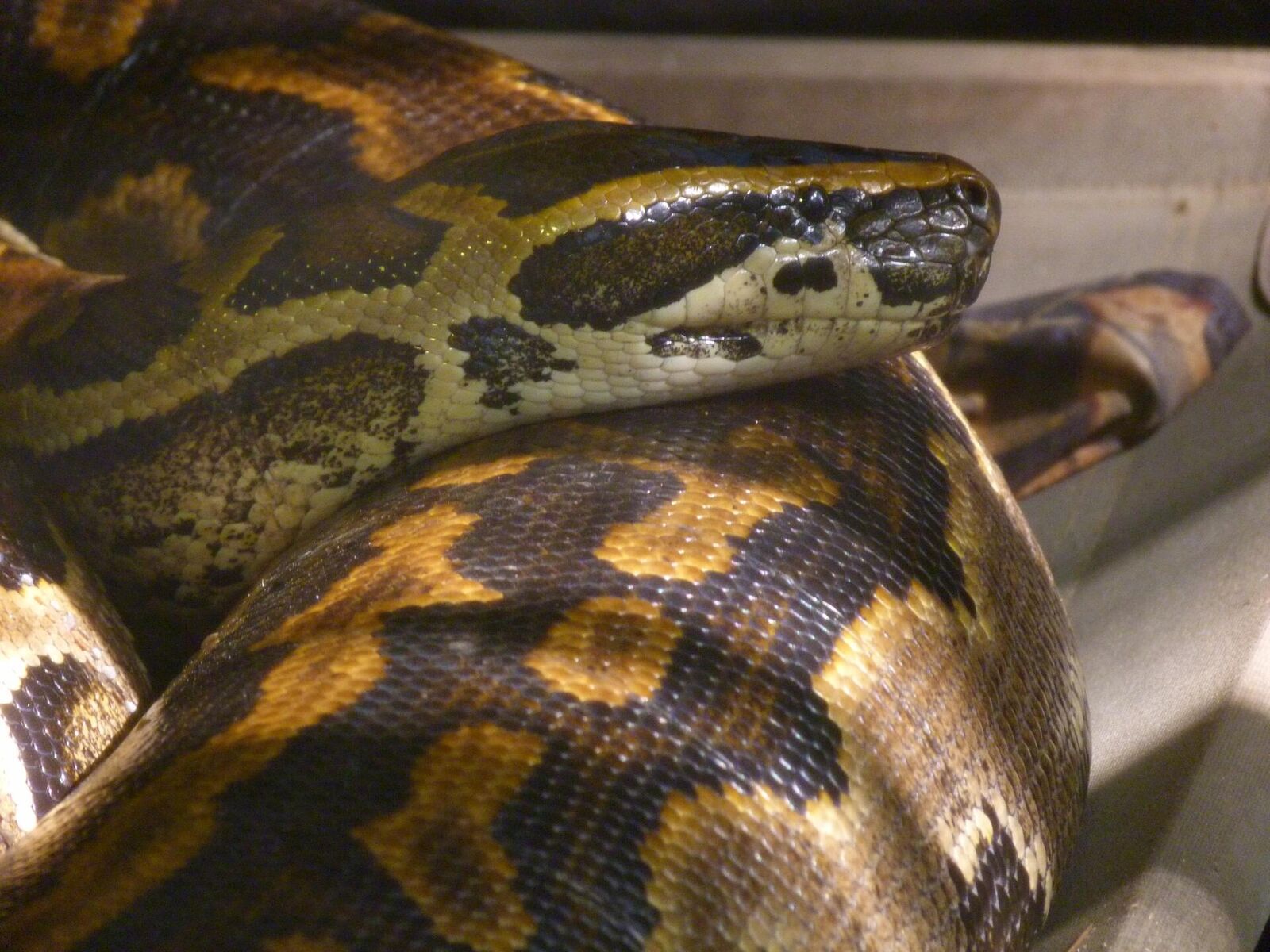
Central African rock python
Python sebae
Africa's largest snake, powerful and spirited.
Pet trade
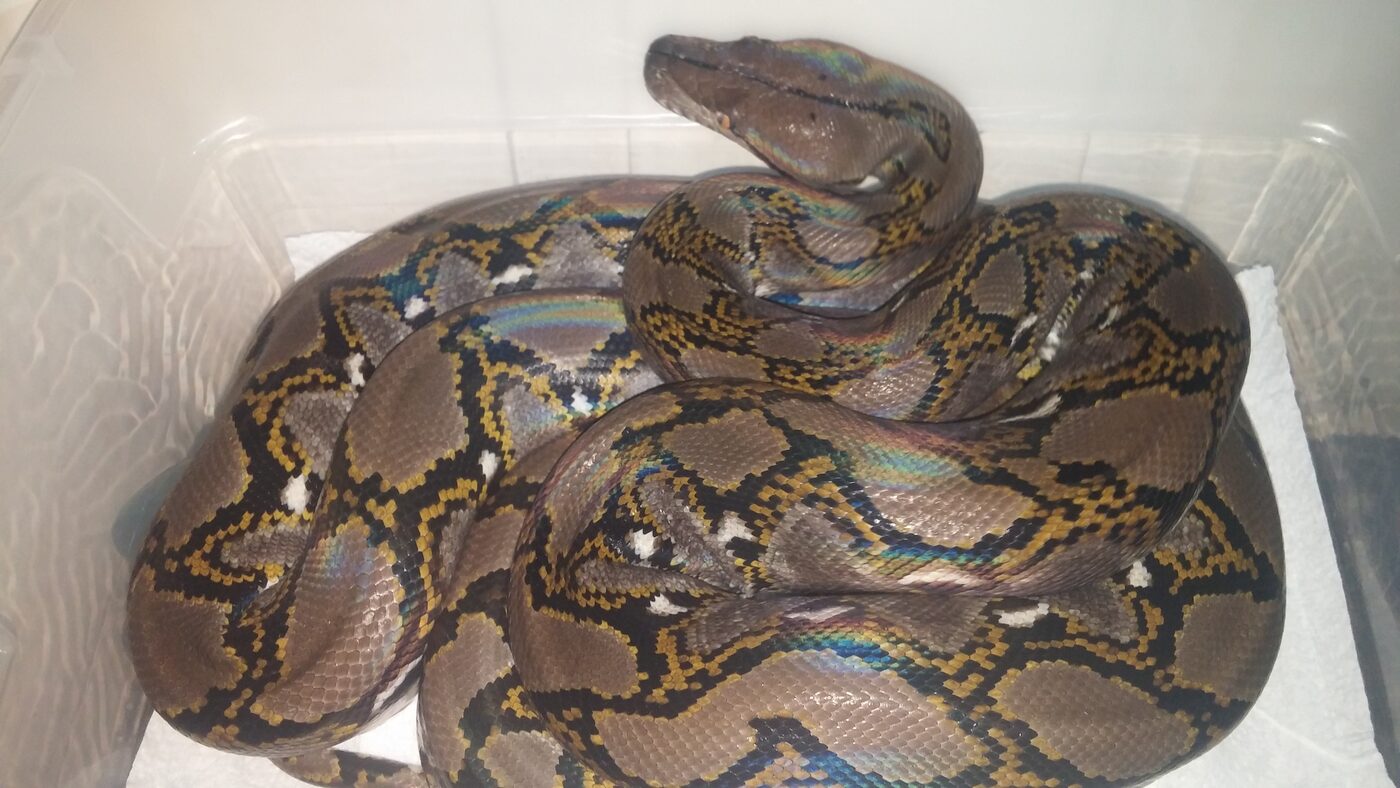
Reticulated python
Malayopython reticulatus
The world's longest snake, and a brilliant, active giant.
Pet trade

Amethystine python
Simalia amethistina
Pet trade

Angolan python
Python anchietae
Pet trade

Australian scrub python
Simalia kinghorni
Pet trade