
Home / Reptiles / Snakes / Pythonidae / Burmese python
Federal restrictions applyBurmese python
Python bivittatus
Reptiles › Snakes (Serpentes) › Pythonidae (Pythons)
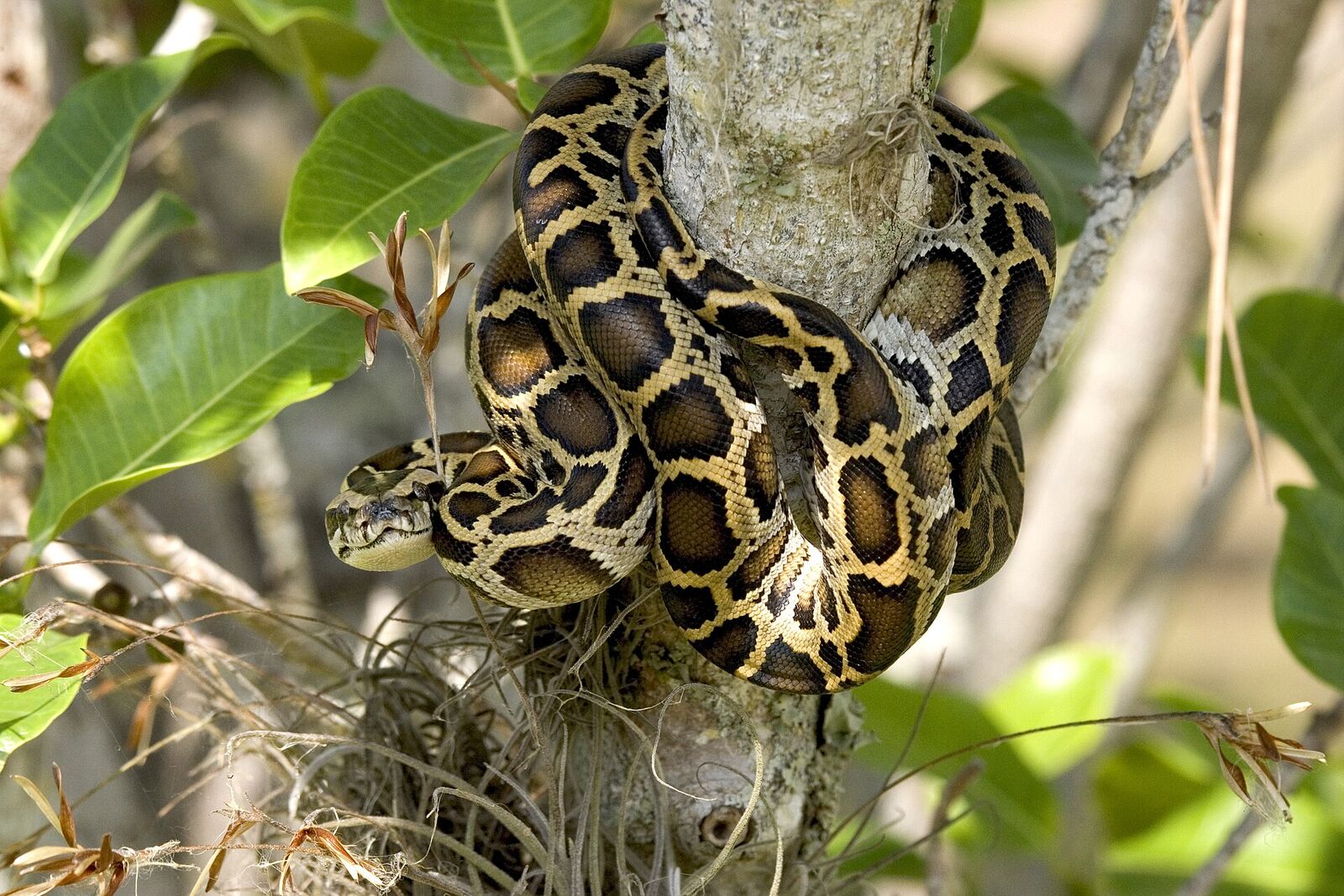
Burmese pythons are massive, heavy-bodied constrictors. Captive-bred Burms are often calm, but even a gentle adult is powerful enough to be dangerous, and they need large enclosures and experienced keepers.
Warnings
Care guide
Enclosure
- Same sizing rule as other giants: length equal to the snake, width half, height as tall as practical. A 16 ft python needs about 128 sq ft of floor space.
- Good ventilation, a hide and sturdy climbing branches.
Climate
- Warm side 80–88°F with a 90–92°F basking area, and humidity around 60%.
- Too much humidity without ventilation can lead to respiratory infections.
Sources reptifiles.com
Feeding
- Hatchlings every 1–2 weeks, juveniles every 2–3 weeks, young adults every 3–4 weeks, adults every 4–6 weeks.
- Obesity is the most common problem in captive Burms.
Sources reptifiles.com
Handling & safety
- Two-person rule for snakes 10 ft and up. Never lift by the tail; support the body with both hands.
Sources reptifiles.com
Understanding the animal
In the wild
In the wild
Researched for this exact species, not its family. Wild conditions are context, not enclosure settings.123456
| Where it lives | Southern and Southeast Asian rainforests, grasslands, marshes, swamps and rocky foothills. It is frequently associated with water and wetlands, including agricultural landscapes with abundant prey. |
| Ground it lives on | Forest floor, grass-covered soil and wetland margins; exact preferred soil texture is undocumented in the sources used. |
| Water it lives in | Uses freshwater wetlands, marshes and swamps, including standing and slowly moving water. Species-specific water chemistry and wild water-temperature ranges were not established. |
| Active | Primarily nocturnal, with daytime basking also documented. |
| Social life | Solitary except for mating. |
| Wild diet | Mammals, birds and reptiles; agricultural prey includes domestic fowl and pigs. In introduced Florida populations, documented bird prey includes wrens, ibis and herons. |
| Behavior to plan for | A large, nonvenomous constrictor that swallows prey whole. Females remain coiled around their eggs and generate additional warmth through muscle contractions. |
- Smithsonian's National Zoo: Burmese python
- Smithsonian: Scientists Find That Non-native Snakes Are Taking a Toll on Native Birds
- IUCN Red List: Python bivittatus, habitat and ecology
- Cleveland Zoological Society: Species Spotlight, Burmese Python
- The Reptile Database: Python bivittatus
- Burmese Python Care Sheet
Native climate (measured)
Native climate (measured)
| Warm-season highs | about 91°F (up to 91°F in the hottest sampled areas) |
| Cool-season lows | about 57°F (down to 54°F in the coldest sampled areas) |
| Average temperature | 74–76°F across sampled records |
| Relative humidity | 72–74% on average (driest month about 69%) |
| Rainfall | about 1346 mm a year |
Measured at 41 wild occurrence records sampled against WorldClim 2.1 climate data (1970–2000 averages). Air conditions in the range are ecological context, not enclosure settings: microhabitats such as burrows, leaf litter or basking rocks can be cooler, warmer or more humid.
Profile
Profile
Researched for this exact species. Sources are listed under In the wild above.
History
Python bivittatus has historically been treated as a subspecies of Python molurus but is recognized as a separate species in the supplied taxonomic source. Its taxonomic distinction has been discussed partly in relation to characters such as the presence of subocular scales, despite the ability of related forms to interbreed in captivity.
Data and studies
The numbers
The numbers
Each bar is what one source reports. Where several sources weigh in, the dashed gold band marks their average.
Basking spot
Reptiles Magazine suggests a basking spot 5–7°F above an 86°F day temperature.
Night temperature
Maximum recorded lifespan
Longest recorded lifespan reported by each database; typical lifespans are usually shorter.
Typical adult weight
Average adult body mass in each database (FishBase gives the maximum recorded weight).
Incubation
Female maturity
Cool side
Species-specific values from keeper care sheets. Basking figures are often surface readings taken with an infrared thermometer, which run hotter than air.
Night temperature
Species-specific values from keeper care sheets. Basking figures are often surface readings taken with an infrared thermometer, which run hotter than air.
Care articles for this species
Care articles for this species
- Burmese Python Care Sheet (ReptiFiles)
- Burmese Python Care Sheet (Reptiles Magazine)
- Burmese Pythons Crossbreeding With Indian Pythons In Florida Everglades (Reptiles Magazine)
- Tagged Burmese Python Leads Florida Researchers To Largest Breeding Aggregation (Reptiles Magazine)
Written by keepers, breeders and vets Reptiles MagazineReptiFiles
Veterinary & husbandry research
Veterinary & husbandry research
- Clutch may predict growth of hatchling Burmese pythons better than food availability or sex Josimovich JM et al., Biology open 2021
- Detection and prevalence of boid inclusion body disease in collections of boas and pythons using immunological assays Chang L et al., Veterinary journal (London, England: 1997) 2016
Peer-reviewed papers that mention this species alongside captivity, zoos, veterinary care or aquaculture. Some cover several species or mention it only in passing, so check the abstract. See all 13 on PubMed → PubMed
Sources for this sheet
- ReptiFiles: Burmese python care Experienced keeper or breederWell-researched care guide citing literature and experienced keepers.
- Reptiles Magazine: Burmese python Experienced keeper or breederLong-established reptile hobby publication; this entry is brief and general.
- Clint's Reptiles (YouTube): Burmese Python, The Best Pet Snake? Expert educator & keeperClint Laidlaw, PhD in Biology Education and MS in Evolutionary Ecology; owner of Clint's Reptile Room and a longtime keeper. His "Best Pet?" series reviews each species' care in depth.
- Myhrvold et al. (2015). An amniote life-history database. Ecology 96: 3109 Peer-reviewed researchPeer-reviewed compilation of life-history data for over 21,000 birds, mammals and reptiles.
- ReptiFiles (care guides) Experienced keeper or breederWell-researched reptile care guides that cite herpetological literature and experienced keepers.
- 50 CFR Part 16: Injurious wildlife (Lacey Act) Zoo, university or veterinaryCurrent federal regulation, read from eCFR.
- U.S. Association of Reptile Keepers v. Zinke (D.C. Cir. 2017) Zoo, university or veterinaryAppeals ruling that the Lacey Act's shipping ban does not cover moves between the continental states.
- Species+ (UNEP-WCMC and the CITES Secretariat) Zoo, university or veterinaryThe official database of species listed under CITES. UNEP (2026). The Species+ Website. Nairobi, Kenya. Compiled by UNEP-WCMC, Cambridge, UK. Available at: www.speciesplus.net. [Accessed 04/10/2026].
- USFWS International Affairs: CITES Zoo, university or veterinaryFederal agency that issues CITES permits.
- Clint's Reptiles (YouTube): Burmese Python, The Best Pet Snake? Expert educator & keeperClint Laidlaw, PhD in Biology Education and MS in Evolutionary Ecology; owner of Clint's Reptile Room and a longtime keeper. His "Best Pet?" series reviews each species' care in depth.
- The Reptile Database Peer-reviewed researchScientist-curated catalog of every reptile species, with taxonomy and literature.
- GBIF Backbone Taxonomy (Global Biodiversity Information Facility) (CC BY 4.0) Peer-reviewed researchInternational scientific taxonomy used here for classification. GBIF Secretariat (2023). GBIF Backbone Taxonomy. Checklist dataset https://doi.org/10.15468/39omei, accessed via GBIF.org.
- Wikipedia (species article) (CC BY-SA 4.0) Community referenceFree encyclopedia; useful overviews with their own citations. Short excerpts are quoted under CC BY-SA 4.0, each credited with a link to its article.
- PubMed (U.S. National Library of Medicine) Peer-reviewed researchIndex of peer-reviewed veterinary, zoo and husbandry research.
- iNaturalist (captive observations) Community referenceCommunity observation platform run by the California Academy of Sciences and National Geographic; observations marked captive show animals living in homes, zoos and aquariums.
- Reptiles Magazine (care articles) Experienced keeper or breederEstablished reptile and amphibian hobby magazine; care articles are written by breeders, keepers and veterinarians.
More pythons
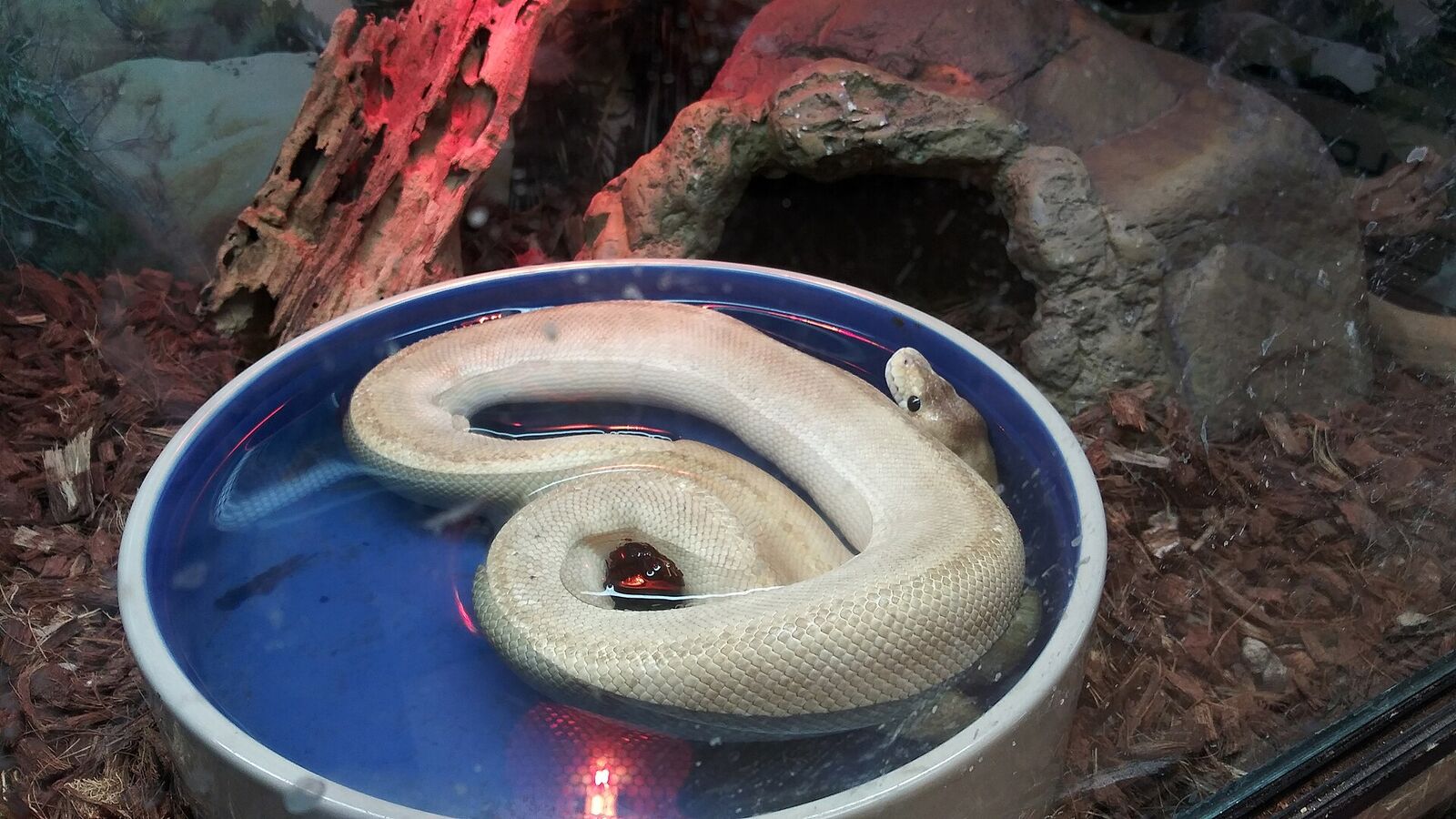
Ball python
Python regius
The calm, curl-up classic of pet snakes.
Pet trade
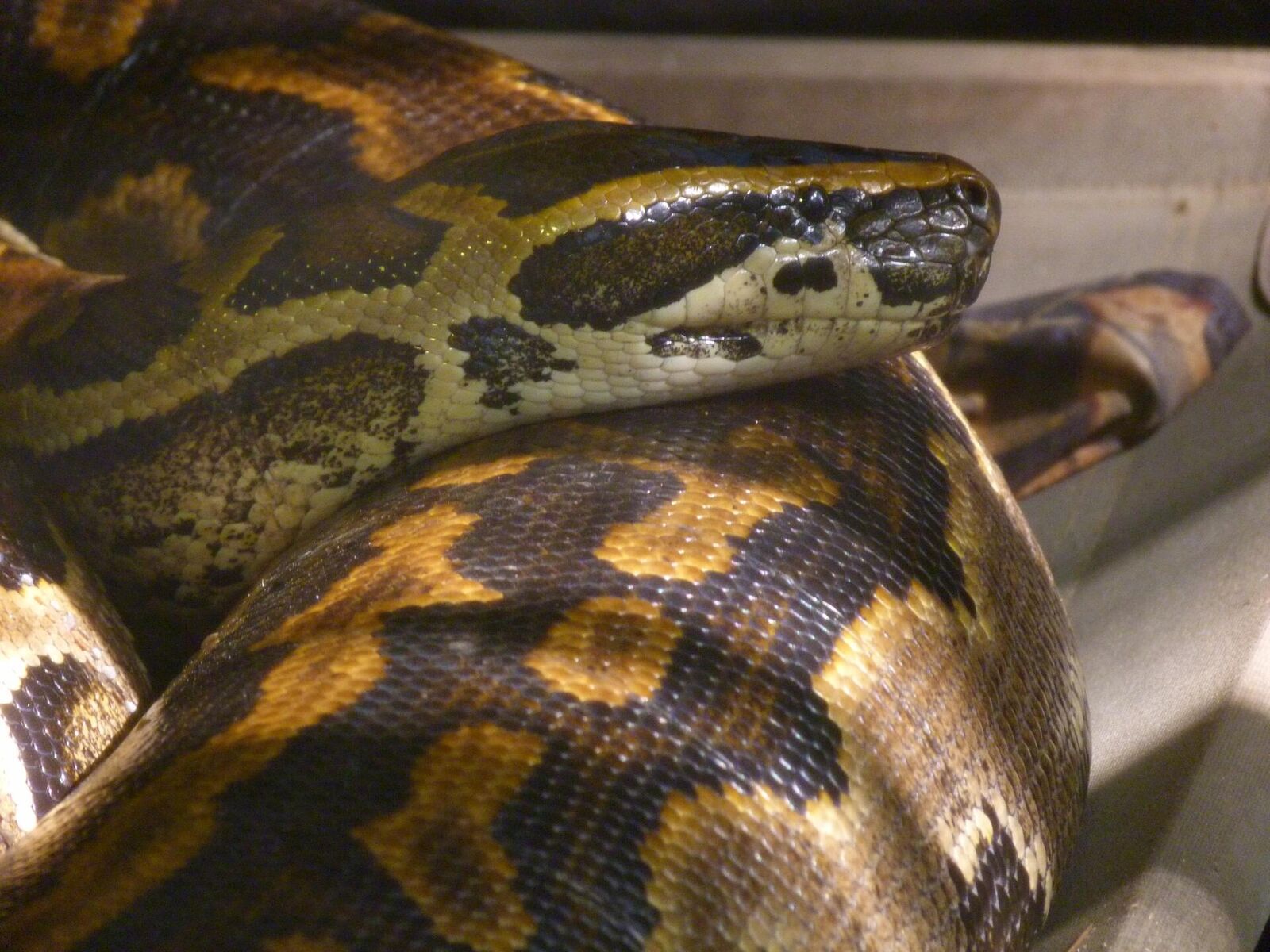
Central African rock python
Python sebae
Africa's largest snake, powerful and spirited.
Pet trade
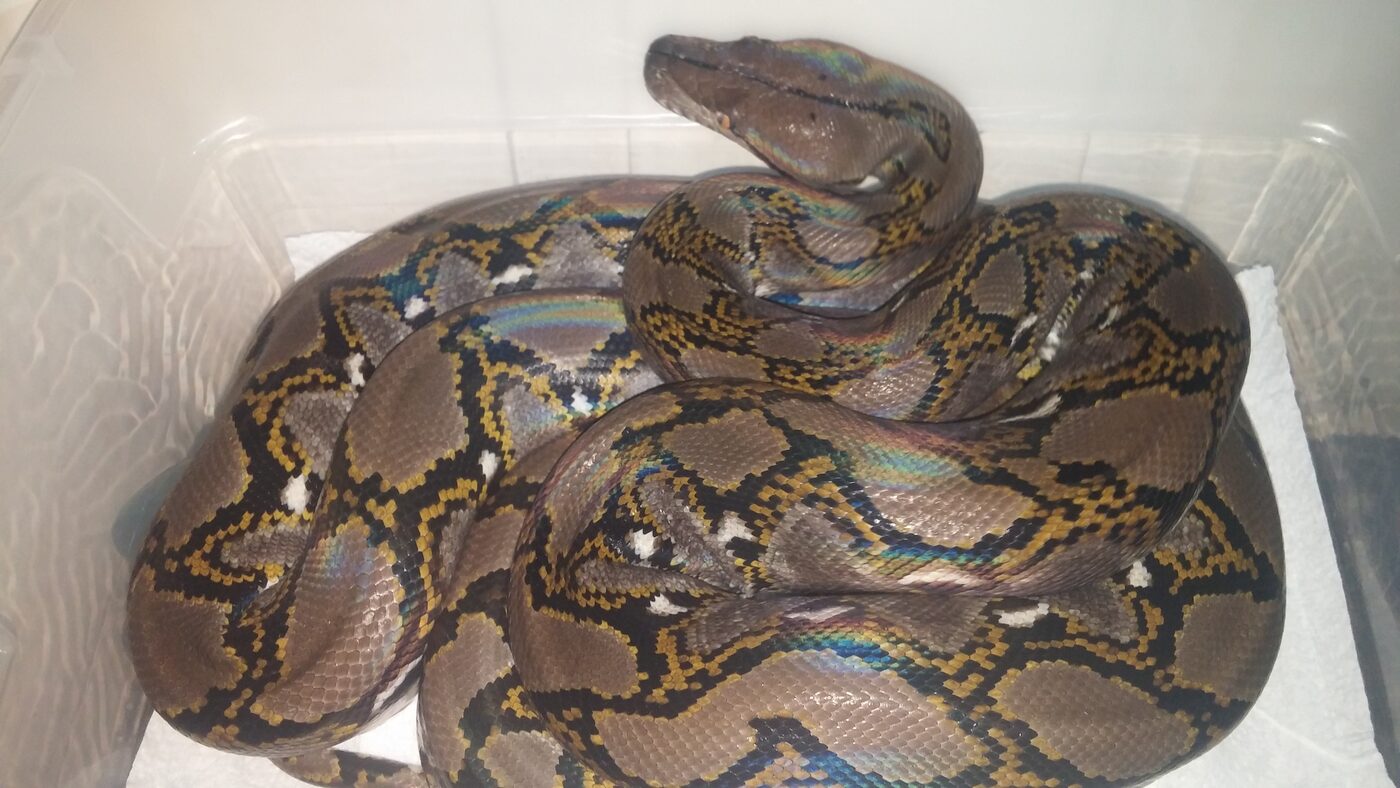
Reticulated python
Malayopython reticulatus
The world's longest snake, and a brilliant, active giant.
Pet trade

Amethystine python
Simalia amethistina
Pet trade

Angolan python
Python anchietae
Pet trade

Australian scrub python
Simalia kinghorni
Pet trade