
Home / Reptiles / Snakes / Colubridae / Banded water snake
No federal permit to keepBanded water snake
Nerodia fasciata
Reptiles › Snakes (Serpentes) › Colubridae (Colubrid snakes)
The banded water snake or southern water snake is a species of mostly aquatic, nonvenomous, colubrid snakes most commonly found in the Midwest, Southeastern United States.
From Wikipedia: Nerodia fasciata, CC BY-SA 4.0 (excerpt)
Care at a glance
Setup
One answer per setting. Where sources differ, the smaller figure is the minimum and the larger is what we recommend.
| Adult enclosure | 55g long Space needs depend on the snake's maturity and whether kept alone or in groups. | reptiletalk.net |
| Hot spot | 86-88°F Required for proper thermoregulation. | reptiletalk.net |
| Cool side | 76-78°F Allows the animal to thermoregulate as needed. | reptiletalk.net |
| Lighting | 12h cycle Supplemental full spectrum lighting helps overall well-being. | reptiletalk.net |
Care guide
By age
| Adult | Feeding: Fish and amphibian 5 days spacing, rodents weekly, links 10-12 days apart | reptiletalk.net |
- Incomplete sheds: Sign of severe health or husbandry error. reptiletalk.net
Understanding the animal
Localities
Localities
Keepers buy these by where the bloodline comes from. Care is basically the same; size, color and temperament can differ. “Breeder-reported” details still need a published source.
| N.f.fasciata | Banded water snake | Breeder-reported reptiletalk.net |
| N.f.pictiventris | Florida water snake | Breeder-reported reptiletalk.net |
| N.f.confluens | Broad-banded water snake | Breeder-reported reptiletalk.net |
In the wild
In the wild
Researched for this exact species, not its family. Wild conditions are context, not enclosure settings.12
| Active | Banded water snakes are active during both the day and night. |
| Social life | Females are generally longer and heavier than males, a trait known as sexual dimorphism. |
| Behavior to plan for | When threatened, they flatten their bodies, emit a foul musk, and bite repeatedly by slashing sideways. |
Profile
Profile
Researched for this exact species. Sources are listed under In the wild above.
Keeper tips
- Wild-caught and juvenile snakes may be nippy, but many tame down quickly in captivity.
- The species is nonvenomous, but they may bite and emit a foul-smelling musk if they are irritated.
Remarkable facts
- They live for 15 years or more in captivity.
- Typical adults range from 22 to 42 inches in total length.
Data and studies
Veterinary & husbandry research
Veterinary & husbandry research
- Plasma and tissue enzyme activities of banded water snakes (Nerodia fasciata) and diamondback water snakes (Nerodia rhombifer). et al., American journal of veterinary research 2021
- Projecting invasion risk of non-native watersnakes (Nerodia fasciata and Nerodia sipedon) in the western United States. et al., PloS one 2014
- Standard and digestive metabolism in the banded water snake, Nerodia fasciata fasciata. et al., Comparative biochemistry and physiology. Part A, Molecular & integrative physiology 2004
- The function of oscillatory tongue-flicks in snakes: insights from kinematics of tongue-flicking in the banded water snake (Nerodia fasciata). et al., Chemical senses 2012
Peer-reviewed papers that mention this species alongside captivity, zoos, veterinary care or aquaculture. Some cover several species or mention it only in passing, so check the abstract. PubMed
Sources for this sheet
- Southern water snake (reptiletalk.net) Experienced keeper or breederKeeper care guide.
- Wikipedia: Nerodia fasciata (CC BY-SA 4.0) Community referenceEncyclopedia article.
- The Reptile Database: Nerodia fasciata Zoo, university or veterinaryTaxonomy, distribution and literature for every reptile species.
- Banded water snake (Animal-World.com) Community referenceWeb page.
- The Reptile Database Peer-reviewed researchScientist-curated catalog of every reptile species, with taxonomy and literature.
- GBIF Backbone Taxonomy (Global Biodiversity Information Facility) (CC BY 4.0) Peer-reviewed researchInternational scientific taxonomy used here for classification. GBIF Secretariat (2023). GBIF Backbone Taxonomy. Checklist dataset https://doi.org/10.15468/39omei, accessed via GBIF.org.
- Wikipedia (species article) (CC BY-SA 4.0) Community referenceFree encyclopedia; useful overviews with their own citations. Short excerpts are quoted under CC BY-SA 4.0, each credited with a link to its article.
- PubMed (U.S. National Library of Medicine) Peer-reviewed researchIndex of peer-reviewed veterinary, zoo and husbandry research.
More colubrid snakes
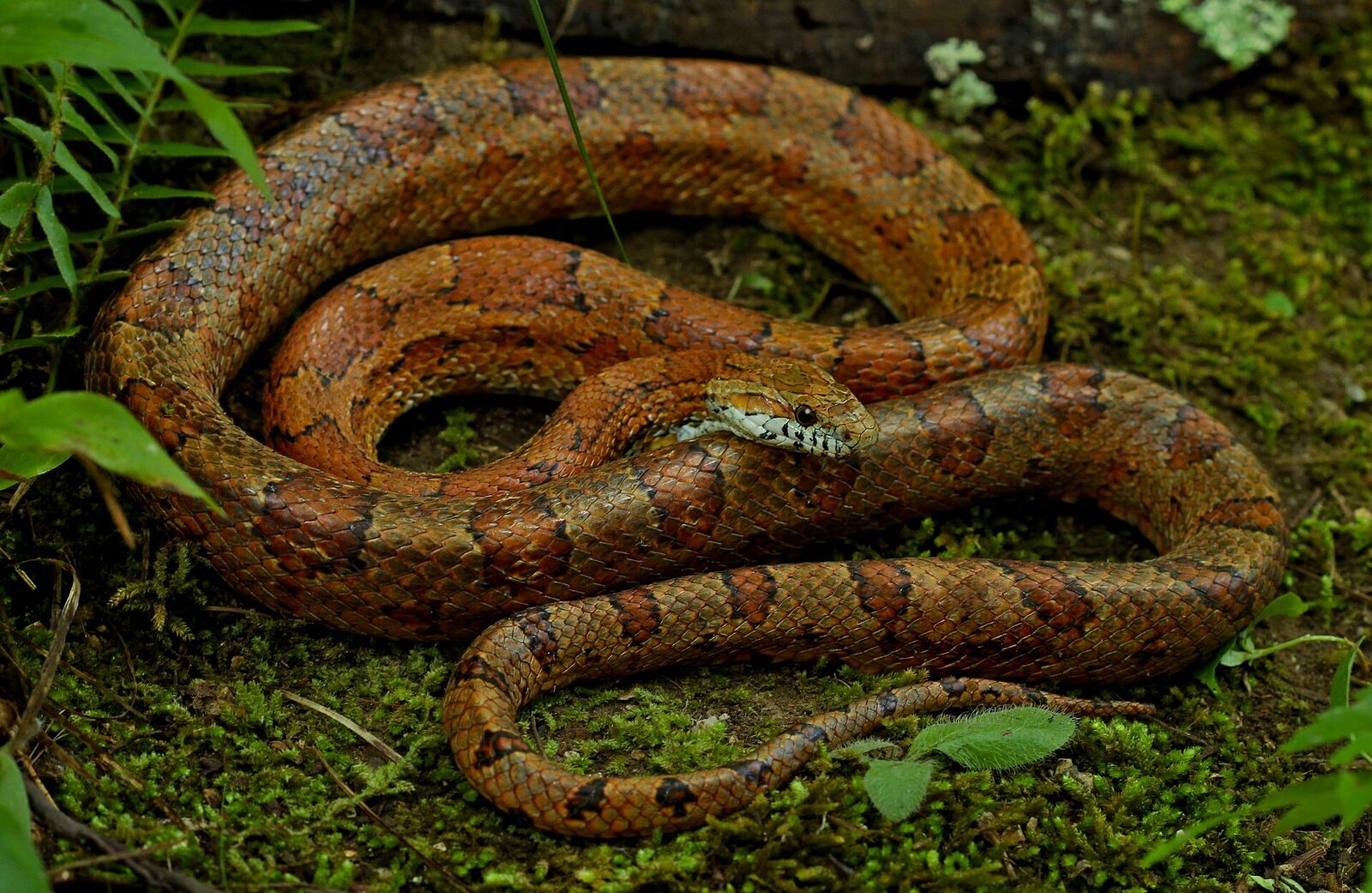
Corn snake
Pantherophis guttatus
Hardy, easy-going and colorful.
Pet trade
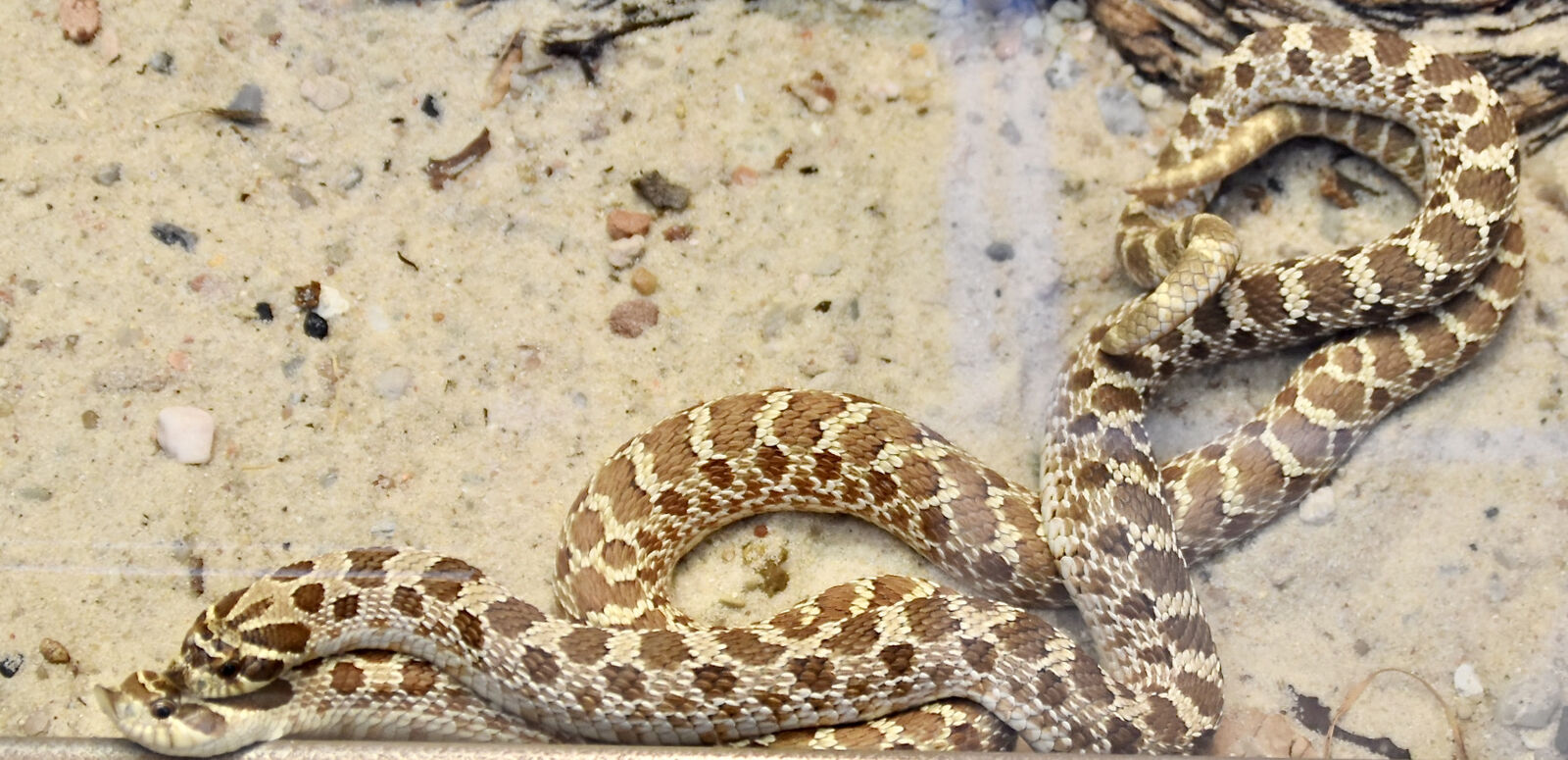
Western hognose snake
Heterodon nasicus
Dramatic bluffs from a tiny, upturned-nose snake.
Pet trade

Amur (Russian) rat snake
Elaphe schrenckii
Pet trade

Andean milk snake
Lampropeltis micropholis
Pet trade

Arizona mountain kingsnake
Lampropeltis pyromelana
Pet trade

Baird's rat snake
Pantherophis bairdi
Pet trade