
Home / Amphibians / Salamanders and newts / Barred tiger salamander
Federal restrictions applyBarred tiger salamander
Ambystoma mavortium
Amphibians › Salamanders and newts (Caudata) › Ambystomatidae (Axolotls and mole salamanders)
The barred tiger salamander or western tiger salamander (Ambystoma mavortium) is a species of mole salamander that lives in lower western Canada, the western United States and northern Mexico.
From Wikipedia: Barred tiger salamander, CC BY-SA 4.0 (excerpt)

Care at a glance
Species-specific values
Values researched for this exact species. Air, surface and water temperatures are listed separately, and each source is kept as published rather than averaged.
| Minimum enclosure | The author’s preferred minimum size for a tiger salamander is a 58-quart storage box. Source: reptilesmagazine.com | |
| Warm side air temperature | 50–75 °F Source: reptilesmagazine.com | |
| Warm side air temperature | up to 80 °F Source: reptilesmagazine.com | |
| Uvb lighting | Salamanders do not require terrarium lighting. Source: reptilesmagazine.com | |
| Diet | Staples include nightcrawlers and crickets; occasional treats include waxworms. Source: reptilesmagazine.com | |
| Feeding frequency | Adults should be fed two to three times weekly in warmer parts of the year. Source: reptilesmagazine.com | |
| Feeding frequency | Juveniles may be fed as often as every other day. Source: reptilesmagazine.com | |
| Substrate | At least four inches of substrate is recommended. Source: reptilesmagazine.com |
Warnings
Understanding the animal
In the wild
In the wild
| Overview | The barred tiger salamander or western tiger salamander (Ambystoma mavortium) is a species of mole salamander that lives in lower western Canada, the western United States and northern Mexico. — From Wikipedia: Barred tiger salamander, CC BY-SA 4.0 (excerpt) |
| History and naming | Tiger salamanders are frequently kept in captivity; they mostly hide and ambush their prey. It is illegal to sell adults in most parts of the United States. Their large size allows for ease of feeding, and their hardy nature makes them excellent captives. — From Wikipedia: Barred tiger salamander, CC BY-SA 4.0 (excerpt) |
Read about this species in the wild at Animal Diversity Web.
Native climate (measured)
Native climate (measured)
| Warm-season highs | about 80°F (up to 91°F in the hottest sampled areas) |
| Cool-season lows | about 10°F (down to -3°F in the coldest sampled areas) |
| Average temperature | 35–54°F across sampled records |
| Relative humidity | 48–63% on average (driest month about 45%) |
| Rainfall | about 433 mm a year |
| Winters | Cool to cold winters (lows around 10°F) in much of its native range. Seasonal slowdown may be relevant, but species-specific biology determines whether brumation or hibernation occurs. |
Measured at 100 wild occurrence records sampled against WorldClim 2.1 climate data (1970–2000 averages). Air conditions in the range are ecological context, not enclosure settings: microhabitats such as burrows, leaf litter or basking rocks can be cooler, warmer or more humid.
Profile
Profile
Researched for this exact species. Sources are listed under In the wild above.
History
Tiger salamanders are frequently kept in captivity; they mostly hide and ambush their prey. It is illegal to sell adults in most parts of the United States. Their large size allows for ease of feeding, and their hardy nature makes them excellent captives.
From Wikipedia: Barred tiger salamander, CC BY-SA 4.0 (excerpt)
Data and studies
Care articles for this species
Care articles for this species
- Tiger Salamander Care Sheet (Reptiles Magazine)
Written by keepers, breeders and vets Reptiles MagazineReptiFiles
Veterinary & husbandry research
Veterinary & husbandry research
- Ophthalmic findings and parameters in Western tiger salamanders (Ambystoma mavortium) from northern Colorado Kansman KJ et al., Veterinary ophthalmology 2025
Peer-reviewed papers that mention this species alongside captivity, zoos, veterinary care or aquaculture. Some cover several species or mention it only in passing, so check the abstract. PubMed
Sources for this sheet
- 50 CFR Part 16: Injurious wildlife (Lacey Act) Zoo, university or veterinaryCurrent federal regulation, read from eCFR.
- U.S. Association of Reptile Keepers v. Zinke (D.C. Cir. 2017) Zoo, university or veterinaryAppeals ruling that the Lacey Act's shipping ban does not cover moves between the continental states.
- 50 CFR 17.11: Endangered and threatened wildlife Zoo, university or veterinaryCurrent federal Endangered Species Act list.
- AmphibiaWeb (University of California, Berkeley) (CC BY-NC) Peer-reviewed researchUniversity-hosted database of amphibian biology and conservation.
- GBIF Backbone Taxonomy (Global Biodiversity Information Facility) (CC BY 4.0) Peer-reviewed researchInternational scientific taxonomy used here for classification. GBIF Secretariat (2023). GBIF Backbone Taxonomy. Checklist dataset https://doi.org/10.15468/39omei, accessed via GBIF.org.
- Wikipedia (species article) (CC BY-SA 4.0) Community referenceFree encyclopedia; useful overviews with their own citations. Short excerpts are quoted under CC BY-SA 4.0, each credited with a link to its article.
- PubMed (U.S. National Library of Medicine) Peer-reviewed researchIndex of peer-reviewed veterinary, zoo and husbandry research.
- iNaturalist (captive observations) Community referenceCommunity observation platform run by the California Academy of Sciences and National Geographic; observations marked captive show animals living in homes, zoos and aquariums.
- Reptiles Magazine (care articles) Experienced keeper or breederEstablished reptile and amphibian hobby magazine; care articles are written by breeders, keepers and veterinarians.
More axolotls and mole salamanders
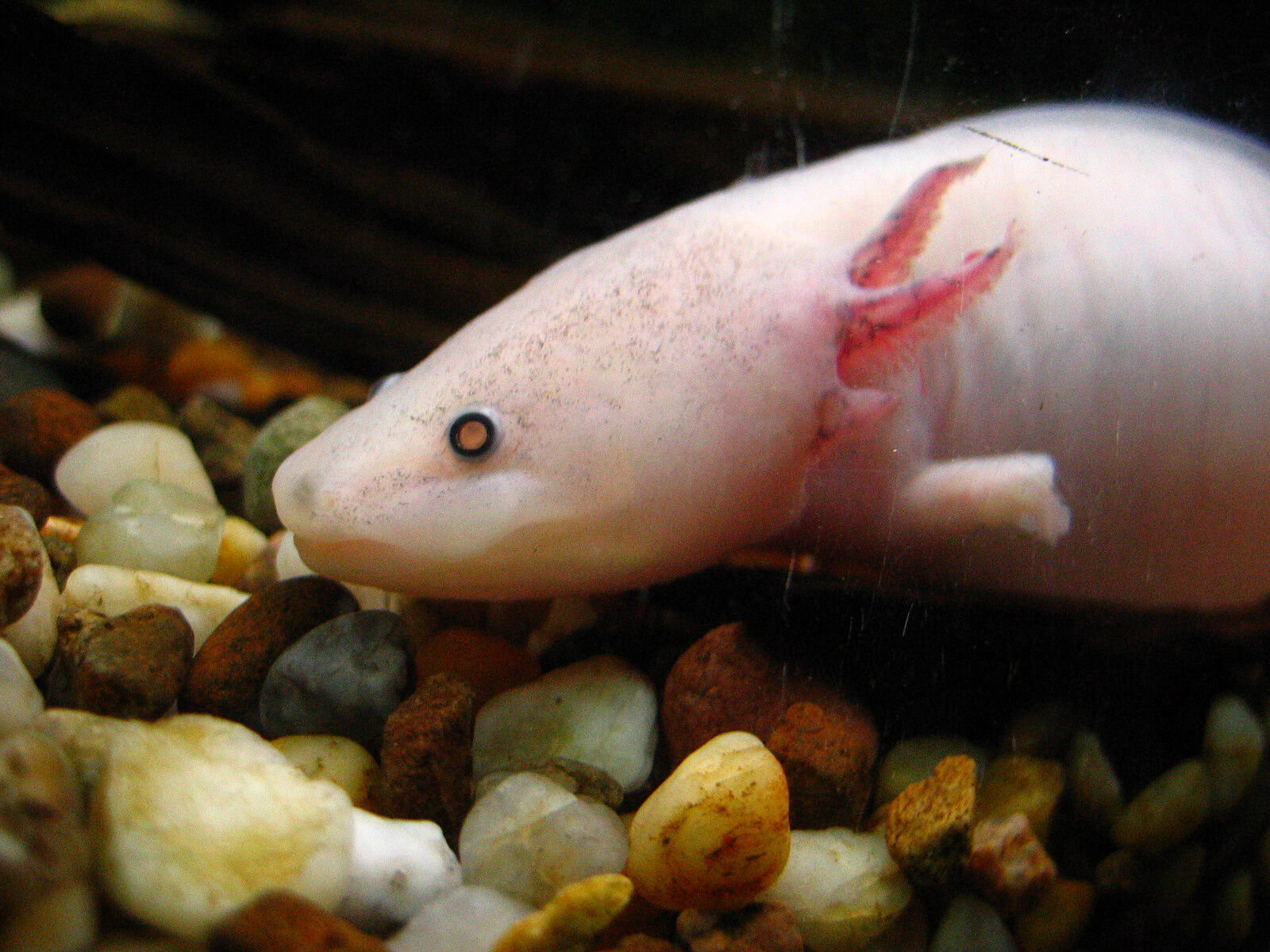
Axolotl
Ambystoma mexicanum
The forever-young salamander that regrows its limbs.
Pet trade
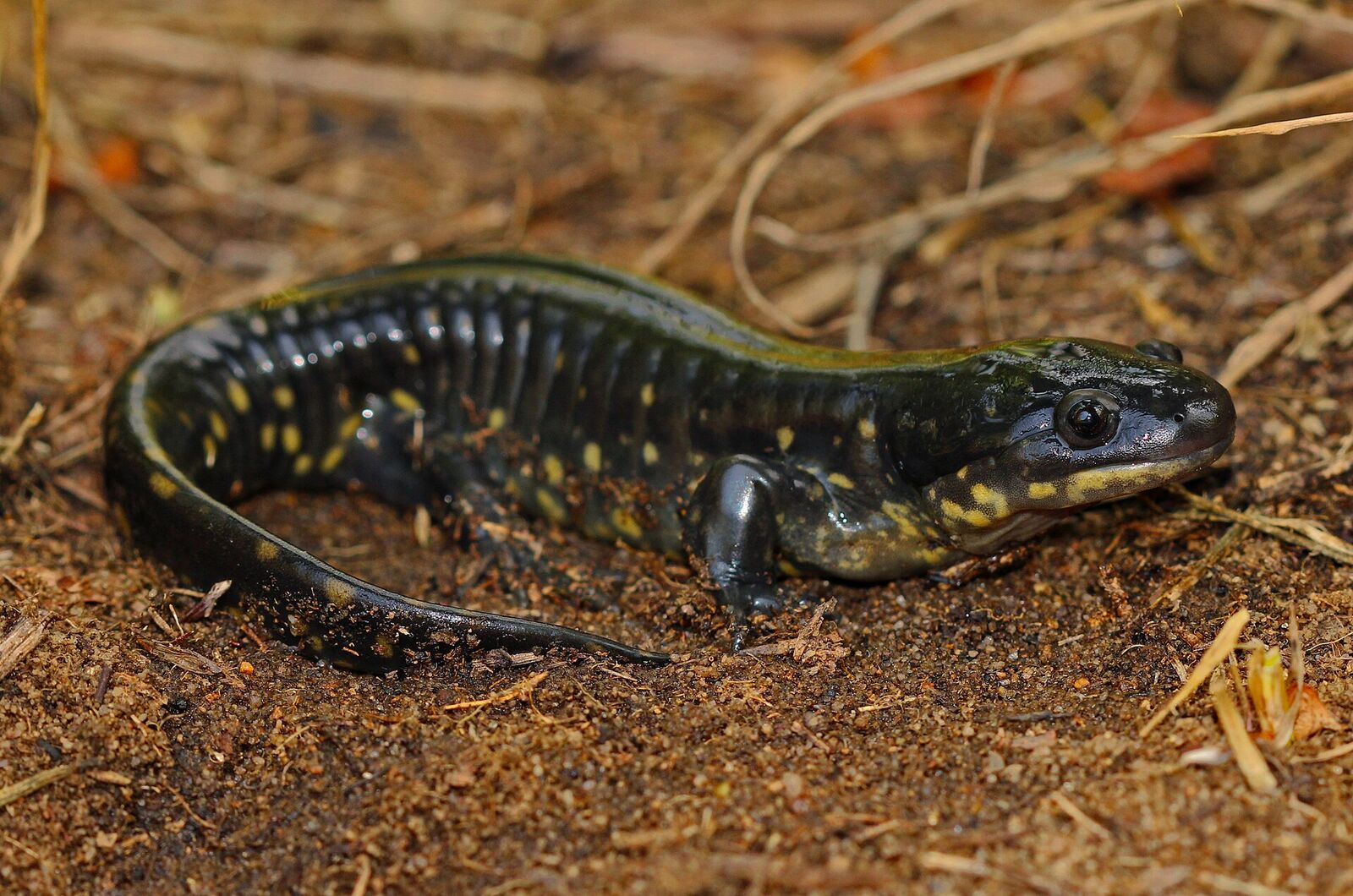
Eastern tiger salamander
Ambystoma tigrinum
A big, burrowing salamander with a big appetite.
Pet trade

Blue-spotted salamander
Ambystoma laterale
Pet trade

Lake Patzcuaro salamander
Ambystoma dumerilii
Pet trade

Marbled salamander
Ambystoma opacum
Pet trade

Spotted salamander
Ambystoma maculatum
Pet trade