
Home / Reptiles / Lizards / Varanidae / Black-headed (freckled) monitor
Some federal rules applyBlack-headed (freckled) monitor
Varanus tristis
Reptiles › Lizards (Lacertilia) › Varanidae (Monitor lizards)
The black-headed monitor or black-tailed monitor (Varanus tristis) is a relatively small species of monitor lizards native to Australia.
From Wikipedia: Black-headed monitor, CC BY-SA 4.0 (excerpt)

Care at a glance
Species-specific values
Values researched for this exact species. Air, surface and water temperatures are listed separately, and each source is kept as published rather than averaged.
| Minimum enclosure | At least 150 × 75 × 120 cm for one adult. Source: academy.herpeton.net | |
| Warm side air temperature | 82–91 °F (28–33 °C) | academy.herpeton.net |
| Cool side air temperature | 75–82 °F (24–28 °C) | academy.herpeton.net |
| Night temperature | 64–75 °F (18–24 °C) | academy.herpeton.net |
| Humidity | 30–60 % Source: academy.herpeton.net | |
| Humidity | 55–70 % Source: academy.herpeton.net | |
| Uvb lighting | Use high-output linear UVB; aim for UVI 2.5–4 on the main basking route, with shade below 1 and dark hollows. Source: academy.herpeton.net | |
| Diet | Routine diet should be varied, well-fed invertebrates; occasional appropriately sized whole vertebrate prey can add variety. Source: academy.herpeton.net | |
| Feeding frequency | Feed juveniles small meals daily or every other day; adults measured portions every two to four days. Source: academy.herpeton.net | |
| Social housing | House one monitor per permanent enclosure. Source: academy.herpeton.net | |
| Substrate | Use 15–25 cm of packed sand-loam-soil mix; provide adult females a secure 30–40 cm deep laying area. Source: academy.herpeton.net | |
| Seasonal cooling | Cooling is optional reproductive cycling, not routine pet care; never cool juveniles, thin, ill, or newly acquired animals. Source: academy.herpeton.net | |
| Note: more detail at academy.herpeton.net. | ||
Understanding the animal
About this animal
About this animal
It is occasionally also called the mournful monitor, freckled monitor (Varanus tristis orientalis) or the racehorse monitor, a name it shares with the Gould's monitor due to their exceptional speed. It is placed in the subgenus Odatria.
From Wikipedia: Black-headed monitor, CC BY-SA 4.0 (excerpt)
In the wild
In the wild
| Overview | The black-headed monitor or black-tailed monitor (Varanus tristis) is a relatively small species of monitor lizards native to Australia. It is occasionally also called the mournful monitor, freckled monitor (Varanus tristis orientalis) or the racehorse monitor, a name it shares with the Gould's monitor due to their exceptional speed. It is placed in the subgenus Odatria. — From Wikipedia: Black-headed monitor, CC BY-SA 4.0 (excerpt) |
| Where it lives | This is the most widespread monitor species in Australia, occurring throughout the mainland and even on some northern islands such as Magnetic Island. It is only absent in the southernmost and south-easternmost regions of Australia. V. t. tristis is found mainly to the west of Australia, while V. t. orientalis is confined mainly to eastern Australia. — From Wikipedia: Black-headed monitor, CC BY-SA 4.0 (excerpt) |
| Wild diet | V. tristis eats small mammals, frogs, other lizards such as agamids, geckos, skinks, and smaller monitor species. They are even capable of eating thorny devils. They also invade bird nests to eat eggs and chicks, and eat a variety of insects such as orthopterans, beetles, ants, and stick insects. — From Wikipedia: Black-headed monitor, CC BY-SA 4.0 (excerpt) |
| Behavior | They are most active in the spring, and may travel a kilometre every day in search of food to accumulate enough fat reserves to last them through the six to seven cold winter months when they become inactive. Although both are semi-arboreal, V. t. tristis is slightly less arboreal than V. t. orientalis. — From Wikipedia: Black-headed monitor, CC BY-SA 4.0 (excerpt) |
| Reproduction | The breeding season is in November, at which point pairs start sharing the same tree. Females lay a clutch of 6-11, but up to as many as 17 eggs in December, which hatch in February or March after incubating at a temperature of 27-29°C. — From Wikipedia: Black-headed monitor, CC BY-SA 4.0 (excerpt) |
Read about this species in the wild at The Reptile Database.
Native climate (measured)
Native climate (measured)
| Warm-season highs | about 96°F (up to 101°F in the hottest sampled areas) |
| Cool-season lows | about 45°F (down to 40°F in the coldest sampled areas) |
| Average temperature | 64–81°F across sampled records |
| Relative humidity | 36–61% on average (driest month about 41%) |
| Rainfall | about 544 mm a year, with strong wet and dry seasons |
Measured at 114 wild occurrence records sampled against WorldClim 2.1 climate data (1970–2000 averages). Air conditions in the range are ecological context, not enclosure settings: microhabitats such as burrows, leaf litter or basking rocks can be cooler, warmer or more humid.
Data and studies
The numbers
The numbers
Each bar is what one source reports. Where several sources weigh in, the dashed gold band marks their average.
Maximum recorded lifespan
Longest recorded lifespan reported by each database; typical lifespans are usually shorter.
Typical adult weight
Average adult body mass in each database (FishBase gives the maximum recorded weight).
Adult snout-to-vent length
Body length without the tail.
Incubation
Sources for this sheet
- Myhrvold et al. (2015). An amniote life-history database. Ecology 96: 3109 Peer-reviewed researchPeer-reviewed compilation of life-history data for over 21,000 birds, mammals and reptiles.
- Species+ (UNEP-WCMC and the CITES Secretariat) Zoo, university or veterinaryThe official database of species listed under CITES. UNEP (2026). The Species+ Website. Nairobi, Kenya. Compiled by UNEP-WCMC, Cambridge, UK. Available at: www.speciesplus.net. [Accessed 04/10/2026].
- USFWS International Affairs: CITES Zoo, university or veterinaryFederal agency that issues CITES permits.
- The Reptile Database Peer-reviewed researchScientist-curated catalog of every reptile species, with taxonomy and literature.
- GBIF Backbone Taxonomy (Global Biodiversity Information Facility) (CC BY 4.0) Peer-reviewed researchInternational scientific taxonomy used here for classification. GBIF Secretariat (2023). GBIF Backbone Taxonomy. Checklist dataset https://doi.org/10.15468/39omei, accessed via GBIF.org.
- Wikipedia (species article) (CC BY-SA 4.0) Community referenceFree encyclopedia; useful overviews with their own citations. Short excerpts are quoted under CC BY-SA 4.0, each credited with a link to its article.
- iNaturalist (captive observations) Community referenceCommunity observation platform run by the California Academy of Sciences and National Geographic; observations marked captive show animals living in homes, zoos and aquariums.
More monitor lizards
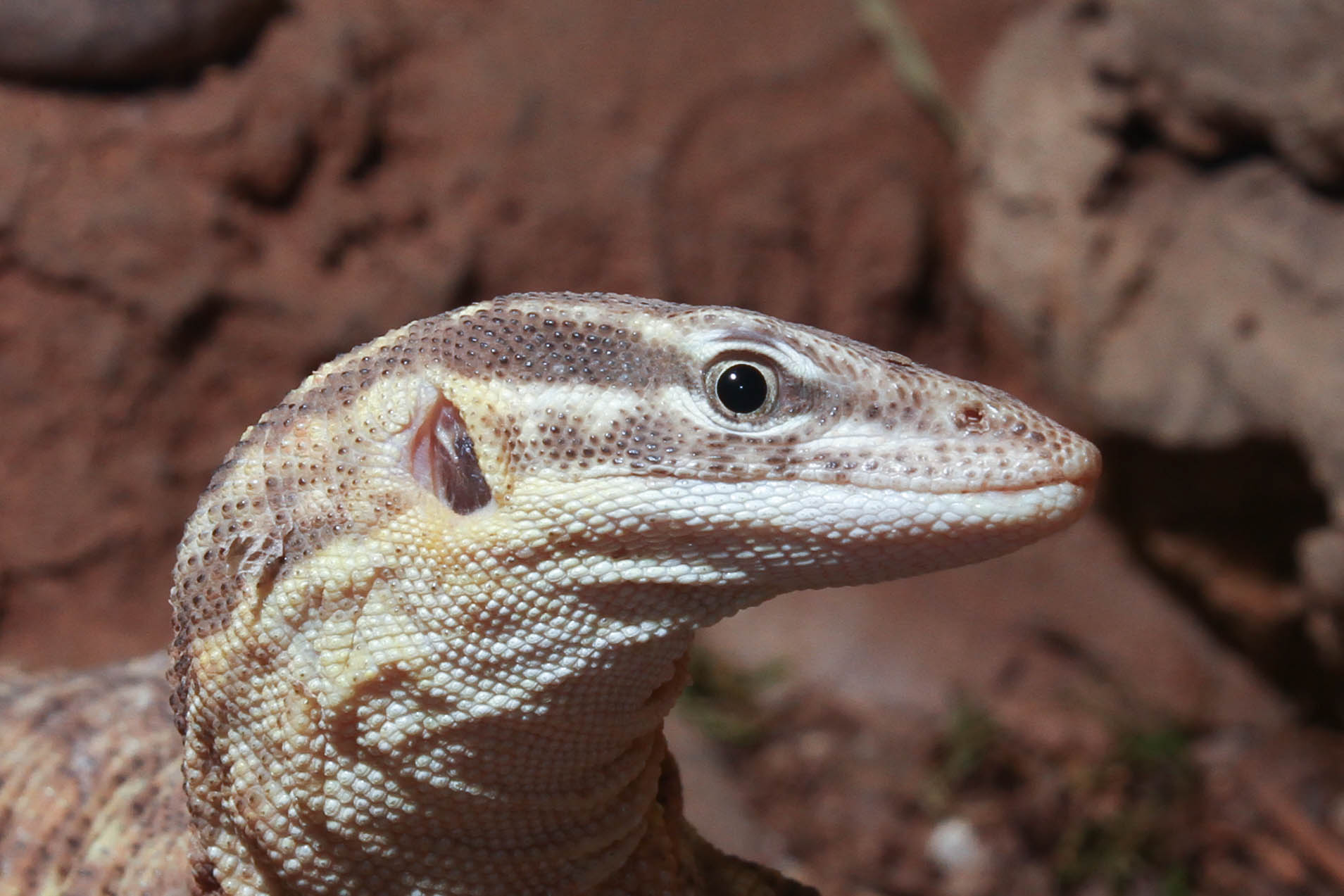
Ackie (spiny-tailed) monitor
Varanus acanthurus
A pint-sized monitor with a huge personality.
Pet trade
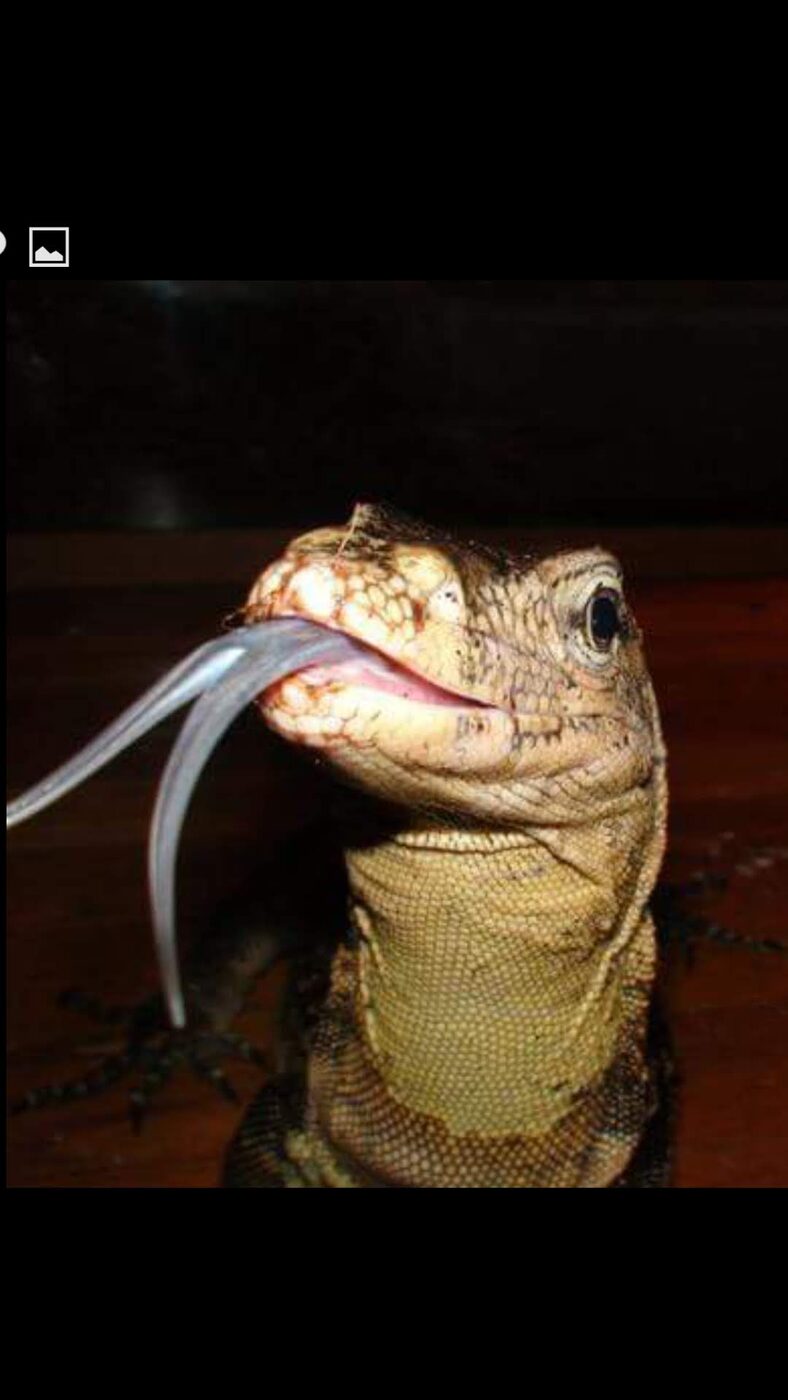
Asian water monitor
Varanus salvator
An intelligent, swimming giant: the "gentle giant" of monitors.
Pet trade
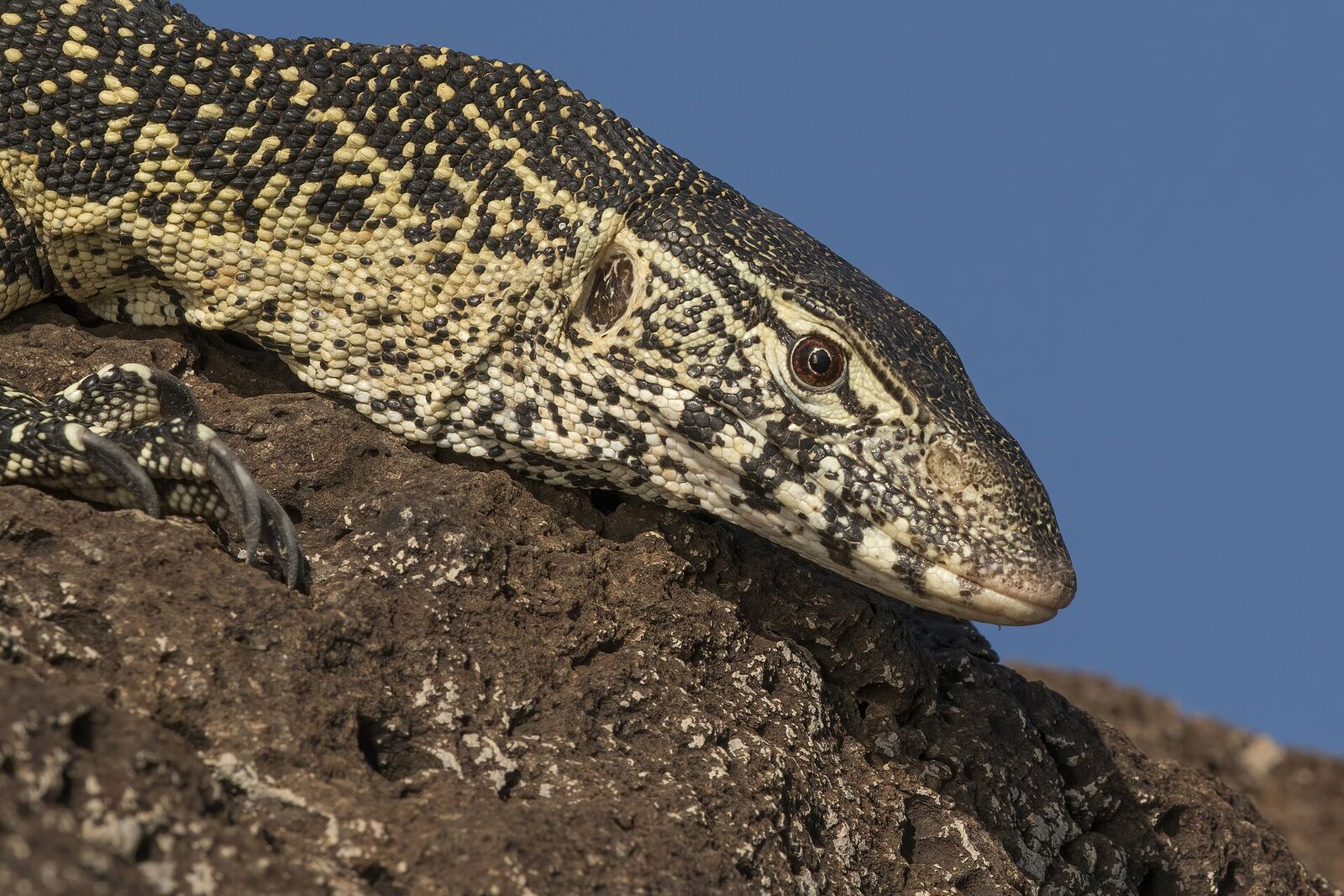
Nile monitor
Varanus niloticus
Africa's longest lizard, fast, bold and powerful.
Pet trade

Argus monitor
Varanus panoptes
Pet trade

Biak Emerald Monitor
Varanus kordensis
Pet trade

Black tree monitor
Varanus beccarii
Pet trade