Home / Birds / Parrots / Blue-and-yellow macaw
Some federal rules apply In-depth sheetBlue-and-yellow macaw
Ara ararauna
Birds › Parrots (Psittaciformes) › Psittacidae (Parrots and parakeets)
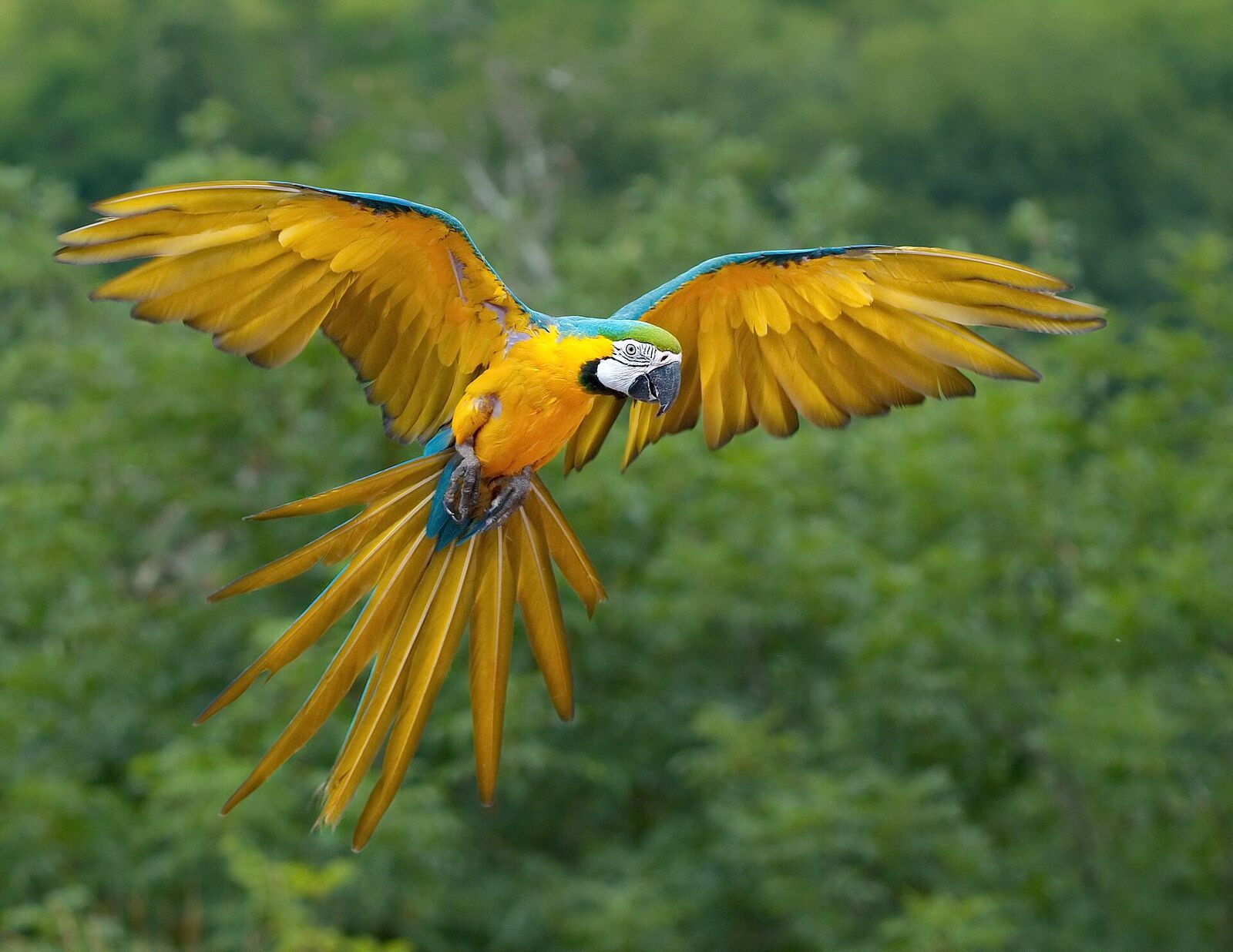
Blue-and-gold macaws are large, loud, intelligent parrots that form strong bonds and can live 30–50 years.
Care at a glance
Species-specific values
Values researched for this exact species. Where they differ from the group guide below, follow these. Air, surface and water temperatures are listed separately, and each source is kept as published rather than averaged.
| Minimum cage dimensions | length: 48 in; width: 36 in; height: 66 in Table cage minimum; exercise space additional. | 316 |
| Maximum bar spacing | 1.5 in | 316 |
Care guide
Diet
- Mostly a pelleted parrot diet with fresh produce and nuts as enrichment.
Behavior
- Pair-bonded flock birds that call loudly when alarmed. Plan for noise and daily out-of-cage time.
Sources 86
Show the group care guide for macaws
Macaws
Applies to most species in this group. Habitat: Neotropical forests and palm savannas. Individual species can differ, so compare with the species numbers above and the linked sources.
Housing & setup
- Very large cages or aviaries with heavy-duty construction; large macaws destroy wood and weak cages.
- Hours of out-of-cage time daily.
Diet
- Pellets, vegetables, fruit and nuts; hyacinth macaws need more fat (palm nuts, macadamias).
Social life
- Very social; need a lot of attention.
Health watch
- Very loud and long-lived (50+ years); powerful beaks.
Understanding the animal
In the wild
In the wild
Researched for this exact species, not its family. Good care copies these conditions.12
| Where it lives | Tropical South American forests and woodlands, especially swamp and river-edge forest; also occurs in Panama. Nests high in tree cavities. |
| Ground it lives on | arboreal; high branches and nest cavities; occasionally visits riverbank clay |
| Active | Diurnal; early-morning foraging and midday shade-seeking. |
| Social life | Bonded pairs, joining noisy feeding flocks. |
| Wild diet | Seeds, nuts and fruit; some populations visit riverbank clay licks. |
| Behavior to plan for | Strong beaks open hard nuts, and alarmed birds take flight while calling loudly. Pairs fly closely together. |
What this means for care
- Provide substantial flight space and robust elevated perches.
- Offer destructible foraging objects that allow shell-opening work.
- Provide compatible social contact and shaded retreats.
Native climate (measured)
Native climate (measured)
| Warm-season highs | about 90°F (up to 91°F in the hottest sampled areas) |
| Cool-season lows | about 66°F (down to 60°F in the coldest sampled areas) |
| Average temperature | 76–79°F across sampled records |
| Relative humidity | 74–79% on average (driest month about 73%) |
| Rainfall | about 1717 mm a year |
Measured at 30 wild occurrence records sampled against WorldClim 2.1 climate data (1970–2000 averages). Air conditions in the range are ecological context, not enclosure settings: microhabitats such as burrows, leaf litter or basking rocks can be cooler, warmer or more humid.
Profile
Profile
Researched for this exact species. Sources are listed under In the wild above.
History
Carl Linnaeus formally described the species in 1758 as Psittacus ararauna. It is now one of the extant species in the genus Ara, which was proposed in 1799 by Bernard Germain de Lacépède. No subspecies are recognized.
Keeper tips
- Account for the species' large adult size of about 32 to 36 inches in length.
- Account for a wingspan of about 41 to 45 inches.
- Provide access to elevated locations consistent with their natural tendency to nest high in trees.
- Expect the possibility of strong social bonding with humans.
Behaviors reported
- Forms monogamous pairs that mate for life.
- Nests high in tall trees, usually in existing cavities.
- Captive birds can develop close bonds with humans.
- The species is known in aviculture for its ability to talk.
Unique adaptations
- Large body size, reaching about 32 to 36 inches in length.
- A wingspan of about 41 to 45 inches.
- Vivid blue upperparts and yellow to orange underparts.
- Bare white facial skin marked by black feather lines around the eyes.
Remarkable facts
- Adults are about 81 to 91.5 cm, or 32 to 36 inches, long.
- Reported adult mass ranges from about 0.9 to 1.8 kg.
- The wingspan is about 104 to 114 cm, or 41 to 45 inches.
- Males and females are alike in external appearance.
- Sexual maturity is reached at about 3 to 4 years of age.
- Females lay 2 to 3 eggs, which are incubated for about 24 to 28 days.
From the sources
From the sources
Quoted from the matching sections of reputable sources for this exact species. Specialist databases are used first; Wikipedia (community-edited, CC BY-SA 4.0) only fills gaps. Other sources are short credited quotes.
| Overview | The blue-and-yellow macaw (Ara ararauna), also known as the blue-and-gold macaw, is a large Neotropical parrot with a mostly blue dorsum, light yellow/orange venter, and gradient hues of green on top of its head. It is a member of the large group of neotropical parrots known as macaws. It inhabits forest (especially varzea, but also in open sections of terra firme or unflooded forest), woodland, and savannah of tropical Central and South America, as well as the island of Trinidad in the Caribbean. — Wikipedia (community-edited) |
| Where it lives | Blue-and-yellow macaws are found mainly in rainforests in swampy and riparian areas. — Animal Diversity Web |
| Social life and communication | Blue-and-yellow macaws communicate by loud vocalizations or flock calls. — Animal Diversity Web |
| Wild diet | Blue-and-yellow macaws mainly eat seeds, nuts, and fruits. — Animal Diversity Web |
| Behavior | Blue-and-yellow macaws are mainly found in pairs but can congregate in groups to form flocks. — Animal Diversity Web |
| Reproduction | Blue-and-yellow macaws form monogamous pairs that mate for life. — Animal Diversity Web |
| Lifespan | The life span of blue-and-yellow macaws in the wild can be up to 50 years while their breeding age ranges from 30 to 35 years. — Animal Diversity Web |
| Appearance and size | Blue-and-yellow macaws are from 81 to 91.5 cm long, weigh from 0.9 to 1.8 kg, and have a wing span of 104 to 114 cm. — Animal Diversity Web |
| History and naming | The blue-and-yellow macaw was formally described by the Swedish naturalist Carl Linnaeus in 1758 in the tenth edition of his Systema Naturae. He placed it with all the other parrots in the genus Psittacus and coined the binomial name Psittacus ararauna. This macaw is now one of the eight extant species within the Ara genus, first proposed in 1799 by the French naturalist Bernard Germain de Lacépède. — Wikipedia (community-edited) |
| Conservation | Ara ararauna is considered least concern by the IUCN due to their large geographic range. — Animal Diversity Web |
Data and studies
The numbers
The numbers
Each bar is what one source reports. Where several sources weigh in, the dashed gold band marks their average.
Lifespan in care
Maximum recorded lifespan
Longest recorded lifespan reported by each database; typical lifespans are usually shorter. The AnAge record comes from an animal in human care.
Typical adult weight
Average adult body mass in each database (FishBase gives the maximum recorded weight).
Incubation
Veterinary & husbandry research
Veterinary & husbandry research
- Impact of Dietary Fructose on the Lipid Profile in Six Macaws Béland K et al., Journal of avian medicine and surgery 2021
- Bacillus cereus infection outbreak in captive psittacines Godoy SN et al., Veterinary microbiology 2012
- Yeasts and filamentous fungi in psittacidae and birds of prey droppings in midwest region of Brazil: a potential hazard to human health Simi WB et al., Brazilian journal of biology = Revista brasleira de biologia 2019
- Captive Blue-and-yellow macaws (Ara ararauna) show facial indicators of positive affect when reunited with their caregiver Bertin A et al., Behavioural processes 2023
Peer-reviewed papers that mention this species alongside captivity, zoos, veterinary care or aquaculture. Some cover several species or mention it only in passing, so check the abstract. See all 26 on PubMed → 170
Sources for this sheet
- Royal Veterinary College Exotics Service: Parrot care Zoo, university or veterinaryVet-school exotics hospital factsheet, reviewed 2021–2024.
- Animal Diversity Web (University of Michigan): Ara ararauna (blue-and-gold macaw; also cited for large macaws as a group) Zoo, university or veterinaryUniversity-hosted species account, mostly wild biology.
- AnAge: The Animal Ageing and Longevity Database (Human Ageing Genomic Resources) Peer-reviewed researchCurated, referenced longevity and life-history records for thousands of species; maximum lifespans are often from zoo animals.
- Myhrvold et al. (2015). An amniote life-history database. Ecology 96: 3109 Peer-reviewed researchPeer-reviewed compilation of life-history data for over 21,000 birds, mammals and reptiles.
- Species+ (UNEP-WCMC and the CITES Secretariat) Zoo, university or veterinaryThe official database of species listed under CITES.
- USFWS International Affairs: CITES Zoo, university or veterinaryFederal agency that issues CITES permits.
- 9 CFR 2.1: Animal Welfare Act licensing (USDA) Zoo, university or veterinaryWho needs a USDA license to breed, sell or exhibit animals.
- Merck Veterinary Manual: Management of pet birds Zoo, university or veterinaryThe Merck Veterinary Manual: a standard veterinary reference written and reviewed by veterinary specialists.
- Merck Veterinary Manual: Nutritional diseases of pet birds Zoo, university or veterinaryThe Merck Veterinary Manual: a standard veterinary reference written and reviewed by veterinary specialists.
- GBIF Backbone Taxonomy (Global Biodiversity Information Facility) Peer-reviewed researchInternational scientific taxonomy used here for classification.
- Wikipedia (species article) Community referenceFree encyclopedia; useful overviews with their own citations. Intro text is quoted under CC BY-SA 4.0.
- PubMed (U.S. National Library of Medicine) Peer-reviewed researchIndex of peer-reviewed veterinary, zoo and husbandry research.
- iNaturalist (captive observations) Community referenceCommunity observation platform run by the California Academy of Sciences and National Geographic; observations marked captive show animals living in homes, zoos and aquariums.
More parrots and parakeets
 In-depth
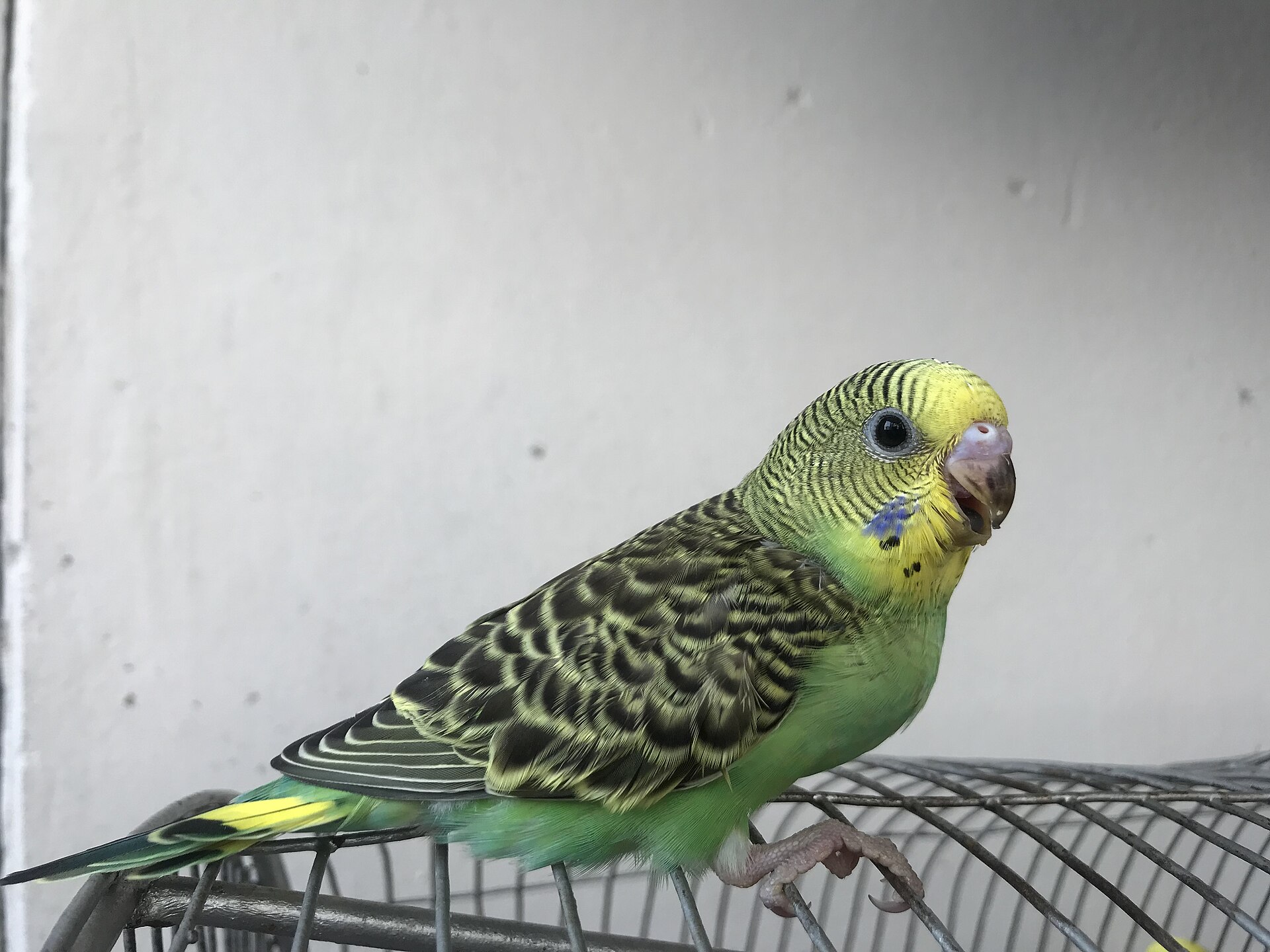
Budgerigar
Melopsittacus undulatus
A small parrot with a big vocabulary.
Pet trade
 In-depth
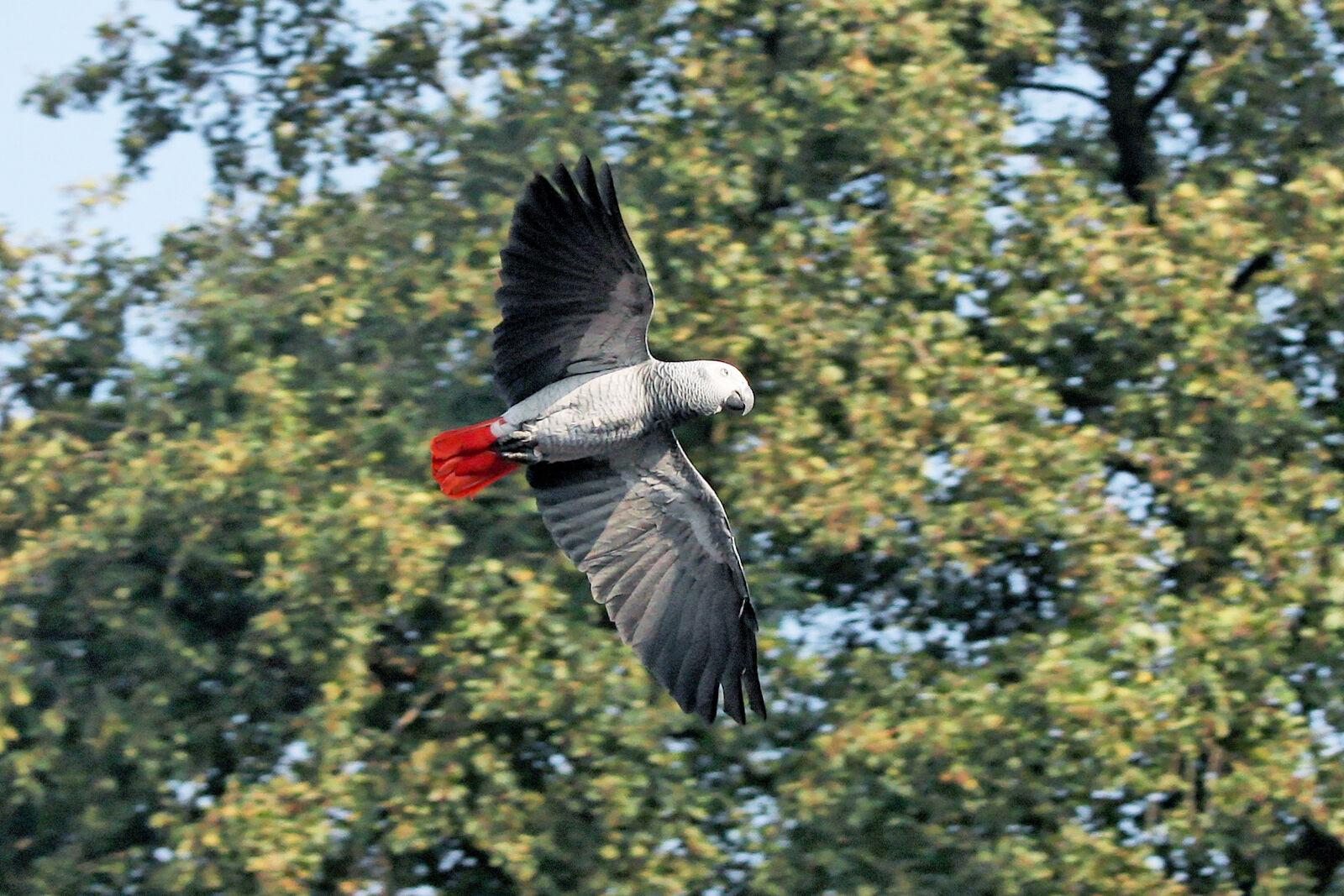
Gray parrot (Congo African grey)
Psittacus erithacus
One of the most intelligent birds on Earth.
Pet trade

Hyacinth macaw
Anodorhynchus hyacinthinus
Pet trade

Kea
Nestor notabilis
Pet trade

Rosy-faced lovebird
Agapornis roseicollis
Pet trade