
Home / Birds / Parrots / Bronze-winged pionus
Some federal rules applyBronze-winged pionus
Pionus chalcopterus
Birds › Parrots (Psittaciformes) › Psittacidae (New World and African parrots)
The bronze-winged parrot (Pionus chalcopterus) is a medium-sized pionus parrot 28 cm (11 in) long.
From Wikipedia: Bronze-winged parrot, CC BY-SA 4.0 (excerpt)

Care at a glance
Species-specific values
Values researched for this exact species. Air, surface and water temperatures are listed separately, and each source is kept as published rather than averaged.
| Minimum enclosure | Needs a large cage for activity. Source: birdscoo.com | |
| Diet | Feed formulated pellets with fresh fruits and vegetables daily. Source: birdscoo.com | |
| Diet | Feed a formulated diet as the basis, with fresh fruits and vegetables in the same volume daily. Source: susanclubb.com | |
| Feeding frequency | Provide the same volume of fresh fruits and vegetables daily alongside the formulated diet. Source: susanclubb.com | |
| Social housing | Companion Pionus parrots should not have unsupervised freedom in the home. Source: susanclubb.com | |
| Substrate | Provide toys, wood blocks or branches to chew. Source: susanclubb.com | |
| Minimum enclosure | Provide the largest cage space and budget allow, ideally with room for flight. Source: susanclubb.com |
Understanding the animal
About this animal
About this animal
It is a short-tailed stocky parrot found in forest and woodland in north-western South America.
From Wikipedia: Bronze-winged parrot, CC BY-SA 4.0 (excerpt)
In the wild
In the wild
| Overview | The bronze-winged parrot (Pionus chalcopterus) is a medium-sized pionus parrot 28 cm (11 in) long. It is a short-tailed stocky parrot found in forest and woodland in north-western South America. — From Wikipedia: Bronze-winged parrot, CC BY-SA 4.0 (excerpt) |
| Where it lives | The bronze-winged parrot is found in far western Venezuela, western and central Colombia, western Ecuador and far north-western Peru. In Venezuela it mainly occurs at altitudes of 900–1400 m, in Colombia it mainly occurs at altitudes of 1400–2400 m (occasionally as high as 2800 m), in Ecuador mainly below 1400 m, and in Peru below 800 m. — From Wikipedia: Bronze-winged parrot, CC BY-SA 4.0 (excerpt) |
| Behavior | It is typically seen in pairs or small groups of up to ten birds. The bronze-winged parrot nests in tree cavities. The eggs are white and there are usually three to four in a clutch. — From Wikipedia: Bronze-winged parrot, CC BY-SA 4.0 (excerpt) |
| Appearance and size | The bronze-winged parrot is mainly dark with a whitish chin patch and its upper chest is speckled with pink feathers. It has short red undertail feathers. The rump, tail and wings are dark blue with lighter blue underwings. — From Wikipedia: Bronze-winged parrot, CC BY-SA 4.0 (excerpt) |
| History and naming | Today most authorities consider this species as monotypic, but some continue to recognize two subspecies: * P. c. chalcopterus: west Venezuela, and north and central Colombia. * P. b. cyanescens: south-west Colombia, west Ecuador, and north-west Peru. Reputedly with broader blue margins on feathers, chin patch and surrounding ring smaller and less distinct. — From Wikipedia: Bronze-winged parrot, CC BY-SA 4.0 (excerpt) |
Native climate (measured)
Native climate (measured)
| Warm-season highs | about 78°F (up to 81°F in the hottest sampled areas) |
| Cool-season lows | about 59°F (down to 54°F in the coldest sampled areas) |
| Average temperature | 63–71°F across sampled records |
| Relative humidity | 77–85% on average (driest month about 74%) |
| Rainfall | about 2665 mm a year, spread fairly evenly |
Measured at 30 wild occurrence records sampled against WorldClim 2.1 climate data (1970–2000 averages). Air conditions in the range are ecological context, not enclosure settings: microhabitats such as burrows, leaf litter or basking rocks can be cooler, warmer or more humid.
Profile
Profile
Researched for this exact species. Sources are listed under In the wild above.
History
Today most authorities consider this species as monotypic, but some continue to recognize two subspecies: * P. c. chalcopterus: west Venezuela, and north and central Colombia. * P. b. cyanescens: south-west Colombia, west Ecuador, and north-west Peru. Reputedly with broader blue margins on feathers, chin patch and surrounding ring smaller and less distinct.
From Wikipedia: Bronze-winged parrot, CC BY-SA 4.0 (excerpt)
Data and studies
The numbers
The numbers
Each bar is what one source reports. Where several sources weigh in, the dashed gold band marks their average.
Typical adult weight
Average adult body mass in each database (FishBase gives the maximum recorded weight).
Sources for this sheet
- Myhrvold et al. (2015). An amniote life-history database. Ecology 96: 3109 Peer-reviewed researchPeer-reviewed compilation of life-history data for over 21,000 birds, mammals and reptiles.
- Species+ (UNEP-WCMC and the CITES Secretariat) Zoo, university or veterinaryThe official database of species listed under CITES. UNEP (2026). The Species+ Website. Nairobi, Kenya. Compiled by UNEP-WCMC, Cambridge, UK. Available at: www.speciesplus.net. [Accessed 04/10/2026].
- USFWS International Affairs: CITES Zoo, university or veterinaryFederal agency that issues CITES permits.
- 9 CFR 2.1: Animal Welfare Act licensing (USDA) Zoo, university or veterinaryWho needs a USDA license to breed, sell or exhibit animals.
- GBIF Backbone Taxonomy (Global Biodiversity Information Facility) (CC BY 4.0) Peer-reviewed researchInternational scientific taxonomy used here for classification. GBIF Secretariat (2023). GBIF Backbone Taxonomy. Checklist dataset https://doi.org/10.15468/39omei, accessed via GBIF.org.
- Wikipedia (species article) (CC BY-SA 4.0) Community referenceFree encyclopedia; useful overviews with their own citations. Short excerpts are quoted under CC BY-SA 4.0, each credited with a link to its article.
- iNaturalist (captive observations) Community referenceCommunity observation platform run by the California Academy of Sciences and National Geographic; observations marked captive show animals living in homes, zoos and aquariums.
More new world and african parrots
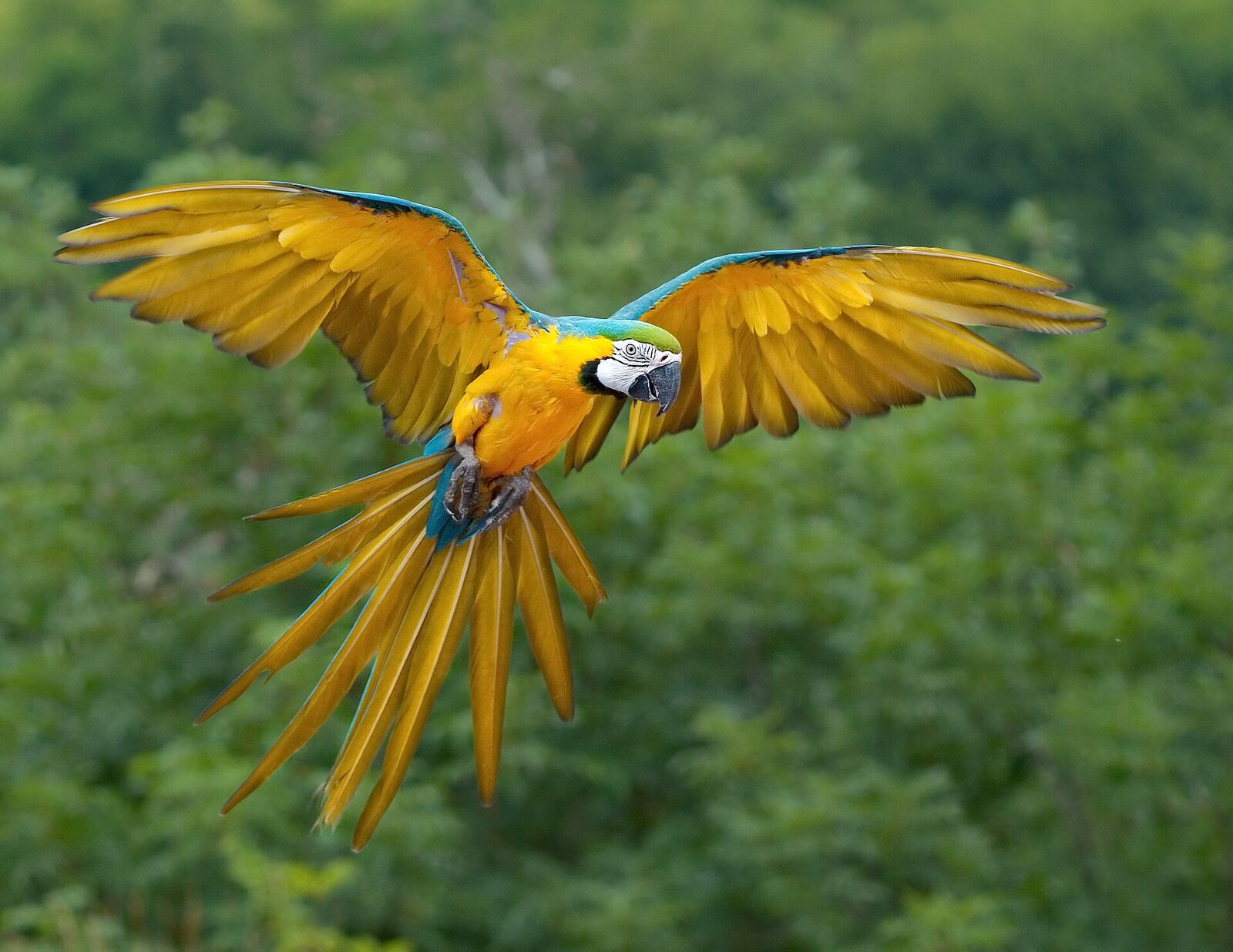
Blue-and-yellow macaw
Ara ararauna
A loud, brilliant, lifelong commitment.
Pet trade
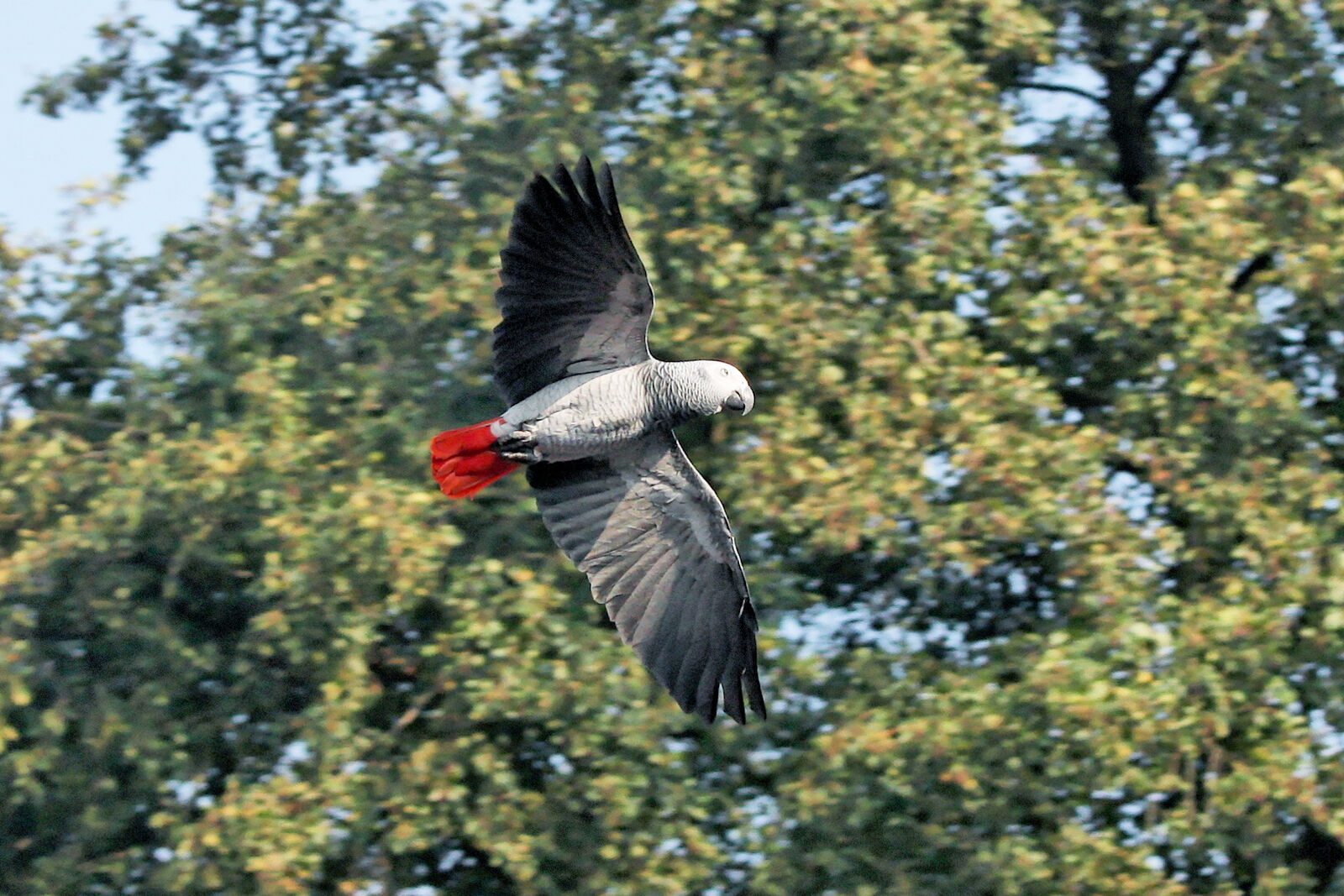
Gray parrot (Congo African grey)
Psittacus erithacus
One of the most intelligent birds on Earth.
Pet trade

Black-headed caique
Pionites melanocephalus
Pet trade

Blue-headed macaw
Primolius couloni
Aviary

Blue-throated macaw
Ara glaucogularis
Pet trade

Blue-winged (Illiger's) macaw
Primolius maracana
Pet trade