
Home / Invertebrates / Spiders / Brazilian jewel tarantula
No federal permit to keepBrazilian jewel tarantula
Typhochlaena seladonia
Invertebrates › Spiders (Araneae) › Theraphosidae (Tarantulas)
Typhochlaena seladonia, known as the Brazilian jewel tarantula, is a New World tarantula that is endemic to the Atlantic Forest in northeastern Brazil.
From Wikipedia: Typhochlaena seladonia, CC BY-SA 4.0 (excerpt)

Care at a glance
Species-specific values
Values researched for this exact species. Air, surface and water temperatures are listed separately, and each source is kept as published rather than averaged.
| Minimum enclosure | Spiderling enclosures should be filled one-third to one-half with slightly damp substrate. Source: thetarantulacollective.com | |
| Humidity | 60–70 % Source: thetarantulacollective.com | |
| Diet | Spiderlings can be offered small prey such as fruit flies, flour beetles, or tiny crickets or roach nymphs. Source: thetarantulacollective.com | |
| Feeding frequency | Feed spiderlings twice a week. Source: thetarantulacollective.com | |
| Substrate | Use slightly damp Terra Aranea substrate. Source: thetarantulacollective.com | |
| Minimum enclosure | Adults can use an enclosure about 15 x 15 x 25 cm. Source: academy.herpeton.net | |
| Night temperature | 66–72 °F (19–22 °C) Source: academy.herpeton.net | |
| Humidity | 60–75 % Source: academy.herpeton.net | |
| Uvb lighting | UVB and basking lamps are not required; provide soft ambient light for 10-12 hours and a dark night. Source: academy.herpeton.net | |
| Diet | Adults can be fed one suitable roach or cricket; spiderlings and juveniles have separate prey guidance. Source: academy.herpeton.net | |
| Feeding frequency | Feed adults every 7-14 days, adjusting to abdomen size. Source: academy.herpeton.net | |
| Social housing | House the spider alone. Source: academy.herpeton.net | |
| Substrate | Use a 2-4 cm soil layer at the bottom to buffer moisture. Source: academy.herpeton.net |
Understanding the animal
About this animal
About this animal
This species primarily inhabits the Brazilian states of Bahia and Sergipe. They are popular in the exotic pet trade due to their bright colors and unique arboreal trapdoor builds.
From Wikipedia: Typhochlaena seladonia, CC BY-SA 4.0 (excerpt)
In the wild
In the wild
| Overview | Typhochlaena seladonia, known as the Brazilian jewel tarantula, is a New World tarantula that is endemic to the Atlantic Forest in northeastern Brazil. This species primarily inhabits the Brazilian states of Bahia and Sergipe. They are popular in the exotic pet trade due to their bright colors and unique arboreal trapdoor builds. — From Wikipedia: Typhochlaena seladonia, CC BY-SA 4.0 (excerpt) |
| Where it lives | These spiders live in the humid rainforest of northeastern Brazil in crevices they find in tree bark. T. seladonia rely on their trapdoors to survive and remain hidden from predators. This species is arboreal, which means they inhabit trees throughout the forest, rather than the ground like other Theraphosidae tarantulas. — From Wikipedia: Typhochlaena seladonia, CC BY-SA 4.0 (excerpt) |
| Wild diet | In the wild, these tarantulas are opportunistic killers who catch small insects that land near the entrance to their trapdoors. Prey can be small flying insects, cockroaches, and other invertebrates. In captivity, owners feed the spiders dependent upon their size. — From Wikipedia: Typhochlaena seladonia, CC BY-SA 4.0 (excerpt) |
| History and naming | T. seladonia was originally described by Carl Ludwig Koch, in Brazil in 1841, as Mygale seladonia. It has since been placed in several genera. In 1850 Koch transferred the species to the genus Typhochlaena as Typhochlaena seladonia. — From Wikipedia: Typhochlaena seladonia, CC BY-SA 4.0 (excerpt) |
Profile
Profile
Researched for this exact species. Sources are listed under In the wild above.
History
T. seladonia was originally described by Carl Ludwig Koch, in Brazil in 1841, as Mygale seladonia. It has since been placed in several genera. In 1850 Koch transferred the species to the genus Typhochlaena as Typhochlaena seladonia.
From Wikipedia: Typhochlaena seladonia, CC BY-SA 4.0 (excerpt)
Sources for this sheet
- GBIF Backbone Taxonomy (Global Biodiversity Information Facility) (CC BY 4.0) Peer-reviewed researchInternational scientific taxonomy used here for classification. GBIF Secretariat (2023). GBIF Backbone Taxonomy. Checklist dataset https://doi.org/10.15468/39omei, accessed via GBIF.org.
- Wikipedia (species article) (CC BY-SA 4.0) Community referenceFree encyclopedia; useful overviews with their own citations. Short excerpts are quoted under CC BY-SA 4.0, each credited with a link to its article.
- iNaturalist (captive observations) Community referenceCommunity observation platform run by the California Academy of Sciences and National Geographic; observations marked captive show animals living in homes, zoos and aquariums.
More tarantulas
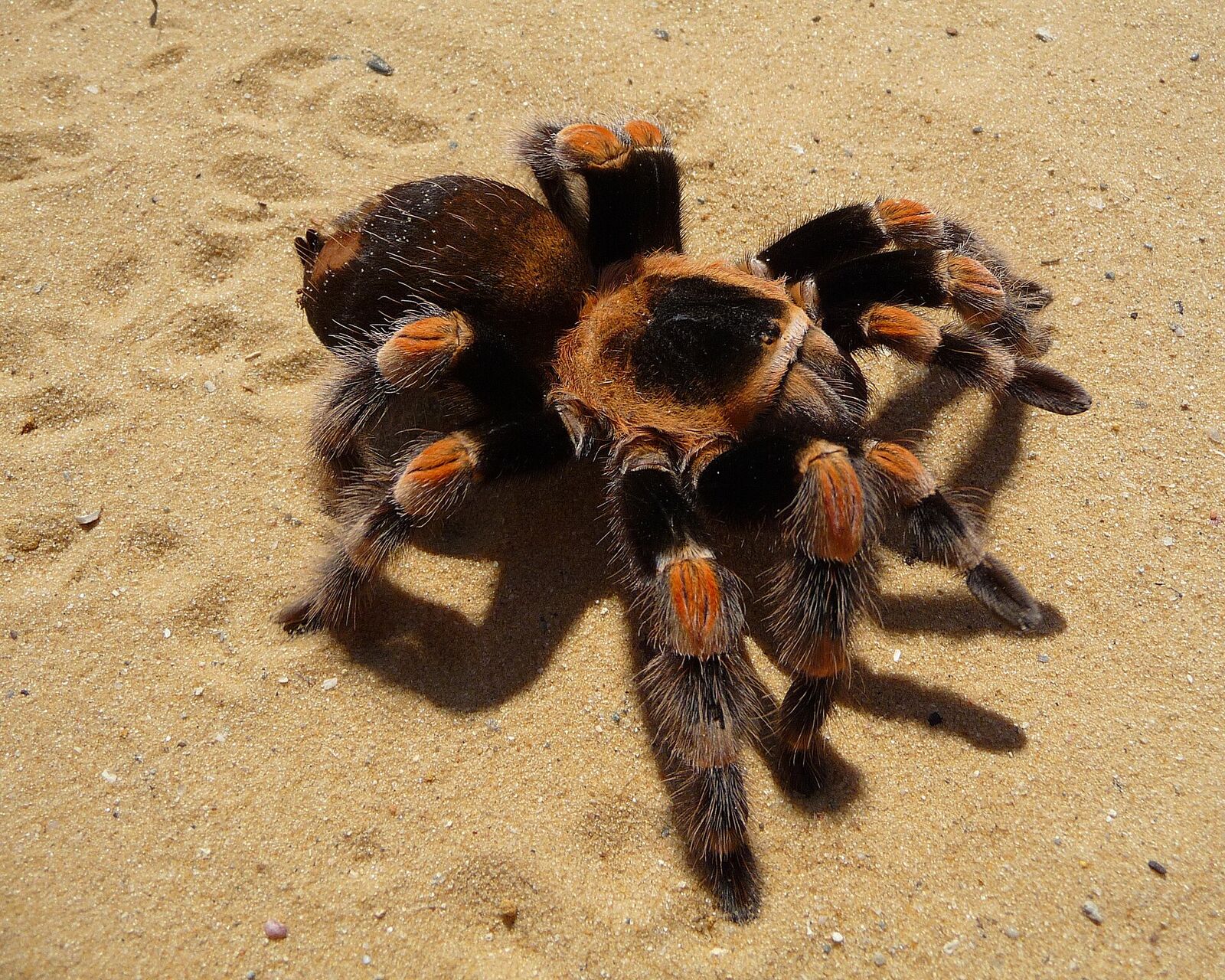
Mexican redknee tarantula
Brachypelma hamorii
A docile spider where females live 25–30 years.
Pet trade

African Horned Baboon Tarantula
Ceratogyrus darlingi
Pet trade
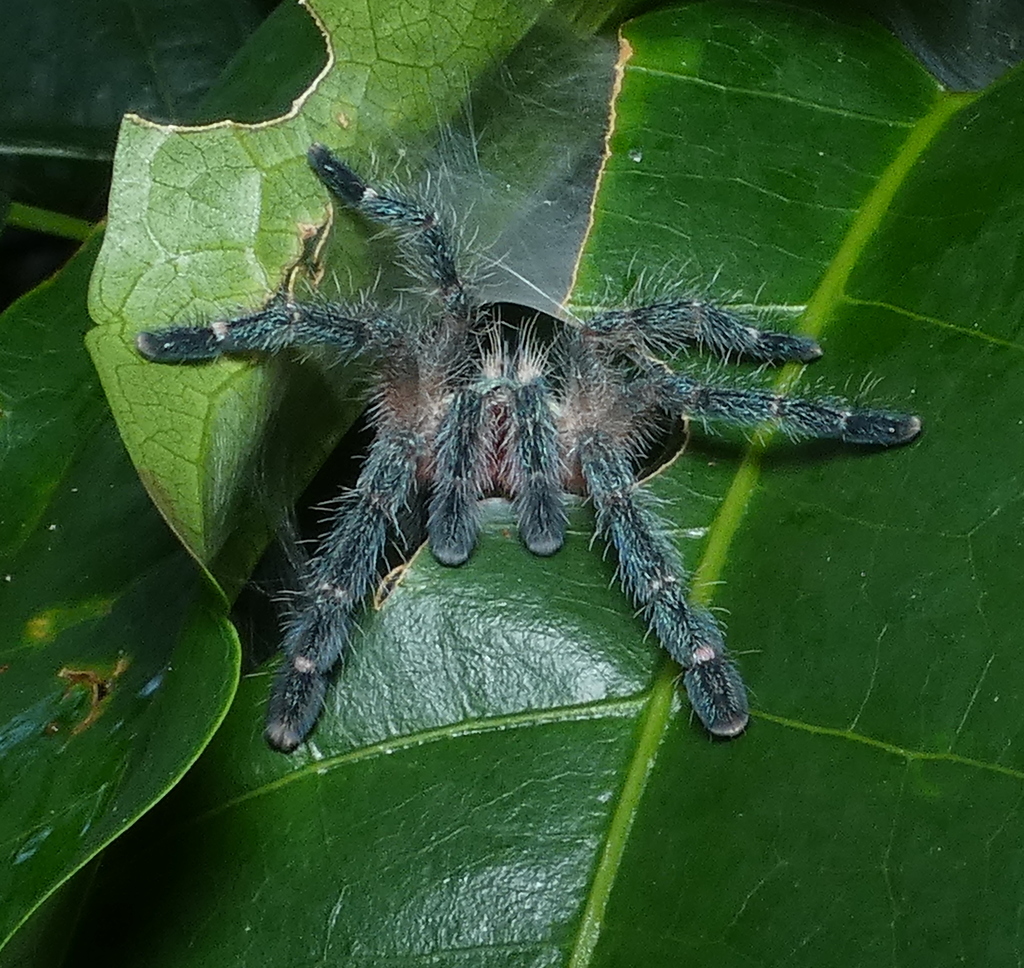
Amazon Ribbed Tarantula
Iridopelma hirsutum
Pet trade

Amula Redrump Tarantula
Brachypelma albiceps
Pet trade

Anantagiri’s Parachute Spider
Poecilotheria tigrinawesseli
Pet trade

Antilles pinktoe tarantula
Caribena versicolor
Pet trade